النص الكامل للفيديو
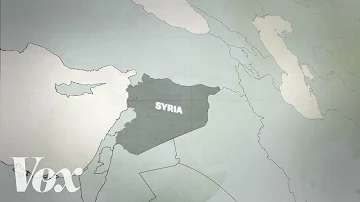
Syria's history begins in the fertile valleys of the Euphrates and Arantes rivers, where some of humanity's earliest civilizations flourished. The region's strategic location at the crossroads of three continents made it natural bridge between Mesopotamia, Anatolia, and Egypt. Archaeological evidence from sites like Tel Soon and Mary reveals sophisticated urban centers dating back to the 4th millennium B.CE. The Amorites, Semitic people, established the first major Syrian kingdoms around 2000 B.CE. They founded Damascus, one of the world's oldest continuously inhabited cities and created network of city states that controlled vital trade routes. The Aramians followed developing the Aramaic language that would become the lingua frana of the ancient near east and the language spoken by Jesus Christ. During this period, Syria witnessed the rise and fall of numerous empires. The Hittites controlled northern Syria from their Anatolian base while Egyptian Pharaohs launched campaigns to secure Syrian territories. The famous battle of Kadesh between Rammes's 2 and the Hittites was fought on Syrian soil, demonstrating the region's strategic importance. The Neoasyrian Empire dominated Syria from the 9th to 7th centuries B.CE. Incorporating it into their vast administrative system. Cities like Aleppo and Damascus became important provincial centers connected by royal roads that facilitated trade and communication across the empire. The Persian conquest of Syria in 539 B.CEE marked the beginning of new era. Under the Akemined Empire, Syria enjoyed relative autonomy and prosperity. After Alexander's death, the region became part of the Seucid Empire, one of the successor kingdoms. The Persians respected local customs and religions, allowing Syrian culture to flourish while integrating the region into their vast imperial network. Alexander the Great's conquest in 332 B.CE brought Hellenistic culture to Syria. The Celisids founded Antioch, which became one of the ancient world's greatest cities and major center of early Christianity. Greek culture blended with local traditions, creating unique Syrian hellenistic civilization. Roman rule began in 64 B.CE when Pompy annexed Syria as province. Under Roman administration, Syria experienced unprecedented prosperity. The Romans built extensive infrastructure including roads, aqueducts, and amphitheaters. Cities like Palmyra emerged as powerful trading centers, controlling caravan routes between the Remang Empire and Asia. The rise of Christianity profoundly impacted Syrian society. Damascus became significant in Christian history when the Apostle Paul experienced his conversion on the road to the city. Syrian Christians developed their own theological traditions and established monasteries that preserved ancient knowledge through turbulent times. The Byzantine period saw Syria integrated into the eastern Ramang Empire. The Arab Muslim armies led by Khaled Imman al-Wallied decisively defeated the Byzantine forces bringing Syria under Islamic rule. Constantinople's influence brought Orthodox Christianity to prominence, though Syrian Christians maintained their distinct identity. The region faced increasing pressure from Sassinid Persia with frequent wars devastating the countryside and weakening Byzantine control. The battle of Yarmmach in 636 CE marked turning point in Syrian history. The conquest was remarkably swift with most Syrian cities surrendering peacefully after receiving guarantees of religious freedom and protection. Under the Amayad Caiphate, Damascus became the capital of the Islamic world. Syrian scholars made important contributions to Islamic theology, philosophy, and science. During this period, the Amayiads transformed Syria into the heart of vast empire stretching from Spain to Central Asia. They built the magnificent Amayad mosque in Damascus and established Arabic as the administrative language, gradually replacing Greek and Aramaic. The Abbassad revolution in 750 CE shifted the Islamic capital to Baghdad, reducing Syria's political importance. However, the region remained economically vital and culturally significant. The Fatimid conquest of Syria in 969 CE introduced Shia Islam to the region, though most Syrians remained Sunni. The Aubids built impressive fortifications, including the Citadel of Aleppo, and promoted trade and learning. The Fatimids controlled Syria from their capital in Cairo, but their rule was marked by political instability and economic decline. The Crusades brought European Christian armies to Syria, establishing several crusader states, including the principality of Antioch and the county of Adessa. The Muslim response was led by figures like Nur Aldin and Saladin, who gradually reconquered crusader territories. The experience of the crusades strengthened Syrian Muslim identity and left lasting architectural and cultural influences. Aubid rule under Saladin and his successors brought stability and prosperity to Syria. However, their power waned in the 13th century, making Syria vulnerable to the Mongol invasions. The Mongol invasions of the 13th century devastated Syria. The sack of Baghdad in 1258 and subsequent campaigns destroyed cities, massacred populations, and disrupted trade networks. However, Syria's recovery was swift under the Mammls, who expelled the Mongols and completed the conquest of the remaining crusader states. The Mamml Sultan had ruled Syria from 1260 to 1516. governing from Cairo. The Ottomans implemented the millet system, granting religious communities autonomy in personal matters. The Mammlocks were former slave soldiers who had seized power in Egypt and expanded their control over Syria. Trade flourished along the old silk road roots and Syrian merchants established commercial networks across the empire. They built impressive madrasas, mosques and caravans, many of which still stand today. The Mammllocks also established efficient administrative systems and promoted trade, making Syria prosperous once again. Mamml rule ended in 1516 when the Ottoman Sultan Salem conquered Syria after defeating the Mammllocks at the Battle of Marge Dabek. The Ottomans incorporated Syria into their vast empire, dividing it into several provinces, including Damascus, Aleppo, and Tripoli. Ottoman rule brought significant changes to Syrian society. This system allowed Syria's diverse religious groups, Sunni Muslims, Christians, Drews, and Alawites, to maintain their distinct identities while participating in the broader Ottoman framework. The 16th and 17th centuries marked the golden age of Ottoman Syria. Cities like Aleppo became major trading centers while Damascus maintained its reputation for craftsmanship, particularly in textiles and metal work. The 18th century saw the rise of local strongmen who challenged Ottoman authority. The Azim family in Damascus and various tribal leaders in the countryside carved out semiautonomous territories. This decentralization continued into the 19th century when figures like Ahmad Pasha al-Jadsar in Akre and the Shihab Amirs in Mount Lebanon wielded considerable power. The Arab revolt supported by Britain and led by figures like Tawrence and Fasalib Hussein promised Arab independence. The 19th century brought modernization efforts and European influence. The Ottomans implemented the Tanzimat reforms which aimed to modernize the empire and grant equal rights to all subjects regardless of religion. The great Syrian revolt of 1925 to 1927 led by Sultan Pasha Alatrash united various Syrian communities against French rule. These reforms had mixed results in Syria where traditional social structures remained strong. European powers, particularly France and Britain, increased their influence in Syria during this period. They built roads, railways, and schools and established modern legal system. Missionary activities, commercial ventures, and diplomatic interventions gradually undermined Ottoman authority. The opening of the Suez Canal in 1869 reduced Syria's importance as trade route, causing economic decline in traditional trading centers. World War marked the end of Ottoman rule in Syria. However, the secret Sykespico agreement between Britain and France had already divided the Ottoman Arab territories between the two powers. The French mandate over Syria began in 1920 after the battle of Mesalon where French forces defeated the Arab Kingdom of Syria led by King Fasil. The French divided Syria into several states including the state of Damascus, the state of Aleppo and the Alawite state employing divide and rule strategy. French rule was marked by resistance and rebellion. Though ultimately unsuccessful, the revolt demonstrated Syrian nationalism and the desire for independence. The French introduced modern infrastructure, education, and administrative systems to Syria. However, these improvements were accompanied by cultural suppression and economic exploitation. World War II weakened French control over Syria. The free French government supported by Britain took control of Syria in 1941. Growing pressure from Syrian nationalists and changing international circumstances led to Syrian independence in 1946. Syria experienced series of military coups beginning with Husni Alzams coup in 1949. The early years of independence were marked by political instability. The country struggled to establish stable democratic institutions while facing regional challenges including the creation of Israel in 1948 and the resulting Arab-Israeli conflict. The United Arab Republic merged Syria with Egypt under Gaml Abdal Nasser's leadership. This union represented the peak of Arab nationalism but collapsed due to Syrian resentment of Egyptian domination and economic policies that favored Egypt. The Bath party came to power in 1963 promising Arab unity, socialism, and anti-imperialism. Internal Bath conflicts led to another coup in 1966, bringing more radical faction to power. These years saw significant social and economic reforms including land redistribution and nationalization of industries. Hafes al-Assad's coup in 1970 marked the beginning of the Assad dynasty's rule over Syria. Assad, an Alawite air force officer, consolidated power through combination of repression, patronage, and strategic alliances. He established highly centralized authoritarian system that dominated all aspects of Syrian life. Assad's rule was characterized by several key features. The dominance of the security apparatus, the promotion of Alawites to key positions and the suppression of political opposition. The regime presented itself as secular and modernizing while maintaining tight control over society. The 1973 Arab-Israeli war, where Syria fought alongside Egypt to regain territories lost in 1967, initially boosted Assad's popularity. However, Syria's military performance was poor, and the Sinai disengagement agreements between Egypt and Israel left Syria isolated. The late 1970s and early 1980s saw major challenge to Assad's rule from the Muslim Brotherhood, culminating in the Hama uprising of 1982. Assad's response was brutal, with government forces killing thousands of civilians and destroying much of the ancient city. This event demonstrated the regime's willingness to use extreme violence to maintain power. Economic problems plagued Syria throughout the 1980s. The decline in oil prices, massive military spending, and inefficient state controlled economy created significant challenges. Assad began limited economic reforms in the late 1980s, allowing some private sector activity while maintaining state control over key industries. The end of the Cold War and the collapse of the Soviet Union, Syria's primary patron, forced Assad to reconsider his regional strategy. Syria participated in the US-led coalition against Iraq in 1991 and engaged in peace negotiations with Israel, though these ultimately failed. Hafes al-Assad died in 2000 and his son Basher al-Assad assumed power. Initially, there were hopes for reform and liberalization. The younger Assad, British trained athomemologist, promised modernization and gradual political opening. The early 2000s saw the Damascus spring, brief period of political discussion and civil society activism. However, the hoped for reforms never materialized. While Basher al-Assad implemented some economic liberalization, political repression continued. The regime maintained its authoritarian character, using security forces to suppress opposition and control society. The 2003 US invasion of Iraq created new challenges for Syria. The influx of Iraqi refugees, regional instability, and international pressure over Syria as alleged support for insurgents in Iraq strain the country as resources and international relations. The Arab Spring reached Syria in March 2011, beginning with protests in the southern city of Dera. What started as peaceful demonstrations calling for political reform quickly escalated into devastating civil war that has reshaped the country and the region. The Assad regime's violent crackdown on protesters radicalized the opposition and militarized the conflict. The Syrian army use of live ammunition against peaceful demonstrators in the early months of the uprising shocked the international community and galvanized opposition groups. The conflict became increasingly complex involving multiple actors with different objectives. The Free Syrian army formed by defecting military officers initially led the armed opposition. However, the group fragmented as the war progressed with some elements becoming more radical and others maintaining more moderate positions and Syria and Jabhhat al-Nusra added another dimension to the conflict. The rise of jihadist groups, particularly ISIS, Islamic State of Iraq. These groups took advantage of the chaos to establish territorial control and implement their extremist ideology. International intervention transformed the Syrian conflict into proxy war. Iran and Russia provided crucial support to the Assad regime while various Western and regional powers supported different opposition groups. Millions of Syrians have been killed, wounded or displaced. This international involvement prolonged the conflict and made resolution more difficult. The humanitarian crisis has been staggering. The UN estimates that over 350,000 people have died, though the true number may be higher. Has been one of the war's most controversial aspects. More than half of Syria's pre-war population has been displaced with millions becoming refugees in neighboring countries. the use of chemical weapons by the Assad regime documented by international investigators. Despite international condemnation and limited military responses, the regime has continued to use these weapons against civilian populations. As of 2024, the Assad regime, supported by Russia and Iran, has regained control over most of Syria's territory. The country's infrastructure has been devastated, its economy has collapsed, and its social fabric has been torn apart. However, the country remains divided with Turkishbacked opposition forces controlling areas in the north, Kurdish-led forces controlling the northeast, and small US presence in the southeast. The Syrian conflict has had profound regional implications. It has destabilized neighboring countries, contributed to the refugee crisis in Europe, and altered the balance of power in the Middle East. The war has also demonstrated the limitations of international law and institutions in preventing mass atrocities. Today, Syria faces immense challenges in reconstruction and reconciliation. The question of how to rebuild Syria while addressing the underlying causes of the conflict remains one of the most pressing issues facing the international community. The Syrian story continues to unfold with its people struggling to overcome decades of conflict and build more just and prosperous future. Understanding this complex history is essential for comprehending not only Syria as current situation but also the broader dynamics of the contemporary Middle East. Thanks for watching. If you enjoyed this video, please like, share, comment, and subscribe to the channel for more engaging historical content.

 47:57
47:57
 8:07
8:07
 18:55
18:55
 1:03:11
 5:06
5:06
 30:48
30:48
 1:26:11
 9:42
9:42
 8:49
8:49
 29:50
29:50
 51:56
51:56
 3:02
3:02
 1:55:55
 5:11
5:11
 7:52
7:52
 15:52
15:52
 6:46
6:46
 17:53
17:53
 47:21
47:21


