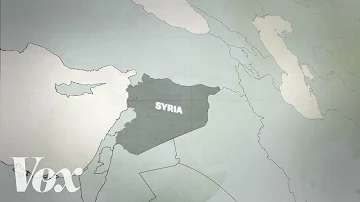
hi this is the history and mythology channel do you remember how the Kingdom of Heaven film ended it was with the words even today there is no peace in the Holy lands there really is no peace and we shall talk about part of the Holy lands Syria has once again entered the world news with the sudden fall of the regime of dictator Bashar Al Assad Bashar is the Son and heir of the previous Syrian head of state HZ al- Assad as well as one of the main factors in the one supranational political ideology bath Bashar Al Assad has served as president and de facto dictator of the Syrian republic since the year 2000 relying on the Army the administration and part of the religious minorities in the traditionally diverse country despite police control and repression the regime was not stable in 2005 the Syrian occupation of Lebanon came to an end throughout the rule of HZ and Bashar the Golan Heights on the border with Israel were under Israeli control and they still are so the Assad government did not control all of its own country's internationally recognized territory in 2010 2011 the Arab Spring in series of uprisings in the country threatened the personal power of the second Assad and shuttered the fragile National Unity the Assad regime answered with series of chemical attacks and bombings mainly against the civilian population Bashar Al Assad owed his surv Revival over the next dozen of years largely to Russian and Iranian support in 2014 2015 the islamist terrorist group al- islamia on Iraq Asam it's also known as dases or Isis the Islamic State in Iraq and Syria established its zone of control and actual Proto State on the territory of Iraq and Syria but was defeated and expelled from the region in the period 2016 2019 by temporary coal of rival forces the Syrian Civil War has continued in practice since the fall of Assad and Syria is currently in one of the most complex Regional situations in the world external Powers such as Russia the United States and Turkey are involved in the internal conflict along with local factors such as the forces of the previous government Kurdish ethnic armed groups and diverse possibly unstable Coalition of militias with pet of views and ideologies from secular and relatively Democratic to extreme islamist the country's population has suffered over half million casualties and major cities such as Aleppo have been partially destroyed the moment is appropriate to review the history of this remarkable but suffering land chapter 1 from prehistory to Antiquity Syria is one of the cradles of civilizations in the old world in Arabic its name Ash sham means the son hence the sunrise and the East what is called the Levant in Romans languages cities such as the capital of Damascus are mentioned in the oldest texts of the Old Testament not politically but geographically Syria is one and the same with Lebanon and Israel or Palestine and also encompasses the present day Southeastern Turkish province of hayat with the cities of anakia and iskenderun former Antioch and alexanda already in modern political sense Syria is territory stretched between mountains that separated from Eastern Anatolia or Turkish Kurdistan to the north the badat as Shams or the Syrian desert to the southeast the Golan Heights to the South the Lebanese Mountains from which the Bride of biblical King Solomon descends and the Mediterranean Sea to the West part of the course of the Euphrates river passes through present day Northeastern Syria and the most remote regions of the country reach or touch the Tigris River so part of historical Mesopotamia is also Syrian according to the biblical Book of Genesis the tigis and Euphrates flow directly from Earthly Paradise according to St Constantine of thessalonica the first language spoken by the common ancestor of humankind Adam was syri Syria is part of the Holy lands that is the territories where the events described in most of the Old and New Testaments of the Bible take place the hills and roads of the country are part of the Sacred history of at least three world religions the fate of Syria has always been tied to that of of its Lebanese Coast as well as to the neighboring regions Asia Minor Mesopotamia or Iraq Egypt and the Arabian Desert which it connects the current internationally recognized borders of the Syrian Republic Encompass approximately 185,000 squ km and population of approximately 25 million of whom over 80% practice various forms of Islam nearly 10% are Christian and less than 5% are Drews for Millennia this blessed but also cursed country has been the scene of the rise and fall of Empires as well as countless Wars about 800,000 years ago in the Paleolithic Era neandertals lived in the territory of modern day Syria at much later period only about 10,000 Years BC or 12,000 years before our own era Syria was part of the Fertile Crescent which included the early agricultural civilizations of our own species in Egypt along the Eastern Mediterranean Coast in modern day Israel and Lebanon Syria and Iraq or Mesopotamia the population was now made of Neolithic Farmers distant descendants of croman hunter gatherers these early inhabitants of historic Syria built modest rectangular houses of unbaked bricks grouped in vitable towns and their material culture was diverse and Rich finds foreign Goods attest to the fact that these people traded with countries near and far around 3,000 BC in what is now Northwestern Syria in the idlib region the Semitic city of eah flourished creating kingdom that extended to Mesopotamia and Anatolia this was perhaps the first Syrian State the inhabitants of EA were linguistically and culturally close to the Acadian civilization around 2,300 BC the northern part of Syria became part of the dominions of the Acadian King Sargon the first ruler of historically attested near Eastern Empire until 2,000 BC Syria was successively part of the dominions of the late Sumerians and the already at the beginning of the second millennium BC Assyrian power was temporarily replaced by the Babylonian Kingdom the Assyrians were one of the most aggressive cultures of the old world and gave their name to modern-day Syria their direct descendants in Syria and Iraq still exist today bearing the same name as their brutal ancestors but they have become relatively peaceful minority in the following centuries the Strategic territory connecting Egypt with Anatolia and Mesopotamia was contested between powerful ancient states such as Egypt Babylon Assyria and the local Karan Kingdom of mitani by 1300 BC large parts of Syria had come under the control of the Indo-European hiits whose capital husha was located in the mountains of Anatolia also known as Asia Minor or modern-day Turkish anadol around the year 1,000 BC with the collapse of the Bronze Age and the Advent of the Iron Age The hitit Empire collapsed and was replaced by the Neo Assyrian Empire which would rule Syria for the next 300 years it was at this time that the name Syria first appears as variant of ashur the original name of the Assyrian Homeland this is also the era of the first flowering of the small Israelite Kingdom in the southwest of Syria around 600 BC the Neo Syrian Empire was replaced by the Neo Babylonian Kingdom which had existed for less than century the Babylonian rulers extended their power over the lands of the Jews in Canaan the first Jewish temple was destroyed destroyed by the Babylonians and part of the people of Israel was taken to the lands of Iraq after the collapse of the ne Babylonian State Syria entered the era of classical Antiquity chapter 2 Antiquity in 539 BC the Persian sha Cyrus the Great annexed Syria to his Empire after having captured Babylon the aate Royal Dynasty ruled from its capitals of pepolis and de batana in the Iranian Plateau relying on its Army of indo-europeans the Arians as this population is called in the ancient texts of Iran and India and from whose self-d designation the very name Iran is derived the Persians adopted writing in much of the culture of their Semitic subjects including the population of Syria Persian kings allowed large number of Jews to return from Babylon to their Homeland and rebuild the former Jerusalem Temple of the harsh Old Testament God because of this Merit the Jews would call the Persian Shak Cyrus the Great mashiach or the anointed one over the next 200 years the power of Persia would reach the shores of the Mediterranean Sea Egypt and Anatolia also became part of the Persian Empire and the Syrian population together with the Egyptians and their Phoenician neighbors would provide part of the numerous Asian troops with whose help the shaks of Iran would try to invade Europe the Syrian Port of arwat was involved in the Ain campaigns against the city states of Greece in 333 BC the Invincible Greek troops of Alexander thei of maedon won another victory at isus near Alexandretta the present day Turkish port ofun with Alexander's Victory Syria came under helenistic rule long era began in which number of Greek cities were founded the Kings who ruled the country bore Greek names and ancient centers such as Damascus Acquired colonades and temples in the classical Greek style the entire Persian Empire from the bosporos to Egypt and the Indus River fell into Alexander's hands after his death he was ified and the commanders of his troops divided the territories into separate kingdoms King cus nikator founded the famous city of Antioch on the ortis River today the Turkish town of antakya in the Northwestern corner of Syria the capital of the Greek cultural presence in Asia Minor and metropolis that competed with Egyptian Alexandria ancient Athens the even more ancient Damascus and later with the sacred Jerusalem as well as with Rome Itself by 100 BC after series of wars with its neighbors the also Greek dynasty of the tmis of Egypt the sald helenistic Empire declined but its influential culture flourished not only in Syria Phoenicia Palestine Egypt and Asia Minor but also spread throughout Iraq not far from the former Babylon and modern Baghdad on the Tigris River Syrian Kings had built sokia Greek city in the middle of Semitic lands mirror of the flourishing Antioch and Center of Trade religion and science meanwhile the inhabitants of Judea had freed themselves from Greek rule rejecting helenistic Customs as impure but adopting the helenistic way of Waging War with large infantry FES armed with long Spears while the grean cusd were winning and losing Wars in Mesopotamia and Palestine the paeans horse riding people with language from the Indo Iranian group of the Indo European linguistic family who adopted the zoroastrian religion and Persian identity invaded Iran the pathans set about eradicating foreign elements in Persia especially Greek influence by 100 BC the pathans and their kings the dynasty of arshak began to enter Syria with the idea of establishing foothold in the Mediterranean like the Ain shaks of old both the Greek and Semitic aristocracy of the Semitic cities tried to save themselves from the parthan conquest and in 83 BC they called for tigranes the great the king of Armenia to be their savior and ruler however this had unforeseen consequences because tigranes was involved in wars with the expanding Roman Republic 20 years after tigran's arrival in Syria the country found itself conquered by the Roman Legions led by General Pompei Antioch fell into Roman hands and Syria from an independent Kingdom became province at distant Rome the population long since become accustomed to foreign rulers and new Customs Syria remained Roman later Byzantine Province for the next 7 100 years in cities such as Damascus in Antioch Greek continued to be spoken while smaller settlements outside the walls remained zone of Semitic languages especially Aramaic also used among the nearby Jews and Phoenicians along the coast Jews Romans Armenians Greeks Persians complemented the local population in an increasingly Cosmopolitan landscape the religions and gods of these peoples coexisted fairly peacefully with rare outbreaks of violence dur during another Roman Civil War Jewish Revolt in the Jerusalem area or parthan Invasion from the East deep in the Syrian desert beyond the last Roman Frontier posts lived the beduin tribes the early Arabs who sometimes came to Syria as peaceful Traders and at other times raided for plunder around 220 ad the young priest of the Syrian deity of the same name elagabalus briefly became Roman Emperor and reigned in world of fantastic luxury and shameful Pleasures that soon led to another petorian coup elagabalus came from emessa city in Syria north of Damascus around 249 ad Emperor Philip the Arab who came from the territories close to Roman Syria celebrated the 1,000th year of Rome great anniversary in the 60s and 70s of the 3rd Century ad Syrian city of pmir became the capital of short-lived Kingdom that unsuccessfully tried to tear the Eastern province away from the temporarily crisis ridden Roman Empire the palmarin queen Zenobia left her name in history as courageous and independent ruler and in the 20th century her memory was used as ideological and historical Capital by modern Syrian nationalists in sense the 3rd Century ad was Syrian Century for the Roman Empire just as the fourth would be Balan Century with the end of the Roman Republic and its transformation into an Empire spanning three continents Christianity began to spread for the first time especially in Syria initially it was simply new Messianic sect of the Jewish tribal religion but it quickly became an independent system and tradition with its own sacred texts hierarchy Saints strict discipline during its first three centuries Christianity was persecuted at irregular intervals by the Roman authorities but it spread successfully nonetheless especially in the Eastern provinces part of which was Syria around 312 when the person persecution of Christians was finally brought to an end large part of the Greek and Semitic speaking inhabitants of the country had already been baptized the internal struggles of the population began to be colored by the contradictory teachings of various Christian sects or heresies the old religions and gods receded from the cities and also from most smaller settlements along with the Balkans Anatolia in Egypt Syria became one of the most important regions of the Eastern Roman Empire which gradually became the state that we have come to call Byzantium the Christian Bishops or Patriarchs of Antioch became one of the five most important institutions of the church in the late Roman or early Byzantine Empire Greek and Aramaic continued to be the leading languages of the region and Antioch Beirut Jerusalem Ty sidon Aleppo and Damascus were the most important cities of the region berth or today's Lebanese beut on the seashore became the center of famous School of Greek rhetoric chapter 3 the Middle Ages from the Arab to the ottoman Conquest in the 3rd Century while Roman Syria had not yet been fully christianized the pathan kingdom in present day Iraq and Iran fell the arikit dynasty remained in power only in Armenia but Persian Mesopotamia were conquered by the local purely Iranian dynasty of the sasit the house of sassan had the ambition to revive the ancient Glory of the ained Empire and closely followed all Customs ceremonial and religion of the former rulers Cyrus Darius and xerxis unlike Roman emperors who went from persecutors to supporters of Christianity the new rulers of Persia were at best indifferent to the followers of Jesus of Nazareth or even persecuted them part of the task that the sasines set for themselves was to restore Persian power to the Mediterranean from the 3rd to the 7th Century ad the Persians and Romans or now byzantines fought series of Wars practically one war for every generation the last of the Roman Persian Wars ended in 628 the Roman Empire barely survived this ordeal but with supreme effort managed to regain control over the entire near and part of the Middle East including Syria what the Romans did not know was that across the border among the Arab tribes desert religion had begun to develop which would explode in rapid expansion of new Empire while Romans and Persians had not yet recovered from their last groeling war in 632 the first islamicized Arabs invaded Persian and Byzantine territory 10 years had passed since the death of Muhammad the founder of Islam most of the tribes of the vast desert Arabian Peninsula had accepted the authority of the prophet and his successor the khif Abu Bakr in 636 the Battle of yarmuk on the Jordan River decided Ed the fate of Syria the well-armed disciplined and numerous but exhausted Roman army was defeated by the Swift detachments of Arabs led by the legendary military leader khed aled together with Palestine and Lebanon Syria became part of the possessions of the Islamic umah retreating after his defeat hercus the Conqueror of Persia but defeated by the Arabs mournfully exclaimed farewell Syria Farewell My Fair Province the population of the country divided between the worrying sects of calcedonian Orthodox Christians monophysites and historians monothelites turned out to be friendly to the new Islamic power in the first Decades of Arab rule some churches that were still in operation even turned out to be curiously shared between Muslims and Christians on Fridays the Islamic prayer was read inside on Sundays the Liturgy was held in arama or Greek god is one as they say in these places the Arab Conquest qu covered the equally War torn territories of Egypt and Libya in the west as well as Iraq and Iran in the east in the middle of the 7th Century the new caliphate dynasty of the umats set its capital in Damascus in the middle of Syria the Arab conquerors were proud of their harsh religion and their Warrior origin from the poor and virtuous beduin Clans but the luxury and civilization of the great ancient city attracted them and changed them the new Syrian rulers minted coins with the designs of the Persian and the Byzantine Empire their Court openly drank wine in violation of The quranic Commandments and entertained itself with love poetry in Persian style the cifs soon found themselves involved in Petty local politics interests and intrigues of the still predominantly Christian population in the 8th Century Syrian Christian officials such as St John of Damascus served at the court of the commander of the faithful in 750 the new calipat the dynasty of the abids moved the capital of Islam from Damascus to Baghdad abandoning Syria for Iraq the surviving Umayyads fled Far West to newly conquered Spain where they continued to claim the title of khif creating one of the many schisms in the Islamic World Syria remained an Abbasid province with its cities becoming part of the pilgrimage route to the holy cities of Mecca and Medina like Egypt Syria would retain large percentage of its Christian population for hundreds of years individual Amir or prosperous Syrian regions minted their own gold coins and effectively became almost independent of the Baghdad khif typical of Syria was the duw sect originally shiit minority which became an independent minority religion supporting both Islamic and Christian beliefs but also some beliefs completely atypical of the abrahamic religions such as reincarnation the 10th century was an era of dynasties contesting control over Syria the tulunid and and idit held Egypt without submitting to the Abbasid calips in Baghdad and ruled the Mediterranean coast of Palestine Lebanon and Syria around the leppo or ancient halab the hinits formed their Dominion whose most notable representative was the Amir safe at dula the defender of Syria against the increasingly persistent attempts at the Byzantine return after his death in 967 the Romans who were now on the rise again quickly conquered Antioch and Aleppo and with it most of the country at the same time the Byzantine Empire began series of Wars against both the bulgarians in the west and the Arabs in the east at the end of this period coinciding with the reign of the remarkable and fearsome Emperor basil II in the first quarter of the 11th century both the Bulan Peninsula and Syria were once again brought under the rule of the Eastern Roman Empire in response Egyptian Fatimid khif alakim ordered the destruction of the Christian Shrine of the Holy Sepulchre in Jerusalem in 109 the rule of the Romans in the East lasted for two more Generations as the capital gradually came under the control of Constantinople officials and the provincial Governors and land owners became increasingly independent the army of the Byzantine Empire weakened Bulgarian revolts broke out in the Balkans and the panex invaded from the 1170s onwards the Byzantine dominions in Mesopotamia Syria and Asia Minor were overrun by wave of sjuk Invaders recently islamicized turky Dynasty leading with them wave of mly armed pastoralists originating from the tanian steps of Central Asia by 1090 most of Syria was in the hands of the new conquerors while Byzantine power was pushed as far as the shores of the Ean and marmar seas the Romans responded by sending urgent requests for the collection of mercenary troops among Western Christians despite the relatively recent Schism between the Orthodox and Catholic churches the Byzantine emperor Alexus the first comminus rightly believed that he could attract large number of pilgrims Knights any kind of warriors with the promise of the riches of the East the holy sea in Rome simultaneously intensified its calls for the restoration of Peace among Christians revenge against Muslims for the destruction of the Holy Sepulchre in Jerusalem the salvation of the Eastern Empire and gent armed pilgrimage to the Holy Land the result were the Crusades from Circa 1096 to 1291 the coast of Syria plus the territories of Lebanon and Israel parts of coastal turkey the island of Cyprus lying opposite Syria and many other islands and isolated fortresses in the Eastern Mediterranean were held by French and Italian conquerors for short time adessa and turel in the interior of Syria became the centers of crusader County the kingdom of Jerusalem and its Allied principalities the principality of Antioch and the county of Tripoli attempted to conquer all of Palestine Syria and Lebanon and to attract more and more and more armed Pilgrims from Western Europe but without much success eventually the surviving Crusader armies were forced to retreat to the nearby island of Cyprus where they remained as new kingdom until the end of the 15th century the 200e period of the Crusader or Latin states in the East enriched the culture of Italy and France and created cows in the interior of Syria the Islamic rulers of Iraq Damascus Egypt and the interior of Asia Minor were busy fighting simultaneously among themselves against the Byzantine Romans and against their temporary allies the Crusaders the Crusades era gave birth to Legendary romantic leaders such as Gad de bolog bodwen IV of Jerusalem Balan of iin nuradin zeni salahadin Bin or Sultan Saladin Richard the linard and fed thei Fon hoen called The Wonder of the world stupor Mundi throughout the Crusades Syria continued to be land of Scholars and philosophers during saladin's Reign the Persian Theologian shabed Yahya called sukardi lived and Tau and died in Aleppo an eccentric thinker who mixed Islam with something like an Arab or Persian reception of neoplatonic philosophy and he was preaching the Awakening of spiritual Light Within human beings this idea did not sit well with the pious ulma of Aleppo so the local imams forced the city's air Malik aah son of Saladin to execute the heretic this turbulent ERA coincided with the beginning of Mongol invasions both north and south of the Black Sea and with the appearance of tar Horsemen including in Syria eventually Syria and the holy lands were fully restored to Islamic rule but the Abbasid calipat was ended in 1258 and by 1300 Aleppo in the north was in the hands of the Mongol ilids and Damascus in the South was in the hands of the Egyptian Sultans of the new maml Dynasty throughout the 14th century as the ottoman Turks gradually unified Asia Minor and conquered the Balan Peninsula Peace by peace Mongol power in the Middle East waned replaced by local rulers while mamluk Egypt conquered Syria it is perhaps strange that the aggressive conqueror Timur the great or tamarlane who by 14400 temporarily restored Mongol power in Iran and attacked both Northern India and ottoman Anatolia failed to add Syria to his dominions chapter 4 the ottoman period one more hundred years later in 1516 the harsh ottoman pades Sim the grandson of mhmed II the Conqueror invaded Syria and defeated the mums in battle near Aleppo Syria and Egypt simultaneously fell to the Ottomans the Turks now found themselves Masters not only of large number of Bulan and Anatolian Christians but also of millions of arabic speaking subjects many of whom were Shia after the conquest of Cairo and the overthrow of the last Sultan and khif of Egypt almut kill the third Sultan Sim announced the transfer of the caliphate to istambul the Ottoman Empire was no longer just military regime dominating diverse population by pure force of Conquest for Christians especially for the Eastern Orthodox who obeyed The ecumenical patriarch in the old imperial capital on the bosporus the pesha was now the kerum that is the emperor of the Romans the Ottoman Empire already had the outlines the capital and the geopolitical tasks of the old Byzantine empire for Muslims especially the Sunni majority Sim and his successors were now legitimate Cals that is rulers of the faithful legitimate Heirs of the Prophet for the next 400 years Syria with its population of many religions and languages would remain under the rule of the Ottoman Masters relations between the Turkish rulers and their Arab subjects were not always is idelic religion most often unified them but language and traditions were different syrians and Egyptians often considered the automans to be rude un civilized devoid of sophistication shortly barbarians Anatolian Warriors in turn often saw the inhabitants of damasco Aleppo beot and Cairo as feminite and mean at the same time Shia sects from Syria and Egypt found good reception in the Islamic quarters of Constantinople or Istanbul since the time of the the first seljuk Empire in Anatolia in the 12th or 13th centuries Shia Mystics such as the famous jalaludin Rumi called mevlana the teacher were welcome in the courts of Turkish bays and Sultans the Bashi the kazilas the alevis or alowitz that is the friends of Ali were present in the Ottoman Empire from its very Inception but their influence intensified with the conquest of Syria and became great in Constantinople schools and branches of these heterodox orders appeared throughout the Balkans including in Bosnia Albania and Bulgaria which are still reflected in the life of Balan Islam Today the tombs of their Saints are still often votive places venerated by the population especially in mixed areas the tradition of whirling dervishes which in today's turkey has been practically eradicated and remains only as mere tourist attraction was tolerated even encouraged by the ottoman Sultans who were often hesitant in their Sunni piety and found themselves under various mystical influences not only Shia but also so crypto Christian ottoman Syria initially formed distinct AET large Imperial region divided into 19 sanjaks which also encompassed present day Lebanon Jordan Israel and parts of Iraq during the Ottoman rule the country was once more divided into two more aets and smaller vetes for the purpose of better Administration but corruption so typical of the Ottoman regime turned the government into something like tragical or even comical Oriental Tale in the ottoman period Balan pilgrimages to the Christian holy places in Jerusalem gradually became more frequent for most of the Ottoman period from 1534 to 1920 Iraq also fell into the same Ottoman Empire so that along the roads and ports of Asia and North Africa Balan trade links reached Damascus Cairo and Baghdad the Ottoman Empire was by no means an idilic Kingdom of religious and ethnic tolerance but trade in it was certainly encouraged by authorities curious episode in the history of Ottoman Syria was Napoleon's desperate attempt to return from Egypt to France passing through Jerusalem in 1798 1799 the young General bonapart was sent by the French Republic to Egypt to cut off British Communications with India Napoleon won meaningless victories against the old-fashioned ottoman mamluk detachments but found himself isolated and out of touch with his homeless while Dr Jean Fran Shoon seconded to the French army was researching the Rosetta Stone the general devised the plan worthy of copon in the march of the 10,000 at the head of not much larger core the corsan general entered otoman Palestine captured hia entered Jerusalem where he flirted for while with the idea of restoring the kingdom of Jerusalem and then continued North along the Mediterranean Coast he failed to instigate an Arab revolt against the Ottomans and besieged akre the port was stubbornly defended thanks to the courage of the Ottoman jazar Pasa the British Commodore Sydney Smith commander of his Majesty's Battleship tiger responsible for supplying the Fortress the Jewish quartermaster Kim fari the brave Albanian Garrison and the extremely capable French artillery man Anan de filipo an old classmate an enemy of Napoleon from their ears at the Military College ottoman soldiers British Sailors and filipos sincere hatred worked for military Miracle although Napoleon himself was proud of his skills as an artillery man Akra with stod the siege and the French Revolutionary Army Was Defeated bonapart had no choice but to sneak out of the Orient secretly defeated and abandoning his troops and then to Stage coup and become the leader of France lest he be guillotined by his own disappointed government fate of Empires sometimes depends on handful of daredevils theti Shar of 1839 and the hati humayun of 1856 were two laws promulgated by otoman Sultan Abdel maid the laws that guaranteed the formal equality of Muslims and Christians before ottoman law in the rural areas of the Empire from Bulgaria to Syria the relations between the local AA and the Raya that is between the local Lords and the population did not change much but in large cities such as rusuk Istanbul salonica Damascus and Aleppo the result was visible enrichment of the Christians Muslims everywhere in the empire were in obvious decline despite the best intentions of the sultanate government the Ottoman Empire had become the sick man of Europe Asia and Africa many provinces were practically not subject to the central government on the border between Anatolia and Syria the Kurdish Clans and especially the mil tribe gained almost complete autonomy leaders of local armed groups were often given the title of Pasha that is general rank in the ottoman Army just to maintain facade of political propriety from 1844 until his death in 1883 the former Amir of Algeria the Shia Sheikh Abdul Kadir lived in Exile in Damascus he was Mystic scholar humanist and prevented massacre of Syrian Christians by the local bashuk in 1860 because of his great religious Authority the 19th century was an era of Misfortune for the ottoman state the deao secession of Egypt the independence of Serbia Romania and Greece the Russian Turkish Wars especially the 11th Russian Turkish War fought between 1877 1878 which ended with the formation of new autonomous Bulgaria all of this encouraged local Arab nationalism the Young Turk revolution of 1908 the talo ottoman war of 1911 to 1912 then the defeat of the Arab ottoman Cavalry by the Bulgarian Army in the Balan Wars of 1912 proved to the syrians and to other Arab subjects that the days of the Ottoman regime were numbered the powerless khif in Istanbul no longer inspired fear and respect unlike his ancestors in 1914 the Ottoman Empire which was under strong German influence entered the first world war perhaps with the vain hope of regaining Egypt from the British the following year 1915 the ottoman government found itself involved not only in the Armenian Genocide but also in an unlikely alliance with its former Bulgarian adversaries the British authorities sent their agent to the Arabian Desert archaeologist Thomas Edward Lawrence who turned out to be the right person to rise an Arab Uprising against the fragile ottoman rule soon the rebels and the Anglo Egyptian Army found themselves on their way to akaba on the Red Sea and from there to Jerusalem and Damascus the Ottomans resisted stubbornly even heroically but lost everywhere the only un defeated commander of the Turks was young Mustafa kimal and the greatest success was the defense of the dardanel against an inept British attempt at the Landing which CA the lives of thousands of Australian and French soldiers the original British plan was to attack not at galipoli but against Alexandretta today's Turkish is kerun on the Syrian Coast despite the failure of the Allied actions of the dardanel the invasion of Palestine and Syria by Lawrence of Arabia and general alen could not be stopped in 1916 the syes Pico agreement divided still ottoman Syria into French and British spheres of influence in 1918 Jerusalem and soon after it Constantinople would again be in Christian hands the Ottoman Empire was in agony from which for the moment it seemed that nothing would survive except crippled Turkish monarchy pushed into the interior of Anatolia according to the Treaty of sever of 1920 the Turkish National Revolution and the war of independence waged by the army would lead to the creation of the modern Republic but Syria would not be part of it chapter 5 modern Syria between 1914 and 1920 the ottoman Turkish Army carried out genocide not only against the Armenians but also against the Assyrian Christians in northern Mesopotamia Kurds from the north also participated in these raids against the Christian communities of Syria and Iraq these raids and ethn religious hostilities would continue for DEC decades to come in 1919 the country was organized as kingdom under the rule of the hashit Amir FAL son of the Sharif of Mecca and later king of Iraq for short time it seemed that the hashit dynasty which today is reigning only in Jordan would rule most of the Arabian Peninsula Syria and Iraq at the head of unified Arab State the kingdom of Syria lasted only 2 years afterwards the former territories of the greater ottoman Syria which also included Palestine and Lebanon were handed over by the League of Nations as mandated territories to Britain and France the British government took control of the South that is of present day Israel as well as of Iraq while the French were responsible for the administration of Lebanon and present day Syria the role of the British Administration in aggravating relations between Palestinian Jews and Arabs is historically well known the French Administration made some efforts to avoid acting like colonial power syrians were with the opportunity to organize state albe it under French supervision the Syrian Federation the state of Syria the Syrian Republic were forms of internal self-government developed by local modernizing Urban Elites from the 1920s to the 1940s predominantly Christian Lebanon the Drew state in the jabal south of Damascus the Sunni state in Aleppo and the short-lived alawi State around the seaside city of Latakia also date from this period the circassian minority in the Golan Heights also formed provisional government under French Supervision in 1938 that is the division and Independence of the various Syrian minorities is not something new the country has managed to be kept under common Authority either within large supranational empire or under the rule of dictators such as the Assad family the majority of Syrian Muslims have religious ties to Iran and Northern Iraq economic Roots traditionally connect the country with Egypt Cyprus and the Anatolian Coast and the minorities are so numerous and so diverse that the single nation in Syria is practically 20th century construct the province of Kai which includes Antioch or anakia and Alexandretta or isander on the Mediterranean was independent only in 1938 1939 and was immediately occupied and annexed by turkey the status of hatti is still subject of debate and there is distinct Syrian minority in Turkey during the second world war Syria remained under French Administration which from 1940 to 1944 remained loyal to the puppet prer regime of Marshall patan in vishi this strained the relations of the French authorities with their British Neighbors in Palestine especially since in 1941 an anti-british Rebellion began in Iraq that same year fearing joint actions by Iraqi Rebels French Colonial troops in Syria and German Italian forces approaching Egypt the British attacked the Lebanese Coast the French albeit reluctantly found themselves drawn into war with their former British allies but after several battles an Armistice was signed in sandak the last capital of the former kingdom of Jerusalem at the very end of World War II in April 1945 turkey finally declared war on the already practically defeated Nazi Germany hoping for new gains in French Syria but by this time the Syrian mandate Republic had already recognized the legitimacy of the government of charl deal and free France so the British authorities were once again on relatively good terms with the French Administration so the Turkish Ambitions were not realized in 1946 Syria declared independence from France in accordance with an old agreement concluded in 1936 postponed due to the war in fact Syria had declared its independence already during the second world war under the leadership of its first president and earlier prime minister of the kingdom of Syria Hashim Al atasi however the presence of isolated French troops made Independence practically impossible until the end of the war as early as 1945 there were protests in Damascus against the delay in the French withdraw from the country when French troops began to shoot at Syrian citizens the British authorities once again entered Damascus and imprisoned the French units within their Barracks what is actually forcing post-war France to honor its commitment to granting Syria Independence well that's British pressure the Syrian Republic existed from 1946 to 19 63 its three star flag is now adopted by elements in the opposition Coalition that ousted Bashar al-assad in 1948 this Syrian Republic went to war with the newly formed Israel but Syria Was Defeated and forced out of the Golan Heights along the border many Jews who had previously lived in Syria and other Arab countries left their countries and settled in Israel in 1949 Syria's defeat in the war with Israel led to three successive military coups the country remained extremely unstable and in 1953 duw Uprising began this was immediately followed by fourth coup actually different factions in the Army were taking turns overthrowing each other in 1956 the suet crisis ended with the failure of the British French expedition to Egypt Syria was extremely distrustful of the former Colonial powers and began course of RMA with the Soviet Union Soviet military aid to Syria strained the country's relation with turkey as the Turkish authorities feared that Syria might try to regain iskenderun in 1958 1961 Syria briefly and formally announced its merger with Egypt into United Arab Republic however the two parts of the Republic not only had separate institutions but also did not share common border Israel lay between them so the Eternal aspiration for common state from the Nile to the Euphrates was not to be realized since 1963 the bath party had come to power in Syria once more of course with coup in fact for the last century the period of its independence Syria has been ruled exclusively by governments that came to power through cous in 1966 the bsts were briefly overthrown from power but the following year defense minister hesal Assad corrected the situation again with coup but this time for change it was bloodless at least East from 1967 to 2024 Syria was ruled by father and son the assads in 1967 1989 the country had close relations with the Soviet Union and the Eastern block countries Syrian socialism was at least initially an at least relatively soft dictatorship combining authoritarian Rule and private property in 1973 the Syrian Army attacked Israel again in the yam kipur war and was again repulsed on the Golan Heights in 1975 HZ Al Assad declared that he was ready for peace with Israel if the Israelis were ready to withdraw from the border Hills Israel was not particularly interested in order to celebrate some military success the Assad regime joined the Lebanese Civil War and ensured the temporary survival of the Maron Christian front's rule in the coastal country for the next 30 Years Lebanon would remain occupied by Syria in 1981 Israel finally declared the gulan heights its own territory and invaded Lebanon after several battles Syria lost ground to the Israeli Army partially withdrew from Lebanon but began to use paramilitary organizations there the nucleus of future islamist terrorist groups in order to ensure some form of control in the neighboring country from 1987 to 2005 Syrian forces were again in Lebanon after which they withdrew Lebanon and Syria are inevitably in constant contact since over million Syrian citizens live and work around Beirut and over 200,000 of them have dual citizenship since at least the 70s the Syrian Sunni majority has been disatisfied with the pro-russian pro-christian regime of the Assad family which fills its Administration mainly from among the minority alawi sect although HZ al-assad was flexible and tried to please even the ultraconservative Muslim in his country by getting closer to the Islamic regime in Iran along Shia lines the Syrian government had to fight the armed movement Muslim Brotherhood in 1982 in fact the victory of the Syrian bsts over their Rivals for power left over 10,000 victims in the city of Hama which was directly bombed by the Army up to that time this was perhaps the bloodiest Act of any Arab government against its own population her successor Bashar Al Assad has definitely taken lot from his father's style of governance in the 1990s Syria supported the United States in the Gulf War and entered into direct peace negotiations with Israel after all the Eastern block had fallen the Soviet Union was collapsing the pragmatic leader Assad needed new allies in any case the negotiations stalled because Israel refused to return the strategically important Golan Heights Bashar Al Assad succeeded his father in 2000 at the time the old president died the Syrian Parliament allowed the head of state to be under 40 years old to ensure at least one peaceful transition of power the transition was carried out and for few months there were even some hopes for reforms and political freedom in the country Blessed Pope John Paul II even visited Damascus where many local political forums suddenly allowed themselves strange forms of freedom of speech the arrests that followed quickly sobered the population of the capital after 2001 the new president or dictator intensified his cooperation with Iran and groups such as hisbah Hamas and Islamic Jihad the massacre of Kurds in the city of kamishi in 2004 shows that the new president had learned the lessons of his father the economic liberalism the Hardline politics and the growing Corruption of the Bist government together with the clown around the president created the typical atmosphere of Syrian politics which led to the beginning of the Civil War in 2011 war that has been going on for 13 years and which finally brought about the end of the Assad regime but will peace be restored Syria has not really seen peace for over century this is the history and mology channel thank you for your attention and if you found this video interesting like share and subscribe to our content
8:07
A Super Quick History of Syria
Mr History
67K مشاهدة · 2 yr ago
26:57
Modern History of Syria 1920 2024
ISRA Academy
5.1K مشاهدة · 1 yr ago
11:03
The Modern History of Syria Every Month 1919 2025
Qarol Mapping
210.3K مشاهدة · 1 yr ago
20:07
The ENTIRE History of Syria From Ancient Empires to Civil War
Empires Revisited
1K مشاهدة · 10 mo ago
8:49
The Complete History of Syria – From Ancient Civilizations to Modern Times
Historical Journey
160 مشاهدة · 7 mo ago
2:54
A Brief History of Syria The Past Ten Years
Syrian Emergency Task Force
179 مشاهدة · 4 yr ago
11:52
Syria History of Thousands of Years Documentary Facts Timeline
Verity Tales
7.7K مشاهدة · 1 yr ago
0:58
History of Syria Flag Timeline of Syria Flag Flags of the world
Data Flag
24.4K مشاهدة · 4 yr ago
12:18
The History of Syria
World History
64 مشاهدة · 1 yr ago
6:46
Syrias war Who is fighting and why
Vox
10.6M مشاهدة · 9 yr ago
51:56
Syria The rise and fall of the Assad regime DW Documentary

 8:07
8:07
 26:57
26:57
 11:03
11:03
 20:07
20:07
 8:49
8:49
 2:54
2:54
 11:52
11:52
 0:58
0:58
 12:18
12:18
 6:46
6:46
 51:56
51:56
 53:17
53:17


