Climates for Kids Learn about Different Weather and Climate Zones

👁 1 مشاهدة

Climates for Kids Learn about Different Weather and Climate Zones

النص الكامل للفيديو

Climates Do you ever wonder why some areas on Earth are warm and others are cold? Why doesn’t it get very cold in Southern California? But one state away in Nevada it gets cold enough to snow? Why does it get so hot in the summer in Arizona, but not very cold in winter? Why is it freezing cold at the North and South Poles, but always warm in Hawaii? The answer is climate. Climate refers to any areas’ normal weather pattern over long period of time. It is different from weather. The weather in certain area changes from day to day or even from one hour to the next. But climate changes very little. And if it does, it may take thousands of years for that change to take place. There are three main climates in our world: arctic, tropical, and temperate. Arctic areas are located near the North and South poles. The climate of the Arctic region is made up of long cold winters and short cool summers. There is lot of variation in the climate across the Arctic, but all of it is very cold. The position of the sun has lot to do with climate and whether it is mild, freezing, or hot. Because the Arctic does not get direct sunlight, it is colder there than other places on earth. Even in the middle of summer, the sun sits lower on the horizon in the Arctic than in other areas of the world. In winter, the sun is so far below the horizon that it cannot be seen for months at time. Within the Arctic and Antarctic are polar climates. These climates are at the North and South poles. These climates do not support life. In the Antarctic, or South pole the temperature is lot colder than the North pole. In fact, it never gets above freezing. But for short time, the temperatures in the Arctic or North pole, may rise above freezing and the ice can melt. Just south of the Arctic circle, there are sub-arctic areas. These include, Greenland, Alaska, Northern Canada, and the northern areas of Scandinavia and Siberia. In winter, the temperature is below zero and the rivers and lakes are frozen. But in summer, when temperatures rise above freezing, the ice melts and plants that grow on the tundra can support some animal life. If you don’t like being cold or living where there isn’t sunlight for long periods of time, then the Artic is not the place for you. Instead, you may prefer tropical climate. tropical climate is climate in tropical region. Tropical climates are just north and south of the equator. Tropical climates are non-arid climates. Non-arid means they get lot of rain, especially in the summertime. The temperatures are very warm in tropical climates. Even in winter when there is less rain it’s still warm. The Congo in West Africa, and the Amazon in Brazil, are both examples of tropical climates as well as some rainforests in Malaysia and Indonesia. There are two types of tropical climates: Equatorial and Desert. Equatorial climates run along the equator. The temperatures are warm in these locations year-round. Rain falls all year in these areas as well. During the summer it gets very hot and humid. And when it rains, it usually occurs with thunderstorms. Fiji, Samoa, and Tonga are examples of Equatorial climates. Desert climates are very dry and hot. They get very little or no rain at all. Desert climates are found in North Africa, such as the Sahara Desert, in Arabia, and in parts of Australia. If you don’t like the idea of living in very cold Artic climate or very hot tropical climate then perhaps you need something in the middle. In temperate climate, it doesn’t get very hot or very cold. Instead, the temperature usually stays about the same. Most of Canada, Europe, Central Asia, and the Southern parts of Australia and South America are all places that have temperate climates. There are two categories of temperate climates: warm and cool. In warm climates, the winters are usually mild and wet, and the summers are hot and dry. Some areas of Chile and Argentina as well as Southern California are examples of warm climates. The Mediterranean, where Greece and parts of France, Italy and Spain are located, are also warm climates. In cool climates, the winters are cold, and the summers are warm. The winter months have snow and freezing temperatures for short periods of time. And there is less rain in the summer then there is in the winter. Examples of cool climates include the British Isles, Northern Europe, and New Zealand. Two major contributors to an area’s climate are how close an area is to the ocean, and how high above sea level an area is. The higher the elevation, the colder the climate. And the lower the elevation, the warmer the climate. For example, if you were to climb mountain in warm area, the higher you get, the cooler it becomes. And the climate is no longer warm one. Oceans and seas affect climates too by absorbing the heat from the Sun. That’s why it’s warmer nearer the coast and cooler further away. Hot or cold winds also affect the climate. Climates can vary drastically inside single country. The United States is one example. Hawaii is tropical climate, Alaska is part of the Sub-Arctic climate, and within the other 48 states there are desert areas, rainy areas, and dry climates. The warmest areas in the United States are in the Southwest. And the cooler areas are in the North. Seasons also affect the climate of an area. Some areas experience wide range of weather patterns throughout the year, while other’s stay about the same temperature. Climates can change over long period of time. Thousands of years ago, the entire climate of the Earth was much cooler than it is now. This period of time was called the Ice Age. The ice caps or glaciers covering the North Pole covered nearly the entire Northern Hemisphere of the Earth. Several reasons that climates change over long periods of time include volcanic eruptions, the Earth’s orbit around the Sun, and how much energy the sun sends to the earth. Other forces can also affect climate change. Many scientists believe human behavior causes climate changes. And that things like building large cities, cutting down forests, pollution, and natural gas all contribute to climate change. Based on what you’ve learned today, can you guess what type of climate you live in?
climate zones explained explainity® explainer video 4:28

climate zones explained explainity® explainer video

explainitychannel

309.4K مشاهدة · 5 yr ago
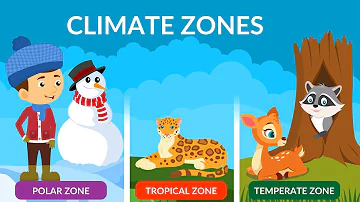
Climate Zones of the Earth Weather and Climate Types of Climate Zones 3:53

Climate Zones of the Earth Weather and Climate Types of Climate Zones

learning junction

361.4K مشاهدة · 5 yr ago

What Factors Determine the Climate Influences on Regional Climate 9:52

What Factors Determine the Climate Influences on Regional Climate

Miacademy & MiaPrep Learning Channel

42.1K مشاهدة · 3 yr ago
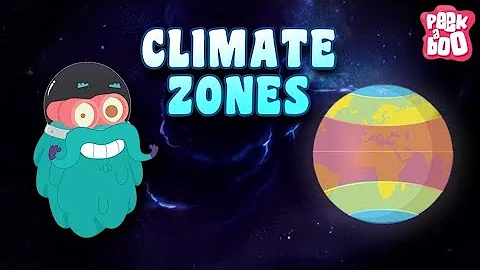
Climate Zones of the Earth The Dr Binocs Show Best Learning Videos For kids Dr Binocs 4:54

Climate Zones of the Earth The Dr Binocs Show Best Learning Videos For kids Dr Binocs

Peekaboo Kidz

2.5M مشاهدة · 8 yr ago

Weather vs Climate Crash Course Kids 1 4:33

Weather vs Climate Crash Course Kids 1

Crash Course Kids

3.9M مشاهدة · 10 yr ago

CLIMATE ZONES explained in 6 minutes 6:23

CLIMATE ZONES explained in 6 minutes

Everything Explained

13.2K مشاهدة · 1 yr ago
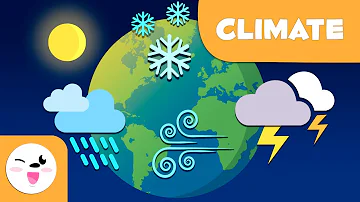
Climate for Kids Types of Climate 5:16

Climate for Kids Types of Climate

Smile and Learn - English

497.1K مشاهدة · 5 yr ago

Climate The Five Major Climate Zones 10:20

Climate The Five Major Climate Zones

Miacademy & MiaPrep Learning Channel

3.7K مشاهدة · 1 yr ago

Climate Zones for Kids Learn about the 3 Main Climate Zones of the Earth 11:31

Climate Zones for Kids Learn about the 3 Main Climate Zones of the Earth

Learn Bright

483.9K مشاهدة · 5 yr ago

Whats the Difference Between Weather and Climate 2:01

Whats the Difference Between Weather and Climate

ARCHIVED - NASA Climate Change

1.5M مشاهدة · 7 yr ago

The Difference Between Weather vs Climate CBC Kids 1:57

The Difference Between Weather vs Climate CBC Kids

CBC Kids

187.1K مشاهدة · 3 yr ago

Weather and Climate 6:20

Weather and Climate

Miacademy & MiaPrep Learning Channel

7.4K مشاهدة · 4 yr ago

Understanding Earths Climates 15:49

Understanding Earths Climates

Next Generation Science

46.1K مشاهدة · 1 yr ago

Climate Zones Climate Change and Permaculture 4:57

Climate Zones Climate Change and Permaculture

Oregon State University Ecampus

92K مشاهدة · 10 yr ago

Exploring the Major Climate Regions of the World 4:25

Exploring the Major Climate Regions of the World

The Digital Classroom Experience

28K مشاهدة · 1 yr ago

Weather vs Climate 4:40

Weather vs Climate

Mike Sammartano

392K مشاهدة · 6 yr ago

How Weather Works Part I 12:44

How Weather Works Part I

It's Just Astronomical!

325.6K مشاهدة · 5 yr ago

Climate Types Major Climate Zones and Their Weather Patterns 8:02

Climate Types Major Climate Zones and Their Weather Patterns

Miacademy & MiaPrep Learning Channel

37.5K مشاهدة · 3 yr ago