Earthquakes 101 National Geographic

👁 1 مشاهدة

Earthquakes 101 National Geographic

النص الكامل للفيديو

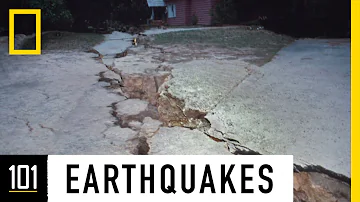
from above the planet appears eerily still but every mountain range and every chasm on its face is scar with many telling story of when the earth rumbled to life earthquakes occur around the world they've been recorded on all seven continents but most quakes take place in just three regions the mid-atlantic ridge an underwater line that runs down the Atlantic Ocean the alpide belt which stretches from the Mediterranean to Southeast Asia and the circum-pacific belt which traces along the edges of the Pacific Ocean and is where about 80% of all earthquakes occur these areas experience the most earthquakes due to what lies beneath the surface earthquakes are the result of pressure specifically pressure caused by extreme stress in the Earth's crust that stress can be caused by volcanic activity or even man-made activities in certain areas however most earthquake inducing stress is caused by the movement of tectonic plates tectonic plates are constantly moving either against away along or underneath each other but sometimes their edges may catch and stick the plates however continue to move or at least attempt to energy from this attempted movement fields around the edges sticking point creating immense pressure until the edges are forced to let go and the plates slip this causes sudden and powerful release of energy so powerful that it breaks the Earth's crust this fracturing emits shockwaves through the ground and causes intense vibrations or quakes in fact the world's most earthquake-prone regions are where the most geologically active plates meet earthquakes or any seismic activity are recorded by seismographs when the ground shakes seismographs oscillate drawing jagged line to reflect this movement the more extreme the earthquake the greater the height of the jagged line these recorded motions are then used to measure the earthquake strength or magnitude while several scales of magnitude exist the one seismologist prefer is the moment magnitude scale it has no upper limit and it measures earthquakes logarithmic ly this means that each magnitude on its scale is ten times greater than the one before it unlike the now rarely used Richter scale the moment magnitude scale can be applied globally and can measure quakes of the highest magnitudes the largest recorded earthquake occurred near Bolivia Chile in 1960 nestled within the circum-pacific belt the Valdivia earthquake was the most powerful in series of quakes that struck the region measuring at magnitude of about 9.5 in addition to causing devastating tremors on land the earthquake also generated deadly tsunami reaching up to 80 feet high the tsunami raced across the Pacific Ocean hitting faraway countries like the Philippines and Japan in fact data from seismographs showed that the shock waves emitted by the Valdivia earthquake continued to shake the entire planet for days some earthquake prone areas have adapted various ways to protect their communities buildings and bridges are designed to sway rather than break when an earthquake occurs the public is educated on how to protect themselves during seismic event and government officials enact drills to ensure the protection of their people earthquakes can leave behind incredible devastation but these same forces have also created magnificent features with each adding character to planet so unique
Earthquakes 101 National Geographic 2:39

Earthquakes 101 National Geographic

National Geographic

1.5M مشاهدة · 15 yr ago
Earthquakes 101 National Geographic 2:57

Earthquakes 101 National Geographic

National Geographic

2.3M مشاهدة · 10 yr ago

National Geographic Reading Explorer 3 Unit 4 Earthquakes 101 3:03

National Geographic Reading Explorer 3 Unit 4 Earthquakes 101

Easko

1.3K مشاهدة · 4 yr ago
Understanding Earthquakes National Geographic 2:58

Understanding Earthquakes National Geographic

National Geographic

418.2K مشاهدة · 16 yr ago

Volcanes 101 National Geographic en Español 4:47

Volcanes 101 National Geographic en Español

National Geographic España

40.1K مشاهدة · 5 yr ago

Earthquakes 101 National Geographic 2:39

Earthquakes 101 National Geographic

National Geographic

100.2K مشاهدة · 14 yr ago

¿Cómo se origina un terremoto Nat Geo 3:00

¿Cómo se origina un terremoto Nat Geo

National Geographic Latinoamérica

10.4K مشاهدة · 8 yr ago

Earthquakes 101 National Geographic 5:02

Earthquakes 101 National Geographic

CVDPN

18.7K مشاهدة · 2 yr ago

Video Earthquakes 101 National Geographic 1:03

Video Earthquakes 101 National Geographic

Sharad Kadam

2.2K مشاهدة · 12 yr ago

Tsunamis 101 National Geographic 2:43

Tsunamis 101 National Geographic

National Geographic

2.1M مشاهدة · 10 yr ago

The Worlds Most Destructive Earthquakes Explained 50:35

The Worlds Most Destructive Earthquakes Explained

Progress - Science Documentaries

47.7K مشاهدة · 8 mo ago

Strongest Earthquakes in History National Geographic Documentary 43:11

Strongest Earthquakes in History National Geographic Documentary

Discovery Documentary

488.1K مشاهدة · 9 yr ago

Volcanoes 101 National Geographic 4:59

Volcanoes 101 National Geographic

National Geographic

31.6M مشاهدة · 6 yr ago

Volcanoes 101 National Geographic 2:29

Volcanoes 101 National Geographic

National Geographic

859.4K مشاهدة · 10 yr ago

Earthquakes for Kids STEM Learn why earthquakes happen and how to measure them 6:14

Earthquakes for Kids STEM Learn why earthquakes happen and how to measure them

Learn Bright

1M مشاهدة · 3 yr ago