Jupiter place of colossal storms deadly radiation and captivating Beauty Powerhouse whose mass is so great it influences even the sun itself Jupiter is fast becoming one of the most studied objects in our solar system with seven flybys two orbiters with one still in operation today and two additional planned missions there is so much to know about the fifth planet from the Sun what causes its distinctive red coloration what is it made of What Lies Beneath its obscuring clouds what do we know about its Great Red Spot Jupiter holds vital role in protecting our solar system and it's time to delve into its Mysteries I'm Alex molan and welcome to astram join me today as we explain every you could want to know about Jupiter the fifth planet from the sun Jupiter is found on the outskirts of the asteroid belt and sits between the orbits of Mars and Saturn it is 778 million km away from the sun on average or 5.2 astronomical units and completes an orbit every 12 earth years the axile tilt of the planet is small only 3° this means it doesn't experience much change in Seasons unlike Earth and Mars and very much like Saturn its radius at the equator is greater than at the poles it is massive Planet the largest in our solar system it is so massive its mass is thousandth that of our sun that might not seem like lot but once you realize the sun contains 99.86% of all all the mass in the solar system you'll realize that Jupiter equals almost the remainder its mass is 2 and half times that of all the other planets in the solar system combined and this brings about an interesting phenomenon the Barry Center between Jupiter and the sun is actually above the surface of the Sun at 1.68 solar radi from the Sun Center let's talk about bar centers when we think think of an object orbiting another object we don't necessarily think that the smaller object has gravitational influence on the bigger object that's because most of the time the effect is negligible like the ISS orbiting Earth or even Mercury orbiting the Sun but it does still happen baric center is the center of mass between these two orbiting objects or the location in space they both orbit around with Jupiter being the mass and distance from the Sun it is unlike Mercury its effect is far from negligible as Jupiter swings around the Sun both of them do little dance around this Center of mass which is actually above the surface of the Sun let me show you this principle with an example if get heavy object and less heavy object and attach them to the ends of long stick in order for the stick to balance we need to find the center of mass as you can see the center of mass is closer to the heavier object imagine this is the Sun and Jupiter with the stick being gravity and you'll understand how bar Center Works while Jupiter has the greatest mass of any planet in the solar system it's not the densest it is the most massive because it is the largest if Neptune was the same size as Jupiter it would be the most massive massive and if Jupiter was the same size as Earth Earth would be over four times more massive as it is though the diameter of Jupiter is 11 times that of earth and its total mass is 318 times more than Earth's as we know Mass affects gravity this means that Jupiter has huge gravity over twice that of Earth at 2528 at its surface the gravity of Jupiter is so influential in the solar system that it affects every planet to one degree or another its gravity is strong enough to tear asteroids apart and capture 67 moons at least some scientists think that Jupiter destroyed many celestial objects in the ancient past as well as preventing other planets from forming one example of this in particular is for Vester scientists even predict the gravity of Jupiter is so significant around the solar system that it is perturbing Mercury's already eccentric orbit enough that in few billion years the tiny planets May either crash into the Sun or be ejected from the solar system all together at the moment though it could be the hero of the four inner planets without Jupiter acting as cosmic vacuum cleaner it wouldn't be sucking up dangerous objects like long period comets or perturbing their orbits enough to give them little kick of energy so that they leave the solar system all together Jupiter is the fifth planet from the sun and it's five times further away from the Sun than Earth even so it can be the third brightest object in the night sky after the moon and Venus just want to show you how bright that is just using handicam we can see Jupiter quite easily in the night sky with maximum magnitude of - 2.94 it can actually cast shadows as result of it being so obvious in the sky it makes very nice Target for amateur astronomers as consumer telescopes have improved in recent years it's amazing what details you can see from your back garden and what makes these famous patterns the cloud layer is only about 50 km thick and contains ammonia crystals much like on Saturn but the coloration comes from compounds heating up from deep within Jupiter and then Rising these compounds are known as chromophor and when they reach the clouds they interact with the UV light of the sun to create these spectacular multicolored bands this is quite the cycle though and the face of Jupiter can change dramatically over time even if their colors do change the actual latitude of these bands remains consistent enough to be given identifying designations but they can vary in width over the course of time lots of Storms and turbulence occur where these bands meet and it is the reason and engine behind Jupiter's very famous Great Red Spot this storm is huge it can easily fit the diameter of Earth within it it has existed for as long as we've known since it was first discovered in the 17th century it might very well be permanent feature of the planet but interestingly it has decreased in size since observations began the reason for its reddish color is unknown and the color of the spot can vary greatly from brick red to Almost White the most recent theory for its color is chemical compounds being broken up by the UV light from the sun much in the same way as the process that happens on the rest of the planet the storm is actually much higher up in the atmosphere than the surrounding clouds and as result can interact with the sunlight lot more this would explain why its color can be much stronger than anything else around it but Jupiter doesn't just have one scientifically interesting storm another storm known as red spot junr formed when three storms merged into one between the years of 1998 and 2000 and it has so far pass unscathed by its bigger neighbor and is now quite prominent feature of the planet it could last for another couple of hundred years if it avoids the same fate of similar storm which passed right through the heart of the great red spot so what do we think Jupiter is made of well much like Saturn under the atmosphere are Gus then liquid and their metallic forms of hydrogen the further into the planet you go the greater the pressure becomes under immense pressure hydrogen acts as metal and beneath that is an ice or rocky core because we can't recreate on Earth the immense pressures Jupiter experiences we don't really know what properties these materials have at the core roughly 90% of Jupiter is thought to be hydrogen 10% helium and then Trace Amounts of methane ammonia and others Jupiter rotates very fast faster than any other planet completing rotation in only 10 hours but due to it not being solid it doesn't rotate the same speed all over rotation at the poles taking 5 minutes longer than at the equator as child was very curious why Jupiter wasn't star considering Jupiter is so massive plus it is predominantly made of flammable hydrogen surely someone just needs to throw match in to set it to light well the sad news for my inner child is that stars don't really work that way plus there's barely any Oxygen on Jupiter to allow for combustion stars produce their heat from nuclear fusion caused by the extreme pressures found at the stars core current thinking is that Jupiter would need to be roughly 75 times more massive than it is now to be massive enough to be star although interestingly its volume is isn't too far off from the smallest known Red Dwarf and yes you may have noticed in this picture Jupiter does indeed have rings nothing on the scale of Saturn but there are four planetary Rings the main ring is very thin but very bright the rest quite wide but exceptionally faint the main ring is about 6,000 km wide and the only distinctive feature you will see is what is known as the Met this Notch something else to note about Jupiter is its remarkably strong magnetosphere it is 14 times stronger than Earth due to the planet's liquid metallic hydrogen Center this makes it the strongest magnetosphere of any planet in the solar system and is only beaten by the sun's sunspots there are couple of reasons why this is really interesting the first is that magnetospheres channel solar wind into the planet's pole which produces magnificent Aurora the second is that the four biggest moons of Jupiter are protected from this solar wind because they orbit within the magnetosphere this implies they don't need their own strong magnetospheres because Jupiter is doing that for them however this doesn't mean they are safe from radiation Jupiter has powerful radiation band around it the same radiation band that has crippled any probe that went through it the closest large moon to Jupiter IO passes right through the heart of this radiation band receiving 3,600 Ram per day on the surface for point of comparison anyone exposed to this much radiation would be dead within 4 hours not the best home away from home then when it comes to the Jovian moons I'll only very quickly talk about them because have made set separate video about them here Jupiter has 67 known natural satellites 51 are under 10 km in diameter but the largest the Galilean moons are some of the biggest in the solar system they are IO Europa ganam and Kalisto and they are all interesting in their own right ganam is actually the biggest moon in the solar system and has greater diameter than that of Mercury and with this final thought take look at Jupiter through the infrared demonstrating the immense size and power of this planet this dot at the bottom of the planet is the impact of an object from space which if it had HD earth could have spelled the end of our planet as we know it we can be glad Jupiter is there not only for its beauty but because in so many ways it is an asset to our soul system thank you so much for watching this far did you learn something today about Jupiter you never knew before and what planet remaster would you like to see next on this channel for this series let me know in the comments below and I'll see you next time think most of us know what the planets look look like in the visible light spectrum Saturn's pale golden color Jupiter's red bands and colorful clouds and Neptune's dark blue hue however light is emitted or reflected by planets in wavelengths beyond our eyes capabilities like Infrareds and UltraViolets and often what we can see in these wavelengths is actually far more valuable to scientists than simply how planet would appear to the natural eye that's because certain things that are invisible to our eyes might be very visible in infrared or ultraviolet or vice versa and if we want to know what substances are found on planet the electromagnetic spectrum can help us again I'm Alex molan and you're watching astrum and in this video want to focus on what we've seen through more of the electromagnetic spectrum on Jupiter and some of its moons and how this different approach may give you new perspective on the largest planet in our solar system just as point of comparison let's first look at how Jupiter appears in natural light the various spacecrafts that have passed Jupiter have revealed it to be beautiful planet you will immediately see lot of the main Cloud deck of Jupiter invisible light these are not water clouds like on Earth but rather ammonia ice clouds if you look closely you can start to perceive the different altitudes of these clouds the dark narrow regions are actually Shadows cast by the tall lighter colored clouds it seems like the higher in altitude these clouds are the lighter they become which be seen in the highest altitude popup clouds in this region which are snowy white the process behind the different colors in Jupiter's atmosphere isn't completely understood but it's believed to be caused by the upwelling of compounds that originated deep within Jupiter suddenly becoming exposed to the UV radiation from the Sun as they lift up to the highest altitudes in Jupiter's atmosphere these compounds begin to darken eventually sinking back down again into the lower altitudes but as you can can see Jupiter's ammonia Cloud deck is opaque we can't see through it if visible light was the only wavelength of light we could work with the vast majority of Jupiter would remain complete mystery luckily we also have instruments that can see beyond our eyes capabilities and in certain wavelengths of the infrared we can see Jupiter in completely new light perhaps the most striking is to observe Jupiter using the 4.68 Micron wavelength as this shows the heat of the planet very interestingly in this view taken by the ger Observatory it is the lower altitude reddish bands that are the brightest you see Jupiter actually emits more heat than it receives from the Sun it is Contracting in size which Heats it up this heat eventually makes its way out of the planet through the cloud deck the heat escapes easiest where the cloud deck is thinnest which is why features like the Great Red Spot and the white bands invisible light are dark in this image luckily we aren't just limited to dis view of Jupiter either thanks to the Juno spacecraft that is in orbit around Jupiter right now viewing Jupiter's poles in infrared again scientists were able to create 3D map of the incredible vortices that are found there Jupiter's North Pole has nine seemingly constant vortices eight in square shape revolving around large one found right in the center again you'll notice that it is the lowest altitude regions that are emitting the most heat because this wavelength only reveals heat the haze and shadows in the atmosphere don't block The View as much as you would get invisible light meaning it can give us an unprecedented view of the 3D structure of these vortices it's still pretty cool here for Earth standards even the yellow sections are only -3° with the darker higher altitude regions being - 83° and because because the heat is coming from Jupiter itself this view is available to Juno night or day it isn't reliant on sunlight storms can show up in infrared before they are noticed invisible light too look at this comparison taken by Hubble these near Earths siiz storms located beneath the cloud tops are much warmer than the ambient surroundings indicating that internal heat does play big role in generating atmospheric disturbances and while we're on this wave length let's also have quick look at Jupiter's volcano Moon IO unsurprisingly io's night side is totally lit up by the volcanic activity on its surface making it very easy to identify new volcanoes and to keep track of the ones we already knew about Juno has had several looks at IO each one revealing it to be hive of activity truly hellish yet intriguing World in fact all of the Galilean moons have been examined in infrared but using specific wavelengths which can reveal different things for instance here is the Galileo probe's infrared view of Europa in the 1.5 Micron Water band when viewing an object through this particular wavelength we can see locations where water is present the deep blues in the image are the locations of the purest water ice whereas other colors indicate mixture of water ice with other minerals this is called spectroscopy where you can ascertain what molecule are on planet without actually having to land there you see when white light reflects of certain atom or molecule that molecule will absorb band of light and reflect the rest if we analyze the missing light band we can know what the molecule is so think of this image less as photo but rather as graph of data indicating locations of certain molecules colors arbitrarily chosen by scientist to represent the data for instance if we look at this image showing the absorption band for sulfuric acid it is the brighter regions this time that show where the abundance of sulfuric acid on euroba is this abundance is found around the surface's cracks so it may come from the ocean below the crust but it's also found on the trailing side of Europa seen on the top left of the image it seems that as Europa orbits it is bombarded by sulfur ions incredibly this sulfur probably originated from the eruptions of IO volcanoes if we look at crater on Kalisto infrared data has been overlaid onto visible light image Reds indicate more water ice Blues show less this is pretty interesting as this is one of the highest resolution infrared images we have of body around Jupiter this image only being 200 km across it adds lot of information you wouldn't get from the visible light image namely there's concentration of water water in the crater but ring directly around it where no water is present and then water appears again in this Ray system coming away from the crater the icier regions come from the impactor exposing the ice beneath the surface but while there's ring between the center crator and the debris from the ray system is bit of mystery perhaps the icy debris from the impact didn't start hitting the ground until it reached this distance out in any case this image shows that non- ice materials only make up thin layer on the top of the surface of Kalisto and what does Jupiter look like through certain bands of infrared this image is really interesting the top left and right images are taken in 1.61 and 2.73 microns respectively in these bands we can see the cloud deck similarly to what we can see inv visible light however in the middle we are looking only through 2.17 microns the absorption band of hydrogen as we know Jupiter is predominantly hydrogen meaning the hydrogen in the atmosphere suddenly becomes opaque and visible in this wavelength in fact the only features still visible are the really high altitude clouds the ones that poke through most of the hydrogen in the atmosphere the bottom left image is the 3.01 Micron band where there is some absorption but not as much at this band it is methane and ammonia that are absorbing the light bottom middle is at 4 4.99 microns giving us another heat map and bottom right is false color combination of all five images which is what you see happening If Ever show false color image in one of my videos now you know what these false color images are trying to show the last interesting view of Jupiter want to show is in the ultraviolet absorption spectroscopy in the ultraviolet isn't super useful in planetary astronomy the only time can think of it being actively used on Jupiter was to track the impact of comet Shoemaker Lev 9 back in 1994 there the dust absorbed lot of the UV sunlight and so scientists could easily track winds in the planet Stratosphere by watching the evolution of these features however molecules that are hot enough will emit light in lots of different wavelengths and there is bright source of light coming from Jupiter in ultraviolet and infrared it's auroras Jupiter's auroras are extremely powerful compared to the ones on Earth and are permanent feature on the planet Hubble which can see in ultraviolet has been tracking Jupiter's auroras for years although the best views have come from Juno in the infrared simply due to Juno's orbit taking it over the planet's poles whereas Hubble's viewing angle makes observations difficult these auroras are strongly influenced by the magnetic field environment of Jupiter streaming particles into its upper atmosphere plus from the flux tubes between it and its moons so there we have it look at Jupiter in very different way than what you may be used to and as you can see absorptions and fluoresence through spectroscopy can help us understand planet far more than what only visible light can reveal we can determine molecules and minerals observe planet's heat map and view Aurora interacting with the planet's magnetosphere everything together helps us get more complete picture of how planet works and why it behaves the way it does what more videos about this for the other planets let me know in the comments Below in July of 1994 scientists around the world watched in amazement as the comet Shoemaker Levy 9 smashed into Jupiter the impact's blast was so powerful that it Unleashed force equivalent to 300 million atom bombs for 6 days Jupiter was throttled by 21 separate impacts from the Comets fragments which produced Giant glooms of debris that Rose 3,000 km above the cloud tops an impressive feat considering Jupiter's immense gravity and heated Jupiter's atmosphere to temperatures reaching 30,000 de at the moment of impact the comet was traveling at blistering speed of 216,000 kmph with its largest fragment spanning 2 km in diameter the impact raised huge clouds of debris that were visible for months and left scar in Jupiter's atmosphere spere more prominent than its great red spot now collisions of this magnitude aren't entirely unheard of our solar system is littered with evidence of major impacts from comets and asteroids scientists believe Earth was hit by massive asteroid at the end of the Cretaceous Period which likely led to the extinction of the non-avian dinosaurs but these events are extremely rare meaning the chance to see one in action is once in a-lifetime Opportunity so what did it look like and does the incident shed light on the odds of similar event happening here on Earth I'm Alex molan and you're watching astram join me today as we relive the biggest planetary explosion ever witnessed from space and unpack what it taught us about Jupiter and planetary collisions in 1993 astronomers Carolyn and Eugene Shoemaker and David Levy were conducting research at California's Palomar Observatory when they discovered periodic Comet that had been captured by Jupiter's gravitational pull periodic means that the comet has an orbital period of fewer than 200 years this was unusual as most comets in the solar system orbit the sun however Jupiter is so massive being the largest of the eight planets by far that its ability to capture other objects approaching its orbit isn't surprising lot of Jupiter's irregular moons are likely captured asteroids and comets that have since burned off their volatile material on their surfaces but this Comet also had other unusual characteristics for one it was big so big that scientists think that the frequency of similar impacts is 1 in 6,000 year occurrence but the comet was also fragmented most likely torn apart by Jupiter's tidal forces on previous approach most striking of all however was his highly eccentric orbit eccentricity measures the deviation of an orbit from circle with zero being the value of perfect circle and one being the upper limit of when an elliptical orbit becomes hyperbolic Shoemaker Lev 99's orbit had an eccentricity of over 0.998 in other words extremely eccentric almost immediately astronomers realized there was possibility the comet would collide with Jupiter but their suspicion turned into certainty once they collected more precise Data before long astronomers knew the impact would occur sometime in July 1994 and pretty soon the whole world was waiting for the event with baited breath anticipating SL 9's impact astronomers monitored its movements from The kek Observatory Germany's rossat x-ray telescope and NASA's Hub Space Telescope among other instruments but when the first of the Comets fragments hit on July 16th 1994 the worst case scenario occurred it looked like we would miss the spectacle you see sl9 trajectory meant the impact would occur on the side of Jupiter facing away from us that meant none of Earth's high power telescopes were in position to view the initial impact for scientists this would have been crushing disappointment but as luck would have it not all our cameras were located here on Earth by sheer chance NASA's Galileo spacecraft launched in 1989 was only one year out from Jupiter at the time of SL 9's Final Approach it just so happened to be in perfect position to record the impact as it happened but Galileo wasn't our only helper from afar the ulyses spacecraft which had been launched in 1990 to monitor the sun was also pointed at Jupiter and even NASA's Voyager 2 located 44 astronomical units away was programmed to monitor radio emissions from the crash site with his ultraviolet spectrometer each Pro paused its own missions to work together on this to help us witness an extraordinary event shortly after fragment impacted Jupiter Galileo saw massive Fireball erupt reaching as high as 24,000 de its plume quickly Rose 3,000 km which would make it as big as Australia from north to south this was surprising scientist hadn't expected to see Fireballs in the aftermath of the Collision few minutes later masses of ejected debris plummeted back towards Jupiter's surface and burned up again turning Jupiter's atmosphere into raging furnace before long Jupiter's rotation brought the impact site into view of Earth allowing high power telescopes like Hubble to view huge Dark Spot on Jupiter as it happens Jupiter's rotation is fast with days that last only 10 hours contrary to what you might think larger planets tend to have shorter days than smaller ones the comet's impact set off shock waves which rippled across Jupiter's dense atmosphere at the speed of 4 450 m/ second and all this was just from the first impact for 6 days between July 16th and July 22nd the Comets fragments bombarded Jupiter the largest coming on July 18th when fragment hit its impact alone produced blast 600 times more powerful than the world's entire nuclear Arsenal leaving huge dark spot one Earth diameter across however as spectacular as the initial impact was the comet's aftermath proved just as valuable by studying the clouds of debris scientists gained an unprecedented window into Jupiter's atmosphere and its movements in addition they caught neverbe seen glimpse of Jupiter's composition beneath its dense Cloud tops as spectroscopic readings were able to identify material that had been splashed upward by the comet's impact they detected diatomic sulfur and carbon disulfide and heavy elements like like Silicon iron and magnesium interestingly they also detected substantial amounts of water something they weren't necessarily expecting in fact one of NASA's Juno probe's primary objectives is to locate where this water is hiding in Jupiter's atmosphere however one of the more disturbing implications of the impact was the realization that large celestial bodies could still hit planets one school of thought theorized that major Comet and asid collisions had been lot more frequent earlier in the Solar System's existence but Shoemaker Lev 9 made it clear that very destructive collisions were still possible had it happened by chance and we witnessed an extremely rare event or does it happen more than we thought remember we've only had the technology to see this kind of event within the last 80 or so years if comet as large as sl9 were to crash here on Earth it would lead to the extinction of most life on the planet this had dramatic effect on our Collective psyche as anyone who lived through the '90s can attest it was also wakeup call for NASA and for various defense agencies before sl9 the term planetary defense didn't exist but in its wake NASA took up the mission of monitoring near Earth objects or NEOS with the goal of identifying upwards of 90% of asteroids in our Celestial neighborhood greater than 1 kilometer in diameter having achieved this goal NASA is now well on its way toward identifying asteroids greater than 140 but before you stay up all night worrying be aware that these events are undoubtedly rare and there is perhaps one other aligning to SL 9's impact you see Jupiter is massive planet with powerful gravitational influence and since it is also one of the outer planets some scientists now think it might act as cosmic vacuum cleaner of sorts we know that Jupiter gets approximately 2,000 to 8,000 times as many cometry impacts as Earth so perhaps one of the reasons extinction level impacts are so uncommon here on Earth is that Jupiter had been magnet for these kinds of comets and asteroids this argument has even become part of the rare earth hypothesis which suggests that Earth is host to unique set of conditions without which the evolution of complex life would be impossible not everyone agrees with this hypothesis though and in any event was still long way from proving it so while we might not know the exact likelihood of massive Comet or asteroid hitting the Earth the impact of sl9 with Jupiter has certainly Advanced our understanding of these events moreover it was without question spectacular moment that treated watches to one of the most impressive action scenes ever witnessed by human eyes maybe one day we'll have the chance to see something bigger but hopefully from not too close while there have been other explosive events like the 2022 Tonga volcanic eruption for now the winner is clear the biggest explosion ever seen on planet is Shoemaker L9 and by comparison the competition looks like drop in the bucket while the planets get lot of the attention in school and by space agencies agencies there are smaller less known worlds in our solar system that are just as interesting four of them are known as the Galilean moons Jupiter's four largest moons considering they are so close together they are fascinating because they are so different you have volcano Moon moon that has one of the best chances of containing life out of anywhere else that we know of the biggest moon in the solar system and an ancient scarred Moon whose surface can be traced back to the solar systems very beginning I'm Alex molan and you're watching asram and in this video we will go through the special worlds one by one and do deep dive into what makes each one so unique by the end of this video I'm sure you'll understand why they will be the subject of two missions this decade from both NASA and Issa we'll start with the innermost Moon IO let's get to know the context of IO little better Jupiter has 79 moons that we know of so far there's few that orbit close to the planet in and around the planet's rings beyond that are four large moons known as the Galilean moons named after Galileo who discovered them in 1610 from innermost to outermost these moons are IO Europa gamid and Kalisto Beyond them are The Irregular moons of Jupiter all of which are much further out than the previous Moon IO orbits very close to Jupiter only 350,000 km above Jupiter's Cloud Tops This Means from io's surface Jupiter would appear 39 times bigger in the sky than our moon IO orbits Jupiter in only 42.5 hours compared to our Moon's monthly orbit at some points in its orbit the tidle Bulge on iO is thought to be up to 100 this effect is similar to what we see on Earth with the ocean tides being caused by the moon although on Earth the effect is much more minimal the tides only usually shifting about 2 from high to low IO is getting 300% more tidal force exerted on it in comparison to our moon on us because of its close proximity to the biggest planet in the Solar System Jupiter and the other big moons in the system don't allow the moon's orbit to be any less exent Centric meaning IO isn't going to be getting any rest bite anytime soon day on iO is the same as its orbital rotation which means that IO is tidily locked to Jupiter just like we can only see one face of our moon from Earth only one face of IO can ever be seen from Jupiter IO is pretty big moon although it is the second smallest out of the Galilean moons it is comparable in size to Earth's moon and shares similar density meaning it has similar amount of gravity but interestingly it does have the highest density of any other moon in the solar system one of its many unique features another is that it is composed of mainly silicate Rock and iron similar to the terrestrial planets and our moon in comparison to most other big moons in the solar system which are made of water ice and silicates IO in fact has the least amount of water of any known body in the solar system its core is likely to be made of iron or iron sulfides surrounded by silicate Rich mantle and crust the core is not thought to be convec in though as no magnetosphere has been detected around the moon the mantle is thought to be liquid near the crust and is at least 50 km thick this is where all the volcanism originates which brings us to perhaps the most interesting part about IO the hundreds of huge volcanoes all over its surface before the 197s we didn't know much about IO at all although telescopes were starting to pick up hints that the moon was devoid of water and that it may have surface of sulfur the first mission to see IO in any kind of detail was Pioneer 11 although the quality was still not great what it did detect however is that IO was made of silicate Rock and not water ice and that it has thin atmosphere Pioneer 10 was also meant to take some close-up shots of IO but this was lost due to Jupiter's radiation interfering with the onboard command system the radiation Pioneer 10 went through was 10,000 times stronger than the maximum radiation around the earth the next missions to Jupiter were the Voyager one and two missions in 1979 Voyager 1 flew by at distance of only 20,000 km and was able to take some impressive closeups of IO surface what it saw was remarkable landscape full of vibrant colors and total absence of impact crators it found mountains taller than Everest as well as volcanic pits hundreds of colomet wide and what look to be lava flows most notably however was the presence of plumes coming from the surface this proved that IO is volcanically active and it is still the first and only place this has been visibly seen beyond Earth not including cryo volcanoes Voyager One also confirmed that the surface of IO is covered in different sulfur frosts this is what gives IO its many spectacular colors it founds that it is these sulfur compounds that dominate the atmosph spere for to two also saw IO in July of 1979 but was much further away at 1 million km although it still saw seven of the nine plumes Voyager one saw in March which meant those volcanoes had likely remained active throughout those four months the really interesting images came about with the Galileo spacecraft that arrived at Jupiter in 1995 the spacecraft wasn't especially designed to study IO but it was able to acquire some of the highest resolution images we now have of its surface sadly though Galileo never worked at full capacity as it had quite few mechanical malfunctions which means we could have had even better images had it been fully operational what it was able to see though were plumes from many volcanoes as well as confirming the volcanoes were erupt in Sulfur and silicate magmas similar to what we have on earth except the magma on iO is also rich in magnesium the surface of IO is spectacularly colorful the yellow ples are composed of mainly sulfur the white areas are mainly fresh sulfur dioxide frosts towards the poles the sulfur is damaged by radiation which can be seen as the poles appear redder than the rest of the planet in other places the colors of red are the deposits left by volcanic plumes that reached hundreds of kilometers above IO the most obvious deposit is from the volcano Pelle sadly an inactive volcano when Galileo was around but Voyager 1 was able to see massive plume when it passed by in this image this plume is 300 km tall and 1,200 km wide in other words roughly the size of Alaska interestingly though the source of lava flows on Earth are typically the depression you would normally see at the top of volcanoes but these depressions are not found on high peaks on iO instead you have these Lava Lakes with high walls along the outside here is Loki the largest volcano depression on iO 200 km in diameter these legs are directly connected to the lava Reservoir below but usually have thin layer of solidified crust on top on average Loki produces 25% of the average heat output of IO but sometimes the crust on the Lava Lake sinks back into the lake causing Loki to produce 10 times more heat than normal this can especially be seen in one of io's other big volcanoes tasa normally this area looks like this but here the crust is seen falling into the lava lake in this image where there is just white the radiant energy from the lava curtain was so intense that the camera only registered white in 2007 New Horizons used Jupiter as gravity assist on its way to Pluto it also used the opportunity to test its equipment it focused its lens on iO during its flyby and what it saw was amazing tashar the volcano just mentioned was in full eruption and the plume could be seen hundreds of kilometers above io's surface you can also see smaller eruptions around the Moon must admit this is one of the most impressive things I've ever seen of space even though the volcanoes tend to be flat it also has some extremely tall mountains the highest one reach in 18 km tall these mountains tend to to be completely by themselves not as part of ridge or range although most are not volcanoes Lava Lakes are found near them indicating there are faults in the crust near these mountains another of the unique aspects of IO is its interaction with the magnetic field of Jupiter Jupiter has an extremely large and strong magnetic field and IO orbits within some of the strongest sections the unusual thing about this interaction is that when particles from some of io's thin atmosphere and its eruptions are lost to space these particles float in orbit around Jupiter in what is known as neutral Cloud This Cloud can extend far beyond and behind the orbit of IO but also surrounding Jupiter is something known as plasma Taurus donut of ionized particles that follows the rotation of Jupiter's magn magnetic field the plasma Taurus rotates lot faster than io's orbit at 70 km second compared to iio 17 km second orbital velocity IO orbits right through the middle of it with the particles from the Taurus bombard in the particles in the neutral Cloud exciting them to higher energies these newly ionized particles feed into the Taurus attracted by the magnetic field lines of the magnetosphere these particles are lost from the neutral Cloud into the plasma Taurus at rate of about one ton of matter per second which greatly increases the size of Jupiter's magnetic field in fact if it was visible Jupiter's magnetosphere would be about the same size as the moon in our Sky io's interaction with Jupiter doesn't end there Jupiter's magnetic field lines which IO crosses couple io's atmosphere and Neal Cloud to Jupiter's polar upper atmosphere by generating an electric current known as the io flux tube flux tube is basically concentration of magnetic field lines the sun has these between sunspots and it's very visible on the sun because of the charged plasma that flows between them io's flux tube causes an aurora Trail around Jupiter's poles this point here is the flux tube from IO striking the upper atmosphere of Jupiter Aurora are also visible on iO although they are not just limited to the poles the different colors represent the different particles being ionized green is sodium red is oxygen and blue from sulfur Europa one of the most exciting moons in the entire solar system it is beautiful world filled with with Mysteries this is the first ever closeup image of Europa taken by the Pioneer probe back in 1973 since then we've had the Voyager and Galileo probes explore the moon and with each visit Europa has never failed to surprise us we are yet to solve lot of europa's puzzles but there are many things that we are starting to piece together let's first of all see where Europa fits into the Jovian system Europa is the second and smallest of the four Galilean moons although it's still the sixth biggest moon in the entire solar system just behind Earth's moon with diameter of about 3,000 km it takes Europa 3.5 days to orbit Jupiter once interestingly the first three Galilean moons IO Europa and ganam are locked in 421 orbital resonance due to their gravitational influence with each other this orbital resonance and the constant gravitational tugging from the other moons keeps the orbit of Europa from ever becoming completely circular due to europa's slight ecliptical orbit the magnitude of the gravitational force acting on it from Jupiter increases and decreases as it orbits this creates tides that stretch the moon's surface these forces are significant as they have big influence on the moon's appearance and what goes on under the surface europa's surface is made predominantly of water ice as you can tell it looks very remarkable and distinctive due to these long continuous fractures and cracks these are called lineer which translates to lines in Latin these lineer are often only about 1 to 2 km wide but can extend for thousands of kilometers across the moon's surface we aren't sure how or why these linear are formed at present but the most likely theory is that as the crust pulls apart from tidal flexing warmer material from beneath fills the Gap in similar fashion to the ocean ridges on Earth in this image taken by the Galileo spacecraft you will notice some dark brown spots they are very small only about 10 km across and they are known as lenticula they are also believed to be formed by the upwelling of hot less dense material to the surface either by pushing the existing crust up or by breaking through altogether should the underground material have broken through what we can then see are these strange unusual terrains called chaos terrains they are really rough patches surrounded by rather smooth surface these spots are expected to be soft and may contain significant information about what's under europa's surface which we will get to later in the video data from Galileo also indicated that europa's equator may be covered in icy spikes called penitentes these vertical cracks may be up to 15 high and will have formed from direct overhead sunlight on the equator interestingly penitentes are found on Earth too in dry regions at high altitudes although nowhere near as large as on Europa despite being roughly the age of the solar system Europa barely has any craters Europa has less than 50 major craters whereas the Earth's moon has more than 5,000 craters with diameter above 25 km this indicates that europa's surface is constantly changing and reforming models suggest that europa's surface is only about 30 to 180 million years old which is very young in geological terms additionally europa's icy surface is the smoothest surface of any known solid celestial object in the entire solar system its icy crust also has an albo or light reflectivity of 0.64 one of the highest of all the moons europa's albo makes it five times brighter than our moon the surface is bombarded by constant and intense blast of radiation from Jupiter the radiation level at the surface of Europa is equivalent to dose of about 5,400 MZ per day exposure to radiation at that level would be enough to kill human in single day the reddish brown color spread across the cracks and fractures of the moon is believed to be due to salt and sulfur compounds mix in with water ice and then Modified by Jupiter's radiation recent study from JPL suggests that Europa might even glow in the dark energetic ions from the radiation penetrates the surface which would energize the molecules beneath which would make them release energy as visible light unfortunately we cannot see europa's Dark Side from Earth as we are between it and the sun always so we are going to have to wait for future missions to Europa before we can prove this radiation received from Jupiter plays significant role in europa's atmosphere as well Europa has very tenuous atmosphere composed primarily of oxygen andlike on Earth the oxygen on Europa is formed by radiolysis or in other words the process of radiation bump barding the water ice surface separating the H2O into oxygen and hydrogen hydrogen escapes europa's gravity alt together because it's so light whereas lot of the heavier molecular oxygen Remains the hydrogen and oxygen that escape europa's gravity form disperse neutral Cloud which follows the orbit of Europa around Jupiter in 2012 the Hubble Space Telescope discovered plumes of water vapor around erupting from europa's South Pole this image suggests that the water plumes rise up to 200 km from its surface in 2018 astronomers found additional evidence of water plume activity on Europa when they looked back at the old Gallo data with new data analysis technique dedicated Mission studying these plumes can also help us understand what's inside the moon without having to land on it because what may lie underneath that solid ice surface is perhaps the most fascinating thing about Europa there is likely to be global Ocean between Rocky manle and the water ice crust the first clue that this amazing ocean world was hidden under its surface was provided by the Voyager and Galileo probes in 1979 and the late 1990s respectively between these missions there was drastic change in the magnetic field of the Moon which is not possible unless there is some electrically cond inductive fluid beneath its surface europa's crust also indicates the presence of liquid layer beneath it as it rotates with an angle of 80° which is not possible if the crust and Rocky mantle were mechanically attached instead it is likely that the icy crust floats on the ocean and it is believed to make one full rotation around the Moon once every 12,000 years the fact that this ocean is not attached also explains the multitude of lineer on the surface tidal flexing should cause lineer to form at specific points on Europa not all over however because the position of the crust changes over time and one spot never stays in the same place for long hence why more and more linear form Europa is 780 million km away from the sun which is five times further away than the earth that makes the sunlight about 20 five times fainter here as such Europa or any other moon in the Jovian system for that matter barely receives any heat from the Sun so unsurprisingly it's cold enough here that the surface is Frozen in fact europa's surface temperature averages about -60° at the equator and- 220° at the poles keeping europa's icy crust as hard as Granite however tidal press presses exerted on the moon as it orbits Jupiter Heats europa's core so geothermal activity from the core should keep the subsurface ocean in liquid state this ocean is believed to be under only 15 to 25 km of solid frozen crust the ocean itself is probably about 60 to 150 km deep interestingly Europa is only 1/4 the diameter of Earth although it may contain twice as much water as all of Earth's oceans combined what's most interesting about europa's ocean is that scientists believe that it is in contct with europa's silicate Rocky mantle this makes europa's ocean as suitable environment for Life as we know it to exist we believe that life requires water minerals and energy to form and Europa seems to have all these requirements from the evidence we've seen so far scientists are extremely confident that this ocean not only exists but that chemical reactions can take place there and that there is enough tidal energy heating the core that geothermal activity may exist on this Ocean's floor as we have seen on Earth whole ecosystems can exist in such places far from the Sun's light so for now Europa is one of the most likely places we can find life outside of Earth now NASA's Europa Clipper spacecraft is scheduled to launch in 2022 and is likely to reach the Moon by the end of the decade it is scheduled to perform more than 42 flybys of Europa Issa is also working on their own spacecraft called juice or Jupiter icy moons Explorer which will explore Jupiter and three of its largest moons ganam Kalisto and Europa juice is also scheduled to launch in 2022 and is also likely to reach the Moon by the end of the decade these probes are specifically designed to examine europa's water water plumes an atmosphere NASA is also planning Europa Lander Mission but this mission is going to launch well after the Europa Clipper Mission these missions will help us know more about Europa and hopefully confirm the answer to the most tantalizing question of all does it and can it sustain life at the very least these missions will give us new perspective of our solar system and help us understand how it works so there we have it almost every anything you could want to know about the fascinating world of Europa ganam the third of Jupiter's Galilean moons the largest moon that we know of and home to the largest water ocean in the solar system but there's something else that sets gamed apart from anything else we've seen before this Jovian giant contains an intrigued mystery buried deep beneath its surface there are 79 different moons of Jupiter and ganam is the third of group known as the Galilean moons ganam is the largest of these four with an impressive diameter of 5,268 KM for point of comparison this is 0.41 times the size of Earth's diameter and 1.02 times greater than the previously thought to be largest moon Titan it initially appeared bigger because of its thick atmosphere which stretches hundreds of kilometers into space ganim's volume is even 26% larger than Mercury's although it doesn't contain as much mass ganim's average density is 1.9 per cm cubed compared to Mercury's 5.4 this is because of its composition like Europa ganam surface is thick crust of water ice extending 150 km deep underneath which is believed to lie vast ocean of liquid water and when say vast it really is because while mercury has very little water and is rich in dense Metals the abundance of water on ganam reduces its average density the ocean of ganam is so big that it contains more water than all the oceans and seas on Earth and it is estimated to be 100 km in depth on average 10 times deeper than the deepest point in our ocean all of this water means that ganam is only 50% Rock the rest being water and small amounts of metals and other ices this seems appropriate to me as the name ganam comes from the classical mythology where Zeus or as the Romans called him Jupiter claimed young boy called ganam and took him to be cup Bearer for the gods it seems fitting that the moon ganam would also carry so much water around for Jupiter interestingly ganam has an atmosphere that can contains oxygen now you might be wondering with all this water and an oxygen atmosphere is it possible that life exists on ganam while it's certainly possible there are some features of ganam that make this unlikely to begin with the oxygen atmosphere is very thin it is estimated to be somewhere between 0.2 to 1.2 micr pascals or about 100 billion to 500 billion times less than Earth's atmospheric pressure at sea level that would be impossible to breathe and while our own planet earth has certainly demonstrated that ecosystems can flourish in the depths of oceans without sunlight to sustain it there could be big problem that prevents this from happening on ganam this is because the ocean of ganam is so deep that water down at its bottom would likely be compressed back into an ice through sheer pressure life in the deepest parts of our ocean can survive thanks to minerals being ejected from geothermal vents with such thick ice layer between the core and the ocean it is unlikely that this would occur on ganam Europa ganim's neighboring moon is considered more likely candidate for life because of this however if ganim's ocean is salty which there is an increasing amount of evidence for it could change the interior makeup of ganam drastically models suggest that with salty ocean it could be that there are multiple layers divided by sheets of ice if this is the case the most internal layer could indeed be in contact with the rocky core increasing the chances of Life existing there but underneath ganim's ice and water exists something else truly surprising something that scientists do not have an explanation for somehow ganam is producing magnetic field the magnetic field of ganam was first discovered by scientists in 1996 when the Galileo spacecraft began series of flybys of the icy Moon the big indicator of magnetic field is the presence of auroras and Incredibly auroras were detected in ganim's tenuous atmosphere not only that but as Hubble studied ganam over an extended period it became clear that these auroras didn't wobble as much as expected likely result of something known as magnetic friction in salty water ocean under the surface magnetic field is significant as it the feature on Earth that shelters the planet from solar radiation enabling all life to flourish the field around ghami does not completely protect it from such radiation being tucked within Jupiter's incredibly powerful magnetic field and radiation belt means it's still getting pelted with lot of radiation gamine surface still has about 5 to8 REM enough to make human severely ill or dead in Just 2 months but it's still better than its closer orbiting neighbor moons scientists are not quite sure why this magnetic field is here at all our planet's core is hot and malten convection currents within it move electrons which in turn produces the magnetic field that surrounds us here however this shouldn't be happening on gamed gamed is smaller than Earth and given its size and composition scientists believe that the core should have cooled down enough by now that it should be solid Mass not liquid this would prevent electron moving through convection and would prevent magnetic field and none of the other moons of Jupiter have magnetic field in fact ganam is the only moon in the entire solar system that has one so what's going on scientists do not know for sure but the answer might lie in ganim's incredible relationship with its planet and neighboring moons and process known as tidal heating ganam orbits around Jupiter roughly once every 7even days in an eccentric orbit this means that at some points of its orbit it's closer to Jupiter than at others when an object comes under strong gravitational force it will stretch in the direction of that Force as mass is pulled in the direction of gravity however the further an object gets from the source of gravity the more it will compress back to its original shape as ganam has an eccentric orbit around Jupiter it is constantly coming under more and then less gravity and is constantly stretching and Contracting have you ever pulled and stretched blue tack repeatedly in your hands before pushing it back to ball shape then you might have noticed that after while it gets surprisingly warm this is because stretching produces friction as the material rubs up against itself and on the scale of moons and planets this friction adds up tidal Force creating heat through friction is known as tidal heating on top of that in process find fascinating has formed an orbital resonance with two of its fellow Galileo moons IO and Europa in what is called laas resonance for each time ganam orbits Jupiter Europa will orbit exactly twice and IO exactly four times this mathematically precise configuration has not happened by coincidence but is evidence of the moon's gravities pulling on each other and the whole system attempting to conserve the resulting momentum however it means that ganam is constantly being by its neighbor's gravity and is under lot of gravitational stress so perhaps tidal heating is warming up ganam enough that its core remains liquid after all helping it to continue to produce its magnetic field scientists do not know for sure but it would perhaps explain why the surface of ganam is so interesting you may have noticed that ganam surface is split into large dark regions that cover about third of its surface and lighter regions that make up the other 2/3 through examining the number of impact craters on these two sections scientists can tell that the dark regions are actually older than the lighter ones as they contain more craters the lighter regions might have fewer craters but they do contain long ridges and grooves up to 700 high and thousands of kilom long truly an impressive sight but again scientists are not sure how these ridges formed one explanation is that tidal forces is stretched out the surface of the Moon in an unstable period of ganim's ancient history perhaps this same tidal Force could have also warned ganim's core and preserved its magnetic field whatever its cause the magnetosphere of ganam has been instrumental in helping scientists understand the composition of the Moon by measuring the areas that Aurora appeared in ganim's atmosphere scientists were able to confirm the existence of ganam subsurface oceans all without having set foot there and as for the rest of ganim's mysteries maybe juice the Jupiter icy Moon Explorer will find us the answers the EA spacecraft is set to launch in 2022 and though it won't reach orbit around ganam for another 10 years after that is to investigate the inner workings of number of Jupiter's moons including ganam until then we may have to let ganim's Mysteries remain just that mystery Kalisto despite the fact it is the third largest Moon that we know of think the majority of people would be hard pressed to say any facts about it at all is it just boring world or do we simply not know much about it actually we know more than you may first assume and it is far from boring let's start with where it fits into the Jovian system Kalisto is the third largest moon in the entire solar system and it's just smaller than Mercury at 4,820 km across however while its diameter is only 58 km less than Mercury's it is only 1/3 of the mass of the planet meaning it's less dense and its gravity is lot weaker it is the second largest of the Galilean moons and orbits Jupiter much further out than the other three taking 17 Earth days to do so at an average distance of 1.9 million km even at this distance it is still tidily locked with Jupiter meaning the same side of Kalisto always faces its parent planet however it does mean that it is not locked in an orbital resonance with the other three moons nor do we believe that it ever was Kalisto has very tenuous atmosphere composed of carbon dioxide and possibly oxygen too although oxygen has never actually been detected yet we know however that the atmosphere is so thin that the molecules contained within it do not Collide and theoretically basically the atmosphere should be Stripped Away by atmospheric loss processes in Just 4 years scientists believe that kalisto's crust is replenishing the Lost atmospheric particles through sublimation of carbon dioxide surface ices evidenced by some interesting surface features now the surface of Kalisto is one of the most ancient in the solar system with evidence placing it at over 4 billion years old you'll immediately notice the speckled nature of Kalisto it's surface is completely covered with various sized impact craters more so than any other object we've observed in fact it's close to saturation any new crater will probably just overlap another one at this point without any geological activity cratering is perhaps the only process that has vastly been impacting kalisto's appearance over its lifetime why is kalisto's surface so old compared to lot of other bodies in the solar system well on geologically active planets like Earth there are processes that can erase almost all evidence of past impacts Earth has one of the least created surfaces in the solar system because so much happens on its surface it has weather water plants volcanism tectonic plates and human activity these act together to break apart wear down and lift up the ground even other Jovian moons like Europa or IO have comparatively fewer craters thanks to the tidal forces which cause geological activity on their surfaces this doesn't happen with Kalisto Kalisto does not show any signs of geological processes such as volcanism or plate tectonics and so its surface has remained intact after all these years limited tidal forces and thus no geological activity impact Kalisto in another very unique way there are no mountains to speak of on its entire surface when Kalisto initially formed at the very beginning of the solar system it was likely an ocean world that has since frozen over and apart from the bombardment of meteors it has stayed exactly the same ever since so let's have look at some of these craters because some of the biggest are truly impressive structures this is Asgard the second largest impact crater on Kalisto measuring 1,600 km in diameter and this is Valhalla the largest multi- ring impact crater in the entire solar system with diameter of 3,800 km it's these craters that add to the unique appearance of Kalisto as they contain more rings than craters anywhere else with these craters the impactor was large enough that it may have completely punctured the thin crust with it eventually refreezing over in the light patches you see in the middle zooming in on these middle regions you'll notice they have mtle appearance there seems to be big difference in contrast between the bright knobs and the darker plane these regions are lot less crated than the rest of kalisto's surface which would make sense if the plane truly is refrozen Surface likely making it two billion years younger than the rest of Kalisto the Rings are likely fractures in the crust concentric failure in the brittle shell of the Moon interestingly though within the Rings these bright knobs are still still visible so what are the knobs well they are believed to be the degraded remains of the millions of crater rims from kalisto's past we don't know exactly why they have degraded so much over time but perhaps it's due to micrometeor impacts or simply the ice is slowly sublimating over time they are brighter than the lower Plains because the Rocky dead brief from the meteors and micro meteors will have fallen down the knobs over time leaving the Pure Ice exposed at the top smaller impact crators are also fascinating due to their uniqueness most impact craters are shallower on Kalisto compared to our moon for instance the Luen impact structure it's well over 100 km wide however it's only 600 deep this could be because the impactor was breaking apart before it impacted causing more of spread out shotgun effect on the surface or it could be that the surface has since leveled off from other larger nearby impacts that have occurred later on this crater is believed to be over billion years old at least yet you can still clearly see the ejector that is streamed away from the impact clear evidence of how unchanging this remarkable moon is with some craters like har crater there is even large Dome found in the Middle with typical large impacts on other worlds you will see few concentric rings and bed peak in the center this is very much the case on our moon however Kalisto has some remarkable examples of large craters where just the opposite happens look at Tinder here instead of peak there is actually pit in the center why does Kalisto have such unique crators it could be due to the fact that kalisto's crust is not just brittle but pretty thin too with either soft ice or salty ocean underneath estimates put the crust at 80 to 150 km thick the Galileo space probe which spent several years around Jupiter spent significant chunk of its time aptly studying the Galilean moons Galileo found that Jupiter's magnetic field could not penetrate through Kalisto implying there is highly conductive layer under the surface at least 10 km thick this couldn't have happened in ice or silicat unless the ice layer is at least partially molten or very very large temperature gradients can be maintained below the ice to create conductive effect data also suggests that Kalisto has small silic core at its center with radius of about 600 km which begs the question can Kalisto be conducive to life like other icy worlds with water mantel under their surfaces well Life as we know it requires liquid water and energy to exist Kalisto might have an ocean of liquid water under its surface but being about 800 million km away from the Sun it barely receives any heat from our Star and the absence of tidal forces doesn't help either leaving radioactive elements the only source of heat to warm this subsurface ocean if it exists and unfortunately even visiting Kalisto won't prove anything moons like Europa and Enceladus have vents ejecting water directly from their subsurface oceans meaning we can investigate habitability prospects without ever going into the oceans themselves no such vents exist on Kalisto so scientists would have to penetrate the crust in order to find out all these things combined mean that unfortunately scientists think that the environmental conditions necessary for Life appear to be less favorable on Kalisto than on any other icy worlds nevertheless Kalisto shouldn't be ignored if we ever go to explore the outer solar system kalista would make perfect base you see orbiting at distance of 1.9 million km from Jupiter means that Kalisto is located Beyond Jupiter's main radiation belt making its environment thousands of times more conducive to human exploration than its inner moons Kalisto also has lot of water ice that can be used for propellent production and of course is the staple to keep humans alive separating the hydrogen from oxygen also leaves oxygen for breathing geological stability would make for building structures on the surface relatively WorryFree and the lack of huge mountains or deep trenches means it's faster easier and more efficient to travel over from Kalisto we could better explore the inner Jovian system from safe distance or use it as way station for heading further into the outer solar system lifting off from Kalisto would be ideal thanks to its low gravity and you could get gravity assist from close flight by of Jupiter it's true that this is futuristic Prospect although if we ever do become space fairing species this is distinct possibility now while Galileo did an admirable job studying Kalisto during its few flybys there is still lot of information gaps that need to be filled with any luck we'll get that from the European space agency's Jupiter iy moon Explorer due to launch in 2022 which will reach the Jovian system by 2030 and will explore Jupiter and three of its largest moons ganm Kalisto and Europa Issa has planned several close flybys of Kalisto during this Mission this Mission might provide more insight into questions like does it have subsurface ocean and if so does it or can it sustain life beyond that there's also the questions we haven't thought to ask yet who knows what more we will still discover about this incredible Moon so there we have it almost everything you could want to know about the Galilean moons of Jupiter on the 5th of July 2016 Juno successfully arrived at Jupiter and inserted itself into polar orbit this means Juno has spent the last year Gathering data around the biggest planet in our solar system so what has it actually seen was it worth all the fuss of getting this orbitor to Jupiter in the first place well take look at few of these breathtaking pictures and then you tell me of course Juno isn't just an expensive camera and has been performing several different scientific experiments as well and the results have completely changed the way we understand the solar system and Jupiter so what has Juno been doing it's in highly perpendicular orbit which brushes over the planet at its closest approach only 4,200 km above Jupiter's atmosphere the furthest point takes Juno out over 8.1 million km each orbit takes 53 days to complete and it will complete 12 orbits by the end of its mission in July 2018 at the time of making this video Juno has completed Parov 6 or its sixth closest approach so about halfway through this Mission as Juno is in good health it could be that his mission is extended Beyond 2018 one of the reasons Juno approaches so close to the planet is to avoid Jupiter's powerful radiation belt there is gap where the planet ends and the radiation belt starts and Juno exploits that there was some concern that Juno would still get huge dose of radiation from the parts of the radiation belt it does hit but the radiation was actually 10 times lower than expected in these parts great for the health of the probe do you remember the previous Jupiter probe Galileo Galileo faced number of setbacks due to the damage received by Jupiter's radiation as its orbit went right through the middle of the radiation belt so Mission planners were Keen to avoid repeat of that as much as possible another advantage of the tiny distance from Juno to Jupiter at its closest approach is that we've been able to see Jupiter in un unprecedented detail the first images of Jupiter's poles in particular took people's breath away some even say that scientists would not even even recognize the planet from these images just no one expected what they saw what you're looking at here of many Cyclones around the South Pole what is remarkable is that the planet looks so different from what we're used to seeing on Jupiter namely large bands however the contrast of the image has been increased to see details the natural eye would see something more like this this image is also mosaic of several images in order to show daytime on all sides of the planet the North Pole isn't quite so clear as it's in Winter and some parts of the pole are in constant night Juno also has the capability to peer deep into Jupiter's atmosphere using micro wave radiometer which was designed specifically for this spacecraft using it scientists were able to see the amount of ammonia in the atmosphere what they didn't expect to see was this band of ammonia around the equator ammonia being Orange in this image the pillar drops down from the cloud tops over 350 km the limit of what the MWR can see scientists are very puzzled by this as they expected to see an even distribution of ammonia throughout the planet they thought the gases in the atmosphere would just mix up or at least stick to the band pattern on the planet but these results are far from then this shows how variable the planet is under the top layer of clouds previously scientists had predicted that Jupiter had solid core but using the gravity science instrument it seems lot hazier or fuzzier than they would have anticipated this could imply the core is not solid it's dissolved or it doesn't exist at all and it may be while yet until we understand the truth about this point when all the microwave radio wave and magnetic field data have been combined to give more complete picture speaking of the magnetic field the results from this also came as surprise to scientists in some places the magnetic field was stronger than they expected and in others they were weaker these patches you see also imply the magnetic field is being generated above the core of the planet as it's quite irregular perhaps originating in the metallic hydrogen layer the magnetic field as we know creates Aurora and Juno has an infrared Aurora mappa giving us view of Jupiter's Aurora like we've never seen before the central band in this animation is the main Aurora and this moving point to the left is caused by the closest of Jupiter's Galilean moons IO the tale of the point point is the remnant of I's orbital motion the whites and greens from this image are iron strike in Jupiter's ionosphere from space and the Reds could be ions coming from the planet itself if this is the case this has never been observed before most of the data collecting takes place but only few hours per orbit as Juno whizzes by the planet all the instruments collect as much as possible during this time including the camera this REM video is time lapse of Jupiter approaching the Northern Hemisphere and leaving again as it looks towards the Southern Hemisphere and this image is collection of all the frames that were used in the video as Juno approaches the planet you can see the storms around the North Pole and gradually The View shifts to the mid latitudes zooming in on some of these shots we can see the classic Swirls and patterns we expect on Jupiter but having really close look we can see these white specks these specks are actually water or ammonia ice clouds as can be seen by the Shadows they create they are higher in the atmosphere than the rest of the cloud layer and although they look small they actually over 50 km wide Jupiter is just really big so it looks small now you've noticed them once you'll start to see them everywhere due to the freezing cold temperatures at this altitude where the clouds are and because they are made of water ice it could very well be snowing on Jupiter remarkably we are still learning so much about our giant neighbor you might have thought that because it's the closest and biggest gas giant we would have pretty good understanding of his mechanics it seems with the arrival of Juno however we still have lot to learn and there's probably questions we don't know yet let alone answers don't know where the time has gone but it's now been 3 years since Juno arrived at Jupiter during this time it has been collecting valuable and insightful data about the largest of our neighbor planets it has recently completed parove 21 or its 21st polar orbit out of total of 35 planned orbits which means we are now well past the halfway point of this Mission some of you veterans to this channel will remember the video made about Juno at its one-year mark but what has it discovered since then and has it disproved some of the assumptions we had about Jupiter from before it arrived I'm Alex molan and you're watching astram and together we will go through everything Juno has discovered and seen around Jupiter so far there was some skepticism about whether Juno would last this long due to the intense radiation around the planet but Juno is currently in good health it's po orbit takes it very close to the planet only 4,000 km above its atmosphere meaning it avoids most but not all of Jupiter's plasma Taurus or this region of extremely energized particles particles which have been trapped in place by Jupiter's powerful magnetic field but thankfully Juno quickly discovered that the radiation where it orbits was lot weaker than initially expected this means that even the camera is still up AAL which was one of the first instruments expected to go Juno completely surprised scientists though by discovering another small and less powerful radiation belt right above the equator which hugs the planet tightly so far the mechanisms behind this radiation belt are unknown however although the radiation exposure hasn't been as bad as scientists expected due to the nature of Juno's orbit every passing parove takes it more more and more into the main radiation belt meaning Juno certainly can't last forever emper of 35 is currently when Mission controllers believe the mission will be forced to end whereupon they will crash Juno into Jupiter to avoid any future collisions with Europa the charge particles in the plasma Taurus come particularly from the volcanic activity of Jupiter's largest moon IO which blasts particles into orbit around Jupiter just to give you an idea of how volcanically active IO is this was New Horizon's view of IO as it passed by Jupiter on its way to Pluto the tashar volcano in full eruption Juno has also had look at IO in the infrared the hot spots indicating where volcanic activity is occurring IO ejects one ton of particles into orbit around Jupiter per second as IO travels through the plasma Taurus and interacts with Jupiter's magnetosphere this causes flux tube to exist between the planet and the moon flux tube being an electric current that travels along cylindrical tube of magnetic field lines it is very powerful it can develop 400,000 volts and 1 million to 5 million amps of current Juno was able to get very accurate readings of the flux tube during its 12th orbit as it passed directly through it no this didn't fry the spacecraft as the flux tube has large diameter and so it isn't concentrated enough to do damage to the craft also Juno was in and out in matter of seconds now Juno is massive spacecraft 20 in diameter and it really has to be as it is solar powered spacecraft and only gets 4% of the sun it would do around Earth this means even though these panels are huge it can only generate just above 400 watts but you'll also notice that this design paired with the fact that Juno rotates makes it look little like fidget spinner this isn't just to make pretty spinning spacecraft Juno was specifically designed to detect various fields and particles around Jupiter and having spacecraft with large spinning radius helps with that this is particularly evident with this instrument here the magnetometer found at the end of one of the solar panels tasked with mapping out Jupiter's magnetic field through Juno's data we now have highly detailed map of Jupiter's magnetic field which is only getting more accurate with every passing orbit as expected Juno confirmed that Jupiter has dipole likee magnetic field although it is not very aligned with the rotational axis what was very interesting though is that scientists discovered something called the great blue spot region on Jupiter where the magnetic field is very concentrated comparing Juno's magnetic field data with previous Jupiter missions like pioneer Voyager and Galileo has also revealed first for the solar system Jupiter's magnetic field structure has been found to change very gradually over time which is called secular variation interestingly this was most apparent around Jupiter's Great Blue Spot this variation is thought to be driven by region right at the base of Jupiter's atmosphere which we'll get to in bit combination of the powerful magnetic field and the charged particles in the plasma Taurus means that Jupiter has the brightest Aurora in the solar system with radiant power of 100 terawatts like Earth Aurora appear as bands around the North and South Poles but unlike Earth these Aurora are mainly visible in the ultraviolet and are mainly produced from alternating currents not direct currents when Juno measured the power generated from the direct currents in Jupiter's magnetosphere it was nowhere near enough to account for the brightness of the Aurora leading scientists to speculate that the remainder of the power is coming from alternating currents at this time it is believed that these alternating currents are produced because of the turbulence in the magnetic field especially at the North Pole the magnetic field lines are much more complex which interferes with direct flow of currents this is evident When comparing the North and South Pole Aurora at the North the Aurora is much more dispersed looking more like filaments and flares whereas at the South Pole where the magnetic field lines are smoother the Aurora seems to be more structured and round what you will also notice is this bright spot and tail in the Aurora this is visibly where the iux tube meets the planet what is less apparent though are these other spots these are from the other large moons in the Jovian system Europa and ganam so while not as powerful as io's flux tube these other moons have their own flux tubes connecting them to the Planet Too the magnetic field of Jupiter brings us nicely to one of the main science goals of Juno to figure out the interior of Jupiter since Juno arrived previous theories have had to be completely thrown out the window by the data it is collected previously it was thought that there was solid core and then sharp cuto line between the core and the next layer the metallic hydrogen layer the cloud layer was then only thought to be few hundred km deep at most but based on the Juno data the atmosphere of Jupiter extends to 3,000 km down and beneath this is an ocean of metallic hydrogen going all the way down to the center and even if there is core it is very fuzzy potentially mixing up with the metallic hydrogen layer so actually to call Jupiter gas giant is bit disingenuous as 80 to 90% of its radius is believed to be liquid now or technically an electrically conduc in plasma perhaps similar in appearance to liquid mercury here the pressure is so great that the hydrogen doesn't retain its molecular structure with two combined protons and electrons and instead they separate at meaning positive and negative charges can move about becoming an electrically conducting substance we say believe as we haven't been able to recreate metallic hydrogen in lab conditions yet the pressure needed is millions of times greater than the atmospheric pressure of Earth although we assume this must be the case due to Jupiter's powerful magnetic field to create magnetic field of this strength the Dynamo must originate in an electrically conducting substance can't be denser metal like iron in Earth's core because Jupiter doesn't have the density for that in fact based on its density we know that it must be made primarily of hydrogen and smaller amounts of helium very similar in composition to the sun another factor for the strength of the magnetic field is due to the rapid rotation of Jupiter one day on Jupiter only lasts about 10 hours various forces from this stir the liquid up which generates the Dynamo it is the rotation of the magnetic field from which we can measure day on Jupiter as simply viewing Jupiter's visible bands couldn't give you definitive result and this is why you'll notice these bands look very peculiar moving in opposite directions from each other at different speeds but this isn't so unusual if you consider the invisible jet streams on Earth what is striking though is the colors and turbulence found in these bands so let's try and understand what's going on from examining these Juno images the cloud layer you are seeing here is the ammonia Cloud layer some are white these represent fresh clouds likely only recently pulled up from the deeper parts of the atmosphere on the other hand while the red colors you see are also ammonia clouds these clouds have interacted with UV light from the sun think of it like photochemical smog the reddish smog you see in summer over large cities the coloring substance isn't exactly known but simply put the longer it is exposed to the Sun the redder it gets interestingly though comparing these bands to what you see at the poles you'll notice it is lot Bluer here this could be because UV light doesn't reach here as easily compared to the equator looking closely you'll also notice what is known as popup clouds initially these were thought to be maybe water ice clouds but they could be ammonia clouds too they are potentially the precursors for thunderstorms on Jupiter the radio wave instrument on board Juno does detect lightning on Jupiter however these storms are interestingly more localized towards the poles than at the equator and more towards the North Pole than the South Pole the cause for this is unknown looking closely at Jupiter you'd be hard pressed not to notice the stunning vort vortexes and storms across the planet Juno has had the opportunity to orbit directly over the great red spot where it discovered something very interesting it was known that the Great Red Spot Rises high above the cloud deck but what scientists didn't expect is How Deeply it penetrates Jupiter's atmosphere the instrument on board Juno designed to peer into the atmosphere has range of 350 km and it seems the Great Red Spot extends down even further than that also interesting is that the spot is cooler than the surrounding area up until depth of 80 km and beyond that it actually gets warmer than the surrounding area this heat perhaps driving the storm it has been theorized that the Great Red Spot is permanent feature on Jupiter but we've only had about 400 years to observe it so far mere blink in astronomical time scales looking over the poles other possible permanent features have been observed in contrast to Saturn which has hexagon on one pole and single Vortex on the other Jupiter has five vortexes around the South Pole and eight around the north it's hard to say exactly how permanent these storms are as Juno has only been there for 3 years and Juno was the first time we have really been able to have good look at Jupiter's poles but they have been reasonably constant throughout that time under the ammonia Cloud layer it's thought to be water ice Cloud layer although this is not been confirmed as this layer hasn't actually been seen yet this is one of the science goals of Juno though and it has several microwave detectors to try and find this elusive substance Jupiter generates heat from within which can be seen through an infrared camera the densest parts of the cloud layer blocking some of the heat from being visible similarly Jupiter also emits microwaves which hypothesized water clouds would absorb so in theory Juno should be able to detect where the water is present in Jupiter's atmosphere by searching for where Jupiter's microwaves aren't visible although this data has either not been released or nothing has been found yet all that being said Juno still has while to go with this Mission and no doubt the data it collects will be examined for years to come our understanding of Jupiter is gradually increasing and with this knowledge comes better understanding of how our solar system formed and also that of other solar systems with Jupiter sized worlds and who knows maybe Jupiter will surprise us few times more yet it's been 6 years since Juno began orbiting Jupiter during that time the probe has been busy gathering incredible images and data from the gasas GI giant Veterans of this channel may remember videos released on the mission's first and third anniversaries but lot has happened since then in 2021 Juno began its extended Mission beyond the initially planned 37 orbits to include flybys of Jupiter's icy inner moons gamed Europa and eventually IO it's been over two decade since Galileo visited these moons and by studying changes in them NASA hopes to understand what might be going on beneath their icy surfaces and without letting the cat out of the bag too soon that appears to be lot also thanks to the probe's powerful cameras Juno Cam and its Stellar reference unit navigation camera Juno is taking some of the very best images we've had of these icy moons so with the long running missions end on the horizon as NASA plans to decommission the probe in September 2025 now seems like good time to ask what has Juno seen I'm Alex molan and you're watching astram join me today as we view the stunning highlights of Juno's extended Mission and unpack the surprising discoveries that are already changing our understanding of the Jovian system let's start with quick recap Juno launched from Cape Canaveral Florida in August 2011 after traveling for 5 years and two .8 billion kilm the space probe began orbiting Jupiter on July 5th 2016 after completing most of its primary objectives NASA extended Juno's Mission and set its sights on some of Jupiter's largest moons in total the extended Mission will add 42 orbits or parage joves by 2025 at the end of which NASA will deorbit the probe by burning it up in Jupiter's atmosphere to avoid potentially contam ating those moons this procedure is in accordance with NASA's planetary protection guidelines but it's of special importance in Juno's case scientists have long wondered whether there could be life on Jupiter's inner moons and NASA doesn't want to muddy up any future discoveries that could be made there so on the 7th of June 2021 Juno performed its close flybys of ganam using gravity assist to bring his orbital period from 53 days down to 43 days Juno had already performed distant flyby of ganam in 2019 when it reached proximity of 97,000 KM but this one brought the probe within just 1,000 km of the moon's surface in this Photograph captured by Juno cam you can see nearly half of ganim's total surface in breathtaking detail for reference the resolution is about 1 km per pixel love the crisp rendering of ganim's unique structural features you can practically feel its texture with your fingertips notice how the icy surface is littered with craters light and dark patches and long striations the darker areas show older terrain which is heavily crated whereas the lighter areas are comparatively younger and less crated but what about those long striations we know based on previous data that contains at least one vast salty subsurface ocean beneath its icy outer layer which some speculate could be suitable for life scientists think that these long structural features might reveal faults produced by tectonic movements generated by heat from the moon's iron nickel core but this is subject of ongoing research this image taken from the same flyby on the 7th of June shows ganim's Tross crater in Greater detail the reason it appears so bright is that it's covered in ice here is another image from the 7th of June which find remarkable it's photograph of ganim's dark side and it was taken by Juno's Stellar reference unit navigation camera the Stellar reference unit was designed to keep Juno on course using Starlite which makes it ideal for photographing low light conditions for scale the resolution is between 600 and 900 per pixel again notice the moon's long striations and craters some of which are stacked on top of each other I've seen lot of photos of ganam many of which I've covered previously but I'm flawed by the level of detail Juno was able to capture in such low light conditions interestingly one of the most surprising discoveries from the mission came not from the Orbiter itself but from Hubble yes that Hubble allow me to explain you see to support Juno's exploration of the Jovian moons NASA asked hble to monitor ganim's ultraviolet signals ganam has an atmosphere albeit very thin one and one of NASA's goals was to find traces of oxygen they long suspected was hiding there nearly everyone expected to find plenty of oxygen based on previous analysis of the moon's ultraviolet emissions but much to our surprise ganim's atmosphere had very little oxy in it what they found instead was whole lot of water vapor this discovery led to significant revision of our model of ganam atmosphere and could suggest that water vapor might even be present in the atmospheres of icy bodies throughout the solar system after visiting ganam Juno made its flyby of Europa on the 29th of September 2022 which gave the probe gravity assist that shortened its orbit to 38 days here is dramatic image from the flyby taken at distance of 351 km it shows portion of Europa just north of the equator what find extraordinary here is the day night boundary known as the Terminator the Deep Shadows really accentuate The Ridges troughs and craters that riddle the moon's surface showing it in almost threedimensional relief scientists think that Europa like anamed Harbors vast ocean beneath its ice exterior but new findings suggest there could be lot more going on than the simple ocean crust model would have you believe what do mean by this well hold that thought as we study the next image this Photograph was taken by Juno's Stellar reference unit camera and shows zoomed in portion of europa's surface it was taken during the moon's night from distance of 412 km with resolution of 256 per pixel this is the highest resolution image that Juno took of Europa at glance your first thought might be what am looking at well what you're seeing is heavily fractured region of europa's surface crisscrossed with grooves and Ice ridges and that oddly shaped dark patch just to the right of Center could yield important Clues as to what's behind this geological complexity scientists believe this darkened area shows an eruption occurring below the surface ice the thing is europa's icy shell is over 10 km thick imagine the pressure needed to penetrate so much ice however new paper published by American Astronomical Society proposes groundbreaking new Theory pardon the pun with different explanation according to the paper's authors europa's cryovolcanic activity shows evidence of brine reservoirs trapped within the icy outer crust this would mean that far above the Moon subsurface ocean there could be Lakes of high salinity brine that slushes about expanding the surrounding ice like balloon and bursting through on occasion it's compelling Theory but to prove it we may have to wait for the European space agency's Clipper Mission which will reach Europa sometime in 2030 know that's 8 years away but it's not too early to mark your calendars let's head back to Jupiter one more time you see while Juno was paying visits to gamed and Europa it also solved big mystery one that goes back more than 40 years when the Voyager Mission first visited Jupiter in 1979 the probes detected mysterious flashes in Jupiter's atmosphere scientists assumed that these were lightning flashes similar to those we see on Earth meaning water would have to be present in all its states solid liquid and gas given what we know of Jupiter's atmosphere this would put the storms at least 45 km below the visible Cloud tops however Juno disproved this Theory and the truth is stranger than we imagined Juno Stella reference unit camera saw something weird nighttime flashes at far higher altitude than we thought possible given the incredibly cold temperatures at this altitude reaching below - 88° science deduced that the storms were made of ammonia water-based clouds phenomenon that doesn't exist here on Earth in these strange and violent thunderstorms the ammonia acts like an antifreeze forming solution of two parts water one part ammonia that remains liquid despite unimaginably cold conditions and apparently as these thunderstorms produce powerful lightning strikes they are raining down massive haill made of water ammonia slush and unusual precipitation that scientists are calling mush balls Jupiter is strange planet and the more we learn the stranger it gets so there we have it some of the best highlights of the trailblazing Juno Mission since we last checked in the next stop for Juno will be IO sometime in 2023 and personally can't wait to see what's in store Juno has vastly exceeded my expectations every step of the way and if ganam and europ are any indication our understanding of IO is about to get whole lot more interesting thanks for watching making this video required some long-term planning and work which we were only able to do thanks to the consistency and sustainability of your memberships as astronauts on patreon huge thank you to everyone who has signed up and if you'd like us to make more videos like this you can join with the link down below when you join you'll be able to watch the whole video ad free see your name in the credits and submit questions to our team once again huge thank you from myself and the whole astrom team meanwhile click the link to this playlist for more asrom content I'll see you next time
14:47
What If You Fell Into Jupiter
What If
1.4M مشاهدة · 1 year ago
23:12
Jupiter Mars Saturn Venus Uranus thru my Huge Telescope
Astrobiscuit
734.4K مشاهدة · 1 year ago
4:17
Train Drops Of Jupiter Tell Me Official 4 K Video
Train
381.3M مشاهدة · 16 years ago
13:30
Jupiter Is Not What You Think
The Space Race
6.6M مشاهدة · 6 months ago
1:01:47
Uranus Trine Pluto Chiron in Taurus Jupiter in Leo June 2026 Astrology Forecast
ASTROLOGY HUB Podcast
11.1K مشاهدة · 11 hours ago
2:31
Venus Mars Jupiter Saturn Planetary alignment 2022 visible to the naked eye Nikon P 1000 zoom

 14:47
14:47
 23:12
23:12
 4:17
4:17
 13:30
13:30
 1:01:47
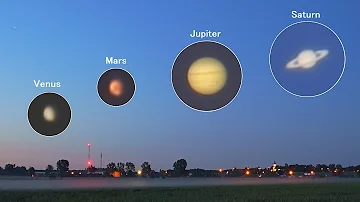 2:31
2:31


