النص الكامل للفيديو
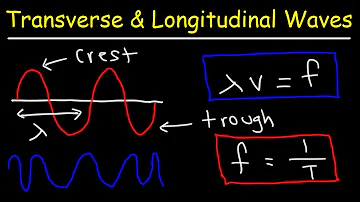
So in this video, we're going to be introducing waves and the various properties and formulas when it comes to describing wave motion. All right. So let's talk about waves. So let's talk about mechanical waves primarily. So mechanical waves, they're they're waves as you think about it's things that will travel along medium. Could be rope, could be water or air. they kind of tend to have these kind of tra you know like think about waves in the ocean where water kinds of spread out or think about like maybe wave on on it could be like string. These are the kinds of things like you you you whip you whip rope and you wave it up and down and it creates like this kind of wave pattern. Okay, so that's that's what we mean by wave or these could be oceans like the waves traveling this way things like that. Okay. So, mechanical waves have physical medium that causes it. Like ocean waves, the physical medium is water. Sound waves, the physical medium is air. Say sound waves, we're talking about waves from sound. Like when the air vibrates, it creates kind of wave. Visually, you know, visually, you can look at it like sine wave, like sign curve. Okay. you can have rope. you can have slinky. You ever seen wave on slinky? like one of those kind of stretchy springs like let me see if have one over here. Like if you have something like like slinky like here and you make it go up and down there's kind of wave pattern that goes that kind of like can travel along along this thing. Right? So if you let me see if can get it to make another wave. Anyway, you get like wave pattern kind of like that. Okay. So there's two kinds of waves we talk about when you have physical medium. You have transverse waves. Transverse waves are the medium moves perpendicular to the direction of the wave. So if you think about like ocean waves for example, if you think about like I'm person floating on the ocean. If you ever been like in wave pool or something like that, you go up and down. You travel up and down. Like if you were just sitting there, you go up and down, but the wave is traveling in this direction. So the physical medium, the water itself is going up and down. And so just again to go with my slinky example like if you this is one's kind of too fast to see but if if cause wave wave travels along this way right but the slinky itself is moving up and down. Okay like that's that's what we mean by transverse waves. So ocean waves waves on rope those are transverse waves because the physical medium is traveling up and down but the wave itself is traveling horizontally. Okay. longitudinal waves is the medium moves in the direction of the wave. So, in the example of my slinky, for example, here is what you can see. I'll see if can do my good job like this. actually, let me get yeah, let me get let me find demo of video that looks that will show you like this longitudinal wave thing. All right. So, here's an example of someone actually using slinky and you can see the longitudinal wave. So what's going to happen is going to create pulse and that creates this little see that thing that's traveling along in there. That's the longitudinal wave. That's because the direction of the wave is the same direction as the actual motion as the vibr as the as the the wave is traveling in the same direction than the medium. And what's happening on on the it's not that the slinky is moving, right? It's just that the slinky is compressing and stretching, right? And so it's the medium itself is moving in the same direction as the wave. So that's what we mean by longitudinal wave. Now what are some properties of waves? So generally when we talk about waves and you think about like think mathematically it's represented by like sign curve and that's because it's easier you know with the rope and ocean waves it's easier to see. Longitudinal waves it's harder to see it this way but they all have the same property. There's couple of things that we look on the sine wave. If you think of as as think of this as snapshot of the wave at particular moment in time, what's going to happen is that wave is going to move left to the right, left to right or right to left, right? It's just going to travel along. So let's pretend that the wave is moving in say this direction. Okay, this is the motion of the wave. But what we're taking right now is snapshot, particular moment in time. It's like I'm it's like I'm recording wave and I'm freezing it at particular moment in time. This is what the wave looks like at this moment. So the wavelength is physical distance. It's kind of like the physical distance between the peaks or the troughs there. That's how long it's physical distance measure. Measured in meters is how far we've traveled along. The amplitude is the vertical distance. There's always sort of like horizontal like like level like neutral position. And the amplitude is how high up the peak of the wave is compared to the in it's like that vertical distance there. Okay, that we call the amplitude. The frequency is the number of waves that pass by point in 1 second. Now, this is you can't visually see on here because remember this is frozen in time. However, if you were to see the wave travel along and you were to think about how much time does it take for the wave to go from there to there, that would be we call the period and and the number of times that happens per second is we call the frequency. Okay, so the period let me maybe the easiest way to think about the period is the time it takes for the peak to travel the wavelength. So the period which is equal we use letter to denote period is the time to travel one wavelength. Okay or it's not the time it takes the wave to travel from there to there because remember the wave is moving and the wave speed is how fast it's going. So one of the things that we think about when we do these kinds of when we're looking at this kind of stuff is the speed at which the wave propagates. Okay. And the the equation that we have here is the speed is the wavelength times the frequency. One way to think about where does this formula come from? The speed is the distance divided by the time. Okay. And we say in one wavelength it travels period. So lot of the times we think about this as our formula here. However, because the period is the time it takes to travel that one wavelength. However, the frequency is one over the period, right? So the one over you know, like you can write as as one, you can write as 1 over And so when you plug it back into there, is equal to lambda So this is key wave equation that we're going to deal with. Okay. The only other property of the wave is generally if we talk about and we don't do lot of analysis on this but the energy of wave is proportional to the square of the amplitude. So the amplitude it's not the period it's not the wavelength or anything like that. It's the amplitude of the wave that dictates for mechanical wave how much energy is in the wave. So the greater the amplitude the greater the amount of energy. So let's go through some examples here. So suppose we have plot of wave function that models wave that travel at 0 and 2 seconds. The dotted line is at 0 seconds and at 2 seconds it's here. So the wave has traveled from there to there in 2 seconds. Basically it's kind of like it's from there to there. Estimate the amplitude, the wavelength and the period of the wave. So the amplitude, so this is as function of distance, right? So the amplitude is the distance from there to there. And that looks like 0.3 The wavelength is the horizontal distance between two adjacent peaks in the wave. So it's from there to there from this peak to say this peak or if you use the dotted lines from there to there. Now we we're going to estimate this. Actually the dotted lines are probably easier to estimate. what would say is you can also measure it from like say this dotted point to here to here because that will give you one whole period right from your trig class like it's one whole side. That's our wavelength there and that looks like it's one meters. the velocity. well, let's get the period first. The period is how long does it take to travel that wavelength. Okay, so we're estimating it here. So, we know that in 2 seconds. So, how many like like it went from here and then 2 seconds later, where is that that position of the wave? It's right it's right here because this is where it kind of starts. So, from let me use different color for that. from there to there is going to be what happened in two seconds. That's far. That's how far that it traveled in two seconds. Okay? So, if we look at the speed of the wave, we say, well, we traveled in 2 seconds. We traveled about 0.65 We'll say 0.65 and that took 2 seconds. Okay? And that's because it went from this. It looked from there to there and it looked like that. So, that's kind of why we say it moved from left to right like that. So that's going to be let me get my calculator. 65 / 2 is going to be 0.325 m/s. So that's the velocity. And then the period there's lot of ways you can do this. 1 / And we know that the velocity is equal to lambda or it's equal to lambda over There's lot of ways you could rearrange this. You could solve for to get the frequency and then do one over that. Or you could just take this the the period move the up and move the velocity is wavelength divided by the velocity. And our wavelength is 1.0 meters and our velocity was 0.325. And so you just do 1 /.325 and get about 3.08 seconds. Okay. So that's kind of how that would work. All right. Now let's talk about wave superposition. This is very common thing and I'm going to pull up this demo to to help you illustrate like what's going to happen here. All right. So the idea is when waves pass through each other they may add. So let's this this this wave is going to be traveling to the left. This wave is traveling to the right. So let's run it and kind of see what's happening here. Now what happens is the wave let's just run it all the way through. Okay. Now what's happening is they're adding on top of each other. And I'm going to pause it right when it gets to the middle here. And when they add, basically the two waves add on top of each other. So there's two things want you to note is when they come together, it's like they're adding on top of each other. Okay? And then but the other thing to observe is that it's like they pass through each other as though the other didn't exist cuz they don't they don't actually collide. They just sort of pass through each other. And you can kind of see this because like if you just look at this wave right here, he's just going to move along as though this guy didn't happen. So when they overlap, they add, but they're also going to pass through each other. They're not going to collide or anything like that. They're just going to pass through each other. Now, when they add on top of each other like this, we call this constructive interference because they're adding. Now, let's say shrink one of these. make it like upside down. Now, what's going to happen when we run is when they add, they're going to cancel each other out little bit. And let's just make them kind of like the same the same amplitude. when they pass towards each other, they'll they'll they kind of cancel each other out. I'll pause it right when it pass through the center. But okay, well, missed it, but right in there. Right. Right in there, they canceled each other out. I'll I'll reduce the animation speed if can just see if you can so you can see little bit slower. Right. And so what's going to happen is once they combine together, we call this destructive interference because the waves sort of cancel each other out. you'll see like the peaks will disappear and they kind of you see there's point where it's completely flat. They completely negate each other and we call that destructive interference. That's how the waves kind of cancel each other out. Okay. All right. So that's what happens here. So let's go through an example of just mathematically how we add this. Now let's suppose these two again the waves move, right? They they they're moving along. But this problem, we're saying, let's suppose these two waves encountered each other. What would the resulting wave look like? Okay? And you're literally just going to add them up together. Okay? So, I'm going to do it in green, or I'll do it in purple to say, and I'll do it on this one. So, here it's going to be zero and zero. And then you're going to have two and two. That's going to go up to four. So, like four up here. And then then you're going to have two plus three. And that's going to be like five. And then right around 5 seconds we're going to drop down to -1 here. So what's going to happen is it's going to go over. So you're I'm just adding them vertically. So up to the 5-second point. Then it's 3 and -1. So that's going to vertically add to two. Okay. Then we go to here. And now we're at -2 and1. So we're going to drop down to -3 to this point. And then after 9 seconds, it's zero here, zero here. You just add them up. 0 plus 0 is going to be zero. So you're just vertically adding the values here. And that's what wave is going to do. And that's what you saw in the visualization, right? Is that vertically it's like the waves just added the values of the waves just added on top of each other like that. Okay. let's take look at this. So if we have two pulse waves each wavelength lambda are traveling towards each other along rope shown when both pulses are in this region between and which are this is lambda part what does the shape of the rope look like? Well this wave here let's make color this wave here looks like this and this wave here when he's in there they look like this. And look at that when you add the values the result is just going to be straight line. It's just going to be horizontal line there because when you put these two waves on top of each other, they're going to completely cancel each other out just for that moment. It's still going to continue on like just but just like in that animation, just for that moment is it kind of frozen there. Thanks for watching. Please subscribe if you haven't already just to like improve the quality of the channel so it shows up more so we can share this out with more and more students out there. the other thing is is if you do need extra help, if you're needing maybe some more practice questions, more guidance on multiple choice questions, we do have program options to help you practice. Also run office hours. answer questions for students, things like that, little bit more just structured guidance. If you feel like you're needing some of that, go ahead and click the description below. There will be link that takes me to takes you to website where you can see about how the different programs operate for all the AP physics and AP calculus programs we run.

 5:08
5:08
 2:57
2:57
 6:40
6:40
 6:19
6:19
 1:37
1:37
 0:24
0:24
 6:08
6:08
 7:45
7:45
 17:49
17:49
 37:55
37:55
 44:28
44:28
 8:35
8:35
 10:24
10:24
 23:25
23:25
 11:58
11:58
 39:04
39:04


