النص الكامل للفيديو
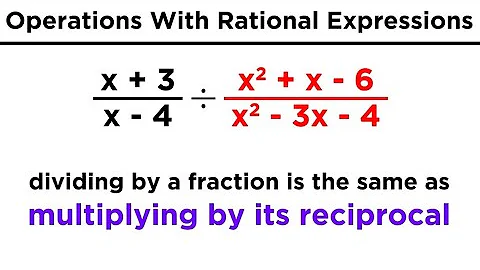
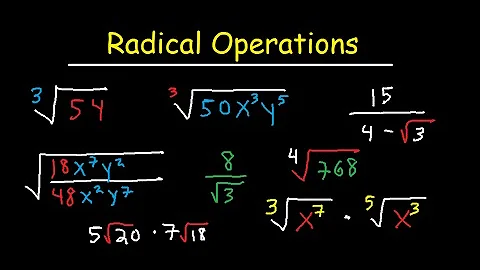
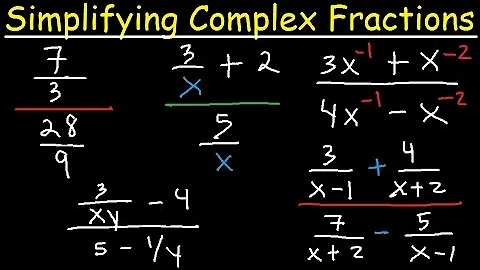
In this video, we're going to cover how to simplify rational expressions, multiplying and dividing rational expressions, adding and subtracting, even simplifying mixed expressions, complex fractions, and also solving equations. Solving rational expressions. So, we're going to try to hit all of those topics in this one video. So, let's begin. Let's start with this problem. x^2 7th to the 4th divided by this stuff. So how would you simplify this rational expression? Well, the first thing would look at is the coefficients, the 49 and the 35. Notice that both of them are multiples of seven. So what would do is divide top and bottom by seven. 49 / 7 is 7 and 35 / 7 is 5. So now next would move to the variables. Let's look at 7th / 3r. When you divide you need to subtract the exponents. 7 - 3 is 4. Now, if we look at the notice that there's more variables on the bottom. So, what I'm going to do is I'm going to subtract it backwards. 8 - 2 is 6, but because subtract it backwards, I'm going to put it on the bottom. Same thing with I'm going to subtract it backwards. 12 - 4 is 8. So, I'm going to get to the eth on the bottom. So, that's how you can simplify that particular rational expression. So, let's try another problem. Let's say if we have 9 x^2 cub / 63 3r 5th - 45 4 3r. So go ahead and try this problem. Pause the video and then unpause it when you're done. Now, since have two terms in the bottom, what need to do is factor because we have subtraction sign right now. You can't cancel these variables. You just can't do that yet. So, between 63 and 45, what is the GCF? What number goes into 63 and 45? 63 / 9 is 7 and 45id 9 is 5. So, we can take out 9. Now notice that we have three variables here and four variables there. So we can at least pull out three variables from both terms. Here we have five variables and three variables. So we can take out three variables from both. So 63 / 9 we said it was 7. And we remove all three variables. We took out three of the variables. So we're left with two. So y^2 and then minus 45 / 9 is 5 4 / 3r is basically We took out three variables. There's one left over. And we remove all three variables. So that's what we have on the bottom. On top we have 9 x^2 3r. So we can cancel these nines. They disappear. And we can cancel the cubes. And for the variables, we're going to subtract it backwards. 3 - 2 is 1, but we're going to put that one on the bottom. So, we have to the first power on the bottom * 7 y^ 2 - 5x. Now, we got rid of everything on top. So, there's one left over. If you cancel out everything, it's one. For example, 9 / 9 is 1. So, that's the final answer for that problem. So, now let's move on to our next one. Let's say if you want to simplify this expression 3x over 12 mean 3x + 12 / x^2 + 3x - 4. So now what you want to do is you want to factor everything before you simplify. So 3x + 12 notice that we can take out GCF the greatest common factor which is 3. 3x / 3 is 12 / 3 is 4. On the bottom, we have tromial. And quick way to factor tromial, look at this number. Look for two numbers that multiply to -4 but that add to pos3. So if we divide4 by 1, we're going to get -4. If we divide it by 2, we'll get -2. Notice that 1 + -4 is -3. So if we divide by 4, we'll get 1. 4 + - 1 is positive 3. So the answer to factor is just going to be + 4 * - 1. If you want to check it, you can foil it and you should get this expression. So now we can cancel these two terms. If there if there was plus sign here, we won't be able to cancel the x+ 4s. But since it's multiplied to the -1, you could cancel it. You can cancel terms if you're dealing with multiplication and division. If you're dealing with addition and subtraction, you can't cancel it. So, what we have left over is 3 / - 1. So, now what about this problem? - 9 / 9 - How can we simplify it? Let's look at the denominator. Let's factor out negative 1. If we take out negative 1gativex will become positive and I'm going to write it first and positive 9 switches to negative 9. I'm going to just reverse the order. Notice that we can cancel the - 9. So we get 1 over -1 which is just 1. Try this one. So, how can we factor 81 - x^2? Well, let's say if you want to factor x^2 - 25, this is the difference of perfect squares, it's going to be + 5, - 5. So, basically, you take the square root of x^2 and you get Then you take the square root of 25, you get five. And on one side you have plus, the other side you have minus. So let's apply that here. What's the square root of 81? The square root of 81 is 9 because 9 * 9 is 81. The square of x^2 is And then we just need plus and minus. That's how you factor it. Now here we have tromial. So we need two numbers that multiply to 81 but that add to the middle term 18. 9 * 9 is 81. 9 + 9 is 18. So to factor, we have + 9 and + 9. So 9 + and + 9 are the same thing. 5 + 4 and 4 + 5 or they're both equal to 9. So when you're adding the order doesn't matter. So now what we have left is 9 - and + 9. Now factoring out negative 1 won't help us in this situation because notice that we have + 9 and + 9 but we have minus and plus only one sign has been reversed the but not the nine. The only way this will cancel is if both signs have been reversed. If we take out negative 1 from let's say the numerator it's going to be -1x becomes positive but positive 9 becomes - 9. - 9 and + 9 doesn't cancel. So we can leave the answer like this because we can't simplify it any further. So now what about this example? cub - 8 / 3x^2 - 5x - 2. Now in the numerator what we have is difference of perfect cubes and the equation that you want to use for that it's minus cub which is equal to minus * 2 + + b^2. So you want to find the cube root of cub which is simply The cube root of 8 is 2. Now, next you want to find square. That's * which is x^2. And then switch the sign from negative to positive. Then ab that's * 2, which is 2 And then ^ 2, that's 2 * 2, which is going to be 4. So that's how you can factor this expression. Now, for the bottom here, notice that we have tromial, but the leading coefficient is not one. So we're going to use different factoring technique. What we need to do is multiply the 3 by the -2. So 3 * -2 is equal to -6. And then we need to find two numbers that multiply to -6 but that add to5. So if we divide -6 by 1, we'll get -6. 1 * -6 is -6, but 1 + 6 is5. So now let me do this somewhere else before put my answer here. We're going to replace the middle term -5x with these numbers. So 5x is equal to -6x + 1x. Now it really doesn't matter the order in which you put those numbers. It can be 3x^2 + 1x - 6x - 2. Either way you'll get the same answer. But now we got to factor by grouping. In the first two terms, let's take out the GCF, which is 3x. 3x^2 / 3x is -6x / 3x is -2. And in the last two terms, all we can take out is 1. So we'll be left with - 2. So now notice that we have two common terms here, - 2. So we're going to factor that out. If we take away - 2 from this term, we're left with 3x. And if we remove - 2 from that term, all we have is positive 1. So what we have now is - 2 * 3x + 1. So we can cancel the - 2. Now x^2 + 2 + 4. We can't factor that any further. So this is our answer. x^2 + 2 + 4 / 3x + 1. So now let's say if we want to multiply rational expressions. How would you multiply these expressions and simplify at the same time? What would you do? Well, let me show you one technique that you can use or that can help you understand the concepts. What you want what you don't want to do is multiply 15 by 12 because you're going to get larger number and it's going to be harder to simplify. Rather, you want to break 15 down into smaller numbers. 15 is 5 * 3 4th. That's * * * Actually, let me put this over here because I'm going to need more space. cub is * * 9 we can break down 9 into three and three. We have one variable on the bottom and we have two variables. 12 we can write 12 as 4 * 3 and we have an variable and we have one Now 40 40 is 8 * 5 and 8 is 4 * 2 and then times 5. So 4 * 2 is 8, 8 * 5 is 40 and then we have three variables on the bottom and then two variables. Okay, so now let's cancel. This will cancel with that one because they're on opposite sides. This is on the top. This one's on the bottom. We can cancel those. And we can cancel these. So, we only have one left over, which I'll put it here for now. Now, we can cancel these threes. This one's on the bottom. That's on the top. We can cancel those. We can cancel the fours. We can cancel the fives. So, as you can see, we didn't really need to, multiply 15 by 12 and 9 by 40 and get these large numbers and then have and then simplify. This is much easier. We can do this without calculator. However, the two is on the bottom. So, got to put it in the denominator. Now, let's cancel the variables. These two cancel. Those two cancel. This one cancels with that one. This cancels with that. That cancels with that. So, we have five variables on top, five on the bottom. They all cancel. So, our final answer for that entire expression is just / two. That's it. Let's try another problem. So let's say if we have 2x / 3x - 6 * 5x - 10 over 20x^2. So once again factor everything. There's really not much we can do with the 2x. However, the 3x - 6 we can take out 3. 3x / 3 is and -6 / 3 is -2. And for the 5x - 10, we can factor out five and we'll get - 2. 20. I'm going to write 20 as 20 is 4 * 5 and the four can break it down to 2 * 2. So 5 * 2 * 2 is 20. And x^2 is * So, can cancel an xus 2. can cancel five. can cancel an and can also cancel two. So, what have left over is three, two, and an on the bottom. There's nothing left over on the top. If you cancel everything on top, all you have is one on top. So, this three multiplied to that two is six. And then the remaining and that's it. So the answer is 1 / 6x. So here's our next problem. x^2 - 9 / x^2 - 16 * + 4 / - 3. So let's factor x^2 - 9. This is the difference of perfect squares. So the square root of x^2 is and the square of 9 is 3. And then we just got to add plus and minus x^2 - 16. That's difference of perfect squares again. So it's going to be + 4 - 4. So now we can cancel terms. So we can cross out the + 4 and we can cancel the xus 3. So our final answer, what we have left over is + 3 / - 4. How about this one? x^2 + 8 + 15 / x^2 + - 6 * 2x^2 - 3x - 2 / 2x^2 - 50. So let's factor the first expression. What two numbers multiply to 15 but add to 8? So it's going to be + 3 and + 5 because 5 * 3 is 15 but 3 + 5 is 8. You can use that technique if there's one in front of the squ. Now what two numbers multiply to -6 but add to one? This is posit3 and -2. 3 * -2 is -6. 3 + -2 is pos 1. So it's going to be + 3 - 2. Now for the 2x^2 - 50, let's take out 2. If we factor out the GCF, we'll be left with x^2 - 25, which this is difference of perfect squares. And that's going to be + 5 - 5. You take the square root of x^2 which is and the of 25 which is five. And then add plus and minus. Now here the leading coefficient is not one. It's two. So we're going to have to multiply these two numbers first. So 2 * -2 is -4. and two numbers that multiply to4 but add to the middle term -3 is -4 and 14 + 1 is -3. So I'm going to factor it on the bottom here. So we have 2x^2 replace the middle term with -4x + 1x and then factor by grouping. In the first two terms, I'm going to take out 2x. And so I'll be left with, let's see, 2x^2 / 2x is -4x / 2x is -2. And here can only take out one. So now if factor out the - 2's, if take away - 2 from this term, I'm left with 2x. And if factor out - 2 here, I'm left with one. So what have on top is - 2 2x + 1. So these cancel and this term cancels here and then these two they cancel. So what we have left over is this term and those two. So it's 2x + 1 / 2 * - 5. So that's the answer for this problem. What about this one? 4x^2 - y^2 / 64 cub - 8 cub* 32 x^2 + 16 + 8 y^ / this enough. So on top notice that what you have is the difference of perfect squares and so we need to we can factor it doing this like using that technique. So the square root of 4x^2 the square root of 4 is 2 and the square root of x^2 is So we get 2x the square root of y^2 is just so it's going to be plus and minus. Now on the bottom what we have is the difference of perfect cubes. And the formula for that is the 3r minus the 3r. That's what we started with. And to factor it, it's going to be minus * 2 + + b^2. So the 3r is 64x cub. So we got to find What's the cube root of 64? What times what times what? 3 * is 64. 4 * 4 * 4 is 64. Or if you type it in your calculator as 64 raised to the and using put in parenthesis 1 over 3, you'll get four. So the cube root of 64 is 4. And the cubet of the 3r is The cubet of 8, what times what times what is 8? It's going to be 2. And the cubet of cub is Now because we have minus sign, it carries over here. So pretty much we have and is 4x, is 2 So a^ 2 that's * or 4x * 4x. So that's going to be 16 x^2. well it's going to be plus got to change sign. * 4x * 2 that's 8 and then ^ 2 * that's 2 * 2 which is 4 y^ 2. Now on the top all we can do is take out the GCF but notice that this term looks very similar to this term. In fact it's twice as much. So what we're going to do is take out two. Half of 32 is 16. Half of 16 is 8 and half of eight is four. So we can cancel those two terms later. Now, so we really don't have to factor it. Chances are it probably can't be factored, but we can cancel it. So it's going to disappear anyway. Now what we have on the bottom, can we factor that expression? Let's see if we multiply the first term four by one. 4 * 1 is four. And if we find two numbers that multiply to four but add to them add to four that's two and two. So it could be factored. So we have 4x^2 plus I'm going to break it down into 2xy + 2x because of those numbers plus y^2. And then I'm going to factor by grouping. So, in the first two terms, I'm going to take out 2x and 4x^2 / 2x is 2x. 2x / 2x is just And in the last two terms, I'm going to take out And then have 2x + Which means that if take out 2x + also get 2x + So, it's 2x + * 2x + So, let me take minute and write down what have on the board and then I'll rewrite I'll rewrite this expression on the next page. So, I'm not going to rewrite the part that was canceled. So after we cancel the 16x^2 and all of that stuff, what we have left over is 2x + * 2x - / the 4x - 2 and what was attached to it was cancelled. Time 2 over we factored this just recently. 2x + * 2x + So that's what we have at the moment. Now we can cancel this 2x + and this one. So what we have left over is 2x - But notice that we can take out two here. If we factor out two from the bottom, we'll be left with 2x - as well. And we still have the other 2x + So we're going to that's going to carry over. So these two expressions they cancel and the twos cancel as well. So our final answer is this 1 over 2x + Okay. So now let's focus on dividing rational expressions. So let's say if we have 40 x^ 5th power / 14 3r and we're going to divide that fraction by 16 4th over 52 4th. So perhaps you heard of the expression keep change flip. We're going to keep the first fraction. We're going to change division to multiplication and we're going to flip the second fraction. So this is equal to 40 and at the same time we're going to actually let me just rewrite it. 40 to the 5th over 14 3r. Keep the first fraction change division to multiplication and flip the second one. Okay. So now we're multiplying again. So instead of multiplying 40 by 52, let's see if we can break down these numbers. So 40 is 8 * 5 and 14 is 7 * 2. Now 52 that is 13 * 4 which we can also write it as 13 * 2 * 2 and 16 I'm going to write it as 8 * 2 because want this eight to cancel with this eight and this two is going to cancel with that two and this one will cancel with this one. So now let's write down the numbers that we have left over. So 5 * 13. We have no choice but to multiply them. So that's 65. Another way you can see it is 10 + 3 * 5. 10 * 3 is 50. 3 * 5 is 15. 50 + 15 is 65. And we have seven on the bottom. So now let's look at the variables. 5th / 4th. 5 - 4 is 1. So we just get on top. 4 / 3r. 4 - 3 is 1. So we get to the 1st on top. So our answer is 65 xy / 7. So let's say if we wanted to divide x^2 - 36 / 3x and that is divided by + 6. So the first thing you want to do is you want to rewrite it. Well, would put this over one and then use keep change flip. So, it's x^2 - 36 over 3x. Keep the first fraction, change division to multiplication, and then flip the second one. Now, x^2 - 36, it's the difference of perfect squares. So, the square root of x^2 is and the of 36 is six. and then plus and minus. So all we could do in this problem is cancel the + 6 values. So what we have left over is - 6 / 3x and that is the answer. Now what about this one? to the 5th power 3R to 4th /. So for this problem, let's use keep change flip again. So let's rewrite it. Let's keep the first fraction exactly the same way as it was. Let's change division to multiplication. And let's flip the second fraction. Since we're only dealing with variables, let's go ahead and multiply the numerators. So 5th * 1st. If you multiply, you need to add the exponents. That's 6. 3r* y^2, that's y^ 5th power. And then we're left with 4th. Now on the bottom we have x^2 * cub which is 5th and then 1st * 4th which is 5th and then 3r. So that wasn't that bad. So now we can divide x^ 6 / 5th 6 - 5 is 1. Now y^ 5th over 5th they completely cancel that give us one and to 4th / cub that's to the first power. So our answer is simply xz. How about this one? So let's use keep change flip again. We're going to keep the first fraction exactly the same way and then we'll flip the second one. So now once you have it in this form factor everything in the numerator we can take out the GCF which is x^2 4 / x^2 is is x^2 and here we have 3. we can't really do much with the + 5. However, the 3x^2 - 75, we could take out three and it's x^2 - 25. So then what we have is this. We can factor x^2 - 25 into + 5 - 5. Notice that nothing cancels in this problem. which is okay. We can still combine these two. x^2 * cub that's 5th and then we have x^2 + 3. On the bottom we have 3. We have 2 + 5 which we're going to write it as + 5^ 2 * - 5. So all we can do is combine the expressions if nothing cancels. So now let's try this one. x^2 + 9 + 20 / x^2 - 3x - 10 / x^2 + 2x - 35 and x^2 + 11 + 28. So, we're going to keep the first fraction the same and we're going to use keep change flip, but in the process of doing so, we're going to factor at the same time because we have limited space. So, two numbers that multiply to 20 but add to 9. So, that's going to be 4 and 5. 4 + 5 is 9 and 4 * 5 is 20. So, now two numbers that multiply to -10 but add to -3, that's -5 and 2.5 5 + 2 is -3 and5 + * 2 is -10. So we're going to change division to multiplication. We're going to factor that expression but put it on the top. So two numbers that multiply to -35 but add to two. That's -7 and actually positive 7 and five. 7 +5 is pos2 and 7 *5 is -35. So it's + - 5. Now we're going to factor this expression but put it in the bottom. So two numbers that multiply to 28 but add to 11 is pos7 and pos4. So we have this term on top. this one on the bottom. So they cancel. These two cancels and the - 5s they cancel as well. So the final answer is + 5 / + 2. Let's try this one. 3x + / 5 x^2 -4x - 3 / 2x^2 - 72 over x^2 - 7 + 12. So in the first fraction we can take out 3. So we have 3 * + 6 on the bottom. What we need to do here is multiply 5 and -3. 5 * -3 is -15. And two numbers that multiply to5 but that add to -14 is -15 and 1. So for now I'm going to rewrite it as 5x^2 - 15x + 1x - 3. And then I'm going to change division into multiplication. So this is going to go on the bottom. I'm going to take out the GCF, which is two. So if factor out two, it's going to be x^2 - 36. And this expression can be factored as well. Two numbers that multiply to 12 but add to7 are -3 and4. So we have - 3 and - 4. So let's factor this expression in the meantime. By the way, x^2 - 36 can be factored as - 6 and + 6. But for this term, we got to factor by grouping. In the first two terms, let's take out five. Actually, 5x. So 5x and then we have - 3. And in the next two terms, let's take out 1. So in this factored form, it's going to be 5x + 1* - 3. This is supposed to be six here, but ran out of space. So, the + 6 will cancel and we can cancel the - 3. And that's all we can cancel. So we're left with on top 3 * - 4 and on the bottom we have 2 we have 5x + 1* - 6. So that's the answer. That's as far as we can simplify or that's as far as we can go. So now we're going to focus on adding and subtracting rational expressions. So let's start with let's say if we have like denominators. So 9 + 7 / - 3 + 7 + 4 / the same denominator. If the denominators are the same, you can just add the numerators. So 9 + 7 is 16x and 4 + 7 is 11 / - 3. That's all you got to do for that problem. Now let's say if we have this one 5 - 7 over + 2 - 3 + 8 over 2 - Now notice that we don't have the same denominator. However, we can for 2 - we can factor out negative 1. If we do, it's going to be negative 1. The negative is going to change to positive and the positive2 will become -2. So what we now have is this expression. You know what? We still don't have common denominators. So, we're going to have to do something different here. All right. We're going to cancel these two negative signs will become positive. So to get common denominators in this case, what we're going to do is multiply this side by + 2 top and bottom. And for this one, we're going to multiply by - 2. So what we now have is 5 - 7 * - 2. And then if we foil the denominator, it's going to be y^2 - 4 and then plus 3 + 8 * + 2 / y^2 - 4. Okay, so let me write this down before change the page. So now that we have common denominators, we can now add the numerator. We can add the two numerators of those two fractions. We can also combine it into single fraction. But before we do all that, let's foil. 5 * is 5 y^ 2. And 5 * -2, that's -10 And -7 * is -7 And -7 * 2 is 14. Now for the other fraction, 3 * that's 3 y^ 2. 3 * 2 is 6 and 8 * is 8 8 * 2 is 16. And we still have y^2 - 4 on the bottom. So now we can combine the numerators of both fractions. So 5 y^2 + 3 y^2 that's 8 y^2. 6 + 6 + 8 that's 14 -10 - 7 that's -17 So, -17 + 14 that's -3 and then 14 + 16 is 30. So, this is our answer. Now, let's check to see if we can factor this combined result. We may or may not be able to. If we can't, we'll just leave it like this, but let's just check. So, 8 * 30 is 240 because 8 * 3 is 24. So, can we find two numbers that multiply to 240, but that add to -3? Well, let's see. So, 240 / itself is 240. If we divide it by two, that's 120. I'm just going to make list of numbers. If we divide it by 3, that's 80. I'm going have to increase this to 10. If we divide it by 10, that's 24. As we can see, this is not going to be possible. If we divided by 20, that's 12. And it has to be negative three. So, we need two negative numbers. There's no two numbers that's going to add to three. It It's just not going to happen. So, this is going to be our answer. We can't factor it. But, it's good to check cuz sometimes you could factor it. We can factor the y^2 - 4 to + 2 - 2 if we want to. But for that problem, we'll keep it like that. Let's try this one. 8 / 5x + 3 / 2x^2. So we don't have common denominators, but we need to get it. So the least common denominator, we need five, we need two, and we need at least two variables. In this fraction, we have the two, we have the two variables. All we're missing is the five. So we're going to multiply top and bottom by five. For the other fraction, we have five and the So we're missing two and an So we're going to multiply top and bottom by 2x. So on top 2x * 8 that's 16 On the bottom 2 * 5 * * that's 10 x^2. On top 3 * 5 is 15. On the bottom that's 10 2 again. So once you have like denominators once they're the same you can combine the numerators. So it's going to be 16x + 15. We're going to combine it into single fraction / 10 x^2. Let's try this one. 5x / + 5 + / - 3. So the least common denominator what we need is we need 1 - 3 and at least 1 + 5. So this fraction is missing in + 5. So whatever you do to the top, you have to do to the bottom. And this one we need an - 3 top and bottom. So here we're going to distribute the 5x. 5x * is 5x^2 and 5x * -3 that's -15 on the bottom. I'm just going to leave it in its factored form. + 5 * - 3. and then plus * is x^2 and * 5 that's 5 So now we can combine these two fractions into one single fraction. So x^2 + mean 5 x^2 + x^2 that is 6 x^2 and then -5x + 5 that's -10 / + 5 * - 3. Now the 6x^2 - 10 we can factor that if you want. We can take out 2x. 6x^2 / 2x is 3x and -10x / 2x is5. So this is our final answer. Let's try this one. 4 / 3 - + 7 / x^ 2 - 9. So 3 - let's take out negative 1. If we do that, becomes positive posit3 becomes -3, and x^2 - 9. Let's factor it. We know it's going to be + 3 * - 3. It's difference of perfect squares. So now these two are are already identical. All we're missing here is the + 3 for the fraction on the left. So we're going to multiply it by + 3. And I'm going to promote the negative 1 to the top. So 4 /1 is -4 and then times + 3. On the bottom we have + 3 and - 3. And we don't really have to modify the second fraction because it already has the common denominator. So let's distribute -4 * That's -4x.4 4 * 3 is -12 divided by the common denominator. So now we're going to combine these two fractions into single fraction. So all we can combine is the -12 and the 7. So it's going to be -4x and -12 + 7 is5 / the common denominator. And that's the answer for this problem. So let's try this example. 7 over 5 + 3 over - 3. So we need at least five. We need and we need yus 3. That's the the common denominator. So, this fraction doesn't have five and it's missing Yus 3 and are separate terms. They're not the same. Now, the second fraction has the five and the but it's missing the - 3. So, let's distribute the 7. 7 * is 7 And 7 * -3, that's -21. on the bottom, it's just 5 * - 3. For the next fraction, 3 * 5 is 15. And let's attach to it. So now that we have common denominators, we can add the numerators. So 7 + 15 that's 22 and there's nothing to combine the the - 21 with. So this is the answer for this problem. Let's try more complicated example. Let's say if we have 5x / x^2 + 5 + 16 - 2x + 8 / x^2 + 6 + 8. So before we can find the common denominator, we have to factor everything. So, two numbers that multiply to 16 but add to five are there's no such numbers. I'm going to have to modify that problem. Let's make let's turn this into an eight. You know what? know what happened. This was supposed to be six and wrote 16 and that makes huge difference. Okay, now everything is good. So let's factor it. Two numbers that multiply to six but add to five are 2 and 3. 2 * 3 is 6. 2 + 3 is 5. So, it's + 2 * + 3. Now, on top, we can take out the GCF, which is 2, and we'll have + 4 left over. On the bottom, two numbers that multiply to 8, but add to six are 4 and 2. 4 * 2 is 8. 4 + 2 is 6. So, it's + 4. don't know why added that, too. + 4 * + 2. And I'm always running out of space, but that's + 2 there. So, we can cancel these. So, what we now have is 5x over + 2 * + 3 - 2 / + 2. As you can see, the common denominator is just + 2 + 3. So, we only have to modify the second fraction. The first one already has the common denominator. So if we multiply this by + 3 over + 3, both fractions now have the same denominator. So let's go ahead and distribute the the -2. If we we can distribute two or negative -2. If we distribute two, the negative stays. If we distribute -2, it becomes plus. So then we have -2x - 6 / the common denominator. So now let's combine the two fractions. So 5x + -2x is 3x and - 6 / + 2 + 3. But notice we're not done. We can simplify this further. In the numerator, we can take out the GCF, which is 3 and it's - 2 over + 2 * + 3. So that's the answer. We can't cancel the - 2 and the + 2. What about this one? So the concept is the same. It's just there's more factoring that's involved in this problem. So we can use that method that we did before, but let's see if we can factor it by trial and error. So let's start with this one. So let's put two parenthesis. Notice that we need 2x^2. So to get 2x^2 we need 2x and an 2x * is 2x^2. To get -3, we need 3 and 1, but one of them has to be negative. But we know 3 * 1 is 3. We just don't know where to put the three, where to put the one. Now notice that the middle term is + one. So, it's better if we put the three here and the one here because this is going to be 2 * 1, which is 2x, and 3 * which is 3x. If we put this three on the other side, 2 * 3 is 6, and there's no way we're going to get one from that. Now, we need to know which one is positive and which one's negative. Now, we want positive So, we want plus 3 because 3 * is 3x. We want this to be minus one because 2x * 1 is -2x and 3x - 2x is + 3. That's one way you can factor it using trial and error. But for the next one, I'm actually going to use the technique that we should use. So 3 * 2 is six and two numbers that multiply to six but add to -5 is -2 andg3. So I'm going to rewrite this as 3x^2 - 3x - 2x + 2 and then factor by grouping. So here I'm going to take out 3x. And so we're going to have - 1 and then I'm going to take out -2 and we're also going to have - 1. So the factor it's going to be -1 * 3x - 2. And fortunately these terms cancel which makes our lives lot easier. So it's going to be 8 over 2x + 3 * -1 plus since there's nothing on the numerator, it's going to be 1 because the 3x - 2 was cancelled. So the common denominator is already what we see on the left. So all we got to do is modify the second fraction by adding 2x + 3 to it or meant by multiplying top and bottom by 2x + 3. So what we now have is 8 over 2x + 3 * - plus 2x + 3 over the same common denominator. So now we can add the numerators. 8 + 3 is 11. So we have 2x + 11 / the common denominator. So that's how you can add or subtract rational expressions. Now let's say if you get problem like this. Let's say if you have mixed expression 3 + 7 /x and you want to write it as rational expression. the three put it over one and then do what we did before get common denominators. So let's multiply top and bottom by So this becomes 3 over 3x /x + 7 /x. Now that we have the same denominator, combine it into single fraction. So it's 3x + 7 /x. So let's say if you have another mixed expression. Let's say if you have 7 - + 1 over 5x again put this over one and then get common denominators. Multiply this by 5x over 5x. So what you have now is 35x^2 over 5x - + 1 over 5x. Now keep in mind this negative sign is distributed to both the and the 1. So our final answer is 35x^2 - - 1 over 5x. So now what about complex fractions? How can we simplify that? So let's say if you have cub over y^2 / x^2 over 4th. Now notice that we have one term in the numerator of the big fraction and one term in the denominator of the big fraction. When you see that use keep change flip. But first let's rewrite it. We can rewrite this as cub over y^2 / x^2 over 4th because that's what it means. And then using keep change flip. It's keep the first fraction change division to multiplication and then flip the second one. So cub / x^2 3 - 2 is 1. We get x^ the 1st power 4 / y^2 that's y^2. So our answer is y^2. What about this one? How can you divide two mixed fractions? Actually, let's save this one. I'm going to do this later before we do this one. Let's simplify this problem. So we can use keep change flip but we're going to factor it at the same time. So this is going to go in the first fraction. So if we factor x^2 + 5 + 6, well let me rewrite it first. This is going to be x^2 + 5 + 6 over x^2 - 2x - 8. And then since we changed division to multiplication, we're going to flip the second part. So this is going to go on top and this is going to go on the bottom. So let's go ahead and factor everything. So, two numbers that multiply to six but add to five, that's 2 and 3. So, this is + 2, + 3. And two numbers that multiply to8 but add to -2, that's -4 and + 2. To factor this expression, 3 * 7 is 21. 3 + 7 is 10. So it's + 3 + 7. And for this expression, it's going to be 5 and -4. 5 * -4 is -20. 5 + -4, that's pos 1. Okay. So now everything is factored. So now let's see what we can cancel these two. They cancel and that is it. So our final answer therefore is + 3^ 2 * + 7 / + 5 * - 4^ 2. since we have two of these. Well, that's it for that problem. Making sure that we didn't miss anything. Okay, so that's all we can do. Let's try another problem. So, how would you divide two mixed fractions? How would you simplify this? Now, you can convert the mixed fraction into an improper fraction if you want. the denominator is going to stay the same. To get the numerator, it's 7 * 3, which is 21, and then add 2. So, that's 23. On the bottom, you can keep the four. 9 * 4 is 36 + 1, 37. And then you can use keep, change, flip. So it's 23 over 3 * 4 over 37. So 23 * 4, let's see, that's 20 + 3 * 4. 4 * 20 is 80. 3 * 4 is 12. So that's 92. And 3 * 37, that's 3 * 30 + 7. So that's 90 + 21 that's 111. And it doesn't look like we can simplify this. So that's our answer. 92 over 111. Now there's another way you can simplify fraction that looks like that. So starting with our original problem. You can also do this. 7 and 2/3 is the same as 7 + 2/3. 9 and 1/4 is the same as 9 + 1/4. So in this format, you don't want to use keep change and flip since you have two terms in the top and two terms in the bottom. What you want to do is multiply top and bottom by the common denominator. To get rid of the 2/3, you want to get rid of any fractions. You need to multiply top and bottom by three. To get rid of the four, you also need to multiply top and bottom by four. So let's start with this term. 12 * 7 is 84 plus now 2/3 * 12. Notice that the threes cancel. So we have left is 2 * 4. So we get 8. 12 * 9 that is 108. 1/4 * 12. The fours cancel so we just get three. 84 + 9 is 92. 108 + 3 that's 111. So that's another technique in which you can use to simplify complex fractions. Now whenever have like two terms in the bottom, if have mixed expression within fraction, like to use that technique. Here's another example to illustrate it. So what I'm going to do is multiply top and bottom by the denominator of this fraction, which is So I'm going to distribute the 8 * is 8 and 5 overx * is just five. The x's cancel. So here 3 * is 3x and * this. This is minus sign by the way. * 7x the x's cancel so you just get seven. And that's the answer for that example. So let's try this one. 7 - 2x - 2 / + 3 / + 1. So now we need to multiply top and bottom by - 2 to get rid of this fraction. But we also need to multiply top and bottom by + 1 so that we can get rid of this fraction. So 7 * these two terms is just 7 - 2 * + 1. Now 2 / - 2 * this. The - 2's cancel. So you're left over with -2 + 1. Now * these two. Nothing cancels. So it's just * - 2 * + 1. Here these two they cancel. So we just get 3 and * - 2. So what I'm going to do is foil this expression first. So * is x^2. * 1 is 1 -2 * is -2x. -2x + 1 is There's seven in front. And then -2 * 1 is just -2. If we distribute the two, we'll get -2x - 2 here. This is - 2 * + 1 again. So that's x^ 2 - - 2 * And then if we distribute the 3, that's 3x - 6. So 7 * is 7 x^ 2. 7 *x, that's -7x. We can add it to -2x. So that's -9x. And then 7 * -2 is -14 plus this -2 which is -16 * is cub mean * x^2 that's cub *x is -x^2 and * -2 that's -2x + 3x -2x + 3x is 1 and then - 6. So that's the final answer for that particular expression. So that one was harder example. Let's try this one. 5x - 2 / 3x + So let's multiply top and bottom by the common denominator, which is So 5x * xy. the variables cancel, so we're left with just 5 and 2 over * The y's cancel, so all we have left over is 2x. Here, the cancels, so it's just 3 * And then here, the y's cancel, so it's * which is x^2. And that's the answer for that one. So, some problems are easier, others are harder. So now we're going to focus on solving rational expressions. So let's say if we have this equation 5 over 2x is equal to 3x - 4. So what can we do to solve this expression? If you have two fractions separated by equal sign, cross multiply. 3 * 2x is 6 and 5 * - 4. You got to distribute. 5 * is 5 and 5 * -4. That's -20. And now we can solve for So we're going to subtract 5x from both sides. So we have is equal to -20. That's the answer. By the way, whenever you have fraction, you need to be aware of, values of that are not possible. So, you see how you have 2x? can't be zero. It's not in the domain. You cannot have zero in the denominator of rational expression. Now, notice how we have - 4 in this fraction. What that means is cannot equal 4. Otherwise, if you plug in four, you'll get 4 - 4, which is zero, and the expression will be undefined. So, make sure you don't get any zeros on the bottom. So always check your answer for extraneous solutions. If this answer was four, it would be no solution. Let's try another example. - 2 / is equal to - 2 over 3X + 5. So let's foil. mean let's cross multiply but let's not distribute or foil yet. You'll see why. So what we have is * - 2 which is equal to - 2 * 3x + 5. Now you don't want to distribute or foil because you can divide both sides by - 2. So these two will cancel. Those two will cancel. And now it's much easier to solve. All we have left over is is equal to 3x + 5. So let's subtract both sides by 3x. So then on the left we get -2x is equal to 5. And then let's divide both sides by -2. And so here's our answer. is equal to -5 /2. And let's see what can't be in the original expression. cannot equal zero. And if we set 3x + 5 to zero, when you solve it, you get -5 over 3. So can't be that answer. But it can be 5 over2. Let's try this one. + 9 / + 3 is = + 1 / - 1. So let's cross multiply. Here we have + 3 * + 1 and here we have + 9 * - 1. So there's nothing that we can cancel right now. So we have to foil for this example. * is X^2. * 1 that's This is 3 And here we have 3. This is X^2X 9 -9. So let's combine these two terms. + 3X is 4X. AndX + 9X, that's 8X. So now what we're going to do is we're going to move everything to one side. Let's subtract both sides by squ and simultaneously let's subtract both sides by 4x and let's subtract both sides by 3. So those cancel. So on the left side we have zero x^2 and x^2 that disappears. 8 - 4x that's 4x -9 - 3 is -12. Let's move the 12 to the other side. So 12 is equal to 4x. And then let's divide both sides by 4. So is equal to 3. Now based on this denominator, can't be positive 1. And for this one, cannot be -3, but it can equal positive 3. What about this one? 2x over 5 + 1 over 3. Let's say that's equal to actually before we do that one, have different problem that want to do first. 1 /x is equal to 3 over 5 - 2/3. So, how can we solve for when it's in the bottom? So, what you want to do is multiply by the least common denominator. You want to get rid of every fraction. To get rid of the the 2/3, we need to multiply by three. To get rid of the 3 fifths, we got to multiply by five. And to get rid of the multiply both sides by So 1 /x * this, the cancels. So what we have left over is 1 * 3 * 5, which is 15. 35ths times this. The fives cancel. So we have this 3 * that 3 * 3 * 3 is 9. And then the comes along. So now 2/3 * 3 * 5 * The threes cancel. So we have 2 * 5 * which is So 9 - 10 is So if we multiply both sides by -1, therefore is equal to5. So you can make these problems lot simpler if you multiply both sides by the common denominator. Your goal is you want to eliminate all the fractions. So let's try some more examples on that. So let's say if you have 2x over 5 + 1/3 and let's say that's equal to - 4 over 5. So to get rid of the 2x over 5 and the - 4 over 5, we need five. And we got to multiply both sides by 3. So this term times this the fives cancel. So what we have left over is 2x * 3 which is 6 Now 1/3 * 5 * 3 the 3es cancel so 1 * 5 is 5 and here the fives cancel so we get 3 * - 4. So let's go ahead and distribute the 3. So it's 3x - 12. So now what we're going to do is we're going to subtract both sides by 3x and subtract both sides by five. So we have 3x is equal to -17. So is -17 / 3. Let's try this one. 3 over 4 - over 3 is equal to 5x over 8. So 8 is the same as 4 * 2. So I'm going to multiply both sides by 4 * 2, which is 8. And that gets rid of the four and the eight at the same time. But it doesn't get rid of the three. So need three as well. So 3/4 * 4 * 2 * 3. The fours cancel. So what we have left over is 3 * 2 which is 6 * 3 that's 18. Now over 3 * 4 * 2 * 3. The threes cancel. So we got 4 * 2 which is 8 * that's 8 So this term times this 4 * 2 is 8. So that cancels with this eight. So what we have left over is 3 * 5x which is 15x. So now we just got to solve for So let's add 8 to both sides. So 18 is equal to 23x. And let's divide both sides by 23. So is 18 / 23. Let's try this problem. 8 / 2x - 4 + / 3x - 3 and that's equal to 9. So let's factor out two in the bottom. So if we take out two, it's going to be - 2. And if we factor out three, it's going to be - 1. So we need to multiply both sides by 2, 3, - 2, and an - 1. So this term, actually no, we don't need to do that. Let's simplify it first because 8 / 2, we can reduce that to four and 30id 3, that's 10. Yeah, this is going to make the problem lot easier if we if we simplify it first. So now let's multiply both sides by just - 2 and - 1. So these two they cancel. So we're left with 4 * -1 and these two cancel. So we're left with 10 * - 2, which is equal to 9 * - 2 * -1. Let's distribute the 4. So it's 4x - 4. Let me separate this. And if we distribute the 10, that's 10 - 20, which is equal to I'm going to foil these two terms first. - 2 * -1 that's x^2x and -2x which is -3x -2 *1 that's plus two. So on the left side we can combine these two terms which is 14x and we can combine the -4 and the -20 which is -4 and that's equal to 9 x^2 - 27 and 9 * 2 which is 18. Okay, let me just rewrite this on new page. So, here's what we currently have at this point. So, let's subtract both sides by 14x. And let's add 24 to both sides. So on the left side we have zero. On the right side we have 9x^2 -27 - 14 that's -41 and 18 + 24 that's positive 42. Now the question is can we factor this expression? Let's see. So 9 * 42 that is equal to 378. So we need two numbers that multiply to 378 but that adds to the middle term -41. By the way, keep in mind 9 is divisible by 3 and 42 is divisible by six and seven. So chances are it's not going to be small number like one or two or three. But let's start with six. If we divide by this six, what's left over is 3 * 3 * 7, which is 9 * 7 and that's 63. So 6 * 63 is therefore 378. But that doesn't add to 41. So let's try the seven. So, what's left over is 3 * 3 * 6. 3 * 3 is 9. 9 * 6 is 54. But that doesn't work either. By the way, this can be broken down to 3 and 2. So, let's try 14. 7 * 2 is 14. And what's left over is 3 * 3 * 3, which is 27. and 27 + 14 does add up to 41, but we're going to make it negative 14ative 27. So, we're going to write this as -27x - 14x + 42. So, let's factor out the GCF. In the first two terms, we can take out 9x. So, we have - 3. And in the last two terms, we can take out -14. And then we'll have - 3 as well. So therefore zero which is has been over here is equal to - 3 * 9x -4. So we get two answers. is equal to 3. And if you set 9 -4 equal to zero. If you move the 14 to the other side then divide by 9 the other answer is 14 over 9. Now if we go back to the original problem which was 8 over 2x - 4 + 30 over 3x -1 = 9. On the bottom the terms that we had after we factor it was 2 - 2 that was on the bottom and we also had 3 and -1. So the numbers that do not exist for this expression is two and one which none of our answers none of our answers will give us zero in the denominator. So both answers work. So whenever you get an answer for these rational expressions make sure that they don't create zero in the denominator of any one of your fractions. Otherwise it's an extraneous solution and you have to remove it. But our fractions contain the denominator -1 and -2. So 3 and 14 over 9. If you plug it in to those expressions, it won't give you zero on the bottom. Let's try this one. 9x over + 2 - 6 / x^2 - 4. Let's say that's equal to 5 over 2 - So let's factor the x^2. - 4 that's going to be + 2 and - 2. Now for the 2 - we're going to take out negative 1. So becomes positive and pos2 becomes -2. So what we're going to do is multiply both sides by + 2 and - 2. this negative 1, we can move it to the top. So, we don't have to worry about it. So, now these two terms cancel. So, we have is 9x * - 2. And then this cancels here and that cancels there. So, we just get six. And in the next expression, these cancel. So we get -5 * + 2. So distributing the 9x we get 9x^2 - 18x - 6 is equal to -5x - 10. So let's see. Let's add 5x to both sides. And let's add 10 to both sides. So we get 9x^2 which is -8x + 5 that's -3x and -6 + 10 that's 4. So can we factor this expression? Let's see. 9 * 4 is 36 and two numbers that multiply to 36 but add to -3 that's94. So it turns out we could factor it. So let's factor by grouping. Let's take out 9x and let's factor out4. So we have 9x - 4 * -1 which is equal to zero. So if you set - 1 equal to zero when you solve it you'll get is equal to 1. And if you set this equal to zero you'll get x= pos4 over 9. you move the four to the other side and then you divide by 9. So those are the two answers for this particular problem. Let's try this example. There's two more examples want to go over. It's going to get little harder, but this is the stuff that you're going to see on your test. So, first let's factor this expression. Two numbers that multiply to six but add to five. Usually, it's probably going to be these factors. And in this case, it is. It's + 2 and + 3. So now that everything is factored, we need to get rid of the denominator. So let's multiply both sides by the common denominator, which is + 2 and + 3. So these two cancel. So all we have left over is 24x. And then these two cancel. So it's 2x + 1 * + 3. And then these expressions cancel. So it's 7 - 3 * + 2. So on the right side, let's go ahead and foil. 2x * is 2x^2 and 2x * 3 is 6 1 * is 1 * 3 is 3. 7 * that's 7 x^ 2. And here we have 14x - 3x - 6. So now let's combine like terms. 2x^2 and 7 x^2 that's 9 x^2. And 6 and 1 is 7. 14 and -3 that's 11. 7 and 11 that's 18x. And then here we have 3 and -6 which is -3. So now we're going to subtract both sides by 24x. So what we now have is 0 is = 9x^2 - 6 - 3. So let's see what we can do next. So this is what we now have. Let's divide everything by 3. 0 / 3 is 0. 9 / 3 is 3. 6 / 3 is 2. And 3 over 3 is 1. So this should be easier to factor. Let's multiply the first and last coefficient. So this gives us -3. Two numbers that multiply to -3 but add to -2 are -3 and 1. So, we're going to replace -2x with -3x and 1 And then let's factor by grouping. So, we're going to take out 3x. And here we're going to take out one. Well, messed that up. This is supposed to be one. If these two are not the same, then it doesn't work. So now what we have is if we factor out the - one, we're left with 3x and we're left with one. So we're going to write this in two separate equations. So - 1 is equal to zero. So therefore is equal to positive 1. And since 3x + 1 is equal to 0, 3x is equal to 1. So is equal to 1/3. And those are the two answers for this problem. Okay, so this is going to be the last problem for today. 2x - 5 over x^2 - 4x - + 5 + 15 / x^2 - 9. And that's equal to 3x - 14 which is equal to x^2 - 10 + 21. So the first thing you want to do is factor every expression. So two numbers that multiply to -21 but add to4 are -7 and positive3. 7 + 3 is4. Now in the numerator we can take out five. So we'll have + 3 and x^2 - 9 that's difference of perfect squares. We can factor it as + 3 - 3. Now for x^2 - 10 + 21 it's going to be -3 and -7. -3 +7 is -10. and -3 *7 is pos 21. So these two terms cancel. But we're going to multiply everything by the common denominator. We need an - 7 and we need an xus 3 and we need + 3. This is going to be long problem. So these two terms cancel and those two. So what we have left over is 2x - 5 and - 3. Then we have five and these two cancel. So what remains is - 7 and this other + 3. These two are gone as well. Now this disappears with that and that goes away. So it's 3x -4 times this term + 3. So let's foil. So here we have 2x^2 - 6 - 5x + 15. I'm going to keep the five on the outside. * is x^2. And then we have 3x - 7 - 21. And that's equal to 3x^2 + 9x - 14x - 42. So what we have is 2x^2. These two combine to1x + 15. And if distribute the five, it's going to be 5 x^2 3 - 7 that's -4x * this 5. So that's -20x and 5 * 21 that's 105. Here we have 3x^2 and those two that's -5x - 42. So let's combine like terms on the left side. So 2x^2 + 5 x^2 that's 7 x^2 and um1x - -20 that's -31x and then 15 and -105. That's 90. And that's equal to 3x^2 - 5x - 42. Okay. So what we need to do now, let's combine like terms. Let's move everything from the right side to the left side. So let's subtract both sides by 3x^2 and let's add 5x and then let's add 42. So on the right side we have zero. On the left side we have 4x^2 - 26x - 48. So it appears if that we can divide everything by 2. So we have 2x^2 - 13x - 24 is equal to So we need two numbers that multiply. Let's see it's 48. 2 * -4 that's -48 but that add to the middle term -3. So if we divided by 1 we get -48. If we divide it by two we get -4. If we divide by 3 we get -16. If we divided by 4 we get -12. And notice that 3 + -16 is -3. So those are the numbers that we need. So I'm going to write it as -16x + 3x - 24. So here I'm going to take out 2x which that's going to give me - 8 and then I'm going to take out three and get - 8 again. So it's - 8 * 2x + 3 and that's equal to zero. So the answers therefore are x= 8 and is equal to -3 / 2. And that's it for that problem. So that's it for this video. And so thanks for watching and wish you well on your exam on simplifying rational expressions and have great

 13:34
13:34
 12:52
12:52
 13:14
13:14
 12:05
12:05
 6:50
6:50
 5:07
5:07
 12:46
12:46
 26:55
26:55
 6:55
6:55
 9:30
9:30
 4:02
4:02
 12:46
12:46
 11:08
11:08
 4:33
4:33
 30:47
30:47
 1:02:48
 12:09
12:09
 20:12
20:12


