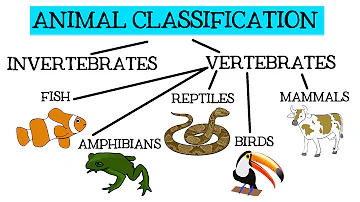
good morning grade seven and welcome to worksheet cloud grade seven Natural Sciences if you have question during the lesson send an email with your question to grade 7 at worksheet cloud.com my name is mrs. hall and today I'm going to be teaching you about classifying animals we are going to be looking at little bit more in depth detail of vertebrates and invertebrates what do you hope to learn from this lesson today grades evens well by the end of this lesson you should be able to classify animals into vertebrates and invertebrates as well as know and understand the basic characteristics of the two groups so just little bit of recap from last week why do we classify organisms as you know there are millions of species on our planet it would be difficult if we just try to describe and name each one individually all those species can be very different from each other many of them have similar features that allow us to put them into groups putting different species into different groups according to their features is called classification take look at these pictures over here right how would you gloop these pictures so you've got birds you've got plants you've got animals you've got glasses how would you group these and classify these pictures I'll give you few seconds think about it one way that scientists might have grouped them is to put them into the following four groups plants birds mammals and reptiles now you may have heard some of these words before they come from scientific way of classifying organisms scientists across the world all use and recognize the same classification system in this classification system they start off using very big groups that include lot of animals and then move down to smaller groups that do not include as many animals the biggest groups are called the kingdoms and all living things are classified into five different kingdoms carrying on from our lesson last week can you remember what those five kingdoms are come on grade sevens put on those thinking caps you've got this right over here we have animals plants monomer which were bacterial and primitive algae are protists which were our single-celled organisms which we spoke about and delved into little bit and then we had our fungi our molds our mushrooms and toadstools in grade seven we look in detail at the animal and the plant kingdom so today we are going to start off grade ceilings with animals and we know that they are divided up into vertebrates these are animals that have backbone this shouldn't be new word to you they have firmer body because of the muscles that connect to this skeleton the to the backbone we then have the invertebrates now these animals do not have backbone you just move me out the way they there have soft inner bodies which are held in shape by flexible covering of outer cells which we will learn about or by hard covering called an exoskeleton which is also not new to you great servants you would have learnt about it in grade five the first group of animals we are going to take good look at is the vertebrates now these animals that have backbone with hollow tube inside it's there to hold the nerves and it is they are called vertebrates as we can see in the x-ray image of the dog we can see the skeleton of this vertebrate this is made of bone and we say that vertebrates have an endoskeleton the first group of animals are we going to look at that are classified as vertebrates are mammals there have nostrils that lead to lungs for breathing they also have body hair or fur they have memory glands that produce milk they are warm-blooded they have internal fertilization and they give birth to live young so there is some form of parental care now most of these words you should already know but there are couple of instances grade our servants where will put up little key notes for you so internal fertilization is means that the male deposits sperm inside the female's body the rest of these terms you should already know that warm-blooded think about it can you remember what it means second group of vertebrates that we looking at off fish now as you know fish live in water they breathe with gills they have streamlined bodies they have cartilage or bony skeletons they are cold-blooded they're mostly lay eggs and they have external fertilization now external fertilization means that the egg and the sperm are released into the water where they fuse together when we classify fish we also look closely at the material that makes up the skeleton of the fish this leads us to divide fish into two main groups cartilage in cartilaginous fish which have skeletons made of cartilage and bony fish the these fish have skeletons made of bone some interesting facts sharks skates and rays are part of group of cartilaginous fish because their skeletons are made of cartilage these fish breathe breathe using 5 to 7 pairs of gills 2/3 of the shark's brain is dedicated to its sense of smell shark sense of smell is so well developed that it can tell the direction from which the smell is coming that's maybe why they follow the blood so quickly whale shark is shock and not whale it is the world's largest fish and it only eats plankton there you have it beautiful looking specimen here's little bit of challenge for you is seahorse fish think about that one Greg David seahorses are fish they live in water they breathe through gills and they have swim bladder the male seahorse actually becomes pregnant the female squirts her eggs into the male's pouch and he then fertilizes them and incubate them until they are ready to hatch Leah you have it who would have known let's take look at our next group of vertebrates we are now going to look at reptiles reptiles have dry scaly skins internal fruit ization they are eat laying they breathe with lungs and they are cold-blooded our next group that we are going to look at are amphibians now and fibia n--'s have moist skin they lay the eggs in water so they have external fertilization the larvae have kills and live in water the adults have lungs and live on land they are cold blooded or another term is ectothermic and what does that mean they get heat from the environment and therefore need to live in areas where it is warm enough for them to have enough body heat to survive if it gets very cold an amphibian will need to either find space under log or leaves or perhaps go and sit in the warm Sun and for beings are animals that includes salamanders newts Sicilians frogs and toads there we have our frog which I'm sure you all recognize our lovely toad there is salamander and there's an example of newt nao-san amanda's can regenerate that means they can regrow their limbs and tail within few weeks if they were lost due to predator tax and often you see they're missing tail all and little league and guess what they just grow back now look at the following image of Sicilian the Sicilian is actually an amphibian now what are the characteristics to be classified as an amphibian ok so take good look at it not very pretty looking an amphibian alert now in order not to be an invertebrate in other words an animal with outer backbone like worm that animal needs to have backbone now the Sicilian does have backbone and it has skull the Sicilian is not snake it is not reptile and it has larval stage which is born in water and it undergoes metamorphose to become the adult Sicilian the larvae also have gills to breathe underwater civilians also do not have scales like reptiles interesting fact that amphibians also lay their eggs in water like the shrub and why do you think they need to do this grade 7 the eggs are in water so that when the larvae hatch they are really in the water to swim around the eggs would dry out if they were not in the water the fertilization process in an FEHB ian's often requires water as the female will lay the eggs and sheet dirt does so the male deposits he sperm in the water around him so they are then fertilized interesting facts you can tell the difference between frog eggs and toad eggs because frogs lay the eggs in clumped and toads who lay their eggs in strings it's never too late to learn something new our next group of vertebrates are birds and as you know they have feathers and wings they lay eggs with hard shell they have internal fertilization they breathe with lungs they are warm-blooded and they have parental care what do you think South Africa's national bird is just put this in just wanted to see how many of you actually know by grade seven and hope you're all thinking what I'm going to show you right now yes grade seven the blue crane what magnificent national bird who we do have our next group that we are looking at are the invertebrates now these animals do not have backbone as said previously there have soft inner bodies which are held in shape by flexible covering of outer cells or by harder covering called an exoskeleton now what can we not see there bones this is because invertebrates do not have skeleton made of bone the crab is hard shell covering on the outside of its body this supports soft bodies inside we say they have an exoskeleton but not all invertebrates have an exoskeleton for example let's take look at the sanitarians for example the jellyfish they are hollow body the mouth is the only body opening and is surrounded by tentacles and they use sting cells to paralyze their prey they are invertebrates however they have hydrostatic skeleton this is skeletal support provided by hydrostatic pressure from fluid filled cavity surrounded by muscles hydrostatic pressure provides skeletal support in Sienna means jellyfish nimac nematodes annelids and echinoderms as well as many other groups our flat worms great servants have flat thin bodies as you can see in the diagram the digestive system has only one opening the animals are both male and female and now mostly parasites our true rooms on the other hand are rounded bodied and their bodies are made of segments which you can see quite clearly over here are mollusks they are not segmented the body is in three continuous parts with head body and foot and they have one or two shells can deduce spiny skint the body is in five parts and they have central mouth with gills and then great sevens we look at arthropods in lot of detail in the curriculum for grade seven they'll have hard exoskeleton on the outside of the body they have eyes and mouth and their body is divided into more than one segments they can have head body and thorax sometimes their head and thorax are joined to form the cephalothorax and then the abdomen so we take an in-depth look at crustaceans which are crabs and things like that wetness our spiders you've all heard of arachnophobia the fear of spiders insects and then we look at centipedes and millipedes in grade seven so there you have it great servants we have our vertebrates and our invertebrates very brief details today we looked at mammals we looked at fish we look to direct Isles amphibians and birds and you should now be able to know few basic characteristics about them we looked at some years time Nigerians flatworms true rooms mollusks econo domes as well as arthropods right little bit of quiz just by looking at these words which is the odd one out what I'm gonna give you second then take good look the odd one out you can see it straight away well done it is the whale all of the rest are fish but the whale is memo look at this which is the odd one out here take quick brief view through all of them you should be able to recognize that the platypus is the odd one out all of the risks of birds where is platypus is mammal which is the odd one out here skim through those words grade 7 right which one is it correct the scorpion all the rest are insects where is scorpion is an arachnid and you will learn about this in lot more detail as we follow through with the curriculum now which group do belong to and live mainly in water feed my yang on milk am covered in brown fur my body temperature is around 30 degrees Celsius have beak that are searched for for food worth on the river bottom the male of my species have venomous spike on their hind legs any idea what am am mammal but which mammal am great sevens who knows correct the duck-billed platypuses which group do belong to you have green and brown moist skin can run on water lay about 20 GD covered eggs at time in water am cold blooded feed on birth flowers and small animals live in trees and on riverbanks what group do belong to am an amphibian and which amphibian is this does anyone have any idea the belly Liske the basilisk lizard okay interesting little fellow that go and do some research on him which group do belong to you live in water and breathe through lungs my skin is covered in pale brown dr scale and they tough leathery eggs on land I'm cold-blooded feed on invertebrates like crabs and clams what group do belong to have you got this yet can live for over 39 years correct am reptile and am the loggerhead turtle right last one under the caves and dark places have wingspan of 18 centimeters and can fly give birth to live young and I'll feed them on milk our way 57 grams and my body is covered in brown fur as an adult only feed on blagged live up to nine years any ideas which group do belong to am memo but which mammal is this great seven come on you guys should know vampire bats well done to those who've got it hope this one more sorry about that I'm covered in fur and feathers can run around at about thirty kilometers an hour lay eggs with hard shells eat stones that help me to digest my food that should give you clue eat plants and small insects live up to thirty years am bird but which bird am the one clue eat stones that help me to digest my food that should have given it away it's an emu right some interesting animals look at these gorgeous gorgeous gorgeous animals great sermon we have some vertebrates we have some invertebrates amazing amazing animals the diversity of animals as we know them there is just so much to learn and we learn new things every day so to end off just little joke they told me could be anything so became if only grade seven so great servants as end off this lesson want to say thank you for watching and please don't forget that this lesson was brought to you by worksheet cloud you can download the homework sheet and the memo and hope you walk away from this lesson today going wow didn't know that that was something here learned today interesting stuff going tell friend share your education with your friends and your family take grade seven hope you have good day
23:36
Grade 7 Natural Science Classification of Organisms WorksheetCloud Video Lesson
WorksheetCloud
23.7K مشاهدة · 5 years ago
19:48
Grade 7 Natural Science Animal and Plant Adaptations WorksheetCloud Video Lesson
WorksheetCloud
9.3K مشاهدة · 6 years ago
6:52
Animal Classification for Children Classifying Vertebrates and Invertebrates for Kids FreeSchool
Free School
3.4M مشاهدة · 9 years ago
16:20
Grade 7 Ns Term 1 2021 Vertebrates Part 1
Marnus Van der Merwe
713 مشاهدة · 5 years ago
7:57
Vertebrates lesson 1 grade 7 Bio
Virtual Classroom
71 مشاهدة · 6 years ago
31:28
Natural Sciences Gr 07 Biodiversity FSDOE FS IBP Online 19022021
FS-IBP Online
136 مشاهدة · Streamed 5 years ago
6:53
THE ANIMAL KINGDOM VERTEBRATES AND INVERTEBRATES Educational Videos for Kids
Happy Learning English
974.7K مشاهدة · 4 years ago
15:21
Grade 7 NS Term 1 2021 Invertebrates
Marnus Van der Merwe
499 مشاهدة · 5 years ago
19:59
Vertebrate and invertebrate animals Educational videos for kids
Smile and Learn - English
2.8M مشاهدة · 7 years ago
23:19
Grade 7 Natural Sciences Variation in a Species WorksheetCloud Online Lesson
WorksheetCloud
6.3K مشاهدة · 6 years ago
18:10
Grade 7 Natural Science Symbiotic Relationships WorksheetCloud Video Lesson
WorksheetCloud
2.4K مشاهدة · 5 years ago
2:58
The Diversity of Invertebrates
MooMooMath and Science
509.1K مشاهدة · 5 years ago
6:53
VERTEBRATE and INVERTEBRATE Animals Educational Videos for Children HappyLearningENG
Happy Learning English
15.3K مشاهدة · 7 months ago
3:53
Vertebrate Animals Educational Video for Kids
Happy Learning English
1.6M مشاهدة · 11 years ago
19:05
Grade 7 Natural Science The Biosphere WorksheetCloud Video Lesson
WorksheetCloud
25.6K مشاهدة · 6 years ago
1:41
Vertebrate and invertebrate animals Short compilation Mammals arthropods birds worms
Smile and Learn - English
73.5K مشاهدة · 7 years ago
18:49
Grade 5 Natural Sciences Invertebrates WorksheetCloud Video Lesson
WorksheetCloud
4.6K مشاهدة · 6 years ago
9:41
How are Animals Classified Classification of Animals Vertebrates Invertebrates Science Grade 4

 23:36
23:36
 19:48
19:48
 6:52
6:52
 16:20
16:20
 7:57
7:57
 31:28
31:28
 6:53
6:53
 15:21
15:21
 19:59
19:59
 23:19
23:19
 18:10
18:10
 2:58
2:58
 6:53
6:53
 3:53
3:53
 19:05
19:05
 1:41
1:41
 18:49
18:49
 9:41
9:41


