النص الكامل للفيديو
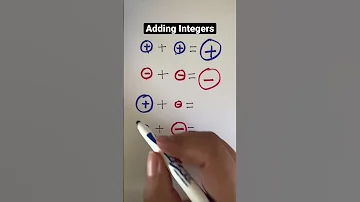
In this video, we're going to talk about how to work with positive and negative numbers. And we're going to talk about how you do adding and subtracting and multiplying and dividing. And we're going to go through 50 questions. I'll do 10 of the adding, 10 of the subtracting, 10 of the multiplying, 10 of the dividing, and then I'll have quiz for you at the very end where you can do 10 questions and kind of test yourself. What recommend if you're somewhat familiar with this already is to go ahead and take photo. I'll get out of the way here and try these problems on your own and then we'll go through them together so you can kind of practice and and learn as we go. So go ahead and take screenshot and let's get started. So the first problem now is -7 plus -4. Now you want to think of some type of framework for understanding negative numbers. One way that recommend is positive is like walking forwards. Okay? And negative is like walking backwards. So if you think about walking backwards seven steps plus you walk backwards another four steps. How many steps are you in relation to where you started? Are you forward or are you back? Well in this case you going to see you're back 11 steps. We walk back seven plus another four back. That's 11 backwards. That's negative 11. Now, after doing these problems for while, you might start to kind of get familiarity with saying like, if have two numbers that are negative and I'm adding, just add the two numbers together and it's negative number." So, you'll start to kind of get quicker at it, but in the beginning, you might want to think about it kind of like in real life scenario. Now, for number two, we've got -12 plus positive 8. Now, when you're adding and one's negative and one's positive, you can almost think of it as like tugofwar, like who's going to win? Are the people on the negative side going to win or the people on the positive side going to win? And in this case, you can see there's more negatives than positives. How many more? Four more. So that means this is actually going to be neg4. Now to go back to my walking analogy, if you were to walk backwards 12 steps, then positive eight, it's like walking forward eight steps. Where are you in relation to where you started? Are you further ahead or are you further backwards? Well, you're going to be further backwards because you walked backwards more than you walked forwards, right? So, that's one way to think about it when you're adding, you know, these positive and negative numbers. So, let's go to number three. Now, we've got 0 + -10. Now, the nice thing about zero is it's nothing, right? So, you can almost like say, this is just -10. But again, if you want to think of that walking analogy, if walk zero steps, that's like zero forward or backwards. I'm just standing right where am, right? Not moving. Plus, walk backwards 10 steps. Where am in relation to where started? I'm 10 steps backwards. That's negative 10. Right? Now, you can also think about earning money and spending money. And I'll show you some examples using that kind of analogy in minute. So, for number four, we've got positive five plus negative 15. So, if you like the step analogy, think about going forwards five steps plus then going backwards 15 steps. Where are you in relation to where you started? You're going to be 10 steps backwards. That's going to be negative 10. Now, another way to look at it is again that tugof-war. You say, got positives and negatives." The negatives, there's more of them. That means that it's going to be negative answer. How many more of them do you have? You would actually have to in your mind or on paper subtract the bigger number minus the smaller number. 15 minus 5 is 10, but it's going to be negative 10 because we had more negatives than positives. If you want to think about earning money and spending money, you can say, "Well, you know, earned $5 today, maybe doing some chores, you know, but then went to the store and bought something that cost $15." So, what happened is had to kind of, you know, spend more than had in my wallet. had to actually maybe go borrow some money from friend or parent, etc. So, that's kind of like now owe somebody $10. See, negative, right? so let's go to number five. So, -6 plus negative8. So negative plus negative is negative, right? Because you're like going backwards six steps plus going backwards another eight steps. That's 14 steps backwards. That's negative 14. So you're starting to see pattern. It's like if you add positive plus positive, you just get positive number. That's what we learned from day one, right? If you have negative plus negative, you just take those two numbers and add them together. It's negative number. So in this case, it was like 6 plus 8 is 14, but it's negative 14. They're both negative. They're both going the same direction, right? Backwards. The toughest problems, think, are when you have one positive and one negative. You have to decide, is it the answer going to be negative or is it going to be positive? If we have more negative numbers, it's going to be negative. If we have more positive numbers, we're going to it's going to be positive. But the way we find that actual number is by taking the larger minus the smaller. We take the difference to see how many more positives we have or how many more negatives we have. So, let's look at that for number six here. 7 + 12. they're both positive. That's what we learned long time ago. That's just 19, right? for number seven, -9 + 15. I've got more positives and negatives. How many more positives? six more. The way did that is just took 15 minus 9. That's six. knew it was positive because had more positives and negatives. If you like the walking analogy, you walk forward 15 steps. You walk backwards nine steps. You're actually six foot six steps, you know, forward from where you started. For number eight, we've got 18 + -7. I've got more positives than negatives. How many more? 11 more. It's going to be positive 11 because have more positives than negatives. So, after while, you can kind of go faster with this, right? So, for number nine, -17 +8. they're both negative and I'm adding. just add the numbers. That's 25 and it's going to be negative 25. See, it's like you spent $17 plus you spent another $8. you spent $25. That's like negative $25. You're like, you know, taking it out of your wallet. It's going away. It's decreasing your your balance in your account. For number 10, now we've got four plus -6. now we've got more negatives than positives. See, 16 is bigger than four. How much bigger? Well, 16 - 4 is 12. So, it's it's 12 more negatives than positives. So, the answer is going to be negative 12. If we had more positives and negatives, the answer would be positive. So, it's kind of like that tugof-war, you know. Okay. Now, addition, think, is little bit easier than subtraction, but let's go over to subtraction now. So, go ahead, take screenshot, see if you can do these 10 problems on your own. We'll go through them together and practice, but this tends to be the toughest for students because lot of negatives in here, right? The way that like to make it easier for myself and for the students work with is say, take the subtraction and change it into an addition. Now, you just can't change the problem because then it's different problem, right? So what we do to counterbalance that is we say that subtraction is like adding the opposite. Okay? So if change this to addition, change this second number to the opposite sign because subtracting 14 is like going backwards 14 steps, right? But that's kind of like adding negative 14. See, same thing. You're going back 14 steps. So that's what do is change the subtraction to an addition problem. Then we're back to what we talked about here. I've got more negatives and positives. How many more? Eight more. So, it's agative8. Okay. For number 12, we've got -5 minus 4. Well, subtraction is like adding the opposite. So, if this was positive, make it negative. If this is negative, make it positive. change it to the opposite sign. Now, it's little bit easier. They're both negative numbers and I'm adding them together. That's going to be -95 +49. For number 13, got subtraction problem. So, let's make it easier on us ourselves. We'll say subtraction is like adding the opposite. So, change this from negative to positive. This is what we learned long time ago. 10 + 4 is 14. See? lot easier. Number 14. -7 - -10. Okay. So, subtraction is like adding the opposite. Got more positives than negative. So, the answer is going to be positive. How many more positives than negatives? Three more. That's going to be positive three. Okay, for number 15, -6 minus 8. Well, another way to think about this, this is not my favorite way, but sometimes teachers will teach it this way. They'll say, imagine if you're on the number line and you're over here at let's just say -6 right here. Okay. If you subtract eight, that means you're going to the left eight. You're going backwards eight. So that's going to put you at -14. The only issue is is that when these numbers get lot larger, you know, it's hard to go on the number line and say, here I'm at 258 and then I'm going, you know, the numbers can get little bit big." But again, my favorite method is to think about, subtraction is like adding the opposite. So, I've got two negatives. know when have two negatives and I'm adding, just add the numbers together and it's negative. Or if you want, think about walking backwards six steps plus walking backwards another eight steps. You're walking backwards 14 steps. So, you're 14 steps back or negative from where you started, right? Okay. For number 16, what do you think on this one? 16 minus -7. Remember, subtraction is like adding the opposite. Okay. 16 + 7. That's what we learned long time ago. That's just adding two positive numbers. 23. Now, look at that number that problem again. See, if you're on your number line, let's just say you're over here at 16, right? To the right 16. When you subtract, you normally say, subtracting is making it smaller. It's going to the left, right?" But negative number, see, I'll just put that in parentheses for minute. negative number is like the opposite. So, when you subtract, normally you go to the left, but if it's negative number, that tells you to do the opposite. You're going to go to the right, which is going to put you at 23. Okay? So, different way to look at it. like think of subtraction as adding the opposite. Change it to an addition problem. This one here, negative 1 minus 0. Remember, subtraction is like adding the opposite. You really can't have negative zero. It's just zero. So negative 1 plus nothing is negative 1. Okay, number 18, we've got 5 minus 16. Now, when the numbers are smaller, you know, lot of times you can just kind of quickly figure it out like, I've got five of something. take away those five items and then have to take away how many more to take away total of 16? I'd have to take total of another 11 away. That's negative 11. And so some people kind of think of it like that, but just think of adding the opposite. I've got more negatives than positives. used to do this kind of way of bal like scale. Those oldfashioned remember these oldfashioned scales like this. And it's kind of like balance. And you say, "Okay, all right. put five on the positive side. Okay, put 16 on the negative side. wow. That's lot heavier. It's tilting way." Now, if you had five and negative five, it would perfectly balance out. It's like zero. like they're canceling each other out. It's balanced. But if you have more on the negative side, you're tilting to that negative side because you have 11 more negative than positive. It's like five of the negatives here are canceling with five of the positives, but you're still left with that 11 negatives. See? And then for number 19, when you subtract adding the opposite, right? So you always want to change that second number, not this one, the one over here that you're to the right. More negatives and positives. How many more negatives? One more. So this is negative one. And then for number 20, 7 minus 20. Subtraction is like adding the opposite. We've got more negatives than positives. How many more? Well, just take the bigger number minus the smaller number. 20 - 7 is 13. It's going to be negative 13 because have more negatives than positives. So, let me erase the whiteboard. Let's talk about multiplying and dividing next. Okay. Now, moving on to multiplying and dividing. If you want to take screenshot, I'll get out of the way for second so you can take picture and then try to do some of these problems on your own. And of course, we'll go through them together. Okay. So now starting with multiplying and want to show you the rules first. So we have to kind of shift gears when we go from adding and subtracting to multiplying and dividing. Multiplying and dividing. Here's what you want to remember. positive times positive is positive. That's what we learned long time ago, right? Just multiply the two numbers together. We just dealt with positive numbers. And if you have negative times negative, you get positive. Okay, so two negatives multiply to positive. But if one's negative and one's positive, or vice versa, one's positive, one's negative, oops, you're going to get negative. Okay? So, pretty simple. What you're used to, two positives, you get positive. Two negatives, you get positive. But if one's positive, one's negative, you're going to get negative. The rules for dividing are exactly the same. If you divide positive by positive or you divide negative by negative or you divide negative by positive or positive by negative same exact rules but you want to remember adding and subtracting it's different from multiplying and dividing. So let's practice -7 * 4 is -28. Now, if you want kind of real life scenario here, you can say to yourself, spent $7 negative7, right? It's going out of your wallet and did that four times. So, that's negative 28. See, it's like you maybe bought four $7 items. That's $28 that you're spending or negative. It's decreasing your balance, right? Number 22, we have 3 * -6. Now remember with multiplication it's commutative meaning you can change the order and you're going to get the same result with multiplication also with addition. Subtraction and division you can't change the order. You'll get something different. So if wanted to, it doesn't really matter how multiply these. just know that one's positive, one's negative. When have positive times negative get negative and this is 18. could think about it as walking backwards six steps. And do that three times. That's going to put me back 18 steps backwards. Right? for 235 * -9 this is positive 45 okay negative times negative is positive sometimes teachers will use the analogy they'll say have you ever played that game where you say to somebody I'm not not going you know that means you're going like if you say I'm not going okay the not is negation you're not going right but if you say I'm not not going okay it's kind of like an uno where you reverse and reverse those two reverses they undo each other and you keep going the original direction that you're you're going. Right? So number 24 -6 * 0. By the way, when these two numbers are right next to each other like that, that means multiplication with nothing in between. So anything times 0 is 0. Okay, we know that from earlier in math. 25 and -10 * -12 is positive 120. Two negatives multiply to positive. You can extrapolate that and say, well, you know, if you have four negatives, six negatives, eight negatives, as if there's an even number of negatives, it's going to multiply to positive. If there's an odd number of negatives, like if said I'm not not going, that means you're not going, right? Because it's negative. But if you said that four times, two of the each two is going to cancel out and give you positive. So an even number, you're going to get positive. An odd number of negatives, you're going to get negative. So 5 * -4 is -20. 27gative8 * -6 is positive 48. See those two negatives multiplying to positive. negative 1 * 17 1 positive 1 negative we get negative it's -17 -4 * 6 we know 4 * 6 is 24 but negative * positive is negative. And for number 30 we've got negative * negative* negative. So three negatives. That's an odd number of negatives. That's going to be negative. 1 * 1 is 1 * 2 is 2. So we get -2. All right. So switching gears to division. Now remember, same rules for division as multiplication. So it makes it easy. Not lot to remember. When you see this fraction bar, that really is like division sign. So this means 10 / -2. Positive by negative is negative. 10 divided by two is five. So we get five. For 32, negative divided by negative is positive. 144id 12 is 12. So pos2 agative8 divided by 1 that's agative8 because one's positive one's negative anything divided by 1 is itself 16 / -4 -4 -121id 11 that's1 see again one positive one negative you get negative if they're both negative like this one you're going to get positive so 32id 4 is 8 56 / 8 is 7 but one's positive one's negative we get ne 7 uh81 /9 that's going to be positive 9 because negative by negative is positive 100id -10 -10 because one's positive one's negative we get negative sometimes people get confused like they'll say Mario you said that if have more positives than negatives it's going to be positive those are the rules for adding right if you added 100 plus negative 10 you would get positive 90 because you have more positives and negatives but see The rules are different for multiplying and dividing than adding and subtracting. So, you almost have to switch gears when you see adding and subtracting versus positive divi multiplying and dividing. 72 divided by 9. That's what we learned long time ago. It's just two positives. 72 divided by 9 is 8. So, now here's your chance to test. I'm going to mix them all up. We're going to do 10 problems in little mini quiz. Take screenshot. I'll put it on the board in just second. See how many you can get right. Okay. So, let's take this quiz now. See what you get. I'm going to go through them. So make sure you take the test first. So starting with 41 -7 minus 2. When see subtraction sign, think of that as adding the opposite. Always want to change that second number. negative plus negative is negative. 7 + 2 is 9. Again, this is like walking backwards seven steps plus another two steps back. That's nine steps back. Right? For 42, what did you get? 6 + -14. Well, when you add and you have more negatives and positives, that means the answer is going to be negative. If had more positives and negatives, the answer would be positive. It's kind of like tugof-war. How many more negatives do have? Eight more. This is going to be8. For 43, what'd you get for this one? -14 / -2. negative divided by negative is going to be positive. And 14id two is 7. So, it's positive 7. For 44, 49id -7. What did you get for that one? positive divide by negative is negative and 49 divided by 7 is going to be seven. So -7 and then for 45 we've got 5 *g8. They're next to each other. That means they're multiplied together. One positive, one negative. We're going to get negative. 5 * 8 is 40. So - 40. One thing wanted to mention is if you're enjoying this video and you say, really like the way that Mario explains these things." Consider joining the channel as channel member at the additional videos level. You can get access to my algebra 1 course. go through about 85 lessons taking you step by step through typical algebra 1 course with these kinds of explanations building on the previous concepts as well as many other videos almost 400 videos on that additional videos section of the channel membership site. So check that out. Let's finish this quiz here. So for 46, what'd you get for this one? -6 - -10. Well, when you subtract, it's like adding the opposite. We've got more positives and negatives. How many more? Four more. So you should have gotten pos4, right? For 47, what'd you get? 5 - 12. Well, subtraction's like adding the opposite. So we've got more negatives than positives. How many more? Seven more. So, it's -7. For 48, what'd you get?8 + -4. They're both negative and we're adding, so it's going to be negative -12. Again, it's kind of like walking backwards eight steps plus another four steps. That's walking backwards 12 steps or -2. What' you get for 49? 0 - 16. Well, zero is kind of like nothing. So, you could just say -16, but like to think of it as adding the opposite. 0 plus negative 16. it's just -6. And then for the last question, negative * negative is positive. 1 * 2 is two. So this is going to be positive2. So let me know in the comments how many of these you're able to get right. And if you want more practice, I'll put video right there talking more about how to master negative numbers. So follow me over to that video for more practice. And remember to join as channel member. I'll see you in that membership site.

 13:26
13:26
 3:12
3:12
 2:01
2:01
 8:53
8:53
 11:23
11:23
 0:10
0:10
 8:32
8:32
 9:51
9:51
 0:48
0:48
 9:02
9:02
 8:04
8:04
 12:54
12:54
 4:58
4:58
 4:17
4:17
 8:16
8:16
 2:07
2:07
 8:07
8:07
 4:07
4:07


