i'm laura lucas magnuson and this is the world unpacked it started with one man in one country tunisia who set himself on fire when the police confiscated his fruit cart leaving him with no way to make money boise died january 4th word went out on facebook to take to the streets the message was received on january 14th tens of thousands brought the nation's capital tunis to halt now the world started paying attention that set off movement that kicked out long-time president dean ben ali region was gripped with freedom fever tunisia is heading to the polls on sunday to vote for new president just one month after electing its parliament the country which kick-started the arab spring is completing its transition to democracy four years on from the revolution with its first free presidential elections mohammed bazizi died on january 4th 2011 and his name remains symbol of the aspirations of young nation in quest of social justice and future on december 17 2010 tenacious street vendor named mohamed bouzizi set himself on fire to protest corruption and poor economic conditions his death sparked mass popular protests in tunisia that quickly carried over to other countries in the middle east today we're talking to sara yerkes senior fellow in carnegie's middle east program about how tunisia has changed in the 10 years since the arab spring sarah has spent much of the past decade both in government and at carnegie trying to understand this period and tracking tunisia's transition thanks so much for joining us sarah thanks for having me so tunisia is often hailed as the success story in the arab spring the protests that shook the country led to the ousting of long-time president ben ali and resulted in democratic elections what is your assessment of how tunisia has been able to sustain its democracy even as other countries with similar promise have not think there's two main reasons that tunisia has been successful first of all is the consensus model that tunisia adopted early on the major political factions even those that were really at odds with each other decided that democracy was more important to them than their own political success and so you had the two main actors the anata or the islamist party and the former president veggie kai de sabzi who was kind of grandfather of tunisia they came together they were really political rivals and they decided that they were going to make this democracy happen and it didn't matter that their own parties were maybe not going to succeed right away and the second reason that tunisia succeeded was the civil society that was there they have this vibrant active civil society that has held politicians accountable over the past decade the participation of civil society whether it's in the street in protests or in consultation to the government which has really become formalized in the constitution as well as normalized is part of regular political activity has made sure that government is held accountable they haven't always succeeded but the government knows that civil society is there watching them and reporting to the public what is going on this keeps them honest in way that we just frankly don't see elsewhere in the region now tanisha has gone through three different prime ministers in 2020 is this just emblematic of still young democracy working out how to govern or are there other concerns that you see on the horizon and can it stabilize as we go into 2021 so what we've seen in 2020 is due to this incredibly fractured nature of parliament that was elected at the end of 2019 the largest party in parliament the islamist party inaudible has less than 25 of seats so they've ended up having to have very precarious coalitions in order to govern but this is bigger problem not just from 2020 tunisia's had actually 13 governments in 10 years and this is due in part to the fact as you mentioned that the parties just aren't mature this is very young democracy 10 years is not long time many of the parties are not even 10 years old they're maybe one or two years old and so as result many of the parties are actually kind of personality driven they're not really issue driven so we tend to see members of parliament jumping from party to party within single electoral cycle which means people have very little loyalty to any sort of particular party but at the same time we've seen lot of polarization and this has gotten lot worse and was really sort of at its peak at the end of 2020 when in december two different members of different political parties got into an actual physical fight on the floor of parliament leaving one with bloodied face this is kind of this culmination of what polarization looks like so this idea that political figures are kind of willing to give up really easily when governing gets hard you know they they don't really have lot of loyalty to particular cause or particular issue so they tend to jump ship and call for new government without realizing that there is cost to change governments and this cost has actually become quite high over the years and are there elections on the horizon in 2021 not as of right now the the government is holding although there's been rumors pretty much since day one of this current government that it will likely fold at some point the prior government only lasted for five months this one so far is on track but again at any point we could hear calls for this and we do from time to time hear calls for this government to fall as well so we'll see what happens as we get further into 2021. tunisia also has seen social progress and some major gains for women more women in parliament female mayor of tunis and the formal outlawing of domestic violence against women what was their role in the revolution and are there things that women in tunisia are still fighting for so even prior to the revolution women in tunisia benefited from lot more equality than anywhere else in the region tunisia has always kind of held up this pride as being the most advanced when it comes to gender equality throughout the middle east and north africa so during the revolution women were able to be in the streets like men they took part in the transition alongside men participating in the earliest transitional government helping to write the constitution but they're still not fully quality and sort of compare tunisia to what we see lot of times in the west where rights on paper are there but in practice lot of the sort of gender equality that you expect just hasn't been realized and one example of this is in 2017 they passed really amazing gender-based violence law that really was remarkable in the region but also globally but this law you know even though it's now more than three years old hasn't really been put into place in practice you know women still don't understand their rights particularly in some of the more marginalized areas in the rural areas in the interior no one has really gone out and explained to women what happens if you're suffering from abuse and worse than that though the judicial system hasn't really been trained on what to do about this so if woman brings forward case if she goes to report some sort of case of gender-based violence often the judicial system the police don't know what to do about that and so this is something that again it's you know it's great on paper but that's only worked so far until you implement it another issue where women continue to fight for their rights is that it's kind of in the social sphere there's still lot of very conservative communities in tunisia where women are just not given the same opportunities as men i'll give you an example couple of years ago when was doing some research in tunisia met young woman in region called siliana which is in the interior and this was during the local elections and she wanted to run for local office she's the head of an ngo she's incredibly independent you know lived her own life she was doing all sorts of things all on her own but that was lie that was red line for her family and her brother actually told her he would not allow her to run for local office so it just kind of shows you that you know society's not quite there there are still taboos around certain issues that in certain parts of the country you know it is really hard for when to actually achieve full equality we'll be right back to talk about some of the unfinished pieces of tanisha's revolution sarah despite some significant successes tunisia's revolution is often described as incomplete many of the economic and social conditions that led to the protest movement have either been addressed superficially or not at all let's first start talking about the economy which economic issues have persisted over the last decade and have any dissipated completely or just simply taken on new forms so think this is really important point that the issues that led to the revolution were not political issues this was not initially revolution about democracy this was revolution about economic injustice so when you look at you know has the revolution succeeded where is the economy today the story is not very good unfortunately you know muhammad was easy whose self-immolation eventually resonated with people across the arab world he was there taking stand against couple of really important things that unfortunately still persist one was corruption the second was the kind of injustice of living in this area that the tunisian government had intentionally held back for decades there's lot of regions of the country away from the coast in the interior in the south that had specifically been held back by the borgiba government who was the first government after independence and then perpetuated under the ben ali government and also you know mohammed bozizi was there protesting the inability to make the ends meet while he's sitting in his town watching the elites and tunis growing wealthier by the day so unfortunately you know decade later much of that has not improved corruption is still there although it's taken on very different form there's kind of this what someone referred to as the democratization of corruption where instead of kind of the grand sort of mafia-esque type of corruption that was famous under banali there's now much more petty corruption you still have the regional marginalization that inspired was easy the government has tried to address some of this through its decentralization plans they have written into the constitution the phenomenon of positive discrimination where they have said they will set aside more resources for the traditionally marginalized areas but lot of that just hasn't actually come to fruition and we've also seen unfortunately from the kofi 19 pandemic challenges that have been exposed in these regions where for example the number of icu beds pales dramatically there more than half of the regions in tunisia did not have single icu bed at the start of kovid so this idea that you know the the difference between the haves and the have-nots which really drove was easy in the first place drove the revolution to start those things are still there that's when it's very worrying as we look forward at what the next decade is going to bring and what measures do you think would provide the economic reform needed for growth and success or maybe even just executing on those things as you said are there on paper but maybe haven't permeated throughout society yeah so think that you know when the tunisian early transitional government set out to kind of fix things or undo all the the sort of the issues after ben ali they put things into the constitution that are that are really great including this positive discrimination aspect but they haven't been realized and so one thing is to actually you know implement the measures in the constitution they started decentralization process in but that's really been quite stilted so they have kind of three levels of government local government and then regional or state government and then national government and the local government is now elected they had their first ever democratic local elections in 2018 and that really helped to bring government closer to the people and help address some of this these issues of services of infrastructure of things not being provided to people in some of the marginalized areas but this middle level of government the regional or state government that is still appointed centrally by the central state and think until that is removed until they have elections for that level of government you you end up with this weird kind of hybrid phenomenon where the the central states still has their hand in local affairs and again that's one of the things that kind of made things problematic back in 2010 so that's one thing and you know investing in the interior in the south making this positive discrimination reality but the second thing is removing some of the bureaucratic hurdles to economic growth tunisia has one of the highest public sector wage bills in the world and this has been an issue throughout the past decade where they've sought ways to shift jobs out of the public sector to the private sector to help lessen the burden on the state but they come up against an incredibly powerful labor union the eugene tete the general labor union who's pushed back on any attempt at shrinking the public sector and that's really hurt the economy tunisia needs to figure out how they can both protect the public sector workers but also try to increase private sector investment help to diversify the economy so that you're not just counting on the state providing income for such large percentage of the public let's go back to corruption as you said corruption has been and remains key grievance for many tunisians who participated in the protests and today how have anti-corruption measures played out over the last 10 years so anti-corruption was one of the top priorities from day one of the revolution this is something that again was very clear that this is part of what boise is protesting against this is an issue that resonated with so many tunisians so they started an anti-corruption commission immediately after ben ali was removed and that had couple of different tasks one was kind of going after some of the big wigs some of the mafia type figures and also recovering the stolen assets there's estimated to be you know tens of billions of dollars of assets that the ben ali family and regime stole from the tunisian people so this is something that has been priority kind of that top-level corruption and another thing that they've done to try to get at some of this was this really innovative measure which was including economic crimes within the transitional justice process along with physical crimes like torture so in most countries when you go through transitional justice process you're looking at the physical aspect of things think tunisia is the first country to ever include economic crimes in their in their reconciliation process so that's really important but while most of these measures kind of get at the head of the snake they haven't really gotten at the lower level so corruption does persist as mentioned before it's this democratization of corruption where now anyone can benefit corruption before all corruption kind of flowed up to ben ali and his family now you know the doctor taking the bribe he can pocket that bribe he doesn't have to give his share to the person above him and the person above him so unfortunately this is while corruption overall has been priority it's been really really difficult to get at this kind of lower level of corruption and talking about including economic justice as you said in the transitional movement how did that play out can you give us little more texture about what was intended and what the effect was sure so there's couple of aspects to it mean one is kind of the individual cases and another part of it that was really innovative was including victim regions within the transitional justice process several of these victim regions did in fact end up submitting claims into the transitional justice process and there have been varying outcomes part of the challenge is how do you determine fault at this and then how do you what kind of retribution is there for this so it's been really interesting phenomenon to see don't think tunisia necessarily did perfect job but the fact that they've even acknowledged this sort of discrimination against full regions has been really remarkable and has at least given the people of these regions some sort of you know symbolic retribution the acknowledgement that their government actually was part of this system and keeping them down think has helped tremendously in moving forward and and as you said moving forward looking forward what specifically do you think should be done to more effectively tackle some of the corruption problems that you're we're still seeing in the country so think unfortunately one of the most challenging things that needs to be done but it does need to be is kind of changing the culture around corruption some tunisians who have spoken with have said you know if they were in different country they would never pay bribe to like go see doctor or to help their kid get into high school but in tunis they just do it without thinking because there's no other way around it and think this is something that takes decades not just one decade it takes many decades to change is how do you make it so that it's not socially acceptable to be on either side of corruption to be on the asking or the giving side and don't honestly don't know how you do that without just time and without sort of making some sort of public information campaigns around this but think it's something that people are working on they're trying to make it so that this isn't part of the system but it still is you know pretty much every sort of cog in the system whether it's taxi drivers police it's doctors it's schools everyone engages in some form of petty corruption and so figuring out how do you make it so this is just not something that's okay anymore the way it isn't in lot of other places and second thing is addressing the informal economy so the informal economy makes up about half 50 percent of tunisia's gdp so the informal so figuring out how to incorporate people into the formal economy both in way that protects them so that they are able to receive social services social security but also so that captures the informal economy in way that's beneficial to the state you know when people are in the informal economy they're not paying taxes they're not contributing to the state in the same way and this was one of the things also that drove was easy in the first place you know he was part of the informal economy so figuring out how do you make this the system that's beneficial to the informal workers and also to the state at the same time that helps get at some of the issues tied to corruption and another challenge obviously has been the coronavirus pandemic and the tunisian government like many around the world you know still trying to navigate that how has the pandemic itself impacted political economic and social progress in tunisia so the pandemic has really had negative impact on tunisia like many places around the world was in tunis in february of 2020 just days before tunisia had its first case of the coronavirus and what saw then in february 2020 was the most optimistic environment had seen in while you know the economy was on positive trajectory for the first time in years they were expecting great tourism numbers in the summer of 2020 and new prime minister and government had just taken office so there was really this sense of hope and then covet hit and kovet really took all that progress and just destroyed it you know today the economy is in shambles the tourism sector has basically been decimated although hopefully eventually it will return at some point and around third of the small and medium enterprises are expected to not survive past the pandemic so what you're seeing is you know lot of frustration lot of anger in the political scene increasing polarization as mentioned before and skyrocketing levels of mistrust with the government and unfortunately the people who are suffering the most from the pandemic are the same people who sparked the revolution in the first place the people in the interior and the south you know we've also started to see at the end of 2020 waves of protests and just this kind of general sense of anger and frustration that's boiling over you know not don't expect we're going to see another revolution in 2021 but you are seeing lot of the same things surface that we saw in 2010. we'll be back in moment to look at how tunisia's revolution has impacted the trajectory of the region over the past decade sarah as we talked about tunisia's revolution took place in tandem with many other popular protests at the time what factors allowed tunisia to be successful while others egypt or syria have failed there are few factors that tunisia benefited from first is that they were first so they had the element of surprise you know the tunisian government the ben ali government did not expect the revolution to succeed by the time the arab spring got to egypt mubarak sort of saw the writing on the wall and he was able to respond in different way you know in tunisia you had this idea that these are just protests they've had protests before they'll have them again it's fine so they were the protesters you know were able to kind of take this on in pretty quick way without the authorities being prepared for it the second thing is that ben ali left peacefully and think this is really important you know he decided he went to exile he lived out the remainder of his life in saudi arabia and pretty good life and this avoided the kind of protracted conflict that we've seen elsewhere in like syria libya yemen this was really important both for the transitional justice process that you had this person who was gone and you could actually have this kind of move along this process move along but also you didn't have the kind of massive clashes that you had in other places because ben ali left of his own accord in way and the third reason was the role of the military so the tunisian military has not traditionally played political role while the police themselves were known for repression and torture the army had been neutral actor and it was really you know stayed that way throughout the protest so the protesters also think were little more confident they were in other places that they were going to be safe that the army was not going to fire on them or not going to take the regime aside they didn't know that for sure and there were some clashes but in general they were little safer than they were in other places and tunisia has managed as you said to avoid state-sponsored violence from oppression unlike some of these other countries what factors further do you think have allowed tunisia to continue on this remarkably peaceful path so think you know initially it goes back to the role of the military who again you know didn't turn on the protesters in the same way that they did in egypt or elsewhere and actually turned on the regime in way but after that you know after the initial revolution there were some moments there were definitely moments of violence related to violent extremists from terrorist groups including isis but not from the tunisian state and think this goes back to the point made at the beginning about consensus so even during the darkest days of the transition in 2013 you saw you know the rise of islamist extremists you saw two assassinations of leftist politicians but the country came together and they put the transition back on track they followed this consensus model that had worked for them in the beginning and this is where you had this group called the quartet that was the heads of four of the kind of most prominent civil society organizations came together figured out plan these were four groups that weren't necessarily always on the same page but figured out how to make things work and get the country to stay along the path of democratic transition and they actually eventually won the nobel peace prize for their work but at the same time enacted isma's party who was in power at the time stepped down you know they took the path of saying we're gonna have this country move forward we're gonna have democracy move forward it's okay we're gonna step back clearly we're not doing great job right now it's time for someone else to take the reins and we didn't see this happen elsewhere you know this think was very selfless act by them and think that really helped them helped avoid bigger clashes and again you know think through to today pretty much not everyone but pretty much all the political actors are committed to democracy they might not agree on what that democracy looks like but they want the democratic transition to succeed and that continues to keep tunisia moving forward let's talk about the regional dynamics here how has tunisia's transition impacted the country's relations with other regional actors so tunisia has been beacon of hope to activists around the mena region you know tunisians are actually very careful to say that they're not model to be emulated they don't want to be seen as something that you kind of copy and paste the tunisian revolution onto another context and that might be true but think it's really important for other actors in the region particularly for civil society activists pro-democracy activists that are watching tunisia and hoping that they can follow on similar path and i'll give an example of algeria you know the algerian protests that took place throughout 2019 throughout 2020 and continue the transition kind of continues there while you can't say that the protests are necessarily directly tied to the tunisian revolution do think it's likely that tunisia's success gave confidence to the algerian protesters that they could unseat gujaraka their long time leader think if we hadn't seen success if we hadn't seen democracy in north africa democracy next door to algeria it might not have been as likely that we would see those protesters in the street so think the big thing that tunisia the big impact ninja has had on the region as being this beacon of hope it's also an important safe haven for other activists particularly those from egypt and libya people who are not really able to meet and have you know free discussion at home they can come to tunis for conferences or even set up in exile you have lot of kind of civil society activists in exile in tunisia and that's been one really important thing the flip side of that is that tunisia has also been kind of target for some of the anti-democratic forces so you've had some incidents of violent extremism that mentioned you know there's an isis cell that's set up in libya that tunisians have gone from tunisia trained in libya and come back and carried out some attacks in tunisia and you've also seen some of the regional actors some of the golf actors in particular who aren't so keen to see democracy in the region who've kind of funneled some money in to try to prevent that but they haven't really been very successful tunisia generally has neutral foreign policy and they've been pretty good at maintaining that and so in general you know tunisia kind of sits there as this beacon and kind of attracts some good and some bad attention but has managed to navigate that quite well so building on this idea of tunisia as sort of an example and model more broadly what lessons do you think that its success can offer other countries not just in the region but around the world think the biggest lesson tunisia has to offer is that consensus has to last beyond the square you know for revolution to succeed you actually have to have lot of disparate groups come together people you need to unite in the public square to overthrow their leader but often what happens is after you leave after you go home once you succeed in removing the leader that unity quickly dissolves to infighting into failure and we saw this in the case of egypt for example but the lesson of tunisia think is that you need to put the transition first you know the the movement that came together the whatever it was pro-democracy anti-corruption whoever whatever it was that sparked your unity to come together in the square you need to keep that momentum going even if your own political gain is is going to be secondary and think that that's something tunisia has been really successful at and could be learned by other places you know play the long game realize that you know if you stay together if you stay united as pro democracy movement in the end you will have your chance you know every group will kind of get its chance to succeed later on but think another the kind of the more important lesson which is something that really persists today that tunisia taught lot of people in the region is that people have power you know even in the most hopeless situations people can make change and think you know if we look back at muhammad wazizi mean he had no idea that the anger he felt the frustration the hopelessness and despair that he felt would actually unseat to this incredibly powerful dictator who had stolen billions of dollars from the tunisian people muhammad buzizi was angry he was upset he couldn't take it anymore and he did what he felt was necessary for his own situation but in doing so he set off events that are still unfolding decade later and will continue to unfold for decades to come and think you know when you look at the tunisian revolutionaries that continue to take to the streets to make sure their transition is not forgotten these are civil society activists who give all their time and energy to protect democratic gains they have proven that people can make difference mean these are just regular people and you know authoritarians think thrive and succeed by convincing people that they're powerless they have no recourse and tunisia showed that that's not the case and so think that that's something that lot of people not just in the middle east but around the world can look at and say people do have power that they can stand up and they can actually make change sarah thank you so much for joining us thank you so much for having me until next time thank you for listening to the world unpacked produced by the carnegie endowment for international peace we're grateful for your listen and eager for your feedback we welcome your emails at podcasts at org ceip.org please rate and review us on itunes spotify or wherever you get your podcasts you can find me laura lucas magnuson on twitter at laura magnuson these discussions are only made possible by our wonderful team behind the pod our audio engineer is tim martin and our executive producer is maya krishna rogers we'll see you next time you
1:34:48
Webinar The Arab Spring lives on Uprisings in times of pandemic
Transnational Institute
637 مشاهدة · 6 years ago
2:21
Frustration grows in Tunisian town which sparked the Arab Spring
Al Jazeera English
4.6K مشاهدة · 5 years ago
3:00
Activists decry state of Tunisias democracy 15 years after Arab Spring AJ
Al Jazeera English
28.7K مشاهدة · 6 months ago
3:55
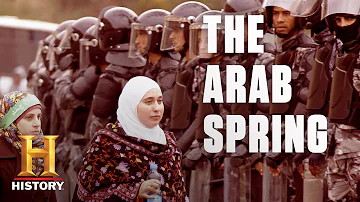
Heres How the Arab Spring Started and How It Affected the World History
HISTORY
1.1M مشاهدة · 8 years ago
2:03
The Arab Spring 10 years on A look back at the events that led to the fall of Ben Ali
FRANCE 24 English
909 مشاهدة · 5 years ago
2:07
Tunisias Arab Spring Three years on
Al Jazeera English
3K مشاهدة · 12 years ago
1:26
The Arab spring and Tamims ruins أطلال الربيع العربي مع تميم
Arabic poems in English with Maisara
371 مشاهدة · 11 months ago
18:20
LIVE Tunisians protest on Arab Spring anniversary
Reuters
3.4K مشاهدة · Streamed 5 years ago
1:35:02
The Future of the Arab World 10 years after the Arab Spring
TRT World Forum
712 مشاهدة · 5 years ago
5:49
The 2011 Arab Spring and latest protests in the Arab world
TRT World Now
281 مشاهدة · 6 years ago
0:55
The Arab Spring Explained How Protests Changed the Middle East 2010–2012
Global Snapshots
286 مشاهدة · 1 year ago
23:49
On the Arab Spring with the Director of We Are the Giant
VICE
45K مشاهدة · 11 years ago
5:14
Arab Spring Arab Winter Tumult in the Middle East
Central European University
295 مشاهدة · 12 years ago
1:54:32
Global Issues Speaker Series The Arab Spring and Its Long Shadow

 1:34:48
 2:21
2:21
 3:00
3:00
 3:55
3:55
 2:03
2:03
 2:07
2:07
 1:26
1:26
 18:20
18:20
 1:35:02
 5:49
5:49
 0:55
0:55
 23:49
23:49
 5:14
5:14
 1:54:32
 1:00
1:00
 0:41
0:41
 2:57
2:57


