hello out there welcome to this tutorial in this video we'll be looking at the sphere where we be treating surface area and volume so we take the sphere this is threedimensional solid shape with radius so the volume of this sphere is 4 3 pi cub and the CES surface area it has only one surface and it is just the cve surface area so we just refer to it as the surface area which is 4 pi r² and we cannot separate sphere and hemisphere so we also look at the hemisphere hemisphere is half of sphere so we have it as radius so that the volume of these is half of the volume of the sphere which is 2 over 3 pi Cub also for the cve surface area here this is the calve surface area hemisphere has two faces the calve surface and the circular face so the calve surface area is 2 pi r² which is still half of the surface area of the sphere while the circular face is r² so that when we are looking for the total surface area now the total surface area of the hemisphere is the area of the curve surface plus the area of the circular face that will give us 3 pi and from here we look at soling two or more problems on the surface area and volumes of sphere or hemisphere so we take our first problem problem one the radius of solid sphere is 7 cm calculate the volume surface area of the sphere take Pi = 22 over 7 so in the solution to this problem we are going to have the volume to be = to 4 3 pi cub and substituting in the value of pi and here our radius is 7 cm Pi is to be taken as 22 / 7 so we have have the volume to be 43 * 22 7 * 7 Cub so if you press our calculator we are going to have it as 1,437 3333 but to 1mr place we have it as 1, 14373 cubic cm which represent the volume of the solid sphere of radius 7 then we go to the part of the problem the surface area is 4 pi r² and substituting in the pi to be 22 / 7 and radius to be 7 so we have 4 * 22 over 7 * 7 1 7 here we go with this so we have 7 here 1 so one of the sevens is taken away with this so we now have 7 * 22 * 4 which gives 616 CM which represents the surface area of the sphere whose radius is 7 cm so we go to problem two for problem two calculate the volume and mass in kilogram of metallic spherical object of diameter 28 CM if the density of the metal is 1.6 per cubic cm take pi = to 22 over 7 and correct answers to three significant figures so in the solution we have to calculate the volume first from the volume we already know that mass is volume time density so we go so volume is 4/ 3 pi Cub our PI is 22/7 our radius is going to be half of the diameter which is 28 / 2 which will give us 14 so substituting in these values we have 43 * 22/7 * 14 Cub so pressing the calculator here we have our volume to be 11,000 48. 66666 so to two decimal places here we have 11, 49867 cubic cm and to three significant figures we are interested in the first one the second one and the four but then we check the next value which is greater than five so we make it one and add it to to 4 so it becomes 11,500 cubic cm so we now go to calculate the mass of the spherical object and we say mass is volume time density so we've calculated the volume and we are going to use this volume not the rounded value so we use the raw value that's going to give us 11,00 48.67 time the density which is time 1.6 and multiplying this out we have 18,3 97.9 and we are meant to give our answer in kilog so that will give us 18. 3979 we have the divided by 1,000 since 1,000 make 1 kilog so converting this to three significant figures we have 18.3 we check the next number since it is 9 we make it one add it to three it becomes 18.4 kilog and that is the end of solution to problem two we go to problem three problem three hemispherical solid material has radius 4.2 CM calculate the volume surface area of the hemisphere we take pi to be 3.42 and starting from part of the problem we know the volume is 2 over3 pi cub and our radius here is 4.2 our PI is 3142 substituting this into the formula we have 2 over3 * 3142 * 4.2 CU so if you press your calculator we have it as 15519 cubic cm and that's the volume of the hemisphere now we go for the surface area of the hemisphere we know from the beginning the surface area is 3 Pi r² still substituting = to 4.2 and pi to be 3.42 that surface area will be 3 * 3142 * 4.2 simplifying this from our calculator we have the result to problem 3B to be 166.270 188 cubic cm calculate its radius and hence its surface area take pial to 22 over 7 in our solution we need the volume of spere and we are giving the volume here we are looking for the radius so we are also given the value of pi so what we do now is to substitute and pi to enable us calculate the value of so we have it 3888 is = 4/3 * 22/7 * Cub we make Cub the subject of the relation this is going to be 38808 * by 3 * 7 21 we multiply by 21 then divide by 4 * 22 so pressing this from our calculator cu is 9,261 to get we find the cube root of 9,261 that gives cm so we're done with the first part of the problem we go to the second part surface area of the spare that's 4 * 22 / 7 * 21 squared so we have the result as 5,544 squ cm and that's the end of solution to problem four we go to problem five metal sphere of diameter 16 cm is melted and cast into smaller balls of diameter 4 cm how many smaller balls can be recast this is an example of change of shape we have an original shape then we're changing it to another shape though they are of the same shape still referred to as change of shape now what we do is to get the number of these smaller balls from the bigger one we find the volume of the bigger one then divide it by the volume of the smaller one so let's go so the solution is number of smaller balls now we've said volume of the big ball divide by volume of the smaller ball so we know the volume of sphere to be 4/ 3 pi Cub we're taking the radius of the bigger sphere to be capital and that of the smaller sphere to be small and if you look at it 4 over3 Pi will go with 4 over 3 Pi so they are gone we are now left with Cub over cub and our Big the radius of the bigger ball that's met sphere of diameter 16 cm the diameter is 16 cm that will give us8 and the diameter of the smaller one is 4 cm to the radius will be 2 Cube so if you look at this 2 cube is 8 it removes one of the eights here will be left with 8 squ and that give us 64 boss so that's the end of solution to problem five and this is the highest we can go in this tutorial hope you enjoyed it please check the description section of this video on our YouTube channel to get link to other videos on solid shapes with respect to volume and surface area until come your way again goodbye
11:09
Volume and Surface Area of a Sphere Formula Examples Word Problems Geometry
The Organic Chemistry Tutor
319.9K مشاهدة · 8 years ago
4:14
Understanding the Volume of a Sphere Formula Using High School Geometry
mathematicsonline
1.5M مشاهدة · 14 years ago
10:28
Spheres Finding the Surface Area and Volume of a Sphere
Nabifroese Math Videos!
453 مشاهدة · 5 years ago
15:51
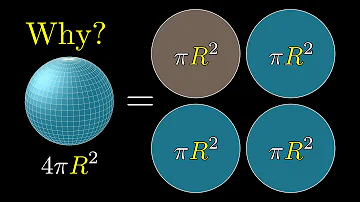
But why is a spheres surface area four times its shadow
3Blue1Brown
8.7M مشاهدة · 7 years ago
5:14
Lesson 29 The Geometry of the Sphere Surface Area Volume Masterclass Plane Solid Geometry
NO PROBLEM ONLY SOLUTION
23 مشاهدة · 7 days ago
20:21
Unit 8 Day 3 Surface Area of Cylinders Spheres part 2
Alexandra Niedden
42 مشاهدة · 2 weeks ago
11:37
Unit 8 Day 7 Notes Volume of Spheres
Alexandra Niedden
3 مشاهدة · 7 hours ago
3:12
Visualizing the Volume of a Sphere Formula Deriving the Algebraic Formula With Animations
Kyle Pearce
1M مشاهدة · 11 years ago
10:26
Surface Area and Volume of Spheres
Geometry with Mr. J
224 مشاهدة · 11 years ago
7:20
Surface Area of a Sphere
Ryne Roper
230 مشاهدة · 4 years ago
17:02
Lesson 11 9 Surface Area and Volume of Spheres High School Geometry Florida Best
FlippinEducation
26 مشاهدة · 2 weeks ago
4:14
The Volume of a Sphere Numberphile
Numberphile
525.3K مشاهدة · 4 years ago
2:47
The Volume of a Sphere and Half Sphere Mathematics Alloprof
Alloprof in English
463 مشاهدة · 3 years ago
28:37
Unizor Geometry 3 D Sphere Volume and Surface Area

 11:09
11:09
 4:14
4:14
 10:28
10:28
 15:51
15:51
 5:14
5:14
 20:21
20:21
 11:37
11:37
 3:12
3:12
 10:26
10:26
 7:20
7:20
 17:02
17:02
 4:14
4:14
 2:47
2:47
 28:37
28:37
 4:31
4:31


