النص الكامل للفيديو
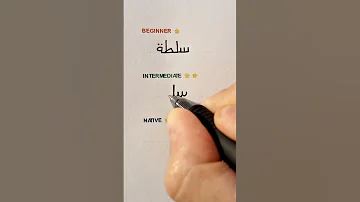
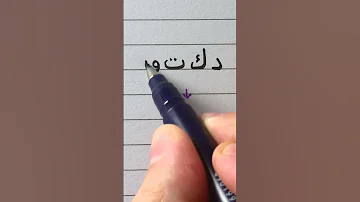
Which one of these two is Alif and which is Hamza? Hmmm seems confusing, right? What about this? Can you tell the difference now? What is Alif and what is Hamza in the first place? Are they different? And if so, how much different? How can we differentiate between them? Don't worry, you're not alone. In fact, many native Arabic speakers used to confuse between Alif and Hamza. In this video, I'll explain everything you need to know to understand both of them. What are they? How can we differentiate between them in both pronunciation and in shape. We'll focus on the most confusing cases for each one of them. And of course, we'll have lots of practical exercises that we'll practice together. This video is complete guide that contains everything you need to know about Alif and Hamza. It's bit long, but promise you that by the end of this video, you will become hero in this topic. Hello everyone, welcome back to my channel. This is Moustafa Nasir speaking and you are watching Arabic4NoNs. This is new pronunciation lesson. Don't forget to subscribe my channel, activate the bell and like the video. You will find two links in the video description below for two PDFs you can download for free. The first one contains the slides used in this video and the second contains summary for all concepts and exercises used. Don't forget to download them. You'll only have to give your email. Before we start, would like to go over the question left for you at the end of the previous lesson about Shaddah. I'll give you the answer now because it connects directly to today's topic. The question was, is it possible for an Arabic word to begin with doubling? In another word, is it possible for the first letter in an Arabic word to have Shaddah? The simple answer is No. That's not happening. But why? Because as we studied previously doubling means two identical letters. The first is consonant and the second is vowel. That would make the first letter in an Arabic word to be consonant which is not allowed. Keep this concept in your mind. We'll come back to it shortly in this video. An Arabic word never begins with consonant. Now let's begin. Let's begin by defining Alif and Hamza separately. Alif is letter of the Arabic alphabet. It's always consonant. So, it has no sound of its own unless it carries Hamza. Most commonly Alif is used as part of long vowel to elongate the (a) sound when the letter before it is labeled with Fatḥa. It can also serve as seat for Hamza as we'll see shortly. What about shapes of Alif al if appears in three different shapes. the regular isolated shape, the connected shape in the middle or at the end of word, and the special final form known as AL-Alif AL-Maqṣūra; the shortened Alif in words like my name, for instance, Mustafa or in other proper nouns such as Musa and Isa also in some feminine nouns like Salma and ṣughra now let's talk about Hamza. Hamza is not letter of the Arabic alphabet. It's phonetic symbol that represents glottal stop. In terms of shape, this is Hamza. that small rounded shape. Sometimes it appears alone, but most of the time it appears in combination with another letter. It can appear on top of the Alif when marked with fat or below Alif when marked with kasra, on waw, on yaa' on this shape which we call Nabra or even floating on the line alone as it is. Here is visual tip to help you recognize Hamza only by looking. Whenever you see this small rounded shape which looks like the head of letter 'ayin ع, that's Hamza. Think of it this way. Hamza usually needs seat to rest on. It could be Alif, waw, yaa', nabra or even just the writing line itself. Okay fine. Now let's demonstrate the difference between Alif and Hamza in pronunciation. I'll start by giving you examples for both of them in the middle and at the end of word before going back to the beginning of words. Check the first example. Here have two similar words. In the first word, the second letter is Alif notice its pronunciation As we explained earlier, Alif here is part of long vowel. It elongates the sound (a), producing smooth single syllable flow. The pronunciation feels light and uninterrupted. Now listen to the second word. The word has three syllables. causes slight interruption, glottal stop that breaks the flow of the word. Listen to the difference again. Here is beautiful exercise to practice the sound of Hamza. Repeat it with each of the three vowels we know; fatḥa, ḍamma, and kasra like this. the Hamza in the previous example was labeled with fatḥa. Let's try another example in which the middle hamza is consonant. Check these two words. The first one the Alif is elongated and smooth. And the second one again you can feel the glottal stop. Now, let's look at examples that end with Alif and Hamza. Starting with these two similar words. The first one is pronounced as with Alif creating that long vowel sound at the end. And the second is pronounced in two syllables. Notice the clear stop from the Hamza. Here is an important caution. Be careful not to over pronounce the Hamza by extending it. Some people in word like this pronounce it as by allowing some air to go out. That's wrong. It is consonant here. So the sound must be held inside without extension like this. only if Hamza is marked with vowel like fatha. And this is by the way the default case-ending here since it's past tense verb. In this case, we shall pronounce it as in three syllables. Let's hear three of them again. Sometimes both Alif and Hamza appear together at the end of word like this. an Alif followed by Hamza resting on the line. Here we will pronounce the two sounds. The long vowel of the Alif followed by the glottal stop of the Hamza. Let's have another couple of words. The first one contains only Alif. So, we will have the elongation sound as while the second one will be pronounced as We have both sounds for Alif followed by the Hamza. Here, the Hamza is consonant. What if we mark it with, say Tanween dammah since the word is indefinite, it will be pronounced like that. both the vowel and the glottal stop are still there. In addition of the noon sound of the Tanween, even when taken step further by making the word definite, the Tanween becomes single damma and hence we pronounce it as Check the pronunciation again. let's talk about how Hamza appears seated on other letters like in these examples they are pronounced as follows. When removing the Hamza from these words, the letters used as seats are pronounced normally. This shows that the base letter Alif, waw or yaa' just become regular sound again. Now, let's go to the beginning of words. And this is where many learners get confused. So, leave anything you're doing right now and look at me. Look at me. Look at me. Now you're looking at me. We said earlier that Alif is consonant and we also said that an Arabic word never begins with consonant. So, according to this concept, an Arabic word never begins with an Alif because it's consonant, right? Wait, what? But we do see al if at the beginning of many words, right? Like these examples. So, what's happening here? Well, here is secret. What you see here, it's not an Alif. It's actually Hamza taking the shape of Alif. This special kind of Hamza is called Hamzatul-wasl or sometimes Aliful-wasl So, it's called Alif and Hamza at the same time. Yes, it's called Alif because it has the shape of Alif and it's called Hamza because it has the pronunciation of Hamza. But to avoid confusion just call it Hamzatul-wasl because we said Alif never comes at the beginning. On the other hand, Hamza appears in its standard shape at the beginning of the word like in these examples. So, there are two types of hamzas at the beginning of word. The first one; Hamzatul-Qat', this is the normal Hamza that we know which has this small rounded shape remember. And the second type is Hamzatul-wasl which looks exactly the same like Alif long vertical line with nothing on top or below. But what is the meaning of these two words AL-Wasl and AL-Qat' what is the difference between Hamzatul-Wasl and Hamzatul-Qat' in the first place? Let's understand the difference with an example. Here are two words. One of them begins with Hamzatul-wasl and the other begins with Hamzatul-Qat' only by looking you can easily differentiate between them. The one that looks like Alif is Hamzatul-wasl and the one that has this rounded shape is Hamzatul-Qat' let's pronounce and Notice again they both have the sound of Hamza pronounced with kasra vowel So both of them will be pronounced obviously in the beginning of the speech when the word that begins with Hamza is the first word. Let's try to make them in the middle of the speech by adding word before them. I'll make it simple by adding single-letter word wa which means (and). Let's now pronounce them again. As you see the Hamza here is pronounced obviously. However, check the other one. This Hamza was completely dropped and the two words were pronounced as one as if it's written like this. Going back to the meanings of the two words AL-Qat' and AL-Wasl the word AL-Wasl literally means connection which refers to the case in which this Hamza becomes silent in connected speech. On the other hand, the word AL-Qat' means separation, which indicates that this Hamza will be pronounced even if the word it begins with is separated from the speech and pronounced alone. Well, hope by now you got everything remain some topics that rely on Alif and hamza. For example, the rules of drawing Hamza with other letters. the cases in which Hamzatul-wasl and Hamzatul-Qat' appear and also to study definiteness since the definite article prefix itself contains Hamzatul-wasl. Let's do quick recap. Alif is consonant letter while Hamza is glottal stop. Alif never comes at the beginning while Hamza comes anywhere in the word. Alif has three possible shapes while Hamza has only this shape but it rarely shows alone. It used to show in combination with other letters including Alif. The only case in which Hamza might be confused with Alif is in case of Hamzatul-wasl which is hamza taking the shape of Alif in the beginning of the word. We explain the difference between Hamzatul-wasl and Hamzatul-qat' Hamzatul-wasl is pronounced as Hamza only when it's at the beginning of the speech while in the middle it becomes silent. However, Hamzatul-qat' is pronounced as Hamza anywhere in the speech. Here is your homework. Try to read the following words and sentences considering the rules of Hamza and Alif we covered today. Well, that's enough for today. Try to rewatch the video and practice all the exercises before jumping to the homework given. In the next lesson, we shall study the definite article which is the prefix AL We'll focus on its effect on the words pronunciation after using it. You can download the PDF summary from the link in the video description as well as the slides used in this video. Just click the link, give your email and download it for free. Don't forget to subscribe my channel, activate the bell and like the video. See you in the next lesson.

 0:59
0:59
 15:44
15:44
 7:25
7:25
 0:20
0:20
 0:58
0:58
 14:20
14:20
 10:22
10:22
 11:05
11:05
 7:46
7:46
 1:00
1:00
 0:34
0:34
 0:31
0:31
 0:13
0:13
 0:46
0:46
 0:21
0:21
 8:48
8:48
 0:11
0:11


