النص الكامل للفيديو
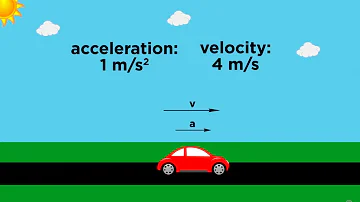
Hello, this is Jonathan Gardner covering section 2.4 of Surway and Jwit's physics for scientists and engineers ninth edition. This is chapter 2.4 section 2.4 on acceleration. This section covers not just what acceleration is and what it means from you know kind of handwavy understanding but also we get little bit deeper into calculus. We learned more about the derivatives and how to calculate some derivatives. So back in the previous section we we talked about what happens when particle has velocity. So the position changes over time when there's some kind of velocity. If the velocity is zero the position doesn't change over time. But when you have you know velocity the particle is moving somewhere. And in this section we're going to talk about what the word acceleration or what it means for particle to accelerate means. and basically acceleration is when the velocity changes over time. So velocity is when the position changes over time and acceleration is when the velocity changes over time. And you might have seen that meme where they show car and for normal people the steering wheel is you know that changes the direction and you know you press the gas to speed up and the brakes to slow down. But to physics students the steering wheel, the gas pedal and the brake pedal they're all accelerating. it's all different types of acceleration. And suppose that we have an object mo modeled as particle moving along the x-axis with initial velocity vx subi. So in the direction of the velocity initially it has some velocity and it also at time ti it has that velocity. We we call this position at time or whatever. And then we have final velocity at Okay. Then we define the average acceleration. So I'm sorry subX average is defined to be the change in the velocity in the direction over the change in the time. Okay. And more specifically, that is the final velocity minus the initial velocity divided by the final time minus the initial time. And this should look very familiar because again, we're just substituting velocity for position and acceleration for velocity. As with velocity, when it's one-dimensional, we're going to use positive signs. So positive signs means that the velocity is changing in this direction. And negative sign means that the velocity is changing in that direction. And there's very important distinction here that we're going to talk about in second. But first, let's analyze the dimensions of acceleration. And so this is going to be the dimensions is going to be length over time divided by time because the units of change in velocity is just length over time. And the the dimensions of time is just time. And so this is length over time squared. Okay? And sometimes people think of this or they talk about it as length over time over time, right? So we might say meters/s per second because the meters/s are changing per second, but we also say meters/s squared or something like that. All right. Now, let's draw little picture here, graph. Okay. So I'm going to draw the graph like this. This is the velocity in the direction. So large numbers means it's moving very rapidly to the towards the right and negative numbers means it's moving very rapidly to the left. This is the time axis. So as time progresses things move towards the right. And in the example he has here, he draws like little box like this where he says initially we're at time ti. Finally we're there and the velocity in the direction starts here and the velocity in the direction ends there. And so we go between and right? And so the average acceleration is just the slope of that line. That's all it is. Okay? Now, if we wanted to do instantaneous velocity, we'd have to know kind of the shape of the graph in between. Let's say the shape of the graph looks like that. The instantaneous velocity would be the tangent line. So, it would be something like that at that point. It would be something like that at that point. Okay? So, the instantaneous acceleration, I'm sorry, would be the slope of the velocity line. Okay? And we can define the instantaneous acceleration to be the limit as the change in time approaches zero of the change in velocity in the direction divided by the change in time. And that is just the derivative of the velocity in the direction with respect to time. So this as we get closer and closer to to delta equaling zero, never actually reaching there, but looking around what it looks like as approaches zero, delta approaches zero, we can deduce the derivative. think one of the confusing parts for beginning physics students is that this they get used to the position graph. So let's draw position graph over here. So we have the position and we have the time and we have particle that does this or something like that right and they they get used to understanding it takes fair amount of work to understand that you know at one second let's say here over here is 5 seconds that let's say the position here is 4 and over here the position is 3 they're like okay understand that at 1 second it was at four meters and then as time moved on it moved forward or to the Right? And then it started moving backwards and then it actually went back to before where it started. Right? They understand this graph. And if if this sort of graph is confusing for you, this is something you really have to sit down and think about lot until it makes sense. But then we're moving from this sort of graph to velocity graph, which means something completely different. Okay. So in this graph it says at this earlier time the velocity was positive in the direction. That means the particle is moving right and then it speeds up and then it slows down but it's still moving towards the right. Okay. One thing that might help you understand is to let's actually draw two of the same things here. So let's let's say that we had velocity graph and this is the example in figure 27 they have in the book and it looks sort of like this. So it goes up and then it goes down. Okay? And they call out this thing at and they call out this thing at and then they call out this thing at Okay? And this is the velocity graph. This is time. And so we're going to draw below that an acceleration graph. Okay. And just like the velocity graph is the slope of the position graph. Well, we're going to take the slope of the velocity graph. And what's the slope here? So, let me grab my pen, put the cap on so don't write on myself. And you can see here at at equals it's flat. And then it starts to curve up. And when you reach the point at the slope is positive, right? It's about one, right? Because it's it's at 45 degree angle. And then as we pass the point the slope changes and it flattens out back to zero. And then as we continue past the slope points downward. At it's actually pointing downward. So it's negative. And then it starts to gradually get closer and closer back to zero. So the acceleration starts here at zero. It's positive here at but then at the slope is zero again. And at the slope is negative. So it it kind of does something like this. It go and then it ends with negative slope, but it's not as steep because you can kind of see it's kind of tapering off there. Right? So this is this is and this is So we can go and line these two graphs up and kind of show you how the acceleration is related to the velocity. All right. And again, if this is something that's confusing for you, you need to sit down and really think hard and maybe go over this explanation few times until it starts to make sense. All right. Now, there's quick quiz 2.3. Make velocity time graph for the car in figure 2.1A. That's the car that's back in section 2.1. remember that car that moved forward and then moved back. suppose the speed limit for the road on which the car is driving is 30 km/h. True or false? The car exe exceeds the speed limit at some point within the time interval 0 to 50 seconds. So go back and take the position graph from figure 2.1A and make velocity graph. And how do you make velocity graph and position graph? You just calculate the slope. And the way you calculate the slope is you take your pen or whatever and you line it up tangent to the graph and you say, "What is the slope of that tangent line?" Okay? Again, I'm not going to tell you the answer. I'm going let you figure that on your own. It might be good if you have friend that's also studying to talk this out with your friend. see if they have some weird ideas or if your ideas are weird. sometimes if you come to an agreement, you might be wrong together. So understanding why you're wrong is is part of the the fun of learning physics. You know, we have all these ideas about how we think the universe actually works. can guarantee almost every idea you have about how the universe works is wrong. Even if you've watched lots of physics videos, as physics students myself, was constantly surprised by how wrong was about the most basic things, you know. So allow yourself to be wrong and try to figure out what it was that led to you being wrong and see if you can resolve that and so it doesn't happen again. Okay. another thing that we want to talk about is when velocity is to the right and the acceleration is to the right. So they're positive numbers. They're pointing to the right. What's happening is the velocity is getting bigger and bigger. Okay? So the velocity is increasing right the magnitude of the velocity is increasing right so but if the velocity is to the right and the acceleration is opposite to that then the magnitude of the velocity I'm going to put little bars around that to indicate the magnitude of the velocity is getting smaller the object is slowing down so it's speeding up and it's slowing down when acceleration points in the same direction as the velocity the speed increases But if it's pointing opposite, then the speed decreases. Remember, speed is the magnitude of the velocity. Now, what if the velocity were to the left and the acceleration to the right? Well, here the magnitude of the velocity is still decreasing. It's not going as fast to the left as it used to be because the velocity is changing and getting smaller and smaller. And the last case is hopefully pretty obviously when the velocity is to the left and the acceleration is to the left then the magnitude of the velocity is increasing even though it's getting more and more negative it's getting bigger and bigger. Okay. And remember the direction and the for these vectors is just positive or negative. So this is velocity is positive, acceleration is positive. This is velocity is negative, acceleration is negative. And this is when they're the opposite signs. Okay? And so if they're opposite signs, the magnitude of the velocity is getting smaller. But if they're the same sign, the magnitude of the velocity is getting bigger. Another thing that we're just going to hint at now, we're not going to talk about in detail. We'll get to chapter 5 and we're going to talk lot about this is you might have heard of this thing called force. Okay? And force is vector. So it has magnitude and direction. So the force in the direction is proportional to the acceleration in the direction. Remember this. We don't know what the factor the the factor or the sorry the the factor of of proportionality is right. Is the force 10 times the acceleration? Is it twice the acceleration? Is it half the acceleration? don't know. just know that if you double the acceleration, the force also doubles. If you have the acceleration, the force also halves. Okay. So this indicates that force is the driving cause or rather acceleration and force are really the same kind of thing. There's relationship between those two things. Okay. So way to think about this is let's say you're playing hockey or something like that and you're only thinking about one direction. You're not thinking about turning. Okay. hockey player is moving down the ice and you want to slow him down. What do you have to do? You have to push on him to slow him down somehow. Maybe he uses his skates to push on the ice. So the ice pushes on him. But if he's moving this way, if he's moving towards the left, you have to push on him to slow him down again. And if he wants to speed up, you have to push him from behind to make him go faster. Right? So force is push or pull. Okay, quick quiz 2.4. Let's say you have car on the highway traveling eastward. Okay. And maybe there's traffic jam ahead of him or maybe something is causing him to slow down. Maybe the the police turn on their lights and he's like, better pull over." Right? So, he's going to slow down. What is the direction on the car that causes it to slow down? Is it eastward, the same direction he's traveling? Is it westward, the opposite direction he's traveling, or is it neither eastward or nor westward? So, think about that. Hopefully, it should be fairly obvious answer if you've been paying attention to what I've been talking about here. Okay, there is two pitfalls on page 33 in section 2.4. Pitfall prevention 2.4. Negative acceleration. It says, keep in mind that negative acceleration does not mean that any object is slowing down. So, when acceleration is pointing to the left, the object may be slowing down, but it could also be speeding up. Okay, so just because the acceleration is negative doesn't mean things are slowing down. And just because the acceleration's positive doesn't mean they're speeding up. Okay, and it says pitfall prevention 2.5. The word deceleration has the common popular connotation of slowing down. We will not use this word in this book because it confuses the definition we have given for negative acceleration. So we're not going to use the word deceleration. deceleration implies an acceleration that's opposite to the velocity, but it also sounds lot like negative acceleration, but they're two different things, right? Because sometimes if you want to quote unquote decelerate, you need to have positive acceleration. Okay? Now, acceleration is defined to be the derivative of the velocity respect to time. Well, the derivative of velocity with respect to time is also derivative with respect to time of the position. Okay? And so we're going to rewrite that as d^2 by dt^2. Okay? It's little bit confusing when you first see this, but just get used to when you see d^2 something by dt ^2. That means we're taking the derivative with respect to the bottom part twice. Okay? So we say that the acceleration is the second derivative of the position with respect to time. Okay, let's go over conceptual example 2.5. Okay, the graphical relationship between vx, and ax. So we're going to look at some graphs and we're going to try to understand how these three things are related together. Right? We've already kind of looked at how the velocity and the the position and the velocity and acceleration related, but let's look at all three together at the same time. Okay. So, I'm going to draw hopefully somewhat accurately three graphs here. Make sure that you can see them all. let's kind of align it with the screen there. So, this is the the velocity, and the acceleration. And all of these three graphs are with respect to time. Right? So in this picture, he has 1 2 3 4 5 6 So we're going to say that's at time at time Time is little bit closer. Time is over there. Time And then finally time Okay. And I'm just going to kind of sketch it out like this. Okay. And I'm just replicating what's in the book. We're going to talk about how these three quantities are related. And could start with the acceleration and get back to the position or could start with the velocity and get the position acceleration or could start I'm going to start with the position. think it's easier to understand with the position. So at position at time equals 0 we're at position zero. Okay. And then gradually he speeds up and then he reaches point Okay. So at this time the velocity is zero. So we're going to start at velocity zero. But then the velocity you can see that there's curve to that graph because the velocity gradually increases. So I'm going to draw line with positive slope and the slope of the velocity is constant and it's positive. So I'm just going to draw that. Okay. And then at equals or something changes and it looks like we have constant change in position. The slope is constant. It doesn't change. And so the velocity is constant. It's flat. What does that mean about the acceleration? What's the slope of the acceleration for that time period? It's zero. So it drops down. And now the acceleration is zero. Okay. So flat line on the position graph means it's slope zero on the velocity graph, which is zero on the acceleration graph. Okay. Now at to can gradually see that it's it's not the slope is gradually changing. It's gradually changing and then it kind of peaks out at at At this the slope of the position graph is flat. So know that have to be at velocity zero at time And can kind of see that it's gradually changing. In fact, it's changing in straight line. And so now we have constant acceleration for that time period that's negative. Okay. So now we have constant slope negative. So it's gradually changing the slope there from from some positive value to zero. And so the the velocity is is changing towards zero gradually and the acceleration is negative. Okay. Make sure that's on screen there so you can see that the the acceleration is negative. Now it continues to kind of slope downward towards and the slope is continuing to change at the same rate. So it's the same slope there. And so we still have negative acceleration at time and then it kind of does this whoop and then it levels out. So we have zero velocity after because the position doesn't change. And then the slope here of the position graph rapidly changes from negative to zero. So we have to go like that. Well, what does that imply? Well, that's positive slope on the acceleration. In fact, it's kind of big positive slope. And then after there's no change, there's no change. Okay, so we've worked through how these three graphs are related to each other and I'm not going to go into great detail about what all this means in terms of maximum minima and all that that kind of stuff, but just wanted to walk you through the process of doing this so that you can do this for yourself and you can think about how these things work. Now, he adds little note here at the end. He says, "Look at the acceleration graph. It's like boop boop boop boop boop boop boop boop." Okay, that is non-physical. In real life, things like that don't happen. We're going to talk about why later, but just understand that sometimes in some of these problems, we're just analyzing something that's not real. Okay, that's example 25, believe. Now, we're on 2.6. And think after this, we wrap it up. There's little note at the end about derivatives. Okay. Yes. Okay. So, we're going to wrap it up after 2.6 and little note about derivatives. So, 2.6. so example 2.6. So we have average and instantaneous acceleration. The velocity of particle moving along the xaxis varies according to the expression. The velocity of is equal to 40 minus 5 ^2. is in seconds and vx is in meters/s. So we're in standard SI and the question is find the average acceler and the time = 0 to = 2.0 seconds. So we want the average acceleration from = 0 to = 2.0 seconds. Okay. Well, the average acceleration it was defined to be the change in the velocity of over the change in time. And so we just need to figure out what the velocity of ended up at at 2.0 seconds. So we have 40 - 5 * 2.0 seconds squared minus the initial velocity. Well, equals 0. So it's 40 - 5 * 0^ 2. Okay. all over the final time 2.0 seconds minus the initial time 0 seconds. Okay, so we can just do little bit of math here. So we have 40 - 5 * 4 that's 20. 2 * 2 is 4. And then minus 40 minus minus is positive. But 5 * 0 * 0 is just zero. Okay. And that's all over 2.0 seconds. this is all meters/s at the top there. So, we have 40s that cancel because 40 - 40 is 0ero. So, we have -20 / 2. So, we have -10 m/s squared. Okay, that makes sense how that works. Pretty simple algebra. Now, we're going to find the acceleration at at = 2.0 seconds. All right. So, we don't want the average acceleration. We want the actual acceleration. That's defined to be the limit as delta approaches zero of the change in the velocity in the direction over the change in time. and if you flip to the back of the book, I'll just say the note about derivatives now. you can go find table of derivatives, and you can learn how to apply derivatives so that you don't have to do what I'm going to do next. Okay? I'm going to tell you in all honesty, never do what I'm going to do next when I'm studying physics. just do this to learn what derivatives are. Okay? So, let's write this all out. So we have the limit as delta approaches zero of vx minus vi initial final minus initial right and so we're going to have let's just say we have 40 - 5 * delta ^ 2 - 40 - 5 ^2 and let's divide by delta Okay, so what did, I'm sorry, plus delta ^2. Okay, and the is 2 seconds, but I'm just going to leave the in there for now. So what did is said the final is just the velocity at plus delta And said the initial is just the velocity at time Okay, so we're just going tiny bit in the future seeing what how the velocity changes and we're going to keep that kind of as the anchor point and delta is going to get smaller and smaller. So these two points are actually going to converge. They're going to be the same at that point delta equals 0, which we're not actually going to get to. Continuing on, let's do little bit of algebra. So we have 40 - 5 * ^ 2 + 2 delta plus delta ^ 2. I'm just expanding plus delta ^ squ in there. Okay. And then minus 40 - 5 ^2. That's going to be all over delta And let's continue. Hopefully won't run out of paper here. 40 minus distribute the 5. 5 t^2 - 10 delta - 5 * - 5 delta ^ 2 and then we're subtracting 40 and then minus and minus is plus. So 5t ^2 and 5t ^2 cancel. 40 and 40 cancel. We're left with this here all over delta Well, delta is going to go towards zero. So let's just not jump the gun here. So we have min -10 deltat over delta minus 5 delta ^ 2 over delta Okay, so what's going to happen to delta ^ squ over delta as we get closer and closer to zero? Well, it's going to get closer and closer to zero. So that just turns into zero. And these two delta t's cancel. We're not actually going to zero. So we can divide by delta approaching zero. So the answer is -10 Okay. Is that correct? That is correct. We plug in for 2.0 seconds. Okay. That is the answer. Okay. Now if we go to the back of the book, think it's appendix B6. They give table of derivatives. Let's do it the way would normally solve this. Okay. So, I'm going to say the derivative with respect to time, the acceleration of is respect to time of the velocity of which is by dt of 40 - 5t^2. Okay. The derivative of sum is just this derivatives of each of the parts of the sum. So of 40 by dt minus of 5t ^2 by dt. Well, this is zero. The derivative of any constant is zero, right? if you don't know why, you can look at the graph or you can just remember that the derivative of any constant is zero. the derivative of product is just the derivative of the first item times the second item plus the first item times the of the second item. So it's going to be minus the derivative of 5 by dt let's just put the minus in bracket there time ^2 plus 5 * the derivative of ^2 with relationship to Well the derative constant is zero again so that's zero. So we're left with 5 dt ^2 by dt. dt ^2 is just 2t. So, it's 10 which when you plug in 2.0, you're going to get 20 m/s squared. And all of this, because I've done it so many times, I'm going to quickly analyze and say, well, the derivative of that's zero. The of that is 10 - 10 I'm sorry, there's minus sign in there. So, I'm just going to write out minus 10 which is minus 20 m/s squared. Okay, so that's how we do derivatives in physics. We look up tables. We memorize the tables and we learn how to apply the tables. and if you want to understand where the tables come from, then you go make trek to your friendly math department and you go ask them to learn real math and not the the math that we use in physics that just gets us by and gets the job done. hope that you take time. You might have to review this video couple times. You might have to think about these concepts on your own. You might have to talk about it with your friends. Come join us on con discord and talk about it if you need to. These are not simple concepts for people to grasp. Do not beat yourself up if you don't understand it at the first go. Okay? Once you understand these concepts, physics gets lot easier. Okay? So, just hold that in your mind that if you're having hard time understanding this, if you can make breakthrough and understand this, then the rest of physics is lot easier. Okay? If you decide to just kind of like, don't really understand this. I'm going to keep moving on. You're going to have terrible time in physics. So, take the time to understand what we talked about here, especially these concepts about the second derivative. You know, the definitions. You have to memorize the definitions about what these words mean because we're very precise with our language and we mean what we say and we say what we mean. So, guys, have great day. Take care. Bye-bye.

 4:24
4:24
 18:58
18:58
 7:40
7:40
 6:36
6:36
 9:52
9:52
 8:06
8:06
 4:54
4:54
 7:22
7:22
 0:57
0:57
 10:20
10:20
 10:40
10:40
 5:04
5:04
 4:40
4:40
 5:28
5:28
 2:03
2:03
 0:58
0:58
 1:46
1:46
 20:40
20:40
 0:58
0:58