النص الكامل للفيديو
There is question so old that even the mountains have forgotten when it was first asked. It was not written in stone. It was not carved into temple wall. It was whispered, passed from teacher to student in the dying light of oil lamps, spoken in Sanskrit syllables so ancient they predate the concept of writing itself. And the question was this. Where did they go? Not metaphorically, not philosophically, quite literally. Where did the gods go? Because according to the Vedas, the most sacred texts ever composed on this earth, there was time long before history, before memory, before the first king drew his first breath, when the gods walked among men. When Indra's chariot left wheel marks in the sky that glowed for days. When Varuna watched the oceans from the shore and spoke to fishermen who recognized his voice. When the boundary between the divine and the human was not wall but door and that door was open. And then one by one they left. The Vadas did not call it an accident. They did not call it mystery. They called it inevitable. They gave it name, shape, timeline, and perhaps most unsettling of all, reason. What you are about to hear is that reason. It is story that begins before the first sunrise and ends in silence so vast that most people mistake it for emptiness. But it is not emptiness. It is held breath. The breath of something enormous waiting. The ancient seers knew what was coming. They encoded it in hymns, in fire rituals, in the architecture of time itself. This is what they saw. And this is why the gods could not stay. Chapter 1. The age when heaven and earth were one. Before we speak of departure, we must first speak of arrival. Before we can understand why the gods left, we must understand what it felt like when they were here. Because the world they inhabited was not this world. Not entirely. It looked different. It smelled different. Even time itself moved differently in those days. Slower, deeper, like river so wide you could not see the other shore. The ancient seers called it Satya Yuga, the age of truth. And if you sit quietly enough, if you let the noise of the modern world fall away for just moment, you can almost feel the edges of it, like the faint warmth of fire that burned out long ago in room you are standing in for the first time. Close your eyes and imagine it. The world in Satya Yuga was not yet broken. That is the only way to describe it really. It was whole in way that nothing is whole anymore. The rivers ran clear and gold in the morning light, not because they were shallow, but because the light itself was different then, deeper, more alive. The Vdic hymns describe sunrises in Satya Yuga as events that the entire natural world participated in. Birds did not simply sing at dawn. They answered the sun. Trees did not merely catch the light. They seemed to reach toward it with kind of longing that even stone could feel. The rig vader, the oldest of the four vades, does not describe this age as mythology. It describes it as memory as something that the rishies the ancient seers did not imagine but witnessed or more precisely remembered because the vadic tradition holds something extraordinary about the nature of knowledge. It teaches that the highest truths are not invented by human minds. They are heard received. The very word for the vades shuti means that which was heard. These were not poems composed by brilliant men sitting under trees. These were transmissions, frequencies caught by minds pure enough to receive them. And what those minds received again and again was the image of world in which the distance between human being and god was no greater than the distance between child and its parent. Think about what that means for moment. Not god enthroned beyond clouds behind veils of thunder and cosmic fire. Not deity accessible only through elaborate ritual. only through centuries of devotion, only through the mediation of priests and temple bells and the smell of burning ghee. god who was simply present nearby, reachable. god whose footstep you might hear on the path behind your home at twilight. god whose breath you might feel as warm wind moving through the field where your family grew its grain. This is what the Vaders describe and it is not presented as fantasy. It is presented as the natural condition of the world in its earliest and most perfect state. Indra, the king of the gods, the wielder of the thunderbolt, did not rule from some unreachable heaven in such yuga. He moved. He traveled the earth and sky in his golden chariot pulled by tory horses. And when he passed overhead, people looked up, not in terror, not in awe alone, but in recognition. The way you recognize the face of someone you have loved for very long time. Agny, the god of sacred fire, was not merely symbol invoked in ritual. He was presence, living intelligence that moved inside every flame, every ember, every spark that jumped from hearth and floated upward into the dark. When family lit their cooking fire in Satya Yuga, they were not performing metaphor. They were greeting someone. They were opening their home to being who had name, personality, history as long as the universe itself. Varuna, the god of cosmic order, the one who watches all things and keeps the laws of the heavens in balance. He was the closest of all to the human world. The Rig Vader addresses Veruna in tone unlike any other deity. Not with triumphant praise, not with the grand elevated language reserved for battles and victories, with intimacy, with the quiet voice of someone confessing to friend. What have done? The hymns ask Veruna. Why are you angry with me? Let me not lose your love. These are not the words of worshipper addressing distant force. These are the words of someone who genuinely expects to be heard, to be answered. And in such yuga, they were. But perhaps the most extraordinary aspect of this golden age was not the presence of the gods themselves. It was the quality of the human beings who lived within it. The texts are careful about this. They do not describe the people of Satya Yuga as superhuman. Exactly. They do not give them wings or extraordinary powers in the way later myths might. What they describe is subtler and in many ways more remarkable. The people of that age had no need for deception. Let that settle for moment. Not that they chose not to deceive. Not that they were punished when they did, simply that the impulse, that particular tightening in the chest, that quick calculation of advantage, the instinct to take more than one gives, it had not yet arrived in the human heart. It was absent. And in its absence, something else filled that space. Something the vades call retita. Rita is one of the most important and most untransatable concepts in all of Vadic thought. It is often rendered in English as cosmic order or truth or right action. But none of these translations quite capture what the vadas mean by it. Rita is not rule. It is not law written down somewhere and enforced by punishment. It is more like current, an underlying flow to all things. The way water finds the sea without being told to, the way seed becomes what it was always going to become without consulting anyone. Rita is the direction in which reality naturally moves when nothing is obstructing it. And in Satya Yoga, nothing was obstructing it. Human beings lived in alignment with Rita the way birds fly in alignment with the wind. Not by effort, not by discipline, not by years of spiritual practice, but by nature. Because they had not yet accumulated the weight that would later bend them away from it. The weight of ego, of craving, of fear. All of that was still distant, still approaching from somewhere beyond the horizon, but it had not yet arrived. And so the gods stayed. Why would they leave world like this? Why would they withdraw from place where every human heart was an open window? Where the smoke from every fire was genuine invitation? where the rivers themselves moved with kind of sacred intentionality that made every crossing feel like ceremony. They didn't. In Satya Yuga, there was no reason to. The relationship between gods and humans in this age is described in the Vadic texts with word that scholars have long debated but never quite agreed upon. Yajna. Most translate it simply as sacrifice or ritual. But the deeper meaning, the one the oldest layers of the Rig Vader seem to be pointing toward, is something more like exchange, sacred reciprocity, conversation between two orders of being, the divine and the human, conducted through fire, through sound, through the precise and beautiful geometry of ceremony. In Satya Yuga, this exchange was effortless. The gods received the offerings of humanity, the clarified butter poured into the sacred flame, the precisely inoned syllables of the vadic mantras, the attention and love of conscious beings choosing freely to direct their awareness upward. And in return, the gods gave the world what only gods can give. coherence, meaning the sense that what happens in one corner of the universe resonates outward, that nothing is wasted, that every gesture of genuine devotion sends ripple through the fabric of things. This was the economy of Satya Yuga. Not gold, not land, not power, but attention and grace moving between worlds, keeping everything alive, keeping the whole structure luminous and intact. Can you imagine living inside that? The Shatapatha Brahmana, one of the great pros commentaries on the Vadic texts, preserves description of the earth in this age that has stayed with me since the first time encountered it. It says that in the time of Satya Yuga, the earth itself was generous in way it is no longer. Not merely fertile, though it was that abundantly, but generous in the deeper sense, responsive. If man sat beneath tree and felt hunger, the tree would offer fruit before he reached for it. If woman walked to the river's edge and felt thirst, the water would rise slightly to meet her cupped hands. The earth was not passive. It was awake. It was in the language of that text participant in the life of every creature that moved across its surface. This is not presented as miracle. It is presented as normaly as the default state of world that has not yet been damaged. And that word damaged is important because the Vic texts do not describe the end of Satya Yuga as something that was done to the world from outside. They describe it as something that grew from within. slow barely perceptible shift in the orientation of the human heart. Not catastrophe. Not war between gods and demons that shattered everything at once. something quieter, more insidious, more like the way vast and ancient tree begins to die, not from sudden blow, but from slow withdrawal of water from its deepest roots. The texts divide cosmic time into four great ages. The four yugas. Each one shorter than the last. Each one diminished in righteousness, in joy, in the quality of connection between human beings and the divine. Satya yoga is the first and the longest. It lasts, according to traditional reckoning, for 1,728,000 years. span so vast that the human mind cannot hold it, can only gesture toward it the way you might gesture toward the night sky when someone asks you what infinity looks like. After satya yoga comes tra. After traa comes dwara. And after dwapara the age in which we are living now comes kaliuga. The dark age the age of confusion and forgetting. But we are not there yet. Not in this chapter. Here we are still in the beginning. still in the gold and the gods are still here. Indra is still riding his chariot across the sky and the people below can still read the patterns in the light he leaves behind. Agni is still present in every flame, not as symbol but as self. Varuna is still listening to the quiet confessions that ordinary people murmur into the darkness before they sleep. the mysterious god of the sacred drink, the deity whose true nature has been debated for as long as the Vedas have existed, still moves through the night air like something between music and medicine. The rishies are still receiving transmissions, still sitting in the pre-dawn silence with their bodies perfectly still and their awareness expanded to size that has no human name. And still hearing clearly, precisely, without distortion, the voices of reality that underlies and sustains this visible one. Everything is still whole. But here is the question that the Vic texts plant very quietly in the earliest chapters of this story. The question that will grow slowly into the answer we have been waiting for. What is the price of perfection? What does it cost world to remain in that state of luminous, effortless alignment? What invisible toll accumulates with each passing age? Each new generation of human beings born into bodies slightly heavier with desire, slightly more forgetful of their origin, slightly more convinced that what they can see with their eyes is all there is to see. The Vedas do not ask this question explicitly. They are too ancient for that kind of directness. They do something subtler. They simply describe the world of saty yoga in such extraordinary detail with such unmistakable tenderness that the reader or the listener in the oral tradition where these texts lived for thousands of years before anyone wrote them down cannot help but feel the fragility of it. The way you feel the fragility of something very beautiful that you are holding in your hands. The way you become suddenly acutely aware that the most precious things are also always the most vulnerable. There is one more detail about Satya Yuga that the texts offer. Almost as an aside, almost as if the writers knew that this particular detail would lodge itself in the mind of anyone paying close attention and would not let go. In Satya Yuga, they tell us there were no temples. Think about that. In the age when the gods were most present, most accessible, most woven into the fabric of daily life, there were no temples, no structures built to house the divine because the divine needed no housing, no images carved from stone because the divine had not yet retreated to the level of symbol, no elaborate ritual to bridge the gap between the human and the sacred. Because there was no gap to bridge. The temple the vades quietly suggest is not sign of spiritual flourishing. It is sign of spiritual distance. It appears when the gods have moved back far enough that human beings need architecture to reach them. And when you understand that, when you let that thought fully open, the history of Indian sacred architecture, the magnificent, soaring, intricately carved temples that have stood for centuries across this subcontinent, becomes something different than what it appeared to be at first glance. It becomes record of distance, monument not to the presence of the gods, but to their gradual, graceful, heartbreaking withdrawal. But that withdrawal has not begun yet, not here, not in this chapter. Here in the age of Satya Yuga, the door is still open. The fire is still alive. The river still rises to meet the thirsty hand. The god of thunder still rides across sky that is not yet merely sky, but still something more. ceiling of light through which another world is faintly, beautifully visible. How long will it last? longer than any human mind can truly measure and shorter than anyone who lived inside it could possibly have imagined. Because the first tremor, the first barely perceptible shift in the deep bedrock of the world is already on its way. It will not arrive as an earthquake. It will not arrive as war or flood or fire from the sky. It will arrive as something far quieter. It will arrive as question. And the question will be this. What if there is more? Chapter 2. The first cracks. How the world began to forget. It did not begin with war. It did not begin with betrayal or flood or fire from the sky. It did not begin with the roar of something breaking. The great unraveling, the slow geological drift of the human world away from the divine began, as so many irreversible things begin with something almost too small to notice. It began with thought. Not wicked thought, not even selfish one. Not exactly. It was more like flicker, momentary hesitation in the current of Rita, that great underlying flow of cosmic order that had up until that moment moved through the human heart as naturally and as unquestioningly as breath. One human being somewhere in the long golden afternoon of Satya Yuga paused at the edge of the sacred fire and felt for the very first time something that had no name yet in the language of that world. Distance, not physical distance. The gods were still present. The fire still carried Agnes's intelligence. The night sky was still the same breathing architecture of light it had always been. Nothing visible had changed. But inside, in that innermost chamber of awareness, where the human spirit and the divine had always touched each other without effort, something had shifted by degree so small it could not be measured. And yet that immeasurable degree was enough. The vadic concept of time is not linear in the way we tend to think of time today. It does not move in straight line from past to future accumulating events the way river accumulates silt. It moves in cycles, great slow breathing cycles, each one complete in itself, each one containing its own birth, flourishing, decline, and dissolution. The Sanskrit word for this is kalpa, cosmic cycle of unimaginable length. And within it, the four yugas turn like seasons. Each one following the last with the same inevitability that winter follows autumn. This is important to understand because it changes the nature of what we are describing here. The first cracks in the world of Satya Yuga were not mistake. They were not punishment for wrongdoing. They were not even in the deepest sense tragedy. Though they felt like one to those who lived through them, they were the turning of wheel so large that the beings riding its rim could not perceive its motion, could only feel gradually that the light seemed slightly different than it used to be. That the mornings were still beautiful, but no longer quite as beautiful as they had been. that something somewhere was very quietly very patiently beginning to recede. The transition from Satya Yuga to tra Yoga the second great age is described in the Vishnu Purana with detail that want you to hold in your mind. It says that in traa for the first time ritual became necessary. Before in the gold of Satya Yuga, there was no need for formal ceremony. The connection between human and divine was direct, unmediated, as constant and unremarkable as the connection between hand and the arm it belongs to. man did not need to perform ritual to speak to Varuna. He simply spoke. woman did not need to arrange an altar to feel Agnes's presence. She simply felt it. The sacred was not destination you traveled to. It was the air. But in Ta Yuga, the air had changed. Not poisoned, not emptied, just thinner. As if the altitude had increased slightly. And the gods who had once been as close as your own heartbeat now required certain effort to reach certain turning of the attention. deliberate act of orientation toward the sacred rather than an effortless resting within it. And so ritual was born. Think about what that means. ritual. The elaborate, precise, beautiful ceremony of the Vic fire sacrifice is often presented as the highest expression of Vic civilization and it is. But the vet themselves quietly encode more complicated truth. Ritual is also technology of distance. It is something you develop when direct contact is no longer the default. When you need bridge, it is because there is now gap. The first priests, the first human beings who began to formalize the relationship between humanity and the divine were not creating something new. They were responding to something lost. carefully, intelligently, with enormous skill and devotion. They were building structure that could hold open the door that was beginning almost imperceptibly to close. But why? What caused the shift? The Vic texts approach this question from many directions and none of them give single simple answer because there is no single simple answer. The withdrawal of the sacred from the everyday world is not one event with one cause. It is long conversation between the human heart and the nature of existence. conversation that unfolds over tens of thousands of years. But there is one theme that appears again and again in the texts spoken in different voices and different languages and different mythological forms. And that theme is this. The human mind began to want things. This sounds almost absurdly simple. Of course, the human mind wants things. What else would it do? But here is the key. In Satya Yuga, according to the oldest Vic conception, desire existed, but it existed in very particular relationship with fulfillment. The earth, remember, was responsive. The tree offered fruit before the hand reached for it. The water rose to meet the thirsty mouth. There was no gap between wanting and receiving. And therefore, and this is the crucial point, there was no accumulation of desire, no stockpile of wanting that began to weigh the mind down, to color its perception, to create the sense that the world owed it something it was not receiving. In threater, that gap opened. Not wide, not dramatically, but it opened enough that new kind of psychological experience became possible. The experience of being without something you needed, of reaching and not finding, of asking and for the first time waiting, and sometimes waiting in silence. What happens to mind that discovers waiting? It begins to plan. And what happens to mind that begins to plan? It begins to imagine futures that have not yet arrived. And in imagining those futures, it begins to inhabit them emotionally, energetically at the expense of the present moment, at the expense of the immediate luminous reality that had always been the primary sight of encounter with the divine. The gods did not leave because they were angry. They did not leave because they were offended or dismissed or forgotten. Not yet. They began to recede because the quality of human attention had shifted very subtly, very gradually, but unmistakably. Human awareness had begun to orient itself not toward what was present, but toward what was absent. Not toward the divine that was immediately overwhelmingly real in every moment, but toward the future goods and securities and pleasures that the mind was learning for the first time to crave. And the gods, the vades suggest this with extraordinary delicacy. The gods can only be met in presence. They exist at the intersection of the human and the eternal. And that intersection is always only now. When human awareness drifted from now into the anxious corridors of future and past, it did not so much close the door on the divine as simply walk away from it. The door stayed open. The gods remained exactly where they had always been. But the beings who might have walked through were no longer standing at the threshold. They were somewhere else inside their own heads, building the first foundations of the world we now inhabit. There is story in the Iter Brahmana, one of the ancient Vadic pros texts that most people have never heard of. tucked in the vast library of Sanskrit literature like gem in drawer that illustrates this transition with simplicity that has always struck me as devastating. It tells of rishi, seer who lived in the earliest part of traitor yoga and who still possessed just barely the ability to see the gods directly. Not as visions, not as experiences in deep meditation, but in the way you see person standing in front of you clearly with detail, with presence. One morning this Rishi woke before dawn as rishies always do and sat in his usual place at the edge of the forest to begin his practice. And as the light came up, he saw Agny moving through the trees in the distance, exactly as he had seen him thousand times before. The god of sacred fire, walking through the early morning forest, leaving no footprints, touching nothing, setting nothing al light, simply present, the way great and ancient being is present, which is to say completely, without effort, without needing to announce itself. And the rishi watched. And as he watched, he noticed something he had never noticed before. He was noticing. In Satya Yuga, seeing the gods had required no more conscious attention than breathing requires conscious attention. It simply happened continuously in the background of life. But this morning, the Rishi was aware that he was watching, that this was an act, deliberate focusing of something. And in that very awareness, in that thin membrane of self-consciousness that had appeared between himself and the experience, the vision was already different, already slightly less immediate, already in some way he could not articulate, beginning to belong to memory rather than to the present moment. He sat with this for long time after agy had passed from his sight. And then he built fire, deliberate fire with carefully chosen wood and offerings of clarified butter and precisely shaped blades of sacred grass arranged just so. ritual fire, bridge fire. Because he understood in that quiet morning that the direct path had already begun to narrow and that what was required now, what the age demanded was not less devotion, but different kind. devotion that could work with distance, that could work across the gap that had opened quietly and without announcement in the fabric of the world. And so, Theta Yuga shaped itself around this new condition. It was still magnificent age. Do not misunderstand the vadic account as simple deterioration as story of pure loss. Traa yoga gave the world extraordinary things. It gave the world the full flowering of vadic ritual. The most sophisticated ceremonial science ever developed by human beings. system of such mathematical and sonic precision that its effects on consciousness can still be felt by anyone who sits in the presence of properly performed fire sacrifice even today thousands of years after the world that created it has dissolved. It gave the world the rishies in their full power. Those extraordinary beings who had refined themselves to such degree of inner purity that they could still receive the transmissions, still hear the voices beneath the surface of reality, still catch the frequencies that the gods were broadcasting continuously whether or not anyone was tuned to receive them. The great hymns of the Rig Vader were composed in this era and they are not the work of people who had lost access to the divine. They are the work of people burning with it, desperate to hold it, to codify it, to pass it forward through time before it diminished any further. And it gave the world what would become much later one of its most celebrated myths the Ramayana because it was in Tauga that Rama walked the earth. Rama even the name seems to carry its own particular quality of light. The seventh avatar of Vishnu, the preserver of cosmic order, who came into the world in human form, not despite its imperfection, but because of it. Not to restore Satya Yuga, that was not possible from within Tetra Yuga's unfolding, but to demonstrate that even in an age of increasing distance, even in world where the sacred had retreated to level that required effort and devotion to reach human life could still be lived in perfect alignment with dharma. Dharma, right action, right being, the living expression of cosmic order in the conduct of single human life. Where retita was the name for that order as it moved through the universe. Dharma was the name for it as it moved through person. And Rama's entire life was teaching about dharma under conditions of difficulty. Not the effortless dharma of Satya Yuga where right action arose naturally because nothing pulled against it. But the earned dharma of thayuga where righteousness required constant choice, constant effort, constant willingness to sacrifice personal happiness for the integrity of something larger than personal happiness. This is why the Ramayana still speaks to people. Not because it is story about perfection, but because it is story about perfection's cost, about what it requires of person to remain aligned with the sacred in world that is no longer organized around the sacred as its default. But even as Rama walked the earth, even as the great epic of Tayyuga played out its drama of exile and devotion and war and return, the wheel was still turning. The cycle did not pause for beauty. It did not slow down for love or valor or sacrifice, no matter how extraordinary. It simply turned as it had always turned with the vast indifference of cosmos that contains all of this and more and is moved by none of it. And after traitor Yuga came Dvapra and the gods took another step back. This time the texts say four things disappeared from the world that had been present since the beginning. the direct vision of the gods, the longevity of human life, the natural fertility of the earth, and what the Sanskrit calls oras, word that means roughly the luminous vitality that fills being when it is in full contact with the source of its own existence. All four receding together as if they were not four separate things at all but four aspects of one thing. The quality of aliveness that world possesses when the divine is genuinely fully present within it. And in dapa yoga something else happened. something that would reshape the relationship between the gods and humanity more profoundly than anything that had come before. The gods themselves began to grieve. Not openly, not in any way that could be directly observed by the human beings who still performed their rituals and composed their hymns and lived their dharmic lives as well as the age allowed. But in the deeper registers of the universe, in the conversations that the gods held with each other, in the spaces between worlds, there was tone that had not been present before, tone of missing. Because the gods, according to the Vadic texts, do not merely observe humanity from comfortable distance. They need humanity. The relationship between the divine and the human, the vades insist with remarkable consistency, is not hierarchy in which the higher realm simply tolerates or condescends to the lower. It is reciprocity. It is mutual sustaining. The gods feed the world through their presence and their grace. And the world feeds the gods through its attention and its devotion. When that exchange falters, when human awareness drifts too far from the sacred to generate genuine, clear, undistorted devotion, something diminishes at both ends of the relationship. The gods do not grow angry when they are forgotten. They grow lonely. This is the detail that the Vadic texts offer with such quiet insistence that it is easy to miss entirely, hidden as it is inside the vast architecture of cosmological theory and ritual prescription. But it is there. The gods are not separate from the world they gave rise to. They are bound to it by something that functions across the scale of cosmic time very much like love. And it is that love, that binding that will make the coming chapters of this story so much more complicated than simple tale of divine withdrawal. Because the gods did not leave easily, and they did not leave all at once. And some of them, the vadas hint at this with kind of barely restrained anguish, some of them found ways to stay longer than they should have, to hold the door open past the point when the age could support their presence. to speak through proxies, through avatars, through the burning clarity of sears who had prepared themselves to act as vessels for communication that the age could no longer accommodate directly. The question is not simply when the gods left. The question is what it cost them to leave and what if anything they left behind. Chapter 3. The war between light and shadow and why neither side won. There is question that every serious student of Vadic mythology eventually arrives at usually late at night, usually after following threat of thought for longer than they intended. If the gods are all powerful, if Indra commands the thunder, if Vishnu upholds the entire structure of the cosmos, if Shiva contains within himself the force of dissolution that can unmake worlds, then why did they struggle? Why across the vast literature of the piranhas and the Vedas and the great epics do we find the gods not triumphant and serene in their omnipotence but exhausted wounded sometimes fleeing? Why do we find Indra himself, the king of heaven, stripped of his power and reduced to hiding? Why do the gods appeal again and again to Brahma, to Vishnu, to forces greater than themselves? because they cannot alone overcome what stands against them. The answer to this question is one of the most sophisticated ideas in all of ancient Indian thought and it requires us to speak about the Assuras. The word assura is usually translated as demon and that translation while not entirely wrong misses almost everything that matters about what the vic texts are actually describing. In the oldest layers of the rigveda the most ancient stratum of the tradition the word assura did not mean demon at all. It meant roughly possessing life force. It was in those earliest texts sometimes even applied to the gods themselves as title of power. The shift from this original meaning to the later meaning of enemy of the gods happened gradually across centuries of textual evolution. And that shift is itself story about how the Vic tradition understood the nature of conflict in the cosmos. The Assuras are not in the full Vic conception simply evil. They are not the villains of morality play placed in opposition to the virtuous gods so that good can triumph over evil in satisfying narrative arc. They are something more disturbing, more interesting, and ultimately more instructive than that. They are the gods brothers. This is stated directly in multiple texts. The das, the gods and the assuras share the same cosmic parentage. They are both children of praapati, the primal lord of creatures, the first being to emerge from the formless void of precreation. Same father, same origin, same initial endowment of power and intelligence and cosmic substance. What separated them was not their nature but their orientation. The davas oriented themselves toward light, toward retita, toward the sustaining order of the cosmos, toward the practice of releasing what they held and trusting in the replenishment that generosity makes possible. The Assuras oriented themselves downward, toward the dense, toward the accumulating, toward the hoarding of power rather than its circulation, toward the conviction that existence is competition, and that the being who holds the most at the end has won something worth winning. Neither of these orientations, the Vedas suggest, is choice made once and irrevocably. Both are tendencies present in every conscious being, including it must be said, and the texts do say it quietly, consistently in every human being. The war between the Davas and the Assuras is not war that happens somewhere else. It is war that happens inside. But it also happens outside. In the cosmic scale of Vadic mythology, the internal and the external are not separate theaters of operation. They are the same theater viewed from different distances. And in the external mythological expression of this war, the battles between gods and assuras are some of the most extraordinary events in all of world mythology. The great churning of the ocean, the Samudra manthan is perhaps the most famous of these events. And it is worth slowing down to consider it carefully because beneath the spectacular surface of the story, there is teaching of remarkable depth about why the world is the way it is. It begins with curse. Indra the king of the gods riding his white elephant Ayraata through the heavens encounters the great sage Durvasa rishi of terrifying austerity and equally terrifying temper. Durvasa offers Indra garland of sacred flowers charged with divine fragrance and potency. And Indra in moment of carelessness that the texts describe with pointed simplicity places the garland on the head of his elephant. The elephant indifferent to the garland's sanctity removes it with its trunk and drops it to the ground and treads on it. Durasa's curse falls like stone dropped from the height of the cosmos. He tells Indra that all the gods and all their power and all their glory will diminish, will wither exactly as that garland was withered by the elephant's indifference. And then he walks away because sages of Durvasa's caliber do not explain themselves. They do not negotiate. They speak what they see and then they leave you alone with what they have said. And it happened. The gods lost their power. Not all at once. Again, the Vadic accounts of cosmic events tend to describe gradations, degrees, the slow turning of things rather than sudden catastrophic reversals. But the diminishment was real and measurable and it had consequences. The Assuras sensing the shift in the cosmic balance of power with the precision of beings whose entire orientation is towards sensing and exploiting advantage mobilized. The war between the davas and the assuras intensified and the gods weakened, divided, deprived of the ojas that had made them radiant, began to lose. There is something in this sequence of events that feels true in way that goes beyond myth. The pattern is recognizable, moment of carelessness, an offense against something sacred that was not immediately apparent as an offense. After all, Indra did not drop the garland himself. He simply failed to protect what had been entrusted to him. And yet the consequence was total. Because in the Vic understanding of things, carelessness toward the sacred is not minor failing. It is structural weakness. It is the crack through which diminishment enters. Desperate, the gods went to Brahma. And Brahma the creator who sees the shape of all things as they must unfold within the pattern of cosmic time directed them to Vishnu. And Vishnu gave them solution so counterintuitive that it could only have come from mind operating outside the logic of ordinary advantage. He told them to make peace with the Assuras, not to surrender, not to abandon the war or accept defeat, but to make temporarily truce, and to propose to the Assuras joint venture that would benefit both sides. He told the gods and the Assuras together to churn the primordial ocean, to use Mount Meu, the cosmic mountain at the center of the universe, as churning rod. To use Vasuki, the great serpent king, as rope, and to churn the ocean of milk that underlies all of material existence until its deepest hidden gifts rose to the surface. Chief among them, Amriita, the nectar of immortality, the substance that once drunk would restore the gods to their full power. This is the samudra man and the imagery of it. The great serpent wrapped around the mountain. The gods pulling at one end and the assuras at the other. The ocean itself groaning under the force of their combined effort. This imagery has endured for millennia across every medium of Indian art. It is painted on temple walls, carved in bar relief on ancient stone, woven into textiles, described in texts that span thousands of years of literary history. Why has it endured? What does it mean? The churning produced many things before it produced Amriita. This is detail that most retellings of the story treat as colorful prologue, but which the Vic texts themselves treat as the heart of the teaching. Before the nectar of immortality rose from the churned ocean, 14 extraordinary substances emerged. Kamadenu, the wishfulfilling cow. Kalpavia, the wishfulfilling tree. Ayraata, the white elephant who would become Indra's mount. Lakshmi, the goddess of abundance and grace, who rose from the ocean surface on lotus and chose freely to take her place with the gods. And most terrifyingly, most beautifully, halah hala, the poison of the world. The most deadly substance in existence, so potent that its release into the cosmic ocean threatened to destroy not just the gods and the assuras, but all of creation. It rose from the churning depths before the nectar did. As if the ocean needed to offer its most dangerous gift before its most precious one. As if creation itself was insisting that the beings who sought the greatest gift first demonstrate that they could survive or find way to contain the greatest danger. And it was Shiva who saved the world. Shiva who stands outside the conflict between davas and assuras because he stands outside all conflicts who is not aligned with the preserving of things all the destroying of them but simply with reality as it is in its totality. Shiver who is sometimes depicted with his eyes closed and sometimes with third eye that sees what the other two cannot. It was Shiver who stepped forward and drank the halah hala, drank it and held it in his throat, did not swallow it, did not let it descend into his body and be neutralized, but held it there in his throat, which turned blue from the poison's power. This is why Shiva is called Nilakanta, the bluethroated one. And it is one of the most profound images in all of Vadic mythology. The great god who holds the world's worst poison in his own body. Not to destroy it, not to release it, but simply to contain it, to prevent it from destroying everything else. Ask yourself what that means. In world that is imperfect, in an age that is turning toward increasing darkness, someone has to hold the poison. Someone has to be willing to absorb the worst of what the churning produces and carry it without being destroyed by it. That capacity, the capacity to hold darkness without releasing it and without being consumed by it. The vadas present as one of the highest forms of spiritual power. Not light triumphant over darkness, not the elimination of the poison, but its containment, its transmutation, held inside being vast enough to survive it. Eventually, the Amriita emerged. And here the story takes turn that is often overlooked in popular retellings but which is in many ways its most important element. Vishnu who had orchestrated the entire event used his power of maya of divine illusion to appear before the Assuras in the form of Moini. figure of such overwhelming beauty that it scattered the Assura's attention and disrupted their capacity for coordinated action. While they were distracted, the Amriita was distributed to the gods. One Assura Svarbanu saw through the disguise and slipped among the gods to drink from the vessel. He managed to swallow portion of the nectar before Vishnu's discus cut off his head. But because he had tasted Amita, he did not die. His head and body became two separate immortal beings, Rahu and Ketu, who would become the nodes of the moon and the cause of eclipses, eternally pursuing the sun and moon in revenge for what was done to them. Think about that for moment. An assura who sought immortality obtained it, but not in the form he had imagined. He obtained kind of immortality that was also kind of perpetual incompleteness. head without body, hunger that can never be satisfied because the throat through which satisfaction would flow has been severed. The vadas are doing something very subtle here. They are suggesting that the orientation toward accumulation, toward seizing what belongs to others, toward obtaining by deception what cannot be honestly earned, does not lead to emptiness. It leads to something worse. fullness that is permanently, cosmically incomplete, power that is real but warped. life that continues but cannot integrate what it is taken. The aftermath of the Samudra man did not end the war between the Davas and the Assuras. Nothing ended that war. The Pudanas contain cycle after cycle of conflict between these two orders of being. Iran Kashipu, Mahishasura, Tarakasura, Vitra, Bali. An endless succession of Assura kings who rose to such heights of power that the gods were repeatedly driven from heaven, repeatedly forced to retreat, to appeal to higher powers, to wait for an avatar of Vishnu to descend into the world and restore the balance. And this is the detail want you to sit with. The gods were repeatedly driven from heaven. Not defeated, not destroyed, but displaced. Forced to inhabit the world as exiles. While the power they had built and maintained was temporarily seized by forces that did not share their orientation toward the sustaining of creation. What is it like to be god in exile? The texts do not describe this often. It is not the part of the story that the great mythological epics tend to linger on. But when they do, when the piranhas paused to describe the experience of the davas wandering in the mortal realms, stripped of their power and their radiance, moving through world that was not built for beings of their nature, there is quality in those passages that is unlike anything else in the texts. It reads like homesickness. Not the homesickness of someone who wants to return to comfort. The homesickness of someone who remembers with perfect clarity state of being that is now inaccessible. Who can still feel the shape of what has been lost even though the ability to access it is temporarily gone. The gods always returned. This is important. The battles between Devas and Assuras are not ultimately story about defeat. They are story about resilience. About the way the cosmic order, however severely disturbed, reasserts itself. about the way light, however deeply obscured, is never actually extinguished because it belongs to the structure of reality at level more fundamental than the temporary rearrangements of power that seem from within the story to be so total and so permanent. But each return cost something. Each cycle of exile and restoration left the world slightly more worn than it had been before, slightly more complicated, slightly more layered with the residue of conflict. The earth did not fully recover its original quality after the great battles were fought above it and through it and within it. The sky did not quite regain the specific clarity it had possessed before the cosmic churning disturbed the deep foundations of the material world. The wheel turned, the yugas aged, and the quality of the world, its luminosity, its responsiveness, its capacity to act as transparent medium through which the divine could flow freely diminished increment by invisible increment with each great cycle of conflict and resolution. And here is where the Vic account of the wars between gods and assuras connects to the larger story we are telling. Because the gods in their wisdom, which is different thing from ordinary intelligence, thing that encompasses not just what is true, but what is necessary. The gods understood something that the Assuras in their orientation toward accumulation and control could not understand. They understood that world damaged enough by conflict eventually becomes world in which their full presence is no longer possible. Not because the gods are weak, not because they have been defeated, but because the medium through which they exist in relation to the human world, the quality of consciousness, the clarity of attention, the capacity of the human heart to receive what the divine is continuously broadcasting. That medium can be degraded, not destroyed, but degraded to the point where the signal, however strong at its source, produces only static when it arrives. The Assuras, for all their power, never grasped this. They fought to hold territory. They fought to hold heaven, to hold the stores of Amriita, to hold the levers of cosmic power. They could not understand that what the gods possessed was not territory or substance. It was relationship. And relationships cannot be seized. They can only be maintained or lost. The battles then were never just about who would rule the cosmos. They were about the condition of the world, about what kind of world was being made. layer by layer, conflict by conflict, cycle by cycle, and about whether that world would remain one in which the gods could be present, in which the door between the human and the divine could remain open. The Vedas, watching all of this from the vast perspective of their cosmic timeline, were not surprised by what they saw happening. They had foreseen it. They had in fact described it with precision and the calm that is when you sit with it long enough more unsettling than any dramatic prophecy of doom could ever be. They gave it name. They gave it shape. They placed it within the turning of the great wheel of time and said this is what comes next. What comes next is kali yuga and what kaliuga means for the gods and for the world they made and loved and could not in the end remain within. That is the story still waiting to be told. Chapter 4. What the seers saw. The prophecies of Kaliuga. Imagine man standing on mountaintop. Not small mountain, the highest point available to human sight. place where the air is thin enough that ordinary perception begins to dissolve at its edges. Where the horizon is not line, but curve where you can see, if your eyes are trained for it, the slight barely perceptible bend of the world. From this height, the man looks outward, not at what surrounds him in the immediate present, but at what is approaching from the distance. what is still to anyone standing at the base of the mountain entirely invisible, decades away, centuries, millennia. He watches for long time and then he comes down the mountain and writes what he saw. This is what the ancient Rishies did not metaphorically, not as literary device. In the vadic understanding of consciousness, the highest states of meditative absorption, the states that the great seers cultivated over lifetimes of extraordinary discipline, genuinely expanded the perception of time, not in the way we use that phrase today as poetic description of deep focus. Literally, the seer in the deepest states of Samadi could perceive the patterns of time the way an eagle perceives the patterns of landscape from above all at once with clarity unavailable to anyone still moving through it on the ground. What they saw they encoded in hymns, in fire rituals, in the architecture of the great texts. And what they encoded above all else was this. precise and detailed description of the age that would come after all the others. The age we are living in now. Kali Yuga. The name itself is worth pausing over. Kali in this context does not refer to the goddess Kali, the dark mother of dissolution. Though the resonance between the two is not accidental. In the language of the Yuga cycle, Kali refers to the last and worst throw of die in an ancient Indian game of chance. The losing throw. The one that means all advantages gone, all position lost, all the accumulated gains of previous rounds erased. Kalyuga is in other words the bottom of the wheel. The point at which the great cycle of cosmic time reaches its nadir, its farthest point from the source, its maximum distance from the light, its deepest immersion in density, confusion and forgetting. And the Bavata Purana, which contains perhaps the most detailed and most sobering account of this age, does not flinch in its description of what that means. It describes Kaliuga not with horror but with the steady unscentimental clarity of physician describing the progression of disease. Not to frighten, not to despair, but because disease that is named and understood can be navigated. And the rishies who loved the world they were describing even as they described its decline wanted the people who would live within Kaliuga to have what no one standing inside it could generate on their own. The view from the mountaintop. So what did they see? The Bavata Purana describes the signs of Kali Yuga with specificity that has caused scholars and mystics alike across many centuries to catch their breath. Not because the descriptions are dramatic. They are not. They are quiet, almost mundane. It is their accuracy that disturbs. The seers foresaw that in Kaliuga the primary measure of person's worth would become their wealth. Not their wisdom, not their virtue, not their lineage or their spiritual attainment, simply what they possessed. The accumulation of material things would be mistaken widely and without significant descent for the accumulation of meaning. They foresaw that religious practice would become performance. That the forms of devotion would persist long after the living understanding that had given those forms their power had evaporated. That temples would be built with great elaborateness and expense. While the quality of consciousness that once made temples unnecessary, that direct unmediated contact with the divine that defined satya yoga would be unknown even as concept to most of the people who entered them. They foresaw that the relationship between teachers and students would be corrupted by money. That knowledge, the most sacred thing the Vic tradition knew how to transmit, the direct transmission of living understanding from mind that had touched reality to mind that was seeking it would become commodity, something sold and bought rather than something given and received in relationship of genuine love. They foresaw that women would be disrespected, that children would become burdens in the minds of people too consumed by their own seeking of advantage to sustain the quality of attention that raising human being requires. that the bonds of family, the primary sacred structure of Vic social life, the container within which the individual soul first learned what love and duty and sacrifice actually meant would weaken and in many cases dissolve entirely under the pressure of individual desire. They foresaw that the earth itself would lose its generosity. Not because the earth was punishing humanity. The Vic worldview does not deal in punishment in that direct transactional way, but because generosity is quality of relationship and the relationship between humanity and the earth, which in Satya Yuga had been one of profound mutual recognition and reciprocity, would in Kali Yuga be replaced by something closer to extraction. Humanity would take from the earth not as child receives from parent with gratitude, with awareness, with the understanding that what is received must in some form be returned. But as machine processes raw material efficiently, without feeling, without any sense that the thing being consumed might have perspective on what is being done to it. Read that list again slowly. Let it arrive without trying to contextualize it, without reaching immediately for the comfortable explanation that these ancient texts were simply describing conditions universal to all human societies, that every age complains of moral decline, that there is nothing here that is specific to now. Let the specificity land. Wealth as the measure of worth, spiritual practice as performance, knowledge as commodity, the dissolution of family structures, the extraction of the earth without reciprocity. The Rishes wrote this down between 2 and 5,000 years ago, depending on which texts you are consulting and which scholarly chronology you find most convincing. They wrote it as prophecy, as description of what was not yet true, but would eventually become true. And they embedded it within cosmological framework precise enough to indicate not just that these things would happen but approximately when what are we to do with that? The Vishnu Purana adds dimensions to the portrait of Kalyuga that are if anything even more precise than the Bavat's account. It describes deterioration of the human body itself. Not just the spirit or the social order but the physical form. In Satya Yuga, human beings were taller, longer lived, more robust in their capacity for endurance and experience. With each passing yoga, the texts say, the body contracts, the lifespan shortens. The senses become less acute, not because they are damaged, but because the subtler frequencies of the living world, the presences, the intelligences, the layers of reality that lie just beneath the visible surface gradually move beyond the range of ordinary human perception. In Kali Yuga, the Vishnu Purana says the maximum natural human lifespan will be 100 years. And even that 100 years will be lived in body less capable of the deep stillness, the refined sensitivity, the sustained interior attention that allowed the rishies of earlier ages to hear the Vedas in the first place. Think about the implications of that. The very instrument through which the sacred was received, the human mind in its state of maximum refinement becomes progressively less capable of that reception. Not because the signal has stopped broadcasting, not because the gods have gone silent, but because the receiver has been gradually, biologically, structurally diminished. as if the same process of cosmic withdrawal that had been operating at the level of consciousness and social structure was simultaneously operating at the level of cells and nerves and the architecture of the brain itself. But the most devastating prophecy, the one that sits at the center of all the others like still point around which everything else revolves is about memory. The seers foresaw that in Kaliuga human beings would forget not specific facts or specific events though that too something deeper. They would forget what they were. They would lose access almost entirely to any direct experience of their own nature as something more than collection of biological processes and social roles and personal histories. The vast luminous dimensionless awareness that the upanishads call atman. The self that is identical to Brahman to the underlying consciousness of the universe. This would become for most people in Kaliuga not living reality but philosophical concept. something to be discussed, debated, written about in academic papers, never touched, never known from the inside. And here is what makes this prophecy so much more than simple prediction of spiritual decline. The seers understood that forgetting your own nature is not merely personal loss. It is cosmological event. Because if the gods exist in relationship with the divine spark in the human being, if the encounter between the mortal and the immortal happens precisely at that point where the human recognizes something in itself that is not human, then humanity that has forgotten its own deepest nature has in very real sense made itself inaccessible to the divine. not abandoned by the gods but unreachable by them because there is no longer surface on which the contact can be made. The door is not locked. The house is simply empty. The Mahabharata, the great epic that contains within it the Bhagavad Gita, the most beloved philosophical text in the entire Hindu tradition, is among many other things document about the transition between Dvapara Yuga and Kaliuga about the exact hinge point the moment when one age ended and the other began. And the Mahabharata locates that moment with extraordinary precision. It says that Kali Yuga began on the day that Krishna left the earth. Not on date determined by astronomical calculation, though such calculations have been made and are honored. On the day specific being, Krishna, the eighth avatar of Vishnu, perhaps the most complete and most complex expression of the divine in human form that the Vic tradition ever produced, chose to complete his time here and withdraw. That is the marker. Not planetary alignment, not calendar date, not political event or natural catastrophe. The presence of god and then its absence. The age changed not because something new arrived but because something ancient departed. As if kali yoga is not at its root description of social decline or moral deterioration, though it is all of those things too, but description of what the world is like without the direct embodied walking among us presence of the divine. cold, confused, brilliant in places, but without the unifying warmth of sun that is moved behind clouds so thick that some people born after the clouds arrived have begun to wonder if the sun was ever really there at all. What did Krishna know that the people around him did not? The Bhagavata Purana gives us portrait of Krishna's last days on earth that is almost unbearable in its quiet intensity. He had lived an extraordinary life as cow herd, as prince, as charioteer, as teacher, as the voice that spoke the Bhagavad Gita on the field of Kurukhetra to man so torn by grief and confusion that he had forgotten why any of it mattered. As the being who had more than any other single presence in the tradition made the divine available to ordinary human beings, not through elaborate ritual or crushing aeticism, but through something as simple as love as the quality of attention that arises naturally when you are fully, genuinely, wholeheartedly present. And yet Krishna left. He left because he saw what was coming. Because the yuga had turned and the world that was arriving. The world of Kali was not world that his continued presence could help in the way his presence had helped in the age just ending. The divine cannot be forced on the world. It cannot maintain itself in medium that has lost the capacity to hold it. There is passage in the Mousa la parva of the Mahabarata. The section that describes the end of Krishna's time on earth where Krishna in his final hours sits alone in forest just sits. hunter mistakes him in his stillness for sleeping deer and shoots an arrow that strikes the one vulnerable point on his body, his foot. And Krishna the all knowing the one who contains the entire universe within himself thanks the hunter thanks him because the arrow was not mistake. It was completion an appointment kept and then he ascends quietly without spectacle without the kind of cosmic fanfare that you might expect from the departure of god. Just stillness where there had been presence, an emptiness in the forest that the trees felt and the river felt and the earth felt. And the few people who had been near enough to understand what had just happened felt as weight in the chest they would carry for the rest of their lives. The day after Krishna's departure, the Mahabarata says, "Kali Yuga fully descended. Not gradually, not incrementally, fully as if his presence alone had been holding the previous age in place, the way hand holds door open against the weight of wind that has been pressing against it for long time." And when the hand withdrew, the door swung shut. The Pandavas, the five brothers who had fought the great war of Kurukhetra and in whose victory the Dharma of Dvapara Yuga had made its last great stand, felt it immediately. They felt it in their bodies. They felt it as confusion that had not been there the day before, blurring of purpose, sudden difficulty in locating the clarity that had previously been, if not effortless, at least consistently available. They made the only decision that made sense. They gave their kingdom away. They dressed in the white clothes of renunciation and they began to walk north toward the Himalayas toward the high cold places where the world thins out and the distinction between the mortal and the immortal becomes once again little less absolute. They walked until they could not walk anymore. And one by one they fell, not as defeat, as rival. The seers who had seen all of this from their mountaintop did not end their account with lamentation. They were too old for that, too vast in their understanding. They embedded within the very structure of the Kaliuga prophecy something that is easy to miss if you are reading too quickly. If you are too absorbed in the catalog of decline to notice the detail placed very quietly at its end. They said Kaliuga is the shortest of the four ages and they said it ends. The wheel completes its turn. The darkness reaches its nadir. And then because this is the nature of cycles, because nothing in the Vic conception of time is linear, because the word for cosmic time in Sanskrit is kala, which is also the name of the dark goddess who destroys in order to make room for new creation. The wheel begins to turn upward again. What follows Kaliuga the seer saw is not new Satya Yuga immediately. The wheel does not skip steps but it begins again from the beginning which means that everything we have been describing the golden age the first cracks the wars the withdrawal the forgetting all of it is not story of permanent loss. It is story about the breath of the cosmos, about the inhale and the exhale of something so large that single exhale lasts 4 million years. We are near the end of the exhale. We are, if the seers are right, and they have been right about so much already. approaching the bottom of the held breath, the pause before the inhale begins. And in that pause before what is coming can fully arrive, the question that has been waiting since the very beginning of this story is finally ready to be asked directly. What happened to the gods who stayed? What became of the ones who could not let go? Chapter 5. The ones who stayed. The last gods on Earth. Not all of them left at once. This is the detail that the great texts circle around without ever quite stating directly, as if the truth of it is too tender to be handed to the reader all at once. It must be approached slowly from the side. The way you approach fire that is dying, not rushing toward it, not trying to revive it by force, but sitting close enough to feel whatever warmth remains and staying with it very quietly until it is gone. Some of the gods stayed longer than they should have. Not out of weakness, not because they failed to understand what the Vades had foretold or because they were caught off guard by the turning of the yuga. They knew. They always knew. The gods by their nature carry kind of temporal awareness that human beings can only approximate even in the deepest states of meditation. They felt the wheel turning, the way sailor feels the change in the wind, not by looking at it, but by the shift in everything. The quality of the light, the behavior of the sea, the particular silence that arrives before very large weather system makes itself visible on the horizon. They knew. They stayed anyway. There is figure in the Vadic tradition who stands at the boundary between the world of the gods and the world of ordinary time more clearly than any other. His name is Narada. Narada is one of those beings who defies simple categorization which is perhaps why he has survived in the imagination of the tradition more vividly than almost any other figure from the piranhas. He is described as rishi, seer and also as dava, divine being. He moves between worlds the way skilled musician moves between notes with perfect ease with the sense that the transitions themselves are form of art. He carries venina, stringed instrument. And wherever he goes, he's always singing, always composing, always in the middle of song whose full length and full meaning only he can hear. Narada is among other things the great transmitter of sacred knowledge across the boundaries of time. He appears in the earliest vadic texts and in texts composed thousands of years later. He speaks to gods and to kings and to ordinary farmers and to children. He is ageless. Not in the way that the great deities are ageless, removed from time, existing above and outside its currents, but in the way that music is ageless, present in every era, wearing the clothing of each age while remaining underneath those clothes always itself. The tradition says that Narada chose to remain in the mortal realm to continue moving between the worlds rather than withdrawing entirely into the divine because he understood something about the nature of kaliuga that most beings divine or human missed. He understood that this age, for all its darkness, for all its confusion and forgetting and spiritual impoverishment was also an age of extraordinary opportunity. Let that settle for moment because it seems at first like contradiction. How can the age of maximum distance from the divine also be an age of extraordinary opportunity? Narada's answer encoded in the texts that bear his name and in the stories told about him across the entire Puranic tradition is this. In Satya Yuga, the divine was simply present. There was no distance to cross, no effort required, no seeking necessary. The sacred was the air and you breathed it because you breathed. The relationship between the human and the divine was real. But it was also in certain sense easy, effortless. The way breathing is effortless and effortless things, however precious, do not build what difficult things build. In Kali Yuga, by contrast, every genuine movement toward the sacred is made against the current. Every honest moment of devotion in this age, every authentic reaching toward the divine in world that has almost entirely forgotten the divine exists. Each of these small, difficult, private acts of connection carries weight, density of intention, quality of genuine choosing that was simply not possible in the golden age. The devotey who seeks the divine in Kali Yuga Narada teaches does so knowing the odds. Knowing that the culture does not support the seeking. Knowing that the very structure of the age works against sustained interior attention. Knowing that what they are reaching for is not immediately obvious or easily felt. that the path is obscured and the signposts are few and sometimes those who claim to offer guidance are themselves lost and reaching anyway. That reaching that specific quality of human effort made in full awareness of the difficulty produces kind of spiritual result that the gods of Satya Yuga who received the divine as easily as they received sunlight never had the opportunity to cultivate. Narada called it in one of his most celebrated utterances the grace of the difficult age. And he stayed in the mortal world, moving between its confusion and its glimpses of clarity, singing his particular song, precisely to be reminder, thread of continuity, living memory of what the world had once been, and the song implied, for those listening carefully enough, would one day be again. Narada is the most visible of the ones who stayed. But he is not the only one. The Vadic and Puranic texts preserve scattered across their vast body of narrative like embers cooling in the dark series of accounts that the tradition calls the stories of the Chiranjis. Chiranjivies, the immortal ones, the long lived, the beings who for reasons specific to each of them exist outside the ordinary structure of cosmic time and continue their presence on Earth through the turning of the yugas. They do not age. They do not forget. And they do not quite belong to the age they are inhabiting. They carry within them the memory of earlier ages. The way very old trees carry the memory of climates that have long since changed in their rings, in their roots, in the particular quality of their stillness. There are seven chiranjis named in the tradition and each of them is here for specific reason. Each of them represents different quality of divine presence that the world requires even in its most diminished state. And the stories of how they came to be immortal and why they chose to remain are some of the most quietly haunting in all of Vadic literature. Consider Ashvatama. Ashvatama is perhaps the most tragic of all the Chiranjis. He was the son of Donachara, the great teacher of the Pandavas and the Cororavas, the man who taught the art of warfare to the warriors whose conflict would become the Mahabarata. He was warrior himself, brilliant and terrible. And in the final days of the great war, he committed an act so severe, so contrary to the deepest laws of dharma that it could not be forgiven within the normal structure of consequence. He attacked the sleeping camp of the Pandavas in the night. He killed children. He tried to extinguish the lineage of the very family that Vishnu's avatar had come to earth to protect. For this Krishna did not kill him. That would have been too simple. Instead, he cursed him to wander the earth in his body, wounded, marked, unable to die for thousands upon thousands of years until the end of the current age. moving through the world that he had wronged. Carrying his wound, remembering what he had done, unable to lay it down, unable to complete the arc of his consequence by moving on. The tradition says he is still here. There are accounts scattered across the folk traditions of India of meetings with tall wandering man with an unhealing wound on his forehead who appears in remote places in the forests in the high Himalayas near rivers at night and who speaks when he speaks at all in Sanskrit so old that modern scholars can barely parse it. who asks sometimes for water, who looks at the world around him with eyes that have seen so much of it for so long that they have achieved stillness beyond ordinary sadness. Is any of this verifiable in the way that modern knowledge demands verification? No. But ask yourself why this story persists. Ask yourself why. Of all the things the tradition might have chosen to preserve, it chose to preserve the image of guilty immortal wandering endlessly through the ages, carrying the memory of what he did. What need does that image answer? What truth does it hold in place against the forgetting? Hanuman is another of the Chiranjivies and his presence in the world of Kaliuga is the counterweight to Ashwatama's shadow. If Ashwatama represents the consequence of transgression sustained across cosmic time, Hanuman represents the consequence of devotion sustained across cosmic time. The great devotey of Rama whose entire life was in its deepest structure an act of service so pure and so complete that it dissolved every distinction between the one who serves and the one who is served. Hanuman was granted immortality not as punishment and not even quite as reward but as kind of cosmic necessity. Because Rama's story, the story of Theta Yuga's most luminous expression of Dharma needed to be remembered not as text, not as narrative, as living testimony. Somewhere in the world, the Ramayana needed to exist not in the form of words in book, but in the form of being who had been there, who had known Rama directly, who could not tell you about Rama the way scholar tells you about historical figure, but the way man tells you about someone he loved. The tradition says that Hanuman goes to every recitation of the Ramayana in every age in every place where the story is told. That he is present always wherever Rama's name is genuinely spoken. That the tears on the face of devote who is moved by the story are in some sense his tears. that the joy in the heart of someone who suddenly understands for the first time what Rama's exile or Sitta's patience actually means. That joy passes through him as kind of resonance, string vibrating in sympathy with string being plucked in another room. He stays because love does not release. Not real love, not the kind that was forged in the fire of tha yoga and tested in ways that human language does not have adequate instruments to measure. That love simply continues. It outlasts the age that created it. It outlasts the deterioration of the world around it. It sits very quietly in the forests and the mountains and the spaces between words where silence carries more than speech. And it waits not impatiently, not in sorrow, in the particular quality of alertness that belongs to being who has devoted every particle of itself to something greater than itself and found in that devotion stillness that nothing in any yoga can disturb. And then there is Parasurama, the sixth avatar of Vishnu, the exwielding warrior sage who appears at the juncture between Treta and Dvapara Yuga as figure of terrifying purgative force. The one who comes not to preserve but to clear, to remove from the world the accumulation of arrogance and corruption that had built up in the warrior class until it had become weight the earth could no longer carry. Parasurama accomplished what he came to accomplish. And then he did not leave. He withdrew to the mountains to Mahendra Giri, the great peak where he said to still reside, performing tapas, austerities of duration and intensity that no living human tradition has the framework to fully describe. Waiting. The tradition says he's waiting for the avatar who will come at the end of Kaliuga, Khali, the 10th avatar of Vishnu, who will arrive on white horse at the very nar of the dark age to begin the restoration of the world. Parasurama will be Khalki's teacher. He has been preparing for that encounter since before Kaliuga began. Think about the quality of patience that implies to sit in the mountains in meditation for hundreds of thousands of years in full knowledge of what is happening in the world below. All the forgetting, all the confusion, all the accumulated damage of the dark age. and to hold your position. Not to intervene prematurely, not to try to force the wheel to turn faster than it turns, but to be ready to keep the knowledge alive in yourself, perfectly preserved for the moment when the wheel finally reaches its lowest point and begins at last to rise. There is something the Chiranjibies share that goes beyond their individual stories. Something that connects Narada's endless singing and Haniman's devoted stillness and Ashwatama's wounded wandering and Parasurama's patient waiting in the high mountains. They are all in their different ways doing the same thing. They are holding the memory of what the world was in an age defined above all else by forgetting, by the progressive loss of access to the deeper registers of reality, by the thickening of the veil between the visible and the invisible by the replacement of lived sacred experience with the performance of sacred forms emptied of their original content. The Chiranjeebies are the memory the world cannot afford to lose. They walk among the forgetting like people carrying water through drought. Not enough water to end the drought. The cosmos does not work that way. You cannot pour enough individual presence into darkening age to reverse the turning of the wheel before it is ready to turn. But enough to ensure that when the wheel does turn, when the inhale finally begins after the long exhale, there will be something to remember. Some thread of continuity connecting the new Satya Yuga to the one that came before. Some living bridge across the vast gulf of the dark age. But there is one more figure who belongs to this chapter. One more presence in the world of Kaliuga that the tradition speaks of in tone different from all the others. Quieter, more intimate, more uncertain somehow in the way that the most important things are often spoken of with the most uncertainty because their importance is precisely their resistance to being fully captured in language. The Davyi The goddess, not one goddess among others, but the feminine principle of the divine itself, Shakti, the creative power without which even the greatest of the gods are, the texts insist, inert. Brahma cannot create without her. Vishnu cannot preserve without her. Shiva cannot destroy without her. The Davyi did not leave. This is what the Davyi Bhagavatam says and the Marandanda Purana and the Davyi Mahatm. The great text of her power composed specifically as document for Kaliuga. The goddess did not withdraw in the way that the gods withdrew. She distributed herself. She became the world. every river, every forest, every field where something grows from dark earth toward light, every woman who has ever held child with quality of attention so complete that time seemed briefly to stop. Every moment of beauty that arrives unexpectedly in the middle of ordinary life and produces in the witness something that has no adequate name in any language. Something like recognition. Something like grief and joy at the same time. Something like almost remembering home you have never visited but have somehow always known. That is her still here. Not withdrawn into some unreachable heaven. Not waiting behind veil that requires centuries of austerity to pierce. Present in the immediate in the sensory world in the specific texture of this moment available to anyone who has slowed down enough who has become quiet enough inside to feel the life within the life. the awareness beneath the ordinary. The tradition preserves this not as consolation, not as way of softening the reality of divine withdrawal that the kaliuga represents, but as genuine and precise description of where the access point has moved to. In satya yoga, the gods were in the sky, in the fire, in the thunder, in the space between worlds where rishies in deep meditation could perceive them as clearly as you perceive the face of person sitting across from you. In Kali Yuga, the Davyi remains, but she has moved closer. She has moved into the very fabric of the material world, into the breath, into the body, into the immediate unre repeatable ordinary miracle of single conscious moment experienced with full attention. She did not leave the earth. She became it. And that is perhaps the most important thing the age of divine withdrawal has to teach us. That what withdraws from one level of perception does not disappear. It moves. It descends. It enters more deeply into the world rather than retreating from it. The gods who left the sky are in some sense more present than ever. only present in way that our mode of attention was not originally designed to perceive that requires of us different quality of looking than the one we were taught. The question the next chapter will ask is the one that follows from all of this. If the guts are still here, distributed through the world in forms the ordinary mind does not recognize. If Hanaman is in every genuine recitation of the name of Ram. If the devi is in every river and every field and every unexpected moment of inexplicable beauty, then what did the vades foretell about what comes after? What does the world look like when the next inhale begins? What does god look like when it returns? Chapter 6. What remains and what the vades promise. There is teaching preserved in the kali santarana upanishad. One of the minor upanishads. text small enough to hold in single breath. Obscure enough that most people will never encounter it. that says something so simple it almost disappears in its own simplicity. It says that in Kali Yuga one thing remains fully available. Not ritual, not the elaborate fire sacrifices of the vadic tradition which require years of initiation and purity of environment and practitioner that the dark age cannot reliably sustain. Not the direct vision of the gods which belongs to an earlier kind of consciousness that the age has made structurally inaccessible to most human beings. Not even the classical path of meditation that the earlier yugas supported the long sustained socially protected inner journey that produced the rishies. What remains the upanishad says is the name the spoken name of the divine. Just that this is not small thing dressed in humble clothing. This is the distillation of the entire vadic wisdom tradition down to its single most essential and most portable element. The one thing that requires no infrastructure, no initiation, no special circumstance, no apicious alignment of planets or seasons. The one thing that can be done by anyone anywhere at any moment in any condition in field or prison or hospital or crowded street or in the last few minutes before sleep descends. Say the name. The tradition is insistent about why this works even when everything else has become difficult. name in the vadic understanding is not label assigned to thing by convention. It is resonance, sound that carries within itself the essential nature of the being it refers to. The name of the divine is not pointer toward the divine. It is form of the divine. compressed portable eminently accessible form. the entire ocean in single drop of water. This is why the Bavata Purana says that Kali Yuga for all its darkness contains within itself one extraordinary grace note, one gift hidden inside the difficulty. The way certain seeds require the heat of forest fire before they will open. The gift is this. In this age, the mere speaking of the divine name done with even fraction of genuine feeling carries an effect that would have required years of rigorous ritual practice in earlier ages to produce. The age is darker. The path is harder. But the door for those who find it opens more readily than it ever did before. This is the paradox of Kali Yuga and it is the last great teaching hidden within the Vadic account of the divine withdrawal. But the Vades did not only speak of what remains. They spoke with the same steady clarity with which they described the descent of what comes after. And what comes after is not continuation of the darkness. It is not further decline into something worse than kaliuga. The wheel has bottom and the bottom is also turning point. And the vdic texts describe the turning with an image that is when you finally encounter it after traveling through all the ages we have been tracing together almost overwhelming in its beauty. They describe horse, white, moving fast, carrying rider whose presence the texts do not describe in detail. Deliberately, it seems as if description would diminish rather than convey what the image is pointing toward. The horse and its rider appear at the end of Kalyuga and the very nature of the dark age in the moment when the wheel has completed its downward turn and is poised for just one breathless instant between descent and ascent. This is Khalki, the 10th avatar of Vishnu, the one who completes the cycle. The Khalki Purana is one of the more unusual texts in the Puranic tradition. It reads differently from the others, more urgent somehow, more aware of its audience, as if it was written not for the people of the age in which it was composed, but for the people of the age it is describing, for us, or for whoever comes just after us, or for the generation poised at the exact hinge point between the end of Kali and the beginning of what follows. It describes Khalki not as destroyer, though destruction is part of what he brings in the sense that what is most broken beyond repair must be cleared away before something new can grow in its place. It describes him primarily as restorer, one who brings back what was lost, who reactivates what has been dormant, who walks into the world that has forgotten and by his presence alone begins to remember it. The tradition is careful about one thing. Khalki does not force the remembering. He cannot. The divine has never forced anything on the human world. The entire Vic account of the relationship between gods and humanity from the luminous reciprocity of Satya Yuga to the tentative bridge building of the ritual tradition to the distributed intimate presence of the devi fabric of the material world. This entire account is story about an invitation that was always open and always chosen freely or not chosen, never compelled. Khalki arrives not to compel but to make possible to shift the quality of the medium, the cosmic atmosphere, the fundamental orientation of time itself just enough that what has been inaccessible begins to be accessible again. Just enough that the seeds the Chiranjis have been carrying through the long dark begin to feel the warmth they have been waiting for. And Parasurama who has been sitting in the mountain since before Kaliuga fully descended will be there will have been waiting will have kept the knowledge perfectly intact perfectly alive through every century of the dark age. Not as text, not as tradition passed through human institutions that could be corrupted or forgotten, but as living flame carried inside single immortal body through the cold. He will give what he has kept to the one who can use it, and the wheel will begin to turn upward. What does that turning look like? The texts are deliberately less specific about this than they are about the descent. This too is teaching. The Vic tradition understood that detailed description of the returning satya Yuga would be for the human minds living in the depths of Kali as impossible to fully receive as description of sunlight is to someone who has been born underground and has never seen it. You can use words. The words are not wrong. But they do not land with the full weight of the thing they are pointing toward. They remain for the underground born fascinating description of something they cannot quite imagine, cannot quite make real in the body, in the cells, in the particular quality of aliveness that direct experience produces. And that secondhand description, however precise, cannot fully replicate. So the texts offer images instead of descriptions. They say that in the age following Khali, the rivers will run clean again. Not as metaphor for moral clarity, though it is that too, as literal statement about the condition of the physical world when the consciousness of the beings inhabiting it has realigned with the order that sustains it. the earth. The texts insist with consistency that spans thousands of years of different authors writing in different contexts for different audiences responds to the quality of the awareness that lives upon it. It always has. It always will. The contamination of the world is not separate from the contamination of the mind. And the healing of the mind, the slow vast planetary healing of human consciousness as it realigns with the retita, with the great underlying current of order will express itself in the physical world as visibly as concretely as the damage did. The rivers will run clean. The earth will be generous again. The space between the human and the divine will narrow. Not all at once, not dramatically, but gradually, perceptibly, in the way that dawn arrives, imperceptibly at first, then suddenly and completely. One morning the sky will be the color it was always going to be and the darkness will be so thoroughly replaced that it will require an act of will to remember it fully. And the gods, this is the question we have been circling since the very beginning, since the first words of this story. Where did they go? The vas answer this with something that is not quite statement and not quite riddle but something in between. Something that requires sitting with rather than solving. They say the gods did not go anywhere. They say the gods are where they have always been at the level of reality that underlies and sustains the visible world. The level the Upanishads call Brahman, the ground of all being. The consciousness that is not consciousness within the universe, but the consciousness that the universe arises within. They did not travel away. They did not retreat to distant heaven and close the gates behind them. What changed was not their location, but the capacity of the world to perceive them. The veil thickened. The receiver lost sensitivity. The signal, as strong as it ever was, began to produce only silence in ears that had gradually become tuned to other frequencies. This is why the Upupanisad say with simplicity that has the quality of something bottomless. Thou art that you are what you seek. The distance between the seeker and the sought is the distance between the eye and what the eye is looking with which is to say no distance at all. only the strange temporary kali yoga specific difficulty of looking with the right instrument in the right direction at the right depth. There is final image want to leave you with. It comes not from one text but from the accumulated weight of the tradition as whole. From thousands of years of rishies and poets and ordinary devoted people who sat with these questions long enough to find at the bottom of them something that felt like ground. Imagine vast ocean at night. On the surface, the ocean is dark, confused, driven by winds whose origin cannot be located and whose direction shifts without warning. The waves do not know where they are going. They are simply moved by forces larger than themselves. forces they cannot see and cannot name and have after long time of being moved begun to believe are all there is. But beneath the surface the ocean is still. Not the stillness of absence, the stillness of depth. The quality of quiet that belongs to water so far below the disturbance of wind and weather that it has simply never been disturbed. Not in the way the surface has been. Not in the way that matters cosmically. Down there in the deep, nothing has been lost. The order is intact. The intelligence is intact. the love because the Vedas do finally in their most intimate moments use that word for what moves between the divine and the human. The love is intact, waiting, patient in the way that only things which are outside of time can be patient. Not counting the years of the dark age. Not grieving the distance, simply present at the depth. The way the ocean floor is present, whether or not any surface creature ever dives deep enough to reach it. And somewhere between the turbulent surface and the still depth, somewhere in the middle layers of the ocean, where the light from above still faintly reaches and the stillness from below can still faintly be felt, the Chiranjivi's move, Narada singing, Hanaman attentive, Parasurama waiting, and the Davyi distributed through every molecule of water, every current, every moment of unexpected beauty that breaks through the surface confusion like shaft of light breaking through storm clouds. Still here. Still here. The vades foretold the leaving. They foretold the forgetting. They foretold the long centuries of confusion and distance and the thickening of the veil. But they also foretold this. The ocean does not lose its depth because its surface is disturbed. The fire does not lose its nature because it burns low. And the gods, the patient, ancient, bottomlessly loving gods of the vadic tradition do not lose their presence because the world has temporarily lost the ability to perceive them. They are where they have always been, at the bottom of the breath. In the silence beneath the noise, in the space between one heartbeat and the next, where something that has no name in any living language waits with absolute stillness for the moment when the instrument through which it is heard becomes once again quiet enough to hear it. That moment is coming. The wheel is turning. And the last chapter of this story is not the darkness. It is what the darkness was always making room for. The breath before the dawn. We began with question. Not complicated question, not philosophical riddle wrapped in layers of abstraction that require years of study to unpack. simple question. The kind child might ask, looking up at sky full of stars, wondering why everything feels so far away when something deep inside insists it should feel close. Where did they go? We have traveled long way together since that question was first asked. Through the luminous wholeness of Satia Yuga, where the gods walked the earth and the earth knew it. Through the first cracks, that barely perceptible drift of human attention away from the present and into the labyrinth of desire and planning and forgetting. through the great battles between light and shadow, where the ocean of the world was churned until its deepest gifts and its most terrible poisons rose together to the surface. Through the slow, precise, heartbreaking descent of the Yugas, each one shorter and darker than the last, through the prophecies of the seers who saw all of it from their mountaintop and wrote it down not to terrify, but to prepare. through the ones who stayed, Narada and Hanaman and Parasurama and the Davyy herself who did not withdraw but dissolved into the world she loved. And now we are here at the end of the story which is also the beginning. The Vaders did not foreclose the future. This is the thing about them that most astonishes me. Every time return to these texts, every time sit with their vast and patient intelligence, they saw the darkness coming. They described it with precision that feels from inside it almost unbearable. They did not minimize it or explain it away or offer cheap consolation in its place. And then they said, "And after this the light, not different light, not light created from new materials by new gods in new cosmology that has no relationship to what came before. The same light, the original light, the light that was present in the first morning of Satya Yuga that moved through Agnes's fire and Varuna's ocean and Indra sky and the clear unobstructed heart of human being who had not yet learned to mistake the surface of things for their depth. That light did not go anywhere. It went underground into the roots of the world into the deep bedrock below the reach of the dark ages confusion into the interior of the earth and the interior of the human being which the upanishads with their characteristic precision tell us of the same place. And it waited there, patient as only something outside of time can be patient, for the moment when the soil above it was ready to let it rise again. That moment, the Vader say, is not infinitely far away. want to ask you something, not rhetorically, not as device to keep your attention. genuinely. Have you ever had moment, perhaps just one, perhaps brief enough that you almost missed it? When something shifted? When the ordinary world, the world of schedules and noise and the relentless pressure of the immediate went very slightly transparent? When something underneath it became, for just breath, visible. Not as vision, not as anything dramatic, just as quality of presence, sense of being accompanied, feeling impossible to fully articulate. That the silence beneath the noise is not empty, that it is, if anything, more full than the noise, more real, more alive. The Vadic tradition has name for that moment. It calls it shrrui, hearing, the same word it uses for the vades themselves, those transmissions received by the ancient seers in the pre-dawn silence of much earlier world. Because the tradition insists with consistency that spans thousands of years and dozens of texts and hundreds of voices that the transmission has never stopped. that the frequency on which the gods broadcast has not changed, has not weakened, has not been interrupted by the turning of the yugas or the thickening of the veil, all the long centuries of collective forgetting. What has changed is the receiver and receivers can be recalibrated. Not all at once, not by cosmic decree that bypasses the difficulty of the age and restores Satya Yuga overnight, but one human being at time, one moment of genuine stillness, one act of authentic devotion made against the current of an age that offers thousand easier things to do instead. This is what the Chiranjivies have been waiting to see. This is what Narada's endless song has been pointing toward. Not the song itself, but the ears that somewhere in the long dark become quiet enough to hear it. The Vaders foretold the leaving of the gods. They were right. They foretold the forgetting. They were right about that too. They foretold the long descent, the tha, the dwapara, the kali. Each age step further from the source. Each generation born slightly more convinced than the last that the visible world is all the world there is. But the vades also foretold the return. Not as wish, not as consolation, as the same kind of certain cosmological wheel turning inevitability with which they foretold everything else. The same calm, precise mountaintop clarity with which they described the descent was the clarity with which they described the ascent. The same seers who saw the darkness coming also saw what the darkness gives way to when it has completed its necessary work. And what they saw was this. The gods do not return as conquerors. They do not arrive with fanfare and thunder, imposing themselves on world that has survived without them. They return the way the sun returns after long winter. Gradually, then suddenly, then completely. First as quality of light you cannot yet quite see, but can feel warming the air. Then as color on the horizon that has no name in the vocabulary of the night. Then as the full blazing undeniable presence of something that was always there and is now simply visible again. And the world that receives them will not be the world of Satya Yuga restored. It will be something new. Something that has passed through the fire of Kali that has been refined in ways that the earlier ages could not have produced by the particular difficulty of surviving very long darkness while still somehow carrying the light. Something harder and something more conscious of its own value for being hard one. Where did the gods go? They went into the world, into the rivers and the forests and the spaces between words. Into the name spoken sincerely in the dark. Into the tears of anyone who has ever been moved without fully understanding why by the beauty of this world. In this imperfect, confused, luminous, enduring world that the gods made and loved and could not in the end entirely leave. They are in the pause before you speak. They are in the breath you take before you sleep. They are in the question itself. The one that started all of this. The one that child asks looking up at the night sky. The one that arises unbidden in the quiet moments of life that has not yet finished asking where did they go here. They went here and they are still here waiting as they have always waited. Not with impatience, not with judgment, not with any of the qualities that waiting accumulates in finite being living inside finite life. Waiting the way the deep ocean waits, the way the root waits below the frozen ground for the warmth it knows is coming. Because warmth is what always comes after cold. Because that is the nature of the wheel. Because that is what the vadas saw from the mountaintop and came back down to tell us. The breath is almost over. The wheel is turning. in the dawn. That same dawn, the one that has been waiting at the edge of the horizon since before any of us were born into this particular darkness, is not promise. It is certainty. Go gently into your rest tonight, knowing this. The gods have not forgotten us. They never

 8:08
8:08
 1:02:47
 1:16:04
 5:15
5:15
 34:38
34:38
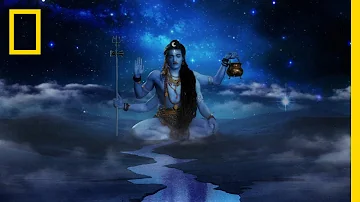 2:03
2:03
 21:32
21:32
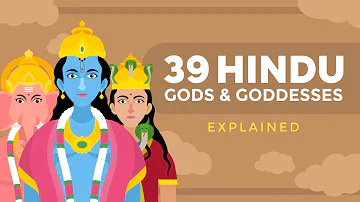 12:40
12:40
 1:55
1:55
 4:35
4:35
 9:30
9:30
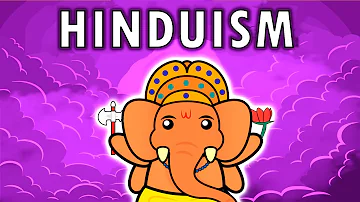 17:52
17:52
 20:25
20:25
 1:33:31
 0:06
0:06
 16:47
16:47
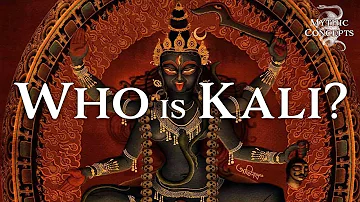 34:20
34:20


