you cantilever is the simplest of all supports like bracket supporting bookshelf cantilever is fixed at one end and projects outwards into space it's an obvious technique for building bridges in this program we travel to Scotland to see the bold Victorian engineering of the fourth rail bridge then fly to Seville Spain to see the outlandish Alamelu bridge but we start our story at the elegant Kingsgate footbridge in Durham northeast England here in Durham where the river Weir loops around the great Cathedral there's an outstanding example of the simplicity of the cantilever bridge in the Kingsgate footbridge in 1963 the university wanted to build link to the extension of the campus on the other side of the river they had little money but they thought it might stretch to span from bank to bank of course being in gorge that would have meant the students having to walk all the way down one side and all the way up the other the university commissioned over up one of the greatest civil engineers of the 20th century born in Newcastle of Scandinavian parents Arab came to engineering from philosophy the Kingsgate footbridge was the last great structure that he designed himself and its success in such dramatic and sensitive setting is testament to remarkable career Arab solution was simple double cantilever bridge spanning right across the top of the Gorge the deck acts as beam and the whole weight of the bridge is carried down the supports inclining the supports is not merely for aesthetic reasons it means there are any two foundations and it divides the span into four sections in the words of the designers the bridges like thin taut white band stretched across the valley resting on pair of slender tapered fingers in v-shape rising from each bank of the river the best way to see how the cantilever principle applies to the bridge is to look up at the supports from below this is half of the bridge like this and the weight of the deck is supported on two twin supports like this which come down to the foundation the weight of each end of the deck can't leave it off the end here from the supports is balanced by the weight at the other end and the weight of the whole deck is carried down to the foundation it's double cantilever and this is one half and it's exactly balanced by the weight of the other half this is the base of one of the two double cantilevers of the bridge with its foundation block below each of the two foundations supporting the bridge have these great v-shaped supports with two fingers on each which stretch away to the deck above beautifully designed paid huge amount of attention to the detail in the design every line carefully laid out the bridge was actually constructed this way along the bank of the river over the bank so there was no need to obstruct the river at all making it lot cheaper and then it was turned out to the river like this in single movement and it was brilliant really because inside here were two cones one on top of the other with the outer one turning like this ninety degrees just once and the two spans meeting in the middle and then this was grouted up through holes so that it all became solid lump and the bridge looks wonderful today I'm standing here at one end of the double cantilever each of the two halves of the bridge is completely structurally independent of each other it's much more flexible than it would have been if it was all rigidly connected together large group of schoolchildren have just walked across and you can really feel the bridge moved quite perceptibly the deck of the bridge is like u-shaped beam with each of the sidewalls providing lot of the strength inside the walls which are called the flange of the beam there's steel reinforcement and in the floor underneath the paving stones there's more reinforcement to help the beam carry the weight of the people in bending the genius of Eric's bridge was to achieve this beautiful solution for the same budget that the university had set aside for simple bridge across the bottom of the gorge the Kingsgate footbridge clearly illustrates how dividing up span into sections can be an ideal solution to bridging gap but this is an example of the cantilever on small scale the colossal fourth rail bridge spans the Firth of Forth near the Scottish capital city of Edinburgh the bridge is made up of three huge double cantilevers connected by girder bridges and at the time of its construction was the biggest bridge in the world the ambition to cross the Firth of Forth has existed for centuries the direct route across the ester II is just few miles but conditions in winter in particular can be pretty rough and treacherous the alternative is long detour maybe 50 miles around the shore as the railways expanded in the 19th century it became increasingly important to construct permanent crossing passengers and freight had to transfer from the railways to ferry to cross over and it was very time-consuming and expensive as early as 1805 there were proposals for double tunnel quaintly described as one for the comers and one for the goers but that plan wasn't feasible but it wasn't until the middle of the century that the railway companies finally decided to go ahead and let contract to the country's foremost bridge engineer Thomas Bouch pouch began work on huge double suspension bridge but soon after the start work came to an abrupt and tragic halt when another of his bridges Fateh bridge collapsed busy passenger train plummeted into the Tay and 76 people were killed faith in badge evaporated and the project was abandoned Bouch died year later the ambition to cross the fourth did not die with him however and in 1882 some 10 years later new bridge contract was awarded to John Fowler and Benjamin Baker the two were leading civil engineers and they began work on different bridge design two batches double suspension bridge instead they opted for three vast double cantilevers and with this new design they said about trying to restore confidence in the railways each of the three huge double cantilevers of the fourth rail bridge weigh around 17,000 tons and are immensely stable because of their great self weight each of the huge cantilevers needs system of bracing internally to make it stiff enough to carry the weight of the railway traffic the bracing is very simple the solid tubular members work in compression and the open lattice girders work in tension and together they form system which is stiff enough to take the weight of the trains at each end of the bridge masonry archers disguise thousand tons of pig on waiting down the end of the cantilever against the weight of train and the girder bridge is trying to tip it up this is where the girder bridge connecting the South Queensferry cantilever meets the main central cantilever at inch garvey these standard girder bridges were used to keep the size of the main cantilevers as small as possible and it's here that we can see how the bridge accommodates movement and expansion the sheer size of the bridge it's mile long means that the wind can blow on one end and not on the other so it's essential that the cantilever is connect independently of each other bit like the carriages on railway train this is the end of the girder bridge and there's gap between it and the cantilever here the girder bridge actually hangs off the cantilever on ball-and-socket joint like this so it can move backwards and forwards but the girder bridge can also twist sideways relative to the cantilever like this around this pin here and another one at the top we're going out to the double-o here on let me to get out and see the top of the fridge for juice they're sending one of the big tubular columns it's not particularly windy today it's only gusting to about 50 miles an hour you can see clearly the cross-bracing in between the poems behind me the top of the towers are nearly 400 feet above the sea that's over hundred metres and you can see them sloping together to provide stability but the main stability against the wind is in the cross bracing that you can see beneath me here in between the towers we came up the easy way of course we came up the lift but when they were building it they would have had to come up the tubes themselves every day thousands of men working their way up riveting the the bridge in sections assembling it building these lattice girders standing and walking along these girders without the sort of protection that I've got here today fifty-seven men died building this over ten years it was big human price really off thanks love late great so the ten around then we'll head out that way this is essential Puritans garmi for huge foundations for the 17 18 thousand tons of steel work above us these granite blocks are there to to protect against the waves of course dan Valois is the enormous casein foundation concrete filled which was floated out in sunken position here compressed air to create working space men went down below the sea level below the sea bed and they hand dug the foundations sinking the casein into the seabed amazingly no men were lost at all in the in the thinking of the caissons and the construction of the foundations men were sick of course because it was horrendous working conditions down there and working under the seabed in the winter very difficult indeed when they finished that they would fill the casing with concrete facing it with these granite blocks to form this enormous foundation this is all that remains of one of bouches piers for his suspension bridge crossing faced in brick it's quite different design to the granite facing of our bridge here other side really the last rivet was hammered in on the 4th of March 1891 by the Prince of Wales the bridge had taken 10 years three million pounds that's about 200 million pounds today and cost 57 lives but they had achieved the crossing and with the greatest railway bridge in the world and it did restore faith in the railways and in British engineering and it remains one of the world's most famous structures nearly 200 trains day still use the bridge today new Steel's allow designers to create bridges that are lighter in weight and easier to build nothing epitomizes that more than our next bridge one of the primary functions of the fourth rail bridge design was to restore confidence in bridge engineering the bridge looks like it will stand forever but in Seville Spain there is bridge that challenges notions of what bridge should look like this is Spanish engineer Santiago Calatrava dynamic 20 Dalila me low on the Guadalquivir River it was completed in 1992 for Expo 92 festival celebrating Commerce and Industry and is fantastic example of cable-stayed bridge it works on the same principle as the cantilever bridge but in this bridge the support for the deck comes from the tension of the cables above and the counterweight of the great pylon also unlike the two bridges we've already seen the Alamelu bridge is symmetrical santiago calatrava was born near Valencia where he studied architecture he also read civil engineering and it's his extraordinary ability to combine structural form with architectural qualities that has marked him as one of the foremost engineers of the late 20th century the cable-stay bridge has actually been around for centuries and many early bridges had cable-stayed elements the concept is simple but it's difficult to analyze which kept the bridge in the wings until modern materials and analytical techniques realized its potential it's now one of the most favored bridge forms of all it's not the 200 metres span of the Alamelu which strikes you it's the great single pylon leaning at what seemed like an outrageous angle but it's this apparent instability which is the key to the bridges success the enormous pylon stands at an angle of 58 and quarter degrees and supports 13 pairs of parallel cables which run down to the deck like harp strings the weight of the deck is exactly balanced by the weight of the pylon so there is no need for second set of cables at the back to anchor it inside it's just like ship miles of Steel staircases until they get smaller at the top the tower was built by welding steel plate to form two tubes one inside the other and were right inside the center of the tower and the gap between them which is up to two meters was filled with concrete creating composite structure where the concrete gives the tower mass and stiffness and the steel gives it strength this is one of the welded joints between the steel plates finally at the top the bridge was meant to be landmark drawing you over the river to the Expo site on this side the top of the bridge is hundred and fifty meters above the ground and the cables stretched down to the deck below the concrete is heavily reinforced at the base and where the cables are anchored to the tower under the bridge the cables are fixed on either side of the spine of the deck into special Anchorage's critical feature of the cable-stay bridge is its rigidity it would buckle upwards under the huge forces from the cables pulling it back to the tower behind me or twists sideways under the weight of traffic if it wasn't restrained properly to achieve this the spine of the bridge where the walkway is is huge hollow hexagonal steel box girder which has excellent torsional or twisting rigidity the roadways on either side are cantilevered off steel ribs at 4 meter centers like fishbone here under the spine of the bridge we can see the depth of the central girder and the ribs on either side much more clearly in design it's not just the grand form that's important but the details and these holes in the deck and in the ribs above let the Sun through to the water and lighten the whole appearance of the structure Crossing bridges is an everyday experience and yet often they're utilitarian anonymous structures which we scarcely notice the common denominator of successful engineering design is thought ingenuity and vision transformed all these structures from what they could have been to what they are in next week's program we look at domes we start our story at Brunelleschi's famous Duomo in Florence then travel to Paris to explore the extraordinary canet building and catch work in progress at the Millennium Dome in London
4:19
Amazing Cantilever Bridges Civil Engineering Detailed 3 D model explaining all Components in 4 K
BridgeHAWK®
3.8K مشاهدة · 4 years ago
17:36
Every Kind of Bridge Explained in 15 Minutes
Practical Engineering
2.4M مشاهدة · 1 year ago
52:15
The Power Of Steel How The Worlds Toughest Cantilever Bridges Were Built
Progress - Science Documentaries
1.1K مشاهدة · 6 months ago
24:27
THE CANTILEVER BRIDGE 1951 UNITED STATES STEEL ENGINEERING CONSTRUCTION FILM MD 10405
PeriscopeFilm
21.7K مشاهدة · 1 year ago
23:47
How Did They Build That Cantilevers
StreamVault
68 مشاهدة · 9 months ago
4:23
Balanced Cantilever Method for Form Traveller Bridge Construction
Huada Heavy Industry
27.9K مشاهدة · 6 years ago
0:55
Engineering Marvels Cantilever Bridges
SnapShots
1.1K مشاهدة · 1 year ago
52:15
Howrah Bridge The Busiest Cantilever Bridge In The World
Spark
5.2K مشاهدة · 3 months ago
2:48
What is a cantilever bridge
Civil sensei #2874
416 مشاهدة · 7 months ago
23:54
The Evolution of the Cantilever Bridge How Did They Build That Episode 3
Science Tech TV
411 مشاهدة · 1 year ago
3:32
Balanced cantilever erection with Standard Mobile lifting frame 3 D animation
Freyssinet
15K مشاهدة · 4 years ago
0:54
Balanced Cantilever Method of Bridge Construction
Tai Phan
51.4K مشاهدة · 3 years ago
5:28
Understanding Cantilever Trusses
StructurePlanet
27.6K مشاهدة · 5 years ago
0:19
Cantilever Bridge
D for DENTAL
9.3K مشاهدة · 3 years ago
4:43
Science Projects Cantilever Bridge
DIY Projects
21.9K مشاهدة · 4 years ago
4:39
Challenges of Cantilever Design
StructurePlanet
169.3K مشاهدة · 6 years ago
3:16
How do Cantilevers Work Civil Engineering for kids

 4:19
4:19
 17:36
17:36
 52:15
52:15
 24:27
24:27
 23:47
23:47
 4:23
4:23
 0:55
0:55
 52:15
52:15
 2:48
2:48
 23:54
23:54
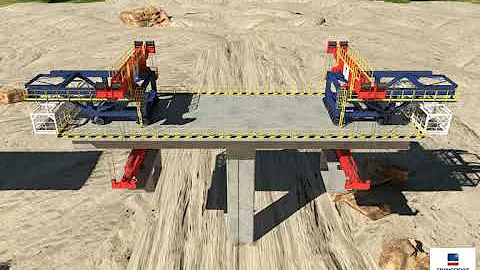 3:32
3:32
 0:54
0:54
 5:28
5:28
 0:19
0:19
 4:43
4:43
 4:39
4:39
 3:16
3:16
 1:41
1:41