النص الكامل للفيديو
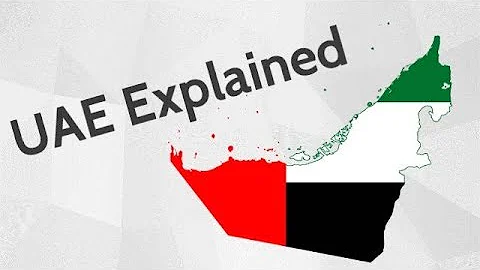
The borders between the Sultenate of Oman and the United Arab Emirates appear quite natural. But if we zoom in little closer, we will notice that there is piece of Omani land located entirely inside the UAE. This is Ma. This land is completely isolated from the rest of the Omani territories and is surrounded by the UAE from all sides. Specifically situated between the Emirates of Sharah, Fujera, and Ros Alka with population exceeding 3,000 people. The border situation between Oman and the UAE closely resembles the border between Spain and France. If we look closely inside France, we find piece of Spanish land located entirely within French territory, completely isolated from mainland Spain. This area is Libya, which is surrounded by France on all sides and is home to about 1,500 Catalonians. However, while Libya is strange, the borders between the UAE and the Sultanate of Omen are much stranger. We could literally say they are among the strangest borders in the world. What makes it even more unique is that inside the Omani wheel of Mada, which is inside the UAE, there is piece of Emirati land that is also completely isolated from the UAE and located entirely inside Omani territory. This is the Emirati region of Nahwa. Nahwa is surrounded by the Omani Mada on all sides, isolating it completely from the rest of the UAE. In short, the UAE contains part of Oman which is Mada and that part of Oman contains part of the UAE which is Nahwa. It is country within country within country. So if you are living in the Emirati Nahwa and want to go to Dubai, you would be required to exit Emirati territory, enter Omani territory, then exit Omani territory and re-enter Emirati territory to finally reach Dubai. As you can see, the visual difference is quite clear on the road, separating the Omani Mada from the Emirati Nawa. The dividing line is distinct simply by the color of the road. When you cross this line to the right, you are effectively inside Omani territory. You will see sign in front of you that says Sultenate of Oman and you will see the Omani flag. You will literally feel like you have traveled to another country. On the other side, you will find sign saying United Arab Emirates. Sharah welcomes you along with the UAE flag. Of course, you can cross the borders between Mada and Nahwa easily without inspections, customs or any procedures and even without passport. If we head towards the north, we find large area of Omani territory called the Musen Dam Governor located in the far north and overlooking the straight of Hormuz. This region is also completely isolated from mainland Oman, but it is not inside the UAE. It lies beyond the UAE. While Mada is about 30 kilometers away from the northern Musandam governoride and roughly the same distance from mainland Oman, Musandam itself is about 70 km away from the main landmass of the Sultanate. Consequently, if person in mainland Oman decides to travel to the other side of Oman, which is Musen Dam, they might exit Oman into the UAE. Then from the UAE back into Oman, then third time from Oman to the UAE, fourth time from the UAE to Oman, fifth time from Oman to the UAE, and sixth and final time from the UAE back into Oman. This means they could alternate entering and exiting between the two countries. six times to finally reach the other side of Oman. During this trip, every time you cross border, your mobile network will switch from the Emirati network to the Omani network and you will receive welcome messages saying welcome to the UAE or welcome to the Sultenate of Oman. But the question that arises is how did the borders between the Sultenate of Oman and the UAE end up in this strange configuration? To understand the full story and how this happened, we need to go back to the 17th century, specifically to 1650. At that time, the Oman Empire succeeded in expelling the Portuguese occupation from its lands after an occupation that lasted about 140 years. Afterward, it began to expand and annex more territory until it controlled vast area that currently includes the Sultenate of Oman, the UAE, parts of Persia, and East Africa. They began competing with the Portuguese for dominance over trade in the Indian Ocean. After the region was liberated from Portuguese occupation, security and stability began to return to various parts of the Arabian Gulf. However, disputes and conflicts started to appear within Oman. At this point, Britain began to intervene gradually in the affairs of the Omani Empire. Due to the struggle for power and British intervention, the empire was divided into an Asian part and an African part in 1856, Britain then increased its influence and intervention until it eventually succeeded in controlling both parts. At that time, the Arabian Gulf region came under British control, effectively becoming part of the British Empire's territories. During this period, conflicts arose within Oman, leading to the formation of alliances between tribes in the coast of Oman region in the north. Emirates or shakdoms began to form in the area, becoming independent entities and gradually gaining power on the ground. Due to the lack of clear border demarcations between these shakdoms, conflicts occurred over areas of control. However, these ended in reconciliation among the shakes of the Emirates under British protection. And these became known as the crucial states or the crucial coast of man. These crucial states were subject to the protection of the British government which was responsible for foreign affairs and defense while respecting the sovereignty of the shakes. In 1968, Britain announced that it would withdraw from the region within three years, specifically by 1971. At that time, Shik Zed bin Sultan al- Nahan, the ruler of Abu Dhabi, began communicating with the rulers of the seven emirates. They agreed that the best solution was to form union to protect the region and its oil wealth. They extended an invitation to Qatar and Bahrain to join the seven emirates. But due to disagreements, Qatar and Bahrain withdrew from the agreement and eventually announced their independence and sovereignty over their own lands. This left only 4 months for the seven emirates to unite before Britain left the region in December 1971. During this time, there were areas where allegiances were disputed. vote was held in these regions to decide which state they pledged loyalty to. The shakes and notables of Mada chose Oman. So Mada became part of the Omani territories. Meanwhile, the shakes and notables of Nawa chose to belong to the emirate of Sharah, making it part of the Emirati territories. As for Musandam, it held great importance for the Sultenate of Oman because it overlooks the straight of Hormuz, considered one of the most important waterways in the world through which oil and natural gas are transported from the Gulf region to global markets. Therefore, Oman held onto the Musandam region and it remained part of Omani territory. On December 2nd, 1971, following the British withdrawal, the establishment of the United Arab Emirates was officially announced under the presidency of Shik Zed bin Sultan al- Nahian. Since that time, the borders between the Sultenate of Oman and the UAE have remained in the form you see today. Mada is an Omani part isolated from Omani lands and located entirely inside the UAE. Simultaneously inside Omani, Mada lies the Emirati region of Nahwa, which is also isolated from the UAE and located inside the Sultenate of Oman. In the north, Musandam became part isolated from the Sultenate of Oman, separated from the mainland by the UAE.

 3:01
3:01
 6:27
6:27
 13:32
13:32
 1:13
1:13
 0:26
0:26
 0:21
0:21
 0:18
0:18
 0:08
0:08
 9:11
9:11
 34:07
34:07
 0:16
0:16
 0:59
0:59
 1:15
1:15
 0:31
0:31
 12:34
12:34
 0:17
0:17
 1:24
1:24
 0:15
0:15


