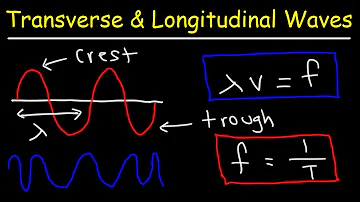
so here we are with video 2 of chapter 19 this video is called wave behavior in it we're going to talk about the two main types of waves as being transverse and longitudinal and we're going to talk about wave interference and what happens when one or two or more waves come into contact with one another so make sure you've got your notes ready to go and here we go so suppose you were to attach the rope to wall and you hold the free end and you begin to shake the free end up and down okay what's going to happen is there's going to be pulse it's going to travel down that rope and then reflect back on you so you're creating waves here the direction of the wave is from left to right down that rope okay the motion of the rope itself though is up and down so the motion of the rope is at right angles to the direction in which that wave is moving whenever the motion of the medium in this case the rope is at right angles to the direction the wave travels the waves transverse wave waves in the stretched strings of musical instruments like guitar violin and on the surfaces of liquids like water are all transverse waves the other major type of wave is called longitudinal wave to think about longitudinal wave think about taking spring and attaching spring to wall and stretching spring out and then you kind of smack the end of it so that pulse wave pulse travels down that spring and back where there's areas that compress and areas that stretch this is called longitudinal wave launched it in longitudinal waves the particles of the medium move back and forth in the same direction in which the rate wave travels so here the wave is moving in this direction and the particles are moving back and forth so when those particles oscillate parallel or along the direction of the wave that's longitudinal wave one common example of longitudinal wave that you experience every day is sound sound waves are longitudinal waves what happens with sound waves is that whatever creates the source for that way whatever vibrates to create that source pushes those air molecules together that energy then is transferred to other air molecules and there's areas of compression and areas where there's not compression those areas where those molecules come together it's called the compression and the areas where they're spread apart is called rarefaction in longitudinal wave then the wavelength is the distance from compression to compression or rarefaction to rarefaction in this picture here we see longitudinal wave and we see that the compressions correspond to crests in sine wave and rarefactions correspond to troughs in sine wave now both transverse and longitudinal waves we can demonstrate with loosely coiled spring when the end of the coiled spring is shaken up and down like this we get transverse wave when it's shaken in and out we get longitudinal wave and we will see demonstrations of this in class now we want to begin to turn our attention to the way waves behave okay we're going to start by talking about what's called wave interference now material objects like rocks or cars or people or whatever cannot share the same space at the same time however with waves more than one wave can exist at the same time in the same space for example if we drop two rocks into water waves are going to propagate out from those points where we drop where we disturb that water so those waves produced by each Rock can overlap and form what we call an interference pattern an interference pattern is just regular arrangement of places where wave effects are increased decreased or neutralized when more than one wave occupies the same space the same time the displacements of medium ad up at every point this is called the superposition principle so when the crest of one wave overlaps the crest of another their individual effects add together to produce wave of increased amplitude this is called constructive interference so with constructive interference the crest of one wave will overlap the crest of another and their individual effects add together the result then is wave of increased amplitude another type of interference is called destructive interference with destructive interference the crest of one wave overlaps the trough of another and their individual effects are reduced the high part of one wave will fill in the low part of the other and we get what's called cancellation so in constructive interference the waves reinforce each other to produce wave of increased amplitude and in destructive interference the waves cancel each other and no wave is produced so when this happens we talk about waves being in phase and out of phase when waves are out of phase the crests of one wave overlap trois of another to produce regions of zero amplitude this is destructive interference so out of phase waves are experiencing destructive interference when waves are in phase the crest of one wave will overlap the crests of the other and troughs will overlap as well and giving us constructive interference so when waves are expert in phase they're experiencing constructive interference now wave interference is easiest to see in water such as in this picture right here what we see here is we've got this water coming in there's source of waves from this direction and source of waves from this direction and those waves are meeting each other and we're getting areas of constructive interference and destructive interference to look at this in more kind of controlled situation we can take look at this picture over here in this picture we've got two overlapping water waves producing an interference pattern okay so we can see this interference pattern in these actual water waves there's source here and source here those waves propagate out this way and what we see are areas of constructive interference and destructive interference where the waves crests come together and make kind of these fuzzy lines right in here those are areas of constructive interference in these areas here where they're it's it's they look whiter okay those are areas of destructive interference so here those waves are in phase here in these areas they're out of phase so another way to see this is we can draw picture of it like we've done here in and overlapping concentric circles produce this pictorial representation of an interference pattern in the pattern these are areas then with constructive interference and these are areas of destructive interference between those now interference is characteristic of all wave motion whether the waves are water waves or sound waves or light waves all waves will experience interference because even though lot of waves especially sound waves and water waves require medium to travel through what's traveling is energy and that energy can interfere with each other in these ways so that's what we'll see as we look more and more into waves and wave behavior we'll see examples of interference in class we'll see you then

 7:37
7:37
 5:08
5:08
 15:00
15:00
 8:05
8:05
 13:35
13:35
 4:15
4:15
 4:20
4:20
 5:24
5:24
 12:40
12:40
 6:45
6:45
 14:00
14:00
 10:30
10:30
 7:35
7:35
 24:54
24:54
 40:54
40:54
 11:53
11:53
 22:40
22:40


