hi i'm chris wing i'm member of the board of directors of the arms control association have been for quite some time it's quite an honor aca in case you haven't noticed has an excellent staff and it's really pleasure to be on the board at the moment i'm acting chair temporarily and i'm very pleased that got got asked to help moderate this panel because in this panel we're moving to really difficult question but it's not right in the heart of the policy it's not in the heart of what happens in washington so much we're talking about the question of nuclear abolition actual nuclear disarmament and in particular we're talking about given how many things are changing in the world but given the long history of some success on on addressing nuclear disarmament addressing abolition where how should we be thinking about popular movements in support of nuclear abolition how should we be thinking about moving toward nuclear disarmament right now and part of what pleases me about being asked to do this is we have really excellent combination of people we've got denise duffield who is actually works at local level you are co-your associate director of physicians for social responsibility in los angeles daryl kimball who think you know have probably met before and so i'm not going to waste any time we've got short time to introduce him further joan rolfine is the president and ceo of the nuclear threat initiative and has been for gene ten years now or so john longer and and and with but and also with solid government experience before that which is very important and xiamen is co-director of princeton's program on social on science and and science and global security yes yes got it have known that program for while should know the name by now but it keeps going zia is is one of those people that it's it is that's very valuable to the kind of work that we all do because he really does function as scientist and researcher but also is very involved in the community of people who work on these issues and so this this panel really we're pulling together every sort of work on these questions from many different levels and as think you'll hear from people and you will also hear it and you'll hear from me think that any movement ultimately to get rid of nuclear weapons means we're working on every level that we can nothing happens only in washington and obviously we're going to be talking mean should say obviously we're going to be talking about the experience these are all folks who work in the u.s we're talking about experience in the u.s especially just wanted to say two things before introducing people to before asking people to to respond to couple of questions we actually collectively have lot of experience working toward nuclear disarmament but the moment we're in is very different than the one that many of us anyway have worked in before and they're really two things mean we don't yet know what the global security situation is going to look like mean there's this sense we have sense think that things are coming apart or are are going to be different they're different now and they're going to be different in year perhaps and further we just but we don't quite know the what that will be like and our domestic political situation in the u.s is profoundly different than it was or it is obvious to us now that it's profoundly different than it was in ways that you know back when was working you know in doing freeze work or working in the disarmament movement or in it since then it's his 80s it was one thing 90s another it's been you know the negotiation of the treaty over the last decade and so on but once but we're in very different moment now draws on activist time or substantial so it's it's we really need we probably need more than 50 minutes to try to figure out what to do but this is how we're going to proceed again have couple of questions i'm going to ask people to respond to them as you know briefly we'll go through once and then we'll come back with second question my first question is really what have you learned from the work that you've done on nuclear issues over the last you know 10 years or so what have we learned about what what it takes to have engaged popular engagement in in affecting nuclear policy so that's really the first question think we have lot of good experience to draw on before turning to all the difficulties wanted we wanted to hear some about what people think works so was going to start with daryl then denise then zia and joan if we may well thank you very much chris and you know this is the tough question think that we all need to to think about is how we engage the public how we motivate ourselves and the organizations that are part of the nuclear disarmament movement in effective actions that that move us out of this very dangerous moment so let me just mention in my 30s or 30 years of experience since was and even before when was student nuclear disarmament campaigner in the early 1980s mean there seemed to be several key things that are necessary ingredients for putting in the recipe to cook up success on nuclear disarmament the breakthroughs that have made difference that we've been hearing about through the course of the day but before go through that that quick list mean think one of the things that we have to remember is as difficult as things are we have to remember to coin phrase from guy who was also in the white house yes we can because we have in the past collectively put together effective campaigns with these right ingredients that have made huge difference and because we have done that in the past despite the problems that we face today you know if we're smart we work together think we can we can change the course of nuclear history once again so as said there are many ingredients that constitute an effective nuclear disarmament movements that have to be cooked up in the right way that have to be cooked up in the right time to produce meaningful success and in the american context mean the way think about it is we need to have widespread public concern and awareness about the dangers of nuclear weapons and arms racing and sense that personal engagement personal action can somehow make difference we need to have bold and smart leadership from the president not just nice words we need actual action and commitment and some political risk taking to move the ball forward we need to achieve success ideally bipartisan leadership from enough members of congress and when we have coordinated and focused and socially and politically diverse set of organizations networks in washington across the country working together you know we can focus public pressure and attention to push policy makers to take the actions that make make difference we need the right ideas and and there are lot of ideas out there right now about how to move the ball forward there's not necessarily agreement in what we think of as the movement and think that's part of our challenge is how do we come together around focused set of key ideas that engage the public that are effective and that are achievable over the next five to ten years and so you know success is also requires coordination amongst some of the key organizations and leaders of organizations like aca and nti and others to be working collaboratively rather than competitively and think there is lot of collaborative spirit but we don't necessarily have the organizational capacity right now to align our strategies within the organizations that work primarily in washington but also across the country we need to work harder to develop that and then of course success depends on whole lot on luck historical circumstances you know mikhail gorbachev coming on the scene in 1985 86 87 that changed the course of history that's not something we could plan for but we can plan for as high representative nakamitsu said we can plan for the moment when the engagement between the great powers resumes when there is an event that focuses the public mind on the problem just as we've seen over the last few weeks we need to be ready to move forward together to push for the actions that are necessary to to reduce nuclear risk and to move towards the goal of the peace and security of the world without nuclear weapons so those are some of the key ingredients think we have to keep that in mind as we we talked about and think about how we work work together okay thank you denise from where you sit what what have you seen that that you feel is help will help guide us forward well for the last four years i've been deeply involved in campaign called back from the brink bringing communities together to abolish nuclear weapons and with this campaign is it is campaign for nuclear abolition we organize around set of policy platform we call them policy solutions but really it's about making clear that nuclear weapons are local issue and that local communities have and must have say in nuclear policy which many people don't know that there's something that they can do about it the campaign also is heavily focused on getting approaching municipal governments and state governments and asking them to adopt resolutions that support our policy platform and that those efforts are led throughout the country by by grassroots activists so even though there's steering committee that that coordinates back from the brink it may be pax christie that's organizing resolution in one city and maybe veterans for peace that's organizing that for another in another city many different groups that get involved what's even more exciting is when these groups can build coalitions and and sort of break down the silos that we're in because i'm local organizer worked lot on the cleanup of the san sada field laboratory know how the city politics works know how the state legislature works have relationships with environmental justice groups with racial justice groups with climate groups so when it came time for the los angeles resolution to happen we could draw on that we could bring together hibakusha we could bring the faith community and we could bring veterans and we could bring students in and we did and what we're finding is that on this local level this is intended to influence decision makers members of congress have asked us look go have town hall meetings don't hear anything about nuclear anything we really need you guys to do this they're not going to make any of these policies priority if they're not hearing it from their constituents and so more and more we want to be able to say these cities in your district this this state that you're in these organizations now we have state and local elected officials who are also coming on board so this is you know boston minneapolis tucson salt lake city washington dc los angeles of course baltimore was the first major city to adopt resolution these resolutions are also sent out to members of congress they're an extraordinarily powerful organizing tool not just at the municipal level but also with when you're talking to other organizations and so trying to really you know build our capacity that way and again this we really really particularly at this moment that you mentioned with so much on the line when children are being slaughtered when people can't go to church or the grocery store in certain communities without being risk of losing their lives that we talk about security in terms of human security and not what is what we think is possible what we know is necessary and that is the abolition of nuclear weapons so i'm very excited about this campaign and the lessons that we continue to learn as it grows and as it evolves particularly this distributed organizing model we're doing and would say also on the national level another thing that we're doing also to break out of the silo is we're really we're partnering with the poor people's campaign they have their moral march coming up on june 18th and this is they refer to moral fusion model of organizing and it's been incredibly powerful to be in some of the planning meetings and have you know you know reproductive rights activists with labor with environmental with you know income inequality with the faith movement to have us all together because don't think where we're at as country right now is single issues are not can't see us having big win somewhere and all these other things think we need to come together so everybody brings their expertise everybody sort of stays in their lanes but we join together and we support each other at moments when it counts so that's that's what so it's not either or you're not sort of saying to to local activist you know either you got to work on on you know what do you want to do about democracy no you show up for each other so maybe you're going to you maybe you're going to pass resolution or state legislative bill and another group is coming there with the housing something about housing we'll stay and we'll we'll always support on that and we'll build the relationships that we need to move forward yeah okay thank you that's that's great start zia what's on your mind failure know yeah all right go ahead mean you know one has to accept the inevitable fact that you know we we're celebrating 50 years of the arms control association so as people have mentioned this was also when the first strategic arms limitation agreement was signed capping the number of strategic nuclear weapons and the signing of the anti-ballistic missile treaty which was said to be proof of the victory of arms control as way of thinking about national security in the united states it's also when nixon went to china it's also the year when the first stockholm conference and the environment took place and made environmental issues global issue and look where we are now we're still here the arms control association the abm treaty has been gone for 20 years so what happened to the proof of the victory of arms control as the cornerstone of american national security when even the kissingers and the mcnamara said it would be disaster to undo this and washington undid it anyway as they were told the expansion of nato after the cold war would be disaster and they did it anyway and the stockholm conference we've had thousands of scientists pour their heart out with explaining the terrible consequences of what we're doing with our fossil fuel economies and yet here we are we still do not have anywhere close to the kind of action that would actually address the real problem and you know we could go on we could talk about roe wade we could talk about racial justice we could talk about gun violence so both at the domestic level and at the global level we actually have crisis of the legitimacy of the institutions that govern the world and this country yes we do and for me we have to start with that fact in funniest way that was also the problem in 1970 71 72 because of the vietnam war people in america and many people around the world saw crisis of responsibility are these people and these institutions fit to be responsible for managing our societies and our lives and when you go back and read the histories of that time you realize that that sense of crisis of the legitimacy of how things are managed and who's in charge and how they manage things was central to the politics of that time and think we need to reclaim that as central element of what we're doing now and say this with great respect for everybody in the room and who've done so much work but as the american political scientist robert dowell pointed out long time ago in his book about controlling nuclear weapons there were these two models the model of guardianship where there is small group of elite experts both inside and outside government that talk to each other and tell everybody you have to trust us to manage this because we are both reasonable and prudent and we're doing it in everybody's best interest so morally we are you know okay and then there is the democratic control issue and dahl said that in the united states you know the guardianship problem is actually acute and one thing that has happened in the past 50 years in variety of issues not just ours is that we have become part of the structure of guardianship the structure of of guardianship guardianship right the professionalization of dissent and contentious politics on nuclear weapons and on many other issues has meant that many organizations and ways of thinking are now part of this inside outside process of people going into the government and coming out to an ngo or think tank people writing policy papers for each other making sure that everybody accepts what is reasonable and that domestication of dissent limits the kinds of things that we are possibly able to imagine and do with these existing structures so i'm in very privileged position that you know princeton is not in dc it's far away sit in university so don't really have to deal with that all of that aspect of it but think it also gives perspective and so think for me one of the things i've learned is that we actually have to rediscover some of the more difficult challenges involved in contentious politics and actually be much more focused on our own relationship to the structures of power and authority and how they limit what we think is reasonable to talk about and ask about and here think that you know we have to remember that it wasn't so long ago that you had almost all the conditions that daryl quite rightly outlined you had president who talked about the moral responsibility of the united states to give up nuclear weapons the first president of the united states ever to go to hiroshima and yet what changed and so want to kind of just conclude by this that if you wanted to look at an example of things that worked i'd point to two things one is that you look at the success of an organization like can which was founded based on an idea by malaysian doctor taken up by group in australia with an agenda that was unthinkable in nuclear weapon states by and large just let's just do zero no step by step let's just do zero and they worked with people outside the united states with great success and so one thing we might want to think about is that if we can't manage our own governmental structures perhaps it's time for the united states to ask for help right hey guys we are really stuck please help send the cavalry all right please send elaine gomez why please send you know lots and lots of activists and diplomats and experts from where you do have experience in how to make fundamental change and how bail is out and the other thing is you look at the kind of work that 350.org and others have done what it took to stop the excel pipeline and all of these things is those are the kinds of things the peace movement used to do yeah right and think that's the last comment and i'll stop here is we need to think about how to reimagine ourselves not as the nuclear security community or the nuclear policy community but ask ourselves are we peace movement or not and what is our relationship to the movement and what kind of movement and where are we with relationship to that i'll stop that thank you and have feeling we're not going to quite get to the end of the whole conversation here but but one of the things wanted to say just before going to to joan is that this is the value of having these four folks on the on the up here because we're all working from and if you in and and from different mean what you're talking about zia what what denise is doing is is fundamental to to to answering some of the questions think that you're raising and we can get to that later but joan so here you are in washington thank you yes alas might say most days it's pretty hot but do love it here so there's way more to say than we have time before let me try and and hit couple of key points and zia thank you for your critical assessment agree with it and would say think one of the most important things we need to do when we look at our our lack of success our lack of strategic success over multi-decadal period is to do deep dive examination of the the nuclear system and all of the elements that hold it in place what are the key dynamics and behaviors that are trapping us in cycle that we can't seem to get out of and one of the observations would make about the system is that it is undemocratic at every level right power is held by small number of elite in small number of states and yet the consequences of nuclear use affect all of humanity and so we do need to find way to democratize nuclear weapons to make them more accessible to reach more people to make nuclear issues relevant for our political leaders to make it necessary for them to respond to learn about these issues and to help build the political will that we need for change so i'll make another observation about how do we do that think by the way would also just mention daryl that there hasn't always been consensus there still isn't consensus in our community we're not monolithic we are pretty diverse but there hasn't been consensus around the importance of social movement and so we've we haven't coordinated well we have thrown our energy into doing that at points in our history but many of us particularly those of us in washington have been playing this inside what call an inside baseball strategy thinking that if we can only persuade you know few key decision makers we can crack the whole nut we can solve the whole problem and as you point out sia even having helped bring to the presidency barack obama there were limits to what he could do and that's what has driven us into deep dive around well if he couldn't do it right what are the other aspects behaviors and dynamics of the system that need to be disrupted the the lack of social movement is only one think there are entrenched financial interests there are entrenched institutional interests there's very deeply entrenched way of thinking about nuclear weapons that is deeply rooted in belief in nuclear deterrence and as long as we remain deeply committed to nuclear deterrence forever we can never mean it's circular logic that traps us in having to have nuclear weapons forever we're never going to be able to reach the end point of world where nuclear weapons are are prohibited so what can we do on the social movement side think that must be priority and an nti in order to better understand how we can help build social movement have done couple of rounds of deep research not traditional polling but kind of deeper sort of cultural audit to understand how the american public thinks about nuclear weapons and there were just i'm going to mention two top level takeaways from that research first is that 75 to 80 percent of the american public is already bought into world without nuclear weapons we don't really have to make the sale on that mean of course it would be good if there was more nuance in understanding how bad it might really be but people already want that world there's high level of despair about the multiple crises that we find ourselves in people are living with high level of anxiety and despair about the future but only half of the population roughly 50 percent believe that world without nuclear weapons is possible and an even smaller number about 30 percent believe they have any agency at all to affect that outcome and one of the biggest obstacles the biggest roadblock standing in the way of people believing that they have any agency is no one has given them hopeful feasible vision of what future without nuclear weapons would look like so you know for me think the number one thing we need to do is to be better as community about conveying the hopeful vision let's give people kind of more fidelity about what that vision looks like and and help them understand that it's possible it's not some not in my lifetime pipe dream think that's really crucial so i'll i'll stop there because know we want to go to next phase of the discussion yeah and it's don't it's hard to jump right from here to talking about okay so what can we do in the next five to ten years you know because actually we're putting very big questions on the table would say in terms of of what joan was just talking about mean this is something that that permeates our politics and actually it's not just recent in terms of there are many things to which 75 to 80 percent of the people in the country would say yes agree with you but the the political but the decisions made in washington have resolutely gone against that it's not just on nukes it's not just on on abortion rights it's not just on gun rights it's so there is something in the political process that is that we cannot actually ignore and so part of the question guess and starting again with denise from from where you sit and and from working locally you're describing situation where you feel that there's energy and so how do you respond to the things that that to the to to the way the discussion that the points that zia and joan have made about the difficulty because you've been working locally and at the state level that doesn't yet make it to the federal level but but it does but it does you know we we for example i've talked about this but we when we met with adam schiff to talk about co-sponsoring no first use bill we were able to talk about the resolutions we're able to bring very diverse in terms of arenas group of people to talk to him and and it's meant that's what it's meant for couldn't agree more with zia don't have an answer for how we fundamentally change the government right now all know is that all social change movements have doubt have been have had at their base at their root organizing organizing organizing organizing that we work from the bottom up and that's what we're trying to do and fuse that with other folks that are also organizing for better future for more hopeful future we have groups like 350 we have sierra club we have we have over 400 organizations that have doors endorse the campaign that we too can call on pond especially the ones that have chapters in different areas and what what think where we what we lack the most is capacity the grassroots is which the grassroots which think holds the key to the kingdom in terms of actually real change is is enormously under resourced and so and we are putting out many fires which is why think this coming together that's happening in couple weeks here is is so important you've seen for the women's march for the march on science you'll you'll see signs for everything immigrants right you know everything in the world you won't see peace or nuclear disarmament well we're changing that and sort of entering into what may eventually at some point need to be quite quite confrontational in terms of how our government is structured and true participatory democracy yes so know well i'm sure so what do you what do you think about what do you what where is your where will your focus be over the next six to 12 months on the assumption that you put your time and energy into things you think are you know have some promise if only one had the privilege of focus given the state of the world yeah it's but let me let me kind of try and follow on from what joan and denise just said it seems to me that what i'm trying to get at you know however incoherently is that for long time we've thought about nuclear weapons and many other issues as issues of policy not as issues of democracy and would make the case that right now all of these different stand strands of contention the single issue causes movements groups that we've seen struggling in in so many ways in the united states and more broadly do reflect an increasingly shared sense about what was saying it's legitimacy crisis about democracy about people's ability to shape their lives and the conditions of their lives and in that respect think that one of the things that as community with all our differences as john rightly points out and also all the other organizations that denise you know he's working with and and others are working with and as said you know folks around the world who are working on on their issues is to think about how to have conversation about democracy because you know thinking about you know what can we do to move this member of congress and get piece of legislation through committee et cetera we've realized how vulnerable all of that is and once upon time it was assumed that we would go step by step through one arms control treaty after the next uncontrolled treaty and that but each one was seen to be an anchor on you know foundation on which we would build the next thing and it turns out that the rug can actually be pulled out from under your feet they were not as solid as we had ever imagined them to be and in the larger scale the entire world system is going through profound transition which was never imagined in the ways in which many of these agreements were set up the united states has moved from position of parity to hegemony now to being defensive about the future and you know so we have to keep all of those things in mind but think that we actually need to have conversation about the need to build anti-systemic movements and go back to the another world as possible kind of ways of thinking but relevant to our time now and actually ask the questions about you know all of these social movements that we have all of these policy crises we have actually are the rise of authoritarianism in many countries and populism all speak to an issue about democracy and so we have to think about how does the peace movement the anti-nuclear movement everybody have conversation about what kind of relationship do we as people want to have about democracy and the role of democracy in managing societies that may actually lead to new kinds of possibilities and so think that would be where would look for resources for hope and action though had told daryl that didn't think i'd call on him in the second round i'm going to because he looks like he has something to say yes will thank you chris for indulging me you've heard lot from me today just let me offer thought in in in to build on what what is saying so you know we've had little bit of discussion earlier today in our previous discussions about what the the war in ukraine what questions it brings up how we should respond to to vladimir putin's threats of nuclear use and so when if we're trying to catalyze conversation about democracy and the lack of democracy in decisions about nuclear weapons mean one of the key issues think we need to be driving on and asking questions about is the the issue of nuclear deterrence and how sustainable is this concept of international security if you've been reading arms control today i've been writing about this in the post-russia ukraine war situation but that is the fundamental question that this crisis raises that we need to begin thinking about and so over the next six to 12 months mean this is one of the the fundamental questions that think we as quote unquote community and community is used with small in broad sense need to be asking questions about it is five to ten year long strategy we need to be pursuing that's just that's one aspect but think it's an important aspect and then finally you know just quick note azia says the arms control institutions that have been and and regimes have been built up over the years that we've been talking about all day that we're celebrating away yes they are vulnerable we cannot take them for granted and you know every generation i'm i'm paraphrasing coretta scott king every generation needs to fight for justice and freedom every generation needs to win their victories and you know so we we are going forward we need to think about how we rebuild some of those those arms control disarm and not proliferation institutions we need to build them better but we need to recognize as you said zia that these are not etched in stone and we're not necessarily going to be able to build on them step by step and one of the elements is the tpnw another element is the taboo against nuclear weapons which we talked about this morning and another element think is the simple idea that nuclear armed states must continue to pursue their legal obligation to negotiate on ways to end the arms race and achieve nuclear disarmament which is article six of the npt so these are some kind of fundamental things that think can bind us together to try to tackle some of the huge issues that we're talking about here over the next whether it's six to 12 months or longer so daryl is in some ways is saying that there are actually also some sort of substantive or policy issues that we don't know that we haven't yet defined got through right so joan for for you and an organization like nti is that useful useful notion that maybe we don't that maybe we haven't figured everything out and there are things that in addition to your concern about how you you build and shape popular opinion are there things that in the last 12 months you have come to think you have come to focus on substantively more for example about deterrence mean are you deeply invested in yes talk little about what you're totally over the last several years we've been really critically examining and challenging this deeply held and deeply entrenched belief system and victory do you see that as an elite discussion mean who do you see it's not at all at the moment it's more of an internal discussion and discussion and in few small forums where we find people interested in engaging in this mean agree with you daryl think it's crucial for us to ask and answer the question about how sustainable is nuclear deterrence and this smart ass in me would say yes and it's perfectly sustainable it's like self-replicating virus it is so resilient right it just keeps coming back and back and back but humanity is not resilient in the face of system which is premised on mass annihilation and therefore has risk baked into its dna and when the system fails and say when because think you know just mathematically it's matter of time before the system will fail and we will have to manage global catastrophe it's possible and shame on us if we cannot as community develop better system for managing nuclear technology one that is when say nuclear technology mean both peaceful and nuclear weapons technology we're not going to uninvent that we have to figure out how we can live with it as humanity in perpetuity but in way that it doesn't threaten us and and think we're lucky to live in period where for for all of the challenges that we're confronting today we have many new tools available to us that we didn't have before in terms of technological tools that can enable us to do detection and monitoring and verification of the non-production of nuclear weapons and that can get us on the other side of this equation to state of of nuclear prohibition at some point so we're investing lot of our time and energy in not only understanding the dynamics that hold deterrence in place to be smarter about how we can disrupt that and get us to better place but then also envisioning and developing the road map not just the the road map how we get there but what does that end state look like let's let's define it with way more fidelity than just an expression of you know wouldn't it be nice to have world without nuclear weapons and many of us if not maybe all of us in this room might agree with that destination but we have to do more than just state the end point and wanted to just say also very briefly come back to the coordination point because think it's really crucial that you know as small community that's under extreme stress at the moment because of the loss of funders we have to leverage our time and our effort and our resources by being much better coordinated with each other so wanted to footstop that observation by daryl also would say that the role of of organizations that are that are advocating think think of an organization like like aca as an advocacy nonprofit in washington when there's lot going on in the country then that pulls the advocacy groups into different relationship with with policy makers and and they serve different role in relation to to organizations on on the ground and you know ideally we will be again at some point in situation where where there is more of that communication where it's that where the where the work that's going on locally is connected and know you all talk don't mean that there's no connection but it's not yet or it hasn't been for while that sort of think that the the it's very easy to it's there are important things for non-profits in washington to do even when there's not big huge grassroots organization but the strength really lies in being able to link not just with each other in washington but also with each other and with people working around the country and with and with researchers think that you may have noticed that we didn't ask for questions and the reason was that we had 50 minutes for this panel and it did not seem realistic 50 minutes four speakers and was crabby so that's why wasn't going to call it daryl second time because figured he's got lots of chances to say to say what's going on but we actually believe it or not even though we have just started to scratch the surface think we are pretty much winding up and wanted to wanted to give you all an opportunity but not requirement if you want to sort of make one one final sort of comment start down at the end of zia because he's had to be quiet for little bit no mean you just haven't talked yet sometimes it's good to be quiet it is sometimes good camus famously said that sometimes the only thing you can do is be silent that's right absolutely true but think that the issue for me fundamentally comes down to that organizations and groups working in the united states need to rethink their relationship of power with the rest of the world yes and begin by putting ourselves in position of humility and say we made the world in large measure the mess is our doing we can't fix it please come help us figure out together how to try and fix it doris leslie wrote book along these lines many many years ago how about you denise do you have anything you would like to add just think just like to stress the importance of leadership in moments like this leadership on on all levels you know some of the city councils that we've approached to have people that want to be involved that want to be leaders you used to be city council member we had named alex padilla he became state senator state legislator now he's state senator it matters you know when we're talking to and developing leaders that can be enforced multipliers in good way and hoping that that will also lead to what we really need which is leadership in congress people who like in the freeze movement took this issue on and made it their issue and so think again this things seem to be falling apart at the seams and maybe they will and something better will emerge from the ashes but in the meantime right now think that that there's crisis of leadership too and that our group is trying to foster that to to be that but to foster that back from the brink again at all levels from community leaders to elected officials on great joan do you want to say anything more yes please which is you know we've been talking about really difficult issues during really difficult period and it's easy to feel hopeless and so maybe will offer word of hope dare say which is and and this might sound like i'm in denial daryl and were talking about earlier how we get our jobs done because we can tune out the rest of the world on many days but really believe our community is positioned at point of significant opportunity right now and it's and we're at this point because of the multiple crises that are happening you know because of the pandemic because of the ukraine crisis people waking up to you know how fragile the world is and how endangered we all are we also see technological trends that are giving us new tools and the fact that our field is in crisis is forcing us to rethink our strategy and to collaborate in ways that we haven't had to in the past and so i'm actually very optimistic that we may be on the verge of some very significant change and and and that we can collectively make some significant impact in the space so wanted to share that thank you daryl do you have anything you want to throw in now or think that's good note to end yeah
2:13
Lithuania Moves to End Ban on Nuclear Weapons and Foreign Bases Gravitas
WION
144 مشاهدة · 59 minutes ago
10:17
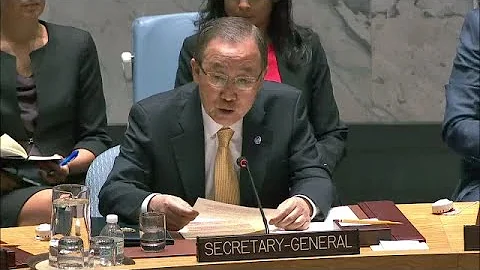
UN chief deplores the fractious deadlock surrounding elimination of nuclear weapons
United Nations
1.5K مشاهدة · 9 years ago
2:08
Lithuania To Lift Ban on Nuclear Weapons Foreign Military Bases WION Fineprint
WION
400 مشاهدة · 1 hour ago
4:55
Total Elimination of Nuclear Weapons UN Chief United Nations
United Nations
4.2K مشاهدة · 1 year ago
2:07:26
From Memory to Action Youth Led Event
United Nations Office for Disarmament Affairs
772 مشاهدة · Streamed 15 hours ago
2:55
The threat of nuclear weapons explained JUST THE FAQS
USA TODAY
30.1K مشاهدة · 4 years ago
Iran ASS SSINATION Plot BLOWN Russias New Weapon SHOCKS West Larry Johnson
Danny Haiphong
31:58
Security Council Elimination of Nuclear Weapons other topics Daily Press Briefing
United Nations
1.3K مشاهدة · 4 years ago
3:23:45
Continued Intl Day for the Total Elimination of Nuclear Weapons
United Nations
3.7K مشاهدة · Streamed 5 years ago
4:26
International Day for the Total Elimination of Nuclear Weapons UN Disarmament Chief 2020
United Nations Office for Disarmament Affairs
33 مشاهدة · 3 years ago
3:15:19
Intl Day for the Total Elimination of Nuclear Weapons
United Nations
6K مشاهدة · Streamed 5 years ago
4:25
Nuclear disarmament is the only sane path to a safer world Ban Ki moon
United Nations
3.2K مشاهدة · 16 years ago
6:35
Panel Discussion on the Treaty on the Non Proliferation of Nuclear Weapons at 50 Nakamitsu 2019
United Nations Office for Disarmament Affairs
26 مشاهدة · 3 years ago
57:10
Nuclear Weapons Testing the Environment
C-SPAN
80 مشاهدة · 2 years ago
5:37
Intl Day for the Total Elimination of Nuclear Weapons UN chief
United Nations
12.6K مشاهدة · 4 years ago
1:01:13
2022 Panel on The Nuclear Threat in the Wake of Russias War on Ukraine
Arms Control Association
251 مشاهدة · 4 years ago
58:02
Implementation of the TPNW Session 2 Institutional Support for the TPNW

 2:13
2:13
 10:17
10:17
 2:08
2:08
 4:55
4:55
 2:07:26
 2:55
2:55

 31:58
31:58
 3:23:45
 4:26
4:26
 3:15:19
 4:25
4:25
 6:35
6:35
 57:10
57:10
 5:37
5:37
 1:01:13
 58:02
58:02
 1:09:03


