النص الكامل للفيديو
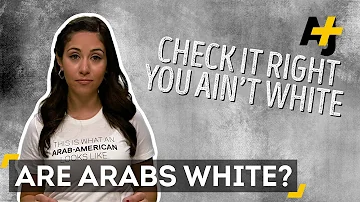
When we think of the Arab world, we often imagine single people, stretching from the Atlantic coast of Morocco to the Gulf, bound by common language, culture and history. But critics, especially in the West, argue that this is an illusion. They insist that the so-called Arab world is not, and has never been, ethnically unified. Egyptians, Iraqis, Syrians, Moroccans, and Sudanese all had their own distinct cultures long before the arrival of the Arabs in the seventh century. The spread of Arabic language and Islam, they say, merely Arab-ized these lands. This narrative is quite powerful. It suggests that Arab identity is political construct rather than real, lived identity. Historian Bernard Lewis, key Western critic of pan-Arabism, once wrote, "The Arab nation is modern invention, forged in the crucible of political necessity rather than historical fact." But Arab scholars challenge this dismissal. Albert Hourani, in history of the Arab peoples, argued the opposite. Arab identity is not artificial. It has grown with time, shaped by the language and faith that gave coherence to vast and diverse civilization. In this video, we'll dive into this debate, why Arabs are sometimes denied their unity, how both Arabs and Westerners have shaped this identity, and why the question of Arabness matters far beyond semantics. Because, at its core, the story of Arab identity is about power, belonging, and the struggle between unity and division in the modern world. On one hand, the Arab identity is real and tangible. Arabs across 22 countries share common language, Arabic, which is not just tool for communication, but the carrier of poetry, religion, philosophy and history. From the Qur’an to classical Arabic literature, the language binds together people in way that transcends local differences. Add to this shared heritage of customs, political struggles, cuisine, artistic expression, and the sense of collective “WE” is unmistakable. The 20th century Arab nationalist thinker, Sati Al Husrai, famously wrote, "Every person who speaks Arabic is an Arab. Every person who's brought up in an Arabic environment is an Arab. Every person who considers himself an Arab is an Arab." His formulation shows how deeply language and culture, rather than bloodlines, defined Arabness. On the other hand, Western scholars often push counter narrative. They argue that Arab identity masks enormous diversity. Kurds in Iraq and Syria, Amazigh in Morocco and Algeria, Copts in Egypt, Nubians in Sudan, and Maronites in Lebanon. These groups may speak Arabic, but they often preserve distinct traditions. Western critics say labeling them all Arab erases their identities. Historian Philip Hitti cautioned, "The term ‘Arab’ has been stretched to cover too wide an area and too many peoples to retain its ethnic meaning." The roots of this dispute go back to the Muslim conquests of the seventh century. The armies of Islam, drawn largely from the Arabian Peninsula, conquered the Levant, Mesopotamia, North Africa, and eventually the Iberian Peninsula. But these armies were relatively small. The historian Marshall Hodgson noted: “The Arab element was but thin ruling stratum. What endured was the Arabic language and the Islamic faith, which spread far beyond the initial conquerors.” Arabic became the language of governance, scholarship and devotion. People adopted it not because they were forced to, but because it was the language of the Qur’an, the courts, the universities, and most importantly, the market. Over centuries, Aramaic, Coptic, Amazigh languages receded, though often surviving in small pockets, as Arabic became the unifying medium of vast empire. So the question becomes: is Arabness false identity imposed from above, or shared identity embraced from below? That is the tension at the heart of this debate, and it continues to shape both Arab self-perceptions and Western critiques. Now, the way Arab identity developed, and the way it's been debated, is not accidental. It's been shaped by mix of external and internal forces that bent the narrative to suit their needs. First was Western colonialism. When European powers carved up the Middle East and North Africa in the late 19th and early 20th centuries, they understood the danger of Arab unity. unified Arab identity would've been political threat to British and French dominance, so they often highlighted local identities. Amazigh versus Arabs, Maronites versus Muslims, Sunnis versus Shia. As an example of this is how French colonial officials in Algeria famously promoted the “Berber Dahir” or the “Dhehir el-Berberi” of the 1930s, which sought to codify Berber law separately from the prevalent Arab Islamic law, deliberately dividing indigenous populations. Historian Charles-Robert Ageron noted: “The French colonizer exploited differences of language and custom to weaken the nationalist front.” The second force was internal, Arab nationalism. In the early to mid 20th century, Arab leaders sought to mobilize populations under banner of shared Arabness. For them, Arab identity wasn't fake. It was rallying cry against colonialism. Nasser's Egypt framed itself as the beating heart of the Arab world. Ba'athists in Syria and Iraq spoke of one Arab nation from the Gulf to the Atlantic. As Michel Aflaq, co-founder of the Ba'ath Party, declared: "The Arab nation is eternal. The mission of the Arabs is to awaken the spirit of unity, which history has preserved." And these two forces, Western colonialism and Arab nationalism, often clashed. Westerners wanted fragmentation. Arab leaders wanted unification. And caught in between were minorities, sometimes forced to embrace Arabization policies, other times encouraged to reject them by colonial patrons. The result was contested identity, forged in the push and pull between external domination and internal aspirations. Here lies the heart of the matter. Why is Arab unity such controversial idea? From the Western perspective, unified Arab identity obviously represents direct challenge to hegemony. If Arabs across 22 countries see themselves as one people, they could potentially pool their resources, coordinate politically, and act as bloc on the world stage. Imagine the combined energy reserves, trade routes and diplomatic leverage. Such unity would diminish Western influence in the region, and challenge global power structures. Edward Said, in Culture and Imperialism, pointed out: "The idea of an Arab world, however imagined, has always been unsettling for imperial powers, because it suggests the possibility of cultural resistance on grand scale." That is why narratives of Arab disunity, emphasizing divisions, tribalism and ethnic differences, have been so useful to Western powers. If Arabs are not really one people, then fragmentation is natural, and foreign intervention is justified as managing instability. For Arabs, however, unity has always been dream tied to dignity. Pan-Arabism in the 20th century captured imaginations precisely because it promised strength against Western domination. Even today, despite failed unions and rivalries, the idea of Arabness carries weight. The Palestinian struggle, in particular, symbolizes shared cause that transcends borders. As the late Palestinian scholar Hisham Sharabi wrote: "Arab identity is not an abstraction... It is lived solidarity, and Palestine has been its proving ground across the greater Arab population." So, in short, Arab unity disrupts Western hegemony, while the promotion of Arab disunity, serves it. This is not just question of identity. It is question of geopolitics and global power. Now, critics may insist that Arab identity is an artificial construct. But for ordinary Arabs, the connection is both real and lived. It has been so for over millennium. Think about it: from the Abbasid Caliphate in Baghdad to the Andalusian Courts in Spain, Arabic was not just language of conquest, but the language of philosophy, medicine, poetry, and theology. Across centuries, merchant in Cairo, scholar in Damascus, and poet in Cordoba could converse in the same tongue, share in the same intellectual traditions, and feel part of the same civilizational fabric. want to quote the historian Albert Hourani once again, who observed that: “By the 10th century, there was cultural unity across the Arab-speaking world which, despite political fragmentation, gave the sense of belonging to single civilization.” This sense of unity persisted long after the fall of Islamic empires. Even under Ottoman rule, Arab culture maintained its cohesion. The Arab Revolt in World War was fueled not only by politics, but by the feeling of shared Arabness. The pan-Arab movements of the 20th century were not simply imposed by elites. They resonated with millions who already felt the weight of common identity. Today, Arabs still experience this connection. Lebanese song can top the charts in Morocco. protest chant in Tunisia can echo in Iraq. The Palestinian cause unites Arabs across borders like few others. Anthropologist Benedict Anderson's concept of “Imagined Communities” is often applied here: “Communities are to be distinguished by the style in which they're imagined.” For Arabs, that imagination is not only political, but cultural, social, and emotional. Yes, Arab identity may not be ethnic in the strict sense. It's not based on DNA or ancestry, but identity rarely is. French identity today unites Celts, Romans, Franks and immigrants, yet nobody questions its reality. Why should Arabs be held to different standard? Arabness is as real as the lived experience of those who embrace it. The debate over whether Arabs are truly Arab or merely Arabized misses the point. Arab identity is not fixed biological category. It is shared consciousness born of language, culture and history, and sustained across many centuries. If it is construct, then it is one of the most enduring and powerful constructs in human history, one that has shaped empires, inspired revolutions, and continues to give meaning to millions of lives today. As the Syrian philosopher George Tarabishi put it: "Arabness is not mask. It is the expression of continuity that, while shaped by history, has been renewed by each generation." Yet, Arab identity cannot remain stuck in the past. To be meaningful in the modern age, it must evolve. It must embrace diversity, recognising the contributions of Kurds, Amazigh, Nubians, and others, not as outsiders, but as integral parts of the Arab story. Arab unity must be about inclusion, not erasure. The call to Arab oneness is not call to deny history. It is call to reclaim it, to see Arabness as strength, bond that empowers rather than divides. In world where global powers still seek to dominate and fracture the region, Arabs must remember that their unity is their greatest defense and their greatest hope. Arab identity is real. It is tangible. And if reinvigorated for the modern era, it can once again become force for dignity, self-determination, and pride.

 3:24
3:24
 9:45
9:45
 12:49
12:49
 36:41
36:41
 10:19
10:19
 51:02
51:02
 1:30
1:30


