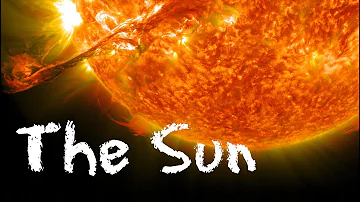
whose birthday is it little kitty sunday well unfortunately we don't know the exact date of the sun's birthday however we do know something about its birth and how it came into existence so in today's episode let us explore the creation of our beloved sun and answer burning hot question how was the sun formed zoom in there are billions of stars in our galaxy but the great glorious sun holds special place in our lives that's because its gravity keeps the solar system together holding everything from the biggest planets to the smallest particles of debris in its orbit not only that the connection between the sun and earth drive the seasons ocean currents weather radiation bells and auroras but the vital question is how did our sun come into existence well it all started 4.5 billion years ago in the milky way galaxy's orion spur when waves of energy traveling through the space press together the clouds of gas and dust called solar nebula these clouds mainly consisted of the gases like hydrogen and helium but some of it was made up of the remaining remnants of dead stars then as the nebula collapsed because of its gravity most of the material was pulled toward the center as it began to spin faster causing the cloud to flatten into disc and in the center of this disc formation the material continued to clump together as the matter condensed into burning ball of gas to form protostar then over the next tens of millions of years the temperature and pressure of the material inside increased jump starting the fusion of hydrogen that made the sun we know today today with the radius of folac 32 168.6 miles our sun is the largest object in our solar system it is so big that it would take 3 lakh 946 earth to match the mass of the sun and can fit all eight planets inside it nearly 600 times the sun can be divided into six layers starting from the corona next comes the chromosphere then the photosphere followed by the convective zone radiative zone and finally the core in terms of atom count the sun is made up of 91 hydrogen that acts as its fuel 8.9 helium and 0.1 heavier elements like nitrogen and carbon the temperature at the surface of the sun is about 5 600 celsius which rises as we go inward towards the center of the sun where it reaches around 15 million celsius now that's really hot but here's thing my friends like all stars the sun will someday run out of energy yes scientists predict that the sun is little less than halfway through its lifetime and will last another 6.5 billion years after that it will swell to become red giant eventually it will shed its outer layers and the remaining core will collapse to become white dwarf slowly the white dwarf will fade and will enter its final phase as dim cool object known as black dwarf did you know the sun is the closest star to our planet yes the sun is 93 million miles away from the earth hope you learned something new today until next time it's me dr binox zooming out hey friends don't you just love warm sunny day from afar it seems like the sun is equally bright no matter where you look from but that is not the case if you look closely at the surface of the sun you will see some areas darker than the others and sometimes you might even see sudden bursts of brightness on the surface of the sun these are what we call sunspots and solar flares let me tell you something more about them come on zoom in the sun is dense cloud of bright and hot gases it holds immense pressure within itself and sometimes this pressure becomes too much so the sun has to let go of some of its energy when the sun does this some areas on the surface become even brighter these bright areas are called solar flares and they disappear very suddenly solar flares usually take place around the active parts of the sun's surface such as the sunspots these are areas of high magnetic activity on the surface of the sun although they produce light it is not as bright as the area around it so the sunspot appears darker they are actually cooler than the rest of the sun when solar flare occurs it also releases different kinds of energy particles like electromagnetic energy electrons ions etc these particles usually reach the earth in around day or two but don't worry they don't harm us because we are protected by the atmosphere of the earth and its electromagnetic field the sunspots were even used in ancient times to figure out that the sun rotates when people looked at the sun they noticed the spots change and realized that the sun must be rotating trip your time auroras popularly known as the northern lights are caused by the solar wind hitting the earth's atmosphere sunspots were observed as far back as 364 bc by astronomers in ancient china now wasn't all this amazing who knew there is so much going on on the surface of the sun as they say don't judge book by its cover who knows what is going on under such simple looking things so friends until next time keep your binoculars out and your eyes open who knows what you might find this is me zooming out no forgot to bring the sunscreen lotion kitty and don't want both of us to fall prey to those harmful uv rays from the sun and get painted with den so let's go back and bring it yes little kitty uv rays hey friends as we carry our uninteresting journey back to our house let us fill it with some interesting discussion and learn about the harmful radiation coming from the mighty sun and answer burning question what are uv rays zoom in the sun the great glorious golden sun the one that provides energy to living beings warms us and turns night into beautiful new day filled with hope and enthusiasm but like anything else our son isn't perfect as well and has dark side to it yes my dear friends and uv rays are one such disadvantage our sun possesses but what are these uv rays everyone fears more than an asteroid hitting the earth's surface before we answer that question we need to learn about an important thing with fancy name that sounds like the next sci-fi movie and that is electromagnetic spectrum you see when we think of light you probably think of what your eyes can see but the light to which our eyes are sensitive is just the beginning it is fragment of the total amount of light around us yes right from radio waves gamma rays and you won't believe but most of the light in the universe is invisible to us meaning we can't see it through naked eyes how ironic isn't it so electromagnetic spectrum is term used by scientists to describe the entire range of light that exists including the invisible uv or ultraviolet rays that are produced by the mighty sun when the sunlight reaches the earth's surface it consists of three types of radiations the infrared light that we can feel as heat the visible light that allows us to see the surrounding things and last comes the uv radiation the ever powerful one that can't be seen or felt by anyone but when it comes to feeling the destructive effects of the sun's rage the uv radiations are the main offender these rays come in three forms ultraviolet or uva ultraviolet or uvb and ultraviolet sea or uvc although uvc is the most destructive of them fortunately they are absorbed by the earth's atmosphere which is the protective layer of gases surrounding the planet and does not reach the earth's surface and it's mostly the uva rays that we get exposed to on daily basis and at times uvb race can penetrate or come through the atmosphere causing damage to people who are exposed to these rays but the vital question is how do these seemingly innocent radiations cause so much of damage to us well for that we need to zoom into your body to look at the upper layer of the skin called epidermis that protects you from many external forces just like that when the visible light coming from the sun hits your skin it reflects off the epidermis but the uvb can penetrate through your skin into the epidermis and reacts with the dna and thus damaging it although low level damage can be repaired but over exposure to uvb rays makes it hard for our body to maintain it and thus leading to many skin disorders including skin burns inflammation and can even cause skin cancer on the other hand over exposure to uv rays can also lead to cancer but it is mostly responsible for causing wrinkles yes it can penetrate to the deep layer of skin called the dermis which has the scaffolding of molecules such as collagen that gives your skin the elasticity but all the flexibility finds it hard to fight the uva rays as it damages the collagen scaffolding causing wrinkles and making you look older than your age but don't you worry about it my friends as there are very easy peasy lemon squeezy ways to protect ourselves from the wrath of the sun yes just limit your time in the sun wear glasses using sunscreen can reduce the level of damage caused by harmful radiation and you can continue to live healthy life time did you know the bees can see the uv rays that help them to get the direction to the pollen as the rays are reflected on the petals also elephants can sense that their skin may get sunburned and hence they guard themselves by covering up in protective coat of mud now that's what we call being self-aware hope you enjoyed today's episode until next time it's me dr binox zooming out nevermind hey where did the lights go is it night already no dr bynox something just hit the sun it's scaring me don't worry buddy this is nothing but the eclipse here take these glasses hello friends thanks for passing by as you can see the sun's got hidden and it's really dark out here do you know what it is don't worry it is nothing but the solar eclipse come let me tell you something about the solar eclipse today zoom in solar eclipse occurs when the moon comes in between the earth and the sun causing shadow of the moon to fall on certain portions of the earth from these locations it appears as if the sun has gone dark since the moon is very small in front of the sun it only blocks part of it hence solar eclipse cannot be seen from every part of the earth but only from the locations where the shadow of the moon falls so buddy no reason to get scared now is it no doctor binocs not at all the three major parts during solar eclipse are umbra and tamra and penumbra the umrah is the portion of the moon's shadow where the moon completely covers the sun this is when the total solar eclipse occurs where you cannot see the sun at all antombra is the area beyond the umbra here the moon is completely in front of the sun but doesn't cover the entire sun the outline of the sun can be seen around the shadow of the moon and that is when you see the annular solar eclipse penumbra is the area of the shadow where only portion of the moon is in front of the sun this is when the partial solar eclipse occurs which lets you see only part of the sun you could see how the solar eclipse works in your homes take these two balls the bigger blue ball is the earth and the smaller white ball will represent the moon place them like this and light up the torch the torch will be sun there there you just got homemade solar eclipse amazing isn't it trivia time one should never watch the solar eclipse with bare eyes because of the harmful uv rays the longest the total solar eclipse can last is seven and half minutes so now if day suddenly turns into night you would know it is the solar eclipse this is me zooming out tune in next time for more fun facts why did you paint the sun black little kitty no no no the sun can't be wait minute that's an interesting scenario to explore hey friends so in today's episode let us figure out what could happen if our sun became black hole zoom in well first of all the sun will never turn into black hole yes my dear friends the sun would need to be about 20 times more massive to end its life as black hole stars born this size or larger can explode into supernova at the end of their lifetimes before collapsing back into black hole the black holes are objects with gravitational pull so strong that nothing not even light can escape but the vital question is what would happen to our sun once it reaches the end of its life well scientists predict that the sun is little less than halfway through its lifetime and will last another 6.5 billion years after that it will swell to become red giant eventually it will shed its outer layers and the remaining core will collapse to become white dwarf slowly the white dwarf will fade and will enter its final phase as dim cool object known as black dwarf but just for the sake of this video let's imagine for while that the sun did turn into black hole what would it be like for us well considering the nature of black holes it's easy to think that the black hole sun will start to pull our earth and other planets towards it before they get sucked into its point of singularity but let me put your fears to rest and say that none of those awful things will happen yes my dear friends that's because our black hole sun will be as small as six kilometers across and it won't contain more matter than it has now therefore its gravity won't be strong enough to pull objects or planets orbiting more than three kilometers away from the center of the solar system so it means fortunately we will continue to hold our current orbit and move around the black hole sun but it does not mean that it will be an easy ride for our planet because this black sun won't give out any light and heat so no wonder everything on earth will be pitch dark and freezing cold sure humans can use artificial light to tackle the darkness for while but the bigger concern here will be the dropping temperature which will quickly freeze the surface water not only that without sunlight photosynthesis will stop and plants and consequently plant-eating species will perish and even humans will come on the verge of extinction so in these life-threatening scenarios the only hope for mankind for survival we'll be building underground houses staying below ground will help us to harness the power of science and use geothermal energy to generate electricity and heat but fortunately our sun will never turn into black hole so there is no need to worry in that regard however as we know like any other star one day our sun will vanish too trim your time did you know the smallest known black hole unicorn is just three times the mass of the sun not only that but it happens to be the closest known black hole to at just 1 500 light years from earth hope you learned something new today until next time it's me dr pynox zooming out never mind what happened gosh thank god it's just balloon imagine what would happen if song explodes for real well that we will learn in today's episode hey friends so without taking any more time let us explore this explosive hypothetical scenario by answering an exciting question what if the sun exploded zoom in just for quick recap supernova is massive explosion that takes place at the end of star's life cycle in other words it's death of star and because of this explosive nature stars can be big threat to their surrounding as they can destroy anything within their range so this makes us wonder what would happen if someday sun explodes too well those who are worrying about it let me tell you that it will not be good sight as well as we don't stand chance yes for our planet to be completely safe from supernova it must be at least 50 light years far away from the explosion spot whereas our sun is merely 93 million miles away from earth meaning the odds are clearly against us so in case the sun explodes tomorrow the radiation and shock waves coming out of it will roast everything in its path and once it enters the earth's atmosphere the side facing the blast will be instantly burned and cleaned off including the oceans while people residing at the night side will feel sudden temperature rise that would be 15 times hotter than the sun's current surface temperature but before they could understand the reasons behind it within the next few seconds or so the blast waves of the matter would engulf the entire planet turning it into lifeless heat ball and without the sun's gravity holding us in orbit earth would likely start floating off into infinite space but fortunately none of it is going to happen yes my dear friends only start 10 times the size of our sun or bigger can explode like bursting balloon on the other hand our sun will die slowly like when you gradually let the air out of balloon that's true scientists predict that the sun is little less than halfway through its lifetime and will last another 6.5 billion years after that it will swell to become red giant eventually it will shed its outer layers and the remaining core will collapse to become white dwarf slowly the white dwarf will fade and will enter its final phase as dim cool object known as black dwarf trim your time did you know that white dwarf the core of the dead star weighs almost as much as the sun while being only the size of the earth yes teaspoon of white dwarf would weigh somewhere around 6 000 kilograms that's as much as an adult elephant hope you learned something new today until next time it's me dr binox zooming out never mind no little kitty the great glorious sun isn't bad but it's the reason behind everything good on our own hey friends it's easy to take free things for granted like the sunlight but have you ever wondered what will happen if the sun suddenly blinked out of existence well in today's episode let us shed some light on this dark possibility and answer life-threatening question what if the sun disappeared zoom in imagine you wake up in the morning for quick dose of vitamin from the sun so you open the window and feel the energy from those form rays as you happily pick up the newspaper that reads the headlines the sun is going on summer vacation forever so you panic sweat while biting your nails and wonder what will happen now well the answer is nothing but only for the first eight minutes or so yes as we know light takes approximately eight minutes to reach our surface from the sun so we'd still see it in the sky for some time but then things will just take turn for the worse yes the first thing you will notice is the darkness around the world although you would be able to see the distant stars but apart from them there won't be any other natural source of light not even the silver moon as it gets its light from the sun and as einstein's theory of relativity suggests that gravity travels at the speed of light so after those initial eight and half minutes there won't be any gravitational force to hold the earth on particular orbit and it will fly away into the solar system into the endless space in straight line at the speed of 18 miles per second and if we are lucky enough not to collide with other planets and asteroids or get absorbed by black hole we will continue to travel for the next 43 000 years until we find another star to orbit around but that would be rather long time the current scenario on earth will continue to depreciate and the next we will witness is that without the sunlight photosynthesis would stop but that would only kill some of the plants yes fortunately some larger trees can survive for decades without it but eventually sooner or later they will meet their end as well later within week or so the would begin to drop below zero that would put most living organisms on the verge of extinction including humans and within couple of months the ocean's surface would freeze over but it would take another thousand years for our seas to freeze solid until then the ocean's interior will remain liquid due to the heat emitting from the earth's core because of this the organisms living in the deep ocean that doesn't need sunlight will continue to thrive for billions of years until the water completely turns into ice and beautiful green planet would be nothing but barren wasteland floating aimlessly through space so we should be thankful for the great sun because of which everything is in perfect order trip your time did you know astronomers estimate that the sun has about 7 billion to 8 billion years left before it sputters out and dies but before that in about 5 billion years the sun will run out of hydrogen hope you learned something new in today's episode until next time it's me dr binox zooming out never mind
6:03
The Sun for Kids Solar System Science
Homeschool Pop
1.6M مشاهدة · 6 years ago
5:39
How The Sun Was Formed Solar System The Dr Binocs Show Peekaboo Kidz
Peekaboo Kidz
3.3M مشاهدة · 4 years ago
5:06
What Is the Sun
SciShow Kids
706.1K مشاهدة · 5 years ago
12:32
Our Sun for Kids Learn About the Sun and Its Effects on the Earth and Objects in Our Solar System
Lesson Boosters - Kids Science and History Videos
18.9K مشاهدة · 2 years ago
5:04
Woodrose International School The Sun Grade 5 Science
Woodrose International School- Africa
108 مشاهدة · 5 years ago
1:56
How the Sun Makes Things Warm and How We Stay Cool
Science Wonderscope
6.5K مشاهدة · 11 months ago
2:31
Our Sun Science videos for kids Kids Academy
Kids Academy
1.4M مشاهدة · 5 years ago
11:30
Science Kindergarten 5 12 Sun Warming the Earths Surface
Seattle Public Schools TV
1.6K مشاهدة · 5 years ago
7:31
K Science How The Sun Warms Earth
EIS Educational Videos
25.7K مشاهدة · 5 years ago
3:35
The Sun Educational Video for Kids
Happy Learning English
1.3M مشاهدة · 8 years ago
4:01
Facts About the Sun for Kids What is the Sun Science Lesson for Kids Twinkl USA
Twinkl Teaching Resources - United States
103.9K مشاهدة · 1 year ago
4:57
All About the Sun for Kids Astronomy and Space for Children
Free School
2.9M مشاهدة · 9 years ago
3:05
Less Than Five Layers of the Sun Explained Inner Layers
Astronimate
189K مشاهدة · 9 years ago
5:50
Importance of the Sun Animation
EarthPen
22.2K مشاهدة · 2 years ago
3:43
All About the Sun Science for Kids
National Science Foundation News
20.9K مشاهدة · 1 year ago
0:11
what is sun sun definition for Kids About Earth understand and learn sun SUPER KIDZ
Super Kidz - International E-Learning Society
17.6K مشاهدة · 3 years ago
1:32
The Sun Shade
NUITEQ Chorus Educational K-12 Content
27.3K مشاهدة · 5 years ago
4:53
Following the Sun Crash Course Kids 2
Crash Course Kids
2.1M مشاهدة · 11 years ago
9:28
Grade 5 General Science Chapter 10 Class 1 The sun the moon light travels in a straight line

 6:03
6:03
 5:39
5:39
 5:06
5:06
 12:32
12:32
 5:04
5:04
 1:56
1:56
 2:31
2:31
 11:30
11:30
 7:31
7:31
 3:35
3:35
 4:01
4:01
 4:57
4:57
 3:05
3:05
 5:50
5:50
 3:43
3:43
 0:11
0:11
 1:32
1:32
 4:53
4:53
 9:28
9:28


