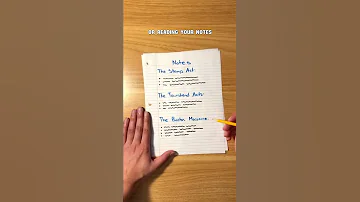
all right welcome back to class everyone wait could you repeat that repeat what what you just said welcome back to class welcome back to thank you class no problem no problem okay what are you doing what are you doing stop that please please stop mean know the feeling know how it feels to strain your wrist and your neck as you're trying to copy down everything your teacher says but in these instances not taking is often comfort mechanism and not necessarily learning mechanism scribbling everything down as fast as possible gives us false sense of progress Although our hands are active our mind usually isn't in this video I'm going to talk about five common note-taking mistakes and how to fix them all right mistake number one transcribing instead of translating so as we covered at the start of this video you should never transcribe your lecture if you are trying to copy down every single word you're teach teacher says you're probably doing yourself disservice why because you can most likely find the lecture recordings and the lecture slides online we often rush to take notes because it excuses us from the harder and more important task thinking in fact argue that many students would be better off taking zero notes during lecture and forcing themselves to pay attention instead but chances are you don't want to do that and fair you probably should write something down during lecture so let me tell you better way to to take notes instead of transcribing which is writing everything down verbatim focus on translating which is writing things down in your own words as your professor speaks avoid the urge to continuously write instead want you to take notes in chunks focus on your professor's words for 10 to 20 seconds let it digest and then write the main points in your own words if you've never taken notes like this before it's going to feel uncomfortable because it'll feel like you're glossing over the important stuff the diagrams the the facts the dates the events but the truth is you can revisit all these specific Minor Details on your own time what you will not have access to later however is your professors and the overarching themes and ideas they want to convey in fact these are often the ideas your professor might communicate on the spot and in the moment they might not be available in textbook or some external resource here's another way to think about it learning is like Pottery you focus on the overall shape and structure first and then once you have that in place you can go in and focus on the Minor Details and patterns to bring your Masterpiece to life knowledge Works similarly instead of going right into the little details you need to create the structure first and this is often through the key themes and messages and ideas and then once you have sense of what you're learning and why you're learning it then you can drill down with all the Minor Details to refine your understanding all this comes back to the one lesson that preach on this channel over and over again discomfort is byproduct of learning actively engage engaging with your professor's words instead of passively copying everything down is hard and most students won't want to do that but you can either actively engage during lecture and trim down your study time outside of class or you can passively engage and drastically extend your study sessions mistake number two obsessing over form now what do mean by this by Form I'm referring to the aesthetic and the format of your notes now don't mean to sound like hater when I'm saying this but aesthetically pleasing notes are very over at if you want to decorate your notes and make them look pretty outside of class please by all means do so and don't let me stop you but do not obsess over the aesthetic while you're in lecture for two reasons first the more you focus on the aesthetic the less you focus on the actual lecture embellishing your notes just gives you false sense of productivity and second you'll be in constant state of panic trying to keep up with your professor and so again we run into this issue where you're not actively engaging with the lecture content okay now let's talk about the format of your notes some of the smartest students know obsess over the format and rightfully so they want to make sure that their notes are neat and organized to maximize their learning but my advice don't overthink it choose format that works for you and run with it for example if you don't like Cornell notes don't use Cornell notes because some academic Guru told you that they were effective which they are by the way but totally understand why you might not be fan of them again what matters more is the process of not taking itself for example are you actively engaging are you processing ideas in your own words are you focusing on the key themes and messages that's what matters more but would be remiss if didn't at least tell you what the different note-taking formats are so let's run through them quickly again if any of these resonate with you great if not keep doing you first we have the good old outline method and this is the notetaking method that carried me throughout high school and college and the premise is pretty simple organize information hierarchically hierarch hierarchically is that how you say that use bullets to put main topics at the top followed by subtopics underneath prefer this format because it gives me the most space to work with which isn't necessarily the case with the second format Cornell notes so for Cornell notes you want to divide your page into three sections in narrow left column for cues and questions wider right column for the notes themselves and then section at the bottom for summaries benefit of this structure is that it forces active engagement with the electure material but drawback is that it takes lot more time time after class or maybe even during class you're going to have to remember to fill out that summary section for every single page now if you're not fan of writing summaries then you might be fan of this third format the box method now I'll admit this one is bit unusual and I've never used it myself but the idea is simple group similar notes together and box them this can provide clear visual separation between distinct ideas which can make studying lot easier but my favorite not taking format at least the one to study with are mind Maps mind maps are great because they reflect the interconnected nature of knowledge you have central idea in the middle and then you have related ideas branching off and then you can integrate distinct colors with separate areas of the Mind map to help with memory retention but know what you're wondering goart didn't you say you used the outline method during school and not mind maps that's correct used the outline method to take notes during class but used mind maps to study outside of class mind maps can get very messy if you're using them dur in lecture because you might not know when to split branch into sub Branch or when to use different colors that's why think that mind maps are instead useful when you're familiar with the concept and understand the surrounding landscape once you've acquired knowledge you can then use mind map to make sense of it and see how everything fits together you know what else should fit together your study tools which is why want to show you something cool that Opera is doing they've partnered with Spotify to reimagine the way we listen to music while working and it gets even better right now Opera is offering three months of Spotify Premium for free that means you can listen without ads download your music to listen anytime anywhere and organize your playlist to listen in whatever order you want you can claim your free trial by downloading the Opera browser and heading to the Opera player sidebar just note that this offer varies by country now let me show you Opera in action especially the video pop out feature you can detach the video you're watching so and place it anywhere on your screen keeping it on top of other windows this is super helpful for those who love to watch while they browse but don't want to keep switching between tabs but what really love is how customizable Opera is watch this can set theme like Midsummer adjust the colors add some subtle sound effects and create the perfect environment for focusing head to the link in my description to download Opera today and claim your free Spotify Premium offer and now back to the video mistake number three ignoring your inner monologue so you know that voice inside your head during lecture the one that's like wait this doesn't make any sense or wait how does that work capture these thoughts in your notes doing so is great way to reflect on the material and to make your notes much more memorable for example as I'm reading book will annotate my exact thoughts in the margins if find something funny will write down LOL or if find something weird I'll say WTF followed by an explanation or sometimes if we're talking about person that reminds me of someone that know or if we're talking about an event that reminds me of something that I've experienced will also note that down the more personal you can make your notes and connect these distinct Concepts to your own lived experiences the easier it's going to be to retain that information the most important type of annotation though in my opinion is the question mark if something confuses you anything confuses you during lecture even for just moment write down question mark in the margin and in the moment not later not via email not after class raise your hand and ask for clarification because promise you the ideas that you're telling yourself you'll revisit on your own time you won't you will probably forget about it as soon as lecture ends and also over the course of the semester you'll encounter more material than you can possibly imagine and you will not have time to go back through everything and see which parts confused you those question marks will be your indicators and they will guide your study sessions so this way you can skip over the self-explanatory Concepts and double down on what confuses you mistake number four failing to contextualize knowledge doesn't exist in isolation when you learn something new it's probably connected to something you've learned previously or it's related to an adjacent Topic in different class your knowledge exists in the shape of tree in other words it looks kind of like mind map when you take notes on new topic you have to embed it in your knowledge Network in other words you have to take this new piece of information and connect it to an old piece of information if you fail to establish these connections your new knowledge will exist in isolation and slowly wither away over time but what does this process look like how do you actually create these connections and contextualize your knowledge well have have three methods for you method number one is to include callbacks if you're taking notes on topic that feels familiar say so in your notes literally write down something like this reminds me of the theorems we learned last week or this reminds me of reaction rates in chemistry you can embed these callbacks into your notes as you're taking them or you can add them to the margins after class now an even stronger way to contextualize your knowledge is Method number two draw comparisons callbacks are great but they're simple you're creating connection without EXP exploring the basis for that connection to further solidify your knowledge include call back followed by point of similarity or point of differentiation for example let's say you're taking notes on photosynthesis call back might be this Builds on our study of cellular respiration then point of similarity might be both processes involve energy conversion and then if you want to take it even further point of differentiation might be photosynthesis stores energy in glucose whereas cellular respiration releases it now you don't have have to do this with all your notes all the time but it's an especially useful exercise if you're studying for an exam and want to make sense of different concepts okay and then method number three map it out as said earlier mind maps are great study tool in addition to taking notes during class also recommend that you have mind map that you build out over the course of semester or unit after each lecture come back to this mind map and see if you can find place to fit in these new Concepts that you just learned the more connections you can draw between these new Concepts and the existing topics on your mind map the better off you're going to be all right and then mistake number five this is perhaps one of the biggest mistakes students make when taking notes doing single pass let me explain no student is going to take perfect notes on the first go but what do most students do they take their notes they close their notebooks and they don't revisit them until exam time or better yet just never at all here's what think you should do instead after you finish taking your notes great put them away and go about about your day but after 24 hours or even the same night want you to revisit what you wrote down what you'll notice is that some of the stuff might not make sense to you or some of the stuff you might want to flesh out even further this is the exercise and these are the realizations that separate decent students from phenomenal students because it's uncomfortable taking notes is the easy part using your notes to test Challenge and solidify your understanding is the harder and the more important part in this whole process so as you're taking notes consider leaving gaps every few lines so you have space to come back and refine your thoughts you'll want to revisit your notes shortly after you've taken them maybe even the night of and then you'll want to revisit them 3 days later and then 5 days later and 2 weeks later and so on this of course is the principle of space repetition which I'm sure every study tuber on this platform has talked about the idea is to revisit your notes at increasing intervals to prevent the knowledge from decaying use these blank lines to elaborate on any points or to clarify confusing details and at the the same time quiz yourself as you're going through your notes rereading your notes is bit overrated you also want to actively quiz yourself as you're doing so so review chunk cover it up with piece of paper and then try to recite the main points in your own words better yet take your notes and pretend you're teaching that material to someone else this of course is the fan technique which I've talked about in previous videos and this study method is one lived by especially for my social studies courses the overarching idea here is that your notes shouldn't just be some stale resource that you create once and then abandon rather your notes should be resource that you revisit review and refine over the course of semester y'all that does it for today's video if you have moment please take minute or two to leave meaningful comment and let me know what resonated most with you and also if you want to excel in school and organize everything you have going on check out my notion template which is linked in the description of this video y'all best of luck this school year hope 2025 is treating you right and I'll see you again next week
8:48
The Surprising Truth About Note taking During Lectures
Benjamin Keep, PhD, JD
329 مشاهدة · 3 jaar geleden
6:40
How to Take Notes in Class The 5 Best Methods College Info Geek
Thomas Frank
2 مشاهدة · 11 jaar geleden
15:07
How to Read Take Notes Like a PhD Student Tips for Reading Fast Efficiently for Slow Readers
Kaelyn Grace Apple | Historian
1 مشاهدة · 4 jaar geleden
32:01
How To Take Notes In Lectures
Tom Watchman
20 مشاهدة · 1 jaar geleden
18:26
Lecture Taking Notes Effectively which words should you write down
Jeffrey Kaplan
872 مشاهدة · 4 jaar geleden
8:51
Taking Notes Crash Course Study Skills
CrashCourse
3 مشاهدة · 8 jaar geleden
6:27
Effective Note Taking Tips BEFORE DURING AFTER LECTURES
heymin
35 مشاهدة · 4 jaar geleden
5:09
How to Take Great Notes
watchwellcast
2 مشاهدة · 13 jaar geleden
5:33
Hoe je wetenschappelijke artikelen leest er aantekeningen over maakt en ze begrijpt Essaytips
Tom Nicholas
461 مشاهدة · 9 jaar geleden
5:57
How I Take Notes for Different Subjects
Mike and Matty
638 مشاهدة · 3 jaar geleden
44:26
16 Note Taking Secrets of the Top 1 of Learners
Justin Sung
449 مشاهدة · 1 jaar geleden
6:12
How I take ZERO Notes at medical school My Studying System
Abadi
96 مشاهدة · 2 jaar geleden
24:31
How to take notes in a lecture class
SchoolHabits
6 مشاهدة · 10 jaar geleden
3:10
Roam for Students How to Take Notes in a Lecture
Shu Omi
12 مشاهدة · 6 jaar geleden
13:10
5 Different Ways to Take Notes While Listening How to Study English Listening

 8:48
8:48
 6:40
6:40
 15:07
15:07
 32:01
32:01
 18:26
18:26
 8:51
8:51
 6:27
6:27
 5:09
5:09
 5:33
5:33
 5:57
5:57
 44:26
44:26
 6:12
6:12
 24:31
24:31
 3:10
3:10
 13:10
13:10