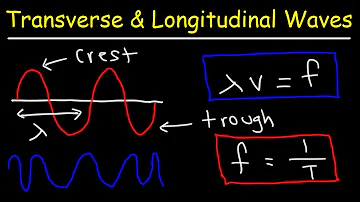
okay so we're starting the unit on waves and sound in this unit you can see I've bet Soundwave here only the best transformer ever but you can debate that if you want anyways this is the old-school one where he was tape deck and stuff like that which is pretty cool used to have that as kid so anyways when I'll talk about this kind of sound waves but what we're talking about is waves in general what they are and what sound is and how it travels and things like that and the speed of waves and their properties really really important because light sound water earthquakes gravitational waves everything is waves and you know all medical equipment these days it's all about waves and sound if you get ultrasounds if you get MRIs anything microwaves have you know they're obviously some form of light waves that are in there you know the signal is coming out of your phone's Wi-Fi signals cell tower signals that's all light it's all waves everything absolutely everything is waves you're gonna find out later in grade 12 about particle waves and electrons behaving as waves and as particles it's just it doesn't stop and there's some key key aspects of waves that will you know you can be using this in biology chemistry physics engineering radio communication physiotherapy if you go to be doctor they have to learn about all this stuff it's so important so of all the units you know this one touches and hits on so many different aspects of of you know your potential future lives and just the world and the universe in general so in this unit we're gonna learn about transverse waves or and learn about longitudinal ways what medium is what the speed of waves are what the speed of sound is some really important properties like constructive and destructive interference lot of you have really fancy headphones that have noise cancelling headphones and this is form of destructive interference of waves fantastic it's based on what's called the principle of superposition so this fancy word is really just constructive and destructor interference summed up is one thing literally the words summation is the word for superposition this is what similar we're gonna learn about the energy that waves carry what periodic motion is frequency pitch wavelength amplitude what's something called the universal wave equation that's really important concept called the resonance speed frequency if you want to you know tune an instrument and things like that you can talk about how beat frequencies are forms of constructive and destructive interference that allow you to tune an instrument we're in talk about rare faction is nodes and antinodes it's really cool reflection transmission electromagnetism or light matter waves mechanical waves really cool effect called the Doppler effect it's really neat concept you probably all heard about it before you know what's that room it sounds that you get when objects are making sound and moving relative to you towards you or away from you the Mach number really neat idea about you know objects traveling at Mach 1 Mach 2 or Mach point 5 or Mach 7 know the SpaceX just sent up rocket recently think was the dragon I'm not sure but Bob and Doug in it which is pretty funny you know and it you know those things travel at Mach 10 or something like that or maybe even more I'm not even sure I'd have to look it up in terms of the speed of sound so they're ripping through through the air at faster than the speed of sound like seven eight nine ten ten times the speed of sound we'll learn about what the sound barrier is what supersonic subsonic means and you know how echoes of sound are really just reflection of waves so that's super important and that's what we're gonna be focusing on in this unit okay so you've downloaded the waves and introduction document here's where you're gonna be able to draw in and follow the PowerPoint presentation you can pause it right in your information on the sheet as we go along now I'm gonna have to skip some of the investigations I'm just gonna cover all of it in this unit sorry in this presentation and you know back in the class we can look at all of the all of this in real person like in real life okay so let's get started and see where Barret are you waves and fall along with that sheet some of its maybe little bit out of order so you have to pause and rewind bit but that's okay introduction to waves and sound all right so what is wave well simply put it's disturbance or vibration that transfers energy progressively from point to point in medium so it requires or not always but most waves the vast majority of waves require what's called medium that's material so that word that meant that medium is material that the wave transfers through it's the way that you pass the energy through the particles in the medium and that energy transfers through the medium at some particular speed very particular speed in fact based on the composition of that medium so the mediums can be anything it could be piece of wood it could be the earth it could be water it could be string it could be tight string it could be able to string it could be slinky anything like that anything that you can transfer energy through is medium guitar string like when you pluck it the energy transfers from one end of the string up to the other reflects back and just keeps reflecting and there's an interference that happens and things like that to make these specific frequencies but so anytime there's disturbance or vibration in material wave will transfer through it sit at table and put your ear on one side of the table and ask someone in your house just to tap the other side how do you think that got there if you feel the vibration or you put your hand on and have someone hit the table you'll feel the tap that the person did on your hand well how did it get there well transferred through the wood or through the material to your hand as wave it transferred the energy to you how do you think you hear people in different room on the door shut well the waves from your your vocal cords vibrate the air the air moves outward hits the door vibrates the door that vibration goes through the door as wave hits the other side and that then the door vibrates and hits the air and that air transfers energy as wave to you into your ear which transfers into your eardrum which taps on little your your your eardrum basically is like piece of skin it's not skin but and it vibrates and taps aw hammer and anvil and it transfers into electrical energy and you can hear right it's all about transferring energy through mediums and progressively and it can travel from one medium to another medium to another medium to another medium to another medium all the time this is something that always happens okay there are three types of waves we're only going to focus on the first one and little bit of the second one and the other ones are done later so the very first type that we're going to talk about our mechanical waves they require material medium okay so they have to travel through medium that means like water waves sound waves waves and Springs or ropes and then comma forever can just go on about all the different places you can transfer energy through medium as wave electromagnetic waves these are weird it's literally just light electro magnet remember in our first unit we talked about electromagnetism which is that electricity can produce magnetism and magnetism can produce electricity Michael Faraday came up with this revolutionary idea that electricity and magnetism combined is what light is he made that hypothesis and James Clerk Maxwell on basically think Faraday was in his 90s and James Clerk Maxwell proved here all of his mathematics that light was in fact an electromagnetic wave that traveled at very specific speed the speed of light and I'm vindicated Faraday for all the work he done and all the hypotheses he made that he had said from the beginning that electricity and magnetism was light these are weird because they don't actually need anything to travel through right there's no air in space yet light can get to us from the Sun how is that possible well because those waves can travel without requiring material for them to travel through now you have to learn about photons and like you know particle wave particle duality but you know that's not until grade 12 so light waves radio waves x-rays shouldn't even split them up because radio waves and x-rays are light right there's different frequencies of light radio waves have big waves x-rays are small waves Ultra necessary and visible light is just sort of in the middle somewhere so it's all about the wavelength we're going to learn about that later the last type are matter waves they're particles of matter that wave when moving so you mean quantum mechanics is needed to describe these waves electrons and other particles show wave-like behavior under certain circumstance in fact they they they you know it's hard to tell an electron is the particle or is it wave and how does it behave and it often behaves like wave which is very strange and in fact the quantum realm is just something else and it really is tied exclusively to waves and you will learn all about this in university whether you take chemistry physics engineering or whatever you have to learn it but it is so important and fundamental for the way our universe works so mechanical ways is we're gonna focus on and mechanical waves and sound we'll leave these trickier types to something to do later alright there are two types of mechanical waves okay in fact they're the two main types mechanical waves and you can look back to your document and you can start filling some things in here as well transverse waves alright so transverse waves are waves that travel up and down okay and the particle movement so in any particular particle movement is up then down up and down the wave itself propagates in one direction so the wave energy movement is to one direction but the particles themselves only go up and down imagine that you're in stadium and the stadium does the wave you don't like the wave you can clearly see the wave going all the way around the stadium constantly but the particles the people stand up sit down stand up sit down stand up sit down they don't move with the wave right it's really weird thing but it's like they just go up and down but the wave moves and the energy moves around the stadium that's how waves of this type work top part of wave is called crest or peak bottom part of wave is called Valley or trough and the particle movement is up and down and the wave energy moves at very particular speed based on the medium you may want to even just write that down somewhere that the speed of the wave is based medium exclusively it's not about how much energy you put into it is literally just what type of material that wave sorry that medium is made out of let's take look at quick little video of this and see if okay here we go so you can see that the wave if you follow piece see my cursor it's moving to the right so started here it moves at very particular speed we could measure this distance and time how long it takes one of these to go across and figure out the speed of this wave but if you look at any individual particle just goes up and down up and down up and down up and down up and down up and down up annoy you if do that it so just keeps going to the right okay and you can see that the particles individually go up and down the crest moves as through the trough okay so that is clearly transverse wave okay this drawing there's box on your sheet pause this video and draw this in chill the particle moving in different color label crest or peak the valley or the trough and right in which direction the waves moving if you would even put for the speed okay so key features particles move up and down wave energy propagates move forward at the very specific speed and then on the side of your sheet right you need to include this not this you need to include this little piece at the bottom the wave speed we would do this in class as an experiment but for right now I'm just gonna explain to you so the speed of the wave is dependent on the type of material or the medium that the wave is traveling through not on the amount of energy or the amplitude or the which is the size of the wave so the amplitude is how big the wave is big amplitude is big wave small amplitude small wave turns out it doesn't matter if you if you have slinky and you make huge wave or if you do small wave this the wave will travel at the exact same speed through the material regardless of how much energy put into it more energy more amplitude less energy less amplitude the wave speed stays the same maybe flip that sheet over and just write this gigantic on your sheet that is dependency of this of the wave speed is only on the amplitude or the energy that you put into it all right so we got the transverse moving up and down wave propagates forward very specific speed here's some transverse waves now I'm very young in this video so come on think there's music but there is yeah you can't hear the video is my grade 10 class my hair was not great at the point and now my student teacher not my student you try it either student helping out in my class when they break he had big amplitude wave slow motion effects in there and the sounds that was 2006 that's quite some time ago 14 years okay so anyways longitudinal waves or longitudinal waves whichever way you want to look at it so these particles move their compression waves so you can add that into your little note there their compression waves the wave energy still moves but these particles just jiggle back and forth right there are areas where the wave where the particles are compressed together and there are areas where the waves are rare facted or there's lots of space between them and that area is called rarefaction you must know the word rarefaction rarefied air like if you go higher up in the atmosphere the air gets thinner and thinner because gravity's pulling on it less most of the area mostly there - sits at the bottom and so it gets rarefied meaning further apart where it's close to the ground there's compression so in this type of wave there's compression zone in rarefaction zone or those many of them in fact but the wave still propagates these rarefaction zones and these compression zones move and the particles just jiggle back and forth they don't actually move with the material it's common misunderstanding and misconception so the wave energy the movement is to the right let's check out cool video about this here we go so you can see watch this little particle this individual particle just jiggles back and forth back and forth but look at the wave there's compression zone and the particles stay compressed and they move at very specific speed this is very slow speed and then you can see that here's the rarefaction zone where the particles are further apart and it also moves at the same speed so this has compression zones and rarefaction zones and it moves at very specific speed based on the wave so there see the wave is moving the particle jiggles back and forth the compression zones are in the middle bit in the middle of two compression zones is rarefaction zone but you can see they move with the wave at the same speed as the wave because it is the wave it is the energy that's transit transmitting this is what sound does this is how particles of sound and particles of air move when you talk they crunch up in these very specific wavelengths and frequencies and then it is moved through the air by compressing the air in front of it but the particles of air like if you talk to someone the particle of air doesn't run over to the other person and say hey I'm talking to you right the part of these jiggles around in the air but it's the air near your head that's just absorbing that energy and making the sound appear to get you okay now here we go so again draw this in to your chart how does it pause it and do that okay key features the particles in this move side-to-side the wave energy propagates moves forward at very specific speed again on the back of your sheet and the biggest pencil Kran color you can do the wave or the speed the wave speed is dependent only on the type of material and not the amount of energy or amplitude of the wave that you that you put in so it doesn't matter what you do it will always move with that speed if you look at water wave in water the speed of which waves move no matter how much energy they have is always the same for the particular lake the temperature the amount of salt that's in the water or the amount of particulate matter or whatever the case may be it will always move with that very very specific speed doesn't change no matter what now some things that we are going to talk about this you'll need to do there's normally very long sort of thing about this we're gonna do tomorrow or the next day is talking about the speed of waves and you can just on the back of the sheet write these down for now and then when we do the next activity when the next lesson you can we'll watch some stuff about this so basically actually I'll stop the video here and I'll leave this for another video where we talk about the speed of waves about heavy mediums and light mediums and the transfer of energy through mediums one thing wanted to point out before we end this is water waves water waves are combination of longitudinal and transverse so look they compress and they rare fast and they also move up and down so water waves are wild and that's why you get sick when you're underwater because you're going up and down and around and that's why you get this undulating feeling because the particles are both doing transverse and longitudinal movement now people often mistakenly think that the water that they're getting hit with is water from the ocean turns out is actually just the water that's sitting right in front of you it's just that it's lifting up and moving down lifting up moving down there is because of gravity things that are on here slide to the front and you can ride the wave inward because of gravity so you can slide down the front due to gravity and move with the wave and that's what happens to particles and objects and that's why they get pushed onto shore they get pushed on shore because of the wave moving up and then in gravity they slide down they almost surf the wave into the shore but it's not the water that's coming to you it's the same the water just stays in the ocean it's the energy the wave and the objects that are on it slide down due to gravity towards you and then you feel sick because it's not just an up-and-down movement or side-to-side it's up and forward that's why you get that sensation from it it's pretty well that's good little extension to what we're doing alright so that's it and I'll move on to what happens to waves during when they move from one material to another material in tomorrow's lesson
8:37
Mechanical Waves
Chad Schmeckpeper
119 مشاهدة · 5 years ago
6:13
SPH 3 U 8 2 Types of mechanical waves
OnPhysics
10.9K مشاهدة · 9 years ago
14:43
Physics 20 Lesson 20 Mechanical Waves
The Physics Booth
5K مشاهدة · 11 years ago
12:50
Mechanical Waves Physics Practice Problems Basic Introduction
The Organic Chemistry Tutor
215.1K مشاهدة · 8 years ago
33:21
Second Baccalaureate Lesson on successive mechanical waves
AdrarPhysic
321.5K مشاهدة · 5 years ago
4:19
Mechanical waves and light Waves Middle school physics Khan Academy
Khan Academy
14.4K مشاهدة · 4 years ago
5:08
Transverse and Longitudinal Waves
The Organic Chemistry Tutor
756.7K مشاهدة · 7 years ago
25:25
APP 1 Mechanical Waves Lecture
Paul Koziel
100 مشاهدة · 7 years ago
7:35
EVERYTHING You Need to Know About Waves For Your Physics Test
EasyPhysics
1.8K مشاهدة · 1 year ago
25:46
Mechanical Waves Lecture Mechanical Waves
The Electron Volt
424 مشاهدة · 6 years ago
4:45
Types of Mechanical Waves Longitudinal and Transverse
adventures in ISTEM
52K مشاهدة · 6 years ago
6:26
Physics 19 Mechanical Waves 1 of 21 Basics
Michel van Biezen
257.4K مشاهدة · 12 years ago
6:07
Wave Mechanics
Professor Dave Explains
153K مشاهدة · 9 years ago
10:47
Physics 19 Mechanical Waves 9 of 21 The Wave Equation
Michel van Biezen
57.2K مشاهدة · 12 years ago
7:41
Mechanical Waves
Andrey K
26.2K مشاهدة · 12 years ago
2:47
Mechanical Waves Part 1
Valentin Taufour
645 مشاهدة · 5 years ago
14:15
8 2 Types of Mechanical Waves Online Physics Lesson SPH 3 U

 8:37
8:37
 6:13
6:13
 14:43
14:43
 12:50
12:50
 33:21
33:21
 4:19
4:19
 5:08
5:08
 25:25
25:25
 7:35
7:35
 25:46
25:46
 4:45
4:45
 6:26
6:26
 6:07
6:07
 10:47
10:47
 7:41
7:41
 2:47
2:47
 14:15
14:15


