النص الكامل للفيديو
History doesn't always reveal itself in full light. Sometimes it lingers in fragments, in contradictions, in silence where answers should be. Across centuries, empires rose, vanished, and left behind questions no single record can resolve. What if the truth is still buried beneath what we think we know? In the fertile plains of Sichuan, China, near the banks of the Yazi River, lies place that once seemed unremarkable until the ground itself began to speak. This is Sanging Dwey, site that has rewritten what we thought we knew about ancient China. When the first major discoveries emerged in 1986, archaeologists were not expecting revelation. Yet beneath layers of soil, they uncovered two massive sacrificial pits filled with artifacts unlike anything previously found in the region. Not pottery of familiar Han traditions, not the expected bronze forms of known dynasties, but towering masks with exaggerated eyes, elongated faces, and features so stylized they seemed almost otherworldly. Some of these bronze masks have eyes that protrude dramatically outward, as if designed not merely to see, but to observe something beyond human perception. Gold scepters, intricate jade blades, and trees cast in bronze with branching symbolism emerged from the earth in silence as though an entire belief system had been paused mid ritual. Mainstream archaeology suggests Sang Singh Doui was the center of an independent Bronze Age culture flourishing around 1200 BC to 1,000 BC parallel to the Shang dynasty but culturally distinct. This civilization appears to have developed in relative isolation. Yet its technological sophistication rivals and in some ways exceeds its contemporaries. The question is not simply what they made but why. Their artistic language diverged so sharply from everything else known in ancient East Asia. And then comes the silence. There are no known written records from Zang singing dui. No deciphered inscriptions, no clear historical lineage connecting it seamlessly to later Chinese dynasties. It is as if civilization reached high level of complexity and then deliberately stepped out of the historical record. what happened to its people? Some scholars suggest environmental catastrophe, perhaps sudden flood or earthquake along the river systems that sustained them. Others point to cultural assimilation where survivors migrated and merged into neighboring societies, dissolving their identity over time. Yet neither explanation fully accounts for the abrupt abandonment of ritual objects carefully buried as if in haste or reverence. Beyond academic consensus, alternative interpretations have also surfaced. Some propose that Singh Dui represents forgotten branch of early civilization that developed independently, isolated by geography and mountains. Others speculate about lost cultural transmissions where knowledge traveled in ways not yet understood. There are even fringe theories suggesting symbolic representations of sky worship, celestial beings, or visions shaped by religious experience rather than earthly observation. But the artifacts themselves remain silent on intent. Why do the bronze masks emphasize such enlarged, almost hypnotic eyes? Why do some figures appear human while others seem deliberately abstract, as if representing something not meant to be fully recognized? And why were so many objects intentionally destroyed before burial, bent, burned, or broken, only to be placed carefully into ritual pits? Each discovery deepens the puzzle rather than resolves it. Even today, new excavations continue at Sang Singh Dui, revealing additional pits, artifacts, and layers of complexity that suggest this was not forgotten outpost, but thriving ceremonial center with its own cosmology, its own vision of existence. Yet, the central question remains suspended in time. Was Sang Singh Dwey lost chapter of continuous history we have yet to fully connect or parallel story that unfolded independently leaving behind only fragments for modern eyes to interpret? And as the soil continues to yield its secrets, one thought lingers quietly in the background. What else might still be buried, waiting for us to understand civilization that never truly agreed to be forgotten? The soil of Sang Singh Dui seems to offer fragments of civilization that spoke in symbols rather than sentences, as if meaning itself was carefully encoded and then deliberately abandoned. Yet the feeling it leaves behind is not unique. Across time and geography, there are other artifacts that resist interpretation in similar way. objects that seem less like relics of known world and more like messages waiting for key that has not yet been discovered. In quiet library setting in Europe, centuries after the bronzes of ancient Sichuan were buried, another mystery surfaced in form far more delicate yet no less perplexing. It is known today as the Voinich manuscript, handwritten book filled with flowing, undeciphered text and intricate illustrations that defy easy classification. Among its most intriguing sections are the so-called zodiac pages, circular diagrams that appear to map celestial cycles, yet do so in language no one has been able to conclusively read. At first glance, these pages resemble medieval astronomical charts. 12 segments arranged in circle, each seemingly corresponding to zodiac sign, are accompanied by small stylized figures, some humanlike, others abstract, floating within ornate frames of botanical and geometric design. But closer inspection raises immediate questions. The symbols do not align perfectly with standard western zodiac iconography. The accompanying text written in an unknown script flows with the rhythm of language but refuses translation. What was the purpose of these pages and who was meant to read them? Mainstream scholarship suggests that the Voinich manuscript may have been created in the early 15th century BC Europe, possibly as scientific or medical compendium encoded in cipher. Some researchers propose it could be an elaborate hoax designed to imitate knowledge without containing any actual semantic content. Others argue it reflects now lost shortorthhand or constructed language perhaps used within specific intellectual or esoteric circle whose conventions never survived into the modern era. Yet none of these explanations fully settle the matter. The zodiac pages in particular seem to resist reduction to simple categorization. The figures inside the circular diagrams are not static symbols alone. They appear individualized almost as if they represent people rather than abstract constellations. Some hold objects. Some are framed by vegetital structures that resemble both plants and anatomical forms. The boundaries between astronomy, biology, and symbolism begin to blur in ways that feel intentional rather than accidental. And then there is the question of the script itself. The text of the Voinich manuscript flows with consistency. Consistent spacing, repeated patterns, and structural rhythm suggest it is not random. Linguists and cryptographers have spent decades attempting to decode it. Statistical analyses reveal patterns similar to natural languages. Yet no known linguistic system matches it. If it is cipher, the key has been lost. If it is language, its speakers have vanished without trace. This uncertainty has given rise to wide spectrum of interpretations. Some propose that the manuscript may encode alchemical knowledge hidden deliberately during time when such ideas were considered dangerous or heretical. Others suggest it could be tied to herbal medicine traditions where plants depicted in the manuscript represent real species stylized through symbolic abstraction rather than botanical accuracy. More speculative theories extend further. Some suggest it may be constructed mystical language intended for ritual or meditation where meaning is not meant to be translated in conventional sense but experienced through pattern recognition. Others propose that it could be an intellectual puzzle, an intentional challenge left behind by an unknown author designed not to be solved quickly but to endure as an open question across centuries. Yet even these possibilities struggle against the manuscript's internal consistency. If it is fiction, it is remarkably disciplined fiction. If it is code, it is one that has resisted every known method of decryption. What connects these pages to the wider world of human knowledge is not clarity, but ambiguity. Like the buried bronzes of Sang Singh Dwey, the Voinich manuscript does not fit neatly into the frameworks we use to organize history. It sits at the edge of understanding where interpretation becomes uncertain and confidence begins to fade. The zodiac diagrams in particular invite slower kind of observation. One might notice how the circular arrangement suggests cycles. Time not as straight line but as repetition. Seasons turning. Celestial bodies returning. Human experience folding back into itself. And yet without translation we cannot know whether these cycles represent astronomy, philosophy, ritual practice or something entirely different. Why would someone go to such lengths to create document that resists understanding so completely? Was it meant to preserve knowledge or conceal it? Was it intended for specific audience now lost to time who could read it effortlessly while we remain outsiders to its logic? Or perhaps the most unsettling possibility is simpler, that the manuscript is not hiding meaning at all, but revealing the limits of our ability to extract meaning from the past. As we move from carved bronze masks buried in ancient earth to ink pressed into parchment centuries later, pattern begins to emerge, not of answers, but of persistence. Human beings have always created systems to record, explain, and preserve their understanding of the world. Yet some of those systems refuse to be decoded by time. And so the Voinich zodiac pages remain suspended between disciplines, neither fully astronomical nor purely linguistic, neither confirmed artifact nor dismissed anomaly. They wait quietly in archives and digital scans as scholars continue to return to them with new methods, new theories, and new hopes. But the question remains unchanged, lingering just beneath the surface of interpretation. Are we looking at lost language of knowledge or simply at reflection of how much we still do not understand? From the inked symbols of manuscript in Europe, our journey now crosses oceans to remote land where human ingenuity and isolation intertwined to create one of history's most enigmatic legacies. The transition feels natural, almost inevitable. Humanity in disperate corners of the world has repeatedly encoded its understanding of life, time, and the cosmos into forms that defy immediate comprehension. After Sang Singh Dooi and the Voinich Zodiac pages, we now arrive at the windswept cliffs of Rapanoui, better known as Easter Island, home to another puzzle, the mysterious Rangarango script. Perched at top volcanic slopes, surrounded by the endless expanse of the Pacific, the island seems almost suspended in time. Its landscape is dotted with monumental stone statues. the Moai, whose silent gaze has captivated explorers and scholars for centuries. Yet beyond the monumental carvings, there exists smaller, subtler artifact. Wooden tablets and artifacts inscribed with series of glyphs, flowing lines, and repeated motifs that hint at writing system unlike any other in the Pacific. This is Rangarango, script whose meaning remains elusive and whose origin continues to provoke fascination and debate. Rangarango appears on wooden tablets, staffs, and plaques, each carefully carved in shallow grooves. The glyphs depict human figures, animals, abstract shapes, and plant-like forms often arranged in rows that are meant to be read in method known as bustedon, where lines alternate direction. Scholars first documented these artifacts in the 19th century, but evidence suggests the tradition predates European contact, though its precise age remains uncertain. Some estimates place the emergence of Rangarango between the 13th and 17th centuries after the island's initial settlement by Polynesians. Yet before outside influence fully reshaped local culture. Mainstream archaeology posits that Rangarango may have been pneummonic system rather than fully developed writing script, method to preserve genealogies, chance or ritual knowledge. Some have suggested that it was connected to the elaborate ritual and social structures of the island, perhaps tied to the Birdman cult or the ceremonial cycles that governed agriculture and religious observances. Yet this explanation, while plausible, leaves many questions unanswered. If rangarango were purely minimonic, why does the script display consistent structure, repeated patterns, and apparent syntactic order reminiscent of full writing systems elsewhere in the world? Attempts at decipherment have spanned decades. Linguists, cryptographers, and anthropologists have compared the glyphs to Polynesian languages, to astronomical charts, and even to protoriting systems in distant regions. Some studies suggest numerical or kundrical elements encoded in the sequences, hinting at method of tracking time or ritual cycles. Others propose that the script may encode more complex form of language, possibly lost to memory with the devastating population decline following European contact. Yet, the more we analyze, the more the mystery deepens. Certain glyphs recur across multiple tablets, while others appear only once, suggesting an internal logic that has yet to be understood. Some sequences seem to reflect storytelling or myth, while others hint at administrative recordkeeping. Could this have been script that served multiple purposes simultaneously, historical, spiritual, and practical, reflecting the full breadth of Rapanoui culture before the collapse of its societal structures? Speculative interpretations extend even further. Some researchers propose astronomical significance with glyph sequences corresponding to lunar cycles, star positions, or seasonal markers. Others have suggested ritualized narratives tied to the creation of the Moai, or allegorical records of voyages and migrations that shaped the island's population. Fringe theories, not supported by evidence, but impossible to dismiss entirely in the absence of key, hint at cosmological or sacred knowledge encoded in the carvings, intentionally veiled from casual eyes. One of the most haunting elements of Rangarango is its disappearance. By the time systematic study began in the 19th century, the number of surviving tablets was already dangerously small. Many had been destroyed or repurposed. Others were lost to fires, decay, or European interference. Unlike other writing systems, there is no continuous tradition of literacy to guide modern understanding. The last known practitioners of Rangarango left no decipherable records, and the context in which it was used vanished almost entirely. The artifacts themselves tell story of care and intention. Glyphs are carved with meticulous attention. Some following natural curves in the wood, others arranged symmetrically to convey rhythm or balance. The lines are not hastily drawn. Each symbol suggests deliberation, consciousness aware of both aesthetic and functional considerations. The physicality of the tablets, the choice of wood, the depth of the incisions, the sequence in which they were arranged, hints at culture that regarded these objects with reverence, perhaps as vessels of memory, instruction, or spiritual power. Yet, as with Singh Dui and the Voinich manuscript, we encounter silence where we most hope for answers. The exact relationship between the glyphs and the social or spiritual life of the island remains speculative. Were these tablets priestly tool reserved for learned elite? Or did they serve broader purpose, embedding collective memory in ways that we are not equipped to fully comprehend today? In considering Rangarango, one cannot help but reflect on the common threads linking human attempts to encode knowledge. Across continents and centuries, societies have left behind artifacts that resist immediate interpretation, cryptic scripts, symbolic objects, and enigmatic constructions. They remind us that human curiosity, creativity, and reverence for the unknown are universal traits. In every corner of the globe, there exists desire to preserve knowledge beyond the reach of time, often cloaked in forms that challenge the next generation's understanding. And so, standing on the windswept slopes of Rapanui, holding fragment of carved wood in imagination, we are left with questions rather than answers. What knowledge did the creators of Rangarango hope to transmit? What fragments of history, ritual, or science remain encoded in its carefully etched symbols? How much has already been lost to the passage of time? And how much remains buried, waiting for new perspective or method to reveal it? Rangorango, like Sang Singh Dui and the Voinich Zodiac pages, reminds us that history is not always linear and understanding is not always immediate. Some secrets endure not because they are hidden, but because they challenge us to consider the limits of what can be known, and to recognize the patience, ingenuity, and mystery inherent in human expression. In the quiet of the Pacific, amidst the silent moi and the carved glyphs, the mystery persists, beckoning us to continue our exploration, to wonder and to imagine what may yet be uncovered in the whispers of the past. From the carved glyphs of Rapanoui, our journey now returns across oceans and centuries, landing in the sunbaked plains of Cree, where another enigma has waited patiently for its story to be told. The islands of the Ajian, steeped in the rise and fall of early European civilizations, hold secrets not just in their ruins and palaces, but in small circular clay artifact that continues to defy comprehension. The Fisto disc. As with Singh Dui, the Voinich manuscript and Rangorango, here too we encounter culture's attempt to encode meaning, leaving behind message that teeters on the edge of understanding. The disc itself is deceptively simple at first glance. About 15 cm in diameter, made of fired clay, its surface is imprinted with 241 symbols arranged in spiral from the edge to the center. Unlike any other Manoan artifact, these symbols were pressed individually into the clay using stamps, creating one of the earliest known examples of movable type printing. The tactile precision suggests deliberation, intent, and perhaps ritual significance. Yet, despite centuries of study, no one has definitively deciphered the meaning of this carefully pressed sequence. Vistos, where the disc was discovered in 1908 during excavations of Manoan palace, provides some context but few answers. The palace complex itself, labyrinthine network of rooms, storage areas, and ceremonial spaces, suggests sophisticated society with administrative and ritual needs. The Manowans were accomplished seafarers, artisans, and administrators. Yet the disc seems to belong to tradition of writing that stands apart from the linear scripts found elsewhere on cree such as linear and linear Its uniqueness only deepens the mystery. Scholars have proposed multiple interpretations. Some suggest that the disc records hymn, prayer, or ritual text intended for ceremonial recitation. Others speculate it may have served as an early accounting tool or calendar, practical instrument encoded in symbols we cannot yet comprehend. Attempts to match the signs to known Manoan or other Agian scripts have yielded tantalizing hints, but no conclusive translation. Statistical analysis of the patterns indicates structure, repetition, and grouping, pointing to intentional syntax rather than random decoration. And yet, for all its apparent order, the disc raises questions that remain stubbornly unanswered. Why was it created using stamps rather than handcarved symbols when most contemporary inscriptions were meticulously written by hand? Was this method an innovation for mass production, symbolic act, or something else entirely? And why has no other artifact surfaced with matching symbols, leaving the Fistos disc as singular anomaly in the archaeological record? Speculative theories naturally abound. Some researchers have proposed that the disc may encode form of protoriting, representing ideas or sounds rather than complete language. Others suggest that it could contain magical or religious formulas, kind of talismanic text intended to convey power or knowledge rather than straightforward information. more controversial hypothesis even connects the disc to distant cultural contacts, imagining transfer of symbols across the Mediterranean to or from Anatolia or Egypt. Though these ideas remain unconfirmed, the spiral arrangement of the signs adds another layer of fascination. Unlike horizontal or vertical inscriptions, the disc's continuous spiral draws the viewer inward, as if inviting journey not just through symbols, but through thought, memory, and perhaps even time itself. Does the spiral mimic the cycles of seasons, celestial patterns, or spiritual journeys? or was it simply practical way to contain information on circular surface? The answer is unknown, leaving each observer to consider the significance in their own way. Material analysis provides some clarity, but also raises further questions. The clay's origin can be traced to the region around Fistos, suggesting the disc was produced locally. The impressions are remarkably uniform, implying practiced hand, careful plan, and perhaps workshop or specialist responsible for its creation. Yet there is no evidence of accompanying tools or records that might shed light on its purpose. It exists in isolation, solitary voice from the distant past. The disc's discovery during palace excavations hints at ceremonial or administrative significance. Yet the lack of contextual artifacts nearby challenges any single interpretation. Could it have been an elite object held in private intended for use by specific class or office? Or was it part of broader system of recording knowledge now lost to time? The mystery deepens when one considers that other Manoan sites equally rich in inscriptions and artifacts have yielded no comparable example. Even modern attempts at decipherment, employing computer algorithms, linguistic analysis, and cross-cultural comparisons have produced tantalizing but unverified results. Some suggest the text could be hymn to deity, record of transactions or narrative of historical events. Others maintain that it may represent local dialect or language that vanished without trace, leaving only this clay disc behind. Each hypothesis brings new possibilities, yet none provides closure. The fistose disc, like the Rangarango tablets and the Voinich manuscript, reminds us that human communication is not always transparent. Cultures have repeatedly devised systems to encode knowledge. sometimes with the intention that only select few might comprehend it or perhaps knowing that its meaning might fade with time. These objects challenge modern assumptions about literacy, universality, and the ways information is preserved across generations. As we consider the disc, it is impossible to avoid reflection on its broader significance. How many other messages, ritual texts, or records have been lost to time, leaving us with singular artifacts like this one? What does the choice of symbols, their repetition, and their spiral arrangement reveal about the Manoan's worldview, their priorities, and their relationship with knowledge and memory. And so, the Fastos disc remains suspended in mystery. It is at once tangible and elusive, precise yet indecipherable, small clay circle that carries within it the vast weight of unanswered questions. As we examine it, we are invited to imagine mind from thousands of years ago, shaping symbols in silence, aware of the world and its cycles and leaving behind challenge for those yet to come. What was the message intended for and for whom? How much of the Manoan mind, its culture, and its rituals is preserved within these 241 pressed symbols? And what other secrets like it are still buried in the sands of Cree, waiting to emerge from history's embrace? From the circular inscriptions pressed into clay in Cree, our journey now shifts northward, tracing the movement of knowledge and mystery across Europe. Like the Fistos disc, the objects we encounter here carry an echo of intent, the human desire to preserve understanding through symbols that speak across centuries. In the libraries and archives of Romania lies one such enigma, the Cibu manuscript. document whose pages hint at knowledge lost to time yet remain tantalizingly close to the surface of comprehension. The CBU manuscript preserved today in delicate folios presents striking contrast to the monumental inscriptions of Manoan. Its pages are filled with an intricate combination of diagrams, sketches, and text meticulously drawn by hand. From the outset, the manuscript demands careful attention. Each page feels alive with intention, as if the author sought to convey more than mere words. an intellectual landscape rendered in ink awaiting decipherment by future reader. The margins are often dense with annotations, while the central diagrams suggest an underlying order, logic both scientific and symbolic. Scholars have long debated the manuscript's origins. Radiocarbon dating and paleographic analysis place it approximately in the 16th century, though some argue elements could be older, hinting at traditions of knowledge predating modern Europe's documented intellectual history. The CBU manuscript emerges from period of profound transition, Europe awakening to new discoveries in mathematics, astronomy, and natural philosophy. Yet unlike widely circulated texts of the Renaissance, this manuscript appears deeply personal, perhaps produced for small circle of scholars or single visionary mind. The contents of the manuscript are as perplexing as its providence. Pages contain diagrams reminiscent of mechanical engineering schematics alongside cosmological charts and geometric figures that suggest advanced mathematical understanding. Interspersed among these technical elements are enigmatic symbols and notations that resist clear interpretation. Some resemble letters of Latin or Germanic alphabets. Others appear to be entirely unique, created by the author to convey concepts without recourse to familiar language. It is as if the CBU manuscript embodies private language, one that blends mathematics, mysticism, and coded expression. Mainstream interpretations suggest that the manuscript may have been compendium of emerging scientific ideas, perhaps illustrating mechanical devices or astronomical models not yet widely understood. Some scholars propose that it could represent early experiments in engineering or the study of mechanics preserved in symbolic form to transmit knowledge without revealing it fully to outsiders. Others hypothesize that its diagrams relate to alchemical traditions where the blending of symbols and sketches serves both practical and ritual purposes, encoding the stages of transformation in visual language. Yet even these explanations leave gaps. The precision of certain diagrams suggests depth of technical knowledge that seems ahead of its time, particularly in the representation of gears, pulleys, and celestial alignments. Were these accurate sketches of devices that existed but have since vanished, or conceptual models intended as intellectual exercises? Could the manuscript have been teaching tool designed for those initiated into particular school of thought rather than text for public consumption? Each possibility raises further questions about the intersection of knowledge, secrecy, and communication in early modern Europe. Speculative interpretations have emerged to fill these gaps, though they remain unverified. Some suggest that the CBU manuscript may encode lost astronomical observations, mapping the heavens in ways that predate more widely known star charts. Others propose it contains encrypted philosophical ideas, visual meditation on the harmony of the cosmos and human invention. More fringe theories imagine connection to secret societies or clandestine schools of thought where knowledge was deliberately shrouded in symbols to protect it from scrutiny or persecution. While intriguing, such hypotheses underscore the profound opacity of the text. We can imagine possibilities, but the manuscript itself offers no confirmation. The interplay between text, symbol, and diagram creates an experience of reading that is simultaneously intellectual and contemplative. Unlike standard printed books, the Cibu manuscript requires the observer to navigate its pages as one might traverse labyrinth. Patterns, repetitions, and anomalies guide the eye, suggesting meaning without guaranteeing comprehension. Its structure invites slow, careful examination where patience becomes tool of discovery, and the absence of immediate understanding is part of the manuscript's design. Physical examination of the manuscript also raises questions. The quality of the parchment, the consistency of the ink, and the meticulousness of the penmanship indicate high level of craftsmanship and intentionality. The precision suggests that the author was not simply recording ideas for personal reference, but was invested in creating durable record, one meant to be studied and perhaps even decoded by future generations. And yet, for all its care, no accompanying key survives. The CBU manuscript exists as single isolated voice in the historical record with no contemporaneous texts to illuminate its purpose. The enigma of the Cibu manuscript parallels the challenges faced with the fistos disc and rangarango. In each case, we encounter record of human thought and creativity that refuses to yield its meaning fully. These are reminders that knowledge is not always transparent, that some insights are deliberately or inadvertently obscured, leaving future observers to grapple with questions rather than answers. As we examine the CBU manuscript today, one cannot help but wonder about the intentions of its creator. Did the author hope that future reader would decipher the diagrams, unlocking practical knowledge or hidden wisdom? Or was the manuscript itself an exercise in thought, reflection of the author's understanding of the world meant to endure as testament to intellectual curiosity rather than concrete guide? and how much of this knowledge has been lost, leaving us with tantalizing hints rather than full understanding. In the quiet corners of archives where the CBU manuscript rests, its pages continue to challenge us. They invite reflection on the human desire to encode, to preserve, and to transmit understanding in ways that may transcend language or time. They remind us that history is not merely record of what we know, but also of what we have yet to discover. And as we trace the lines, study the diagrams, and contemplate the symbols, one question lingers quietly, insistently, what truths remain hidden within these pages, waiting for mind capable of uncovering them? From the inked diagrams and complex symbols of the Cibu manuscript, our exploration now turns to stone surface carved in the highlands of Sri Lanka where single artifact has both fascinated and perplexed scholars for decades. Like the Fistos disc and the Cibu manuscript, the Sakala Chakraa speaks in language of geometry and symbol, hinting at knowledge that challenges our understanding of history, astronomy, and human ingenuity. Here on weathered rock face, the past is etched in concentric circles and intricate lines, inviting us to look closer and wonder. The Sakala Chakraa sometimes referred to as the cosmic diagram is found at the sacred site of Aluvihare in Sri Lanka. It appears as series of concentric circles, radial spokes and interlocking arcs deeply insized into the rock surface. The design has hypnotic quality. Each ring seems to pulse with meaning, drawing the eye from the outer edges inward, as though tracing the movement of celestial bodies or mapping the passage of time. The grooves are precise, the geometry deliberate, suggesting the hands that carved it were guided by both intellect and ritual purpose. Mainstream scholars generally approach the saquala chakra as symbolic cosmogram, representation of the universe in spiritual and philosophical terms. In this view, the diagram reflects ancient Buddhist conceptions of space, time and cyclical existence, encoding teachings about samsara, karma, and the structure of the cosmos. Its placement near sacred sites supports this interpretation, suggesting that it functioned as meditative or ritual aid, way to visualize the vastness of existence and humanity's place within it. Yet the more one examines the carving, the more questions emerge. The proportions of the circles, the angles of the radial lines, and the layering of patterns seem to hint at mathematical or astronomical knowledge that is not easily explained solely by symbolic intent. Some researchers have noted the possibility that the diagram could reflect planetary alignments, solstesses, or other celestial phenomena, suggesting that ancient observers may have had sophisticated understanding of the heavens. Could it be that the Squala Chakraa served both as spiritual map and tool for tracking cosmic cycles? The mystery deepens when we consider the techniques used to create the carving. The lines are insized with remarkable precision into solid rock. Yet the methods of measurement, alignment, or construction remain unknown. Did the carvers employ rudimentary surveying tools? Or is this an early example of applied geometry? And if the design does encode astronomical knowledge, what motivated its creators to preserve it in such permanent form rather than in more portable medium? The answers, like the grooves themselves, are elusive. Speculative interpretations abound, some stretching beyond conventional scholarship. Certain theories propose that the concentric circles could represent map of the solar system or even the galaxy, predating widely recognized astronomical charts. Others suggest that the pattern may encode cycles of time far longer than human lifespans, perhaps even indicating epics of cosmic significance. While these ideas cannot be verified with current evidence, they underscore the magnetism of the Sakala Chakraa. It resists closure, inviting curiosity and contemplation. The artifact's connection to the broader cultural and religious context of Sri Lanka is equally compelling. The diagram is situated within landscape rich in monastic complexes, meditation caves, and ritual sites reinforcing its sacred significance. It is easy to imagine monks, sages or scholars pausing before the carving, tracing its lines with their eyes, contemplating the cosmos and considering humanity's place within it. In this sense, the suala chakra is not merely an object. It is conduit for thought, reflection, and perhaps instruction, bridging the tangible and the metaphysical. Yet despite centuries of study, the Saquala Chakraa remains largely undeciphered in terms of specific knowledge or measurement. Unlike written manuscripts or symbolic alphabets, this rock carving provides no textual key. Its language is geometry, rhythm, and proportion. code that demands not translation but interpretation. Some have attempted to overlay astronomical charts, geodisic models, or even fractal analysis to uncover patterns, but definitive conclusions remain beyond reach. The diagram stands as silent testament to what might have been known, yet is no longer accessible to us. The persistence of the Saquala Chakraa echoes patterns we have observed in other enigmatic artifacts like Sang Singh Dui's bronzes, the Voinich Zodiac pages, Rangorango tablets, or the Fistos disc. It represents deliberate attempt to capture and transmit knowledge. Knowledge that, for reasons lost to history, has become opaque. Each layer of the diagram, each carefully drawn circle reflects human ingenuity, curiosity, and reverence for the unknown. It reminds us that civilizations across time have striven to understand forces greater than themselves, leaving clues that challenge the intellect of those who follow. What was the full purpose of this diagram? Was it tool for meditation, record of cosmic observations, or symbolic representation of metaphysical truths? Could it have encoded knowledge of celestial mechanics or philosophical principles that remain inaccessible to us? And how much more of this ancient wisdom was lost to time, eroded by centuries of weather, human activity, and the passage of memory? As we stand before the grooves of the saquala chakra, whether physically or in imagination, we are confronted with the limits of understanding. Its silent lines compel us to reflect, to wonder, and to consider how much of humanity's knowledge may be recorded in forms that challenge conventional modes of interpretation. The mystery is not simply that of diagram etched in stone, but of the broader human impulse to capture, encode, and transmit understanding across time. And so the Squala Chakraa waits patiently and silently in the Sri Lankan highlands. Its concentric circles, radial lines, and interlocking arcs invite us to trace them with our eyes and our thoughts, to ponder their meaning, and to ask the enduring question that accompanies all great enigmas. What truths lie hidden, waiting for minds capable of uncovering them? From the stone-carved geometry of the Sakala Chakria etched permanently into the living rock of Sri Lanka, our path now turns once again toward Europe, toward quieter, colder kind of mystery, one preserved not in stone or clay, but in ink and parchment. Unlike the vast cosmological diagrams carved into open air, this enigma exists in the confined silence of manuscript, its pages bound together as if to protect secret too delicate or too dangerous for the outside world. It is here that we encounter the artifact known as the CEX Rohanchi. The codeex rests today in archival preservation, its pages filled with dense lines of handwritten text that refuse to yield to linguistic certainty. Alongside the writing are dozens of small illustrations, figures in procession, architectural scenes, symbolic forms, and what appear to be moments of ritual or narrative significance. At first glance, it resembles medieval chronicle. But the longer one studies it, the less it conforms to any known tradition of European writing. The manuscript is relatively small, yet its presence feels immense. Each page carries weight of repetition and variation, as though the author was following system just out of reach of recognition. The script itself flows continuously without clear word boundaries in conventional sense. Letters or symbols repeat in patterns that suggest structure. Yet no confirmed alphabet, language, or cipher has been matched to it with certainty. Historical estimates generally place the CEX Rahanchi somewhere between the 17th and early 19th centuries, though even this remains debated. Its origin is uncertain, its authorship unknown, and its journey into modern awareness fragmented. It surfaced in the collection of Hungarian aristocratic libraries before eventually entering scholarly attention where it immediately became subject of intense curiosity and controversy. Mainstream academic interpretation tends toward caution. Some scholars propose that the codeex may be hoax, an elaborate imitation of writing designed to mimic the appearance of sacred or historical text without conveying actual linguistic content. Others suggest it could be ciphered religious manuscript perhaps created by sect or isolated intellectual circle using private system of notation. There is also the possibility that it represents now extinct shortorthhand or experimental script that never achieved wider adoption. Yet none of these explanations fully account for the consistency of its structure. The text is not random. Statistical analysis reveals recurring patterns, repeated clusters of symbols, and structural regularities that resemble those found in natural languages. Lines appear to follow rhythmic constraints, and certain symbols cluster in ways that suggest grammatical or semantic roles. And yet, despite decades of study, no bilingual key, no equivalent of Rosetta Stone, has ever been found to unlock its meaning. The illustrations offer additional complexity. Some depict human figures arranged in rows, possibly engaged in ceremonial or lurggical activity. Others show architectural spaces that resemble churches or temples, though the stylistic details do not align cleanly with any known European architectural tradition. There are scenes that appear narrative in nature, moments of action, gesture, or procession, but without interpretive clarity, they remain suspended between storytelling and symbolism. What makes the CEX Roanchi particularly intriguing is the apparent intentionality behind its ambiguity. This is not scattered collection of notes or fragmented writings. It is carefully constructed object bound and organized, suggesting purpose and continuity. Someone at some point invested significant time and effort into creating it as cohesive work. But for whom, and why, in form that resists interpretation? Some researchers propose that the manuscript may be linked to religious or mystical traditions operating outside the mainstream of European Christianity at the time. In this view, the codeex could represent an esoteric text designed to conceal its teachings from outsiders while preserving them for initiates. The combination of text and illustration might function as layered system of meaning where images and symbols reinforce or replace linguistic content. Others suggest more experimental origin. The codeex may have been an intellectual exercise, an attempt to construct new writing system, or even philosophical exploration of language itself. In this interpretation, the manuscript becomes less about communication and more about the boundaries of communication. What happens when meaning is deliberately encoded beyond conventional decoding? There are also more speculative interpretations which remain outside academic consensus but persist in public imagination. Some have proposed that the codeex could encode historical events in encrypted form, possibly intended to preserve sensitive information during periods of political or religious instability. Others suggest it may reflect contact with unknown linguistic traditions, either lost within Europe or introduced through undocumented cultural exchange. However, no material evidence has confirmed any of these ideas. The physical qualities of the manuscript add yet another layer of intrigue. The ink, parchment, and binding methods suggest degree of care and durability inconsistent with purely disposable document. It was made to endure. Every page feels deliberate, as though its creator expected it to be studied eventually, perhaps by someone capable of understanding it. And yet that understanding remains absent. Even modern computational analysis has struggled to produce meaningful translation. Algorithms designed to detect linguistic structure find patterns but cannot assign them stable semantic value. The result is paradox. The codeex behaves like language yet refuses to become one we can read. This tension places the CEX Rohanchi in familiar constellation of mysteries like the Cibu manuscript. the Fistos disc, Rango Rango, and other undeciphered systems. It occupies space between intention and obscurity. Each artifact suggests that human beings across different times and contexts have repeatedly created systems of communication that either were never meant to be widely understood or have simply outlived the knowledge required to interpret them. There is something quietly unsettling about this pattern. It suggests that the history of human knowledge is not only one of accumulation but also of disappearance. For every text preserved and understood, there may be others that persist physically while becoming intellectually unreachable. And so the codeex Rohansi continues to exist as both object and question. Its pages do not speak, yet they are far from silent. They invite observation, repetition, and return. Each attempt to decode them becomes part of their ongoing story, even if the meaning itself remains just beyond grasp. Was it deliberate encryption of knowledge, private spiritual language, or an experiment in the limits of written communication? Or does it represent something even more elusive? system of thought that no longer has parallel in modern understanding, way of seeing the world that has since dissolved. As we turn its pages in silence, whether physically or through study, we are left in the same position as those who first encountered it centuries ago, observers of message that insists on meaning, yet refuses to reveal it. And in that refusal lies the enduring mystery. What kind of knowledge was important enough to preserve so carefully, yet hidden so completely from the reach of time? From the undeciphered pages of the Codeex Roanchi, where meaning seems to hover just beyond reach, our journey moves from ink and parchment back into the earth itself. If the codeex represents locked mind on paper, then what lies ahead is something far more physical, yet no less enigmatic, place where human intention is carved not into symbols on page, but into the very stone beneath our feet. Beneath the dry volcanic landscapes of central Anatolia lies one of the most astonishing architectural mysteries ever uncovered. The underground labyrinth known as Darenuyu underground city. At the surface, the region of Capidoshia appears almost otherworldly. Soft volcanic rock eroded into towering formations and hollowed valleys shaped by wind and time into surreal landscape. But beneath this terrain, hidden for centuries, lies something even more extraordinary. An entire multilevel city carved deep into the earth, descending more than 60 below ground and capable, according to estimates, of sheltering tens of thousands of people. The entrance to Darenuyu is unassuming, just narrow opening that gives little hint of the vast network below. But once inside, the space opens into complex system of tunnels, chambers, ventilation shafts, wells, storage rooms, and communal areas spread across as many as 18 interconnected levels. Each level appears carefully designed, not as an afterthought, but as part of long-term architectural vision. Mainstream archaeology generally attributes the expansion of Darren Kuyu to the Byzantine era, particularly between the 6th and 10th centuries BC when communities in the region sought refuge from repeated invasions and conflicts. The underground city, in this interpretation, functioned as defensive sanctuary, place where entire populations could disappear beneath the surface during times of danger, only to reemerge when threats had passed. The engineering behind this subterranean world is remarkable. Massive circular stone doors weighing hundreds of kg could be rolled into place to seal off tunnels from intruders. Ventilation shafts run vertically through the system, ensuring air flow even at great depths. Water wells connect to underground aquifers, allowing inhabitants to survive prolonged periods without returning to the surface. Storage rooms indicate careful planning for food preservation, livestock, and long-term habitation. Yet, even with these practical explanations, questions remain. Why build on such scale underground rather than fortifying existing surface settlements? And how did the builders achieve such precision in excavation using tools available at the time? The softness of the volcanic rock certainly made carving possible. But the coordination required to construct stable multi-level city suggests an advanced understanding of engineering, geology, and spatial planning. Some scholars propose that Darren Kuyu was not built all at once but developed gradually over centuries with different groups expanding and modifying existing tunnels. In this view, the city becomes layered record of human adaptation shaped by necessity and survival across generations. Each generation added new corridors, expanded ventilation systems, or deepened protective measures in response to changing threats above ground. But this explanation does not fully account for the city's sheer scale and coherence. The integration between levels suggests more than ad hoc expansion. It implies shared understanding of design principles that persisted over time, even as political and cultural control of the region shifted repeatedly. Beyond mainstream interpretations, alternative perspectives occasionally emerge. Some researchers and independent theorists suggest that underground complexes like Daren Kuyu may have originated as part of broader subterranean habitation traditions in ancient Anatolia, possibly connected to earlier civilizations whose architectural knowledge has not been fully documented. Others propose that the city may have held not only defensive but also religious or ritual significance, serving as protected space for spiritual communities during periods of upheaval. There are even more speculative ideas, though they remain outside academic consensus. Some propose that the underground environment reflects an ancient understanding of long-term sustainability where living beneath the surface provided protection not just from human conflict but from environmental instability. Others suggest that such extensive underground networks hint at forgotten cycles of migration where entire populations periodically moved between surface and subterranean worlds depending on climate conflict or seasonal necessity. What makes Darren Kuyu especially compelling is not just its scale but its sense of intentional invisibility. This was not hidden cave system used by few individuals. It was structured environment capable of supporting entire communities. Kitchens, stables, storage rooms, and communal gathering spaces indicate daily life continuing beneath layers of rock and darkness far removed from sunlight. And yet, despite its complexity, no definitive written records explain its full origin or development. There are no inscriptions that clearly document its construction. No surviving manuals describing its engineering principles. Like many of the mysteries explored in this journey from the Fistos disc to Rangarango to the CEX Rahanchi, Darren Cuyu exists in silence, its meaning reconstructed only through observation and inference. The psychological dimension of the city is equally fascinating. What must it have felt like to live in such an environment where the sky is replaced by stone ceilings and daylight exists only at the surface far above? Was it experienced as refuge, protection, and safety, or as confinement, separation, and uncertainty? The architecture suggests both security and restriction, duality that mirrors the tension between survival and freedom. Even today, only portion of Darren Kuyu has been fully excavated. Many tunnels remain unexplored or inaccessible, extending into darkness where modern surveys have yet to reach. This raises further questions. How much of the system is still hidden? Could there be connections to other underground cities in the region, forming wider subterranean network across Capidoshia? As with so many ancient mysteries, each discovery seems to expand the boundaries of the unknown rather than close them. Daringu is not just city beneath the earth. It is reflection of human adaptability, ingenuity, and the lengths to which communities will go when survival demands transformation of their environment. And so we are left with an enduring question echoing through its tunnels and chambers. How much of this underground world has truly been revealed? And what deeper layers of history still remain concealed beneath the surface, waiting in silence for the next passage of time to bring them to light. From the buried silence of Darenuyu, where entire civilizations once lived beneath layers of volcanic stone, our journey returns once again to the surface world. Yet, even above ground, mysteries persist. Not carved deep into the earth this time, but etched into stone in plain sight, exposed to weather, time, and countless generations of passing observers. Some secrets do not hide underground. They stand in gardens, in monuments, in places people walk past without realizing they are looking at something still unresolved. In the landscaped grounds of Shugboroough Hall in Staferture, England, there is monument that at first appears decorative, even poetic. stone structure modeled after Nicholas Busen's famous painting, The Shepherds of Arcadia. It depicts pastoral scene. Shepherds gathered around tomb, their gestures frozen in contemplation. But beneath this classical composition lies something far more enigmatic. An inscription that has resisted definitive interpretation for centuries. This is the Shugborough inscription. The monument itself dates back to the 18th century commissioned by Thomas Anson, member of wealthy English family with naval and intellectual connections. The sculpture closely mirrors Busan's painting, which already carried its own symbolic reputation within European art history. Yet, what transforms the monument from artistic homage into enduring mystery is the carved sequence of letters on the stone pedestal beneath it. Eight letters, no punctuation, no agreed meaning, no definitive solution. Mainstream interpretations approach the inscription cautiously. Some scholars suggest it may be simple commemorative cipher, possibly referencing Latin phrase connected toerary themes. One commonly proposed reconstruction expands the letters into sentence often rendered as optimiusurus, optimize, sororus, viduous, amantisimus, vovvit, vertudibus. loosely interpreted as dedication to beloved wife and sister. Yet, this solution is far from universally accepted, and linguistic inconsistencies leave room for doubt. Others argue that the inscription may be deliberate puzzle, kind of intellectual exercise embedded within the design of the monument. The 18th century was an era deeply fascinated with symbolism, classical knowledge, and encoded meaning. Secret societies, philosophical circles, and antiquarian scholars often embedded layered messages within architecture and art. Could this inscription be part of that tradition? riddle meant to be solved only by those with specific knowledge or insight? But if so, the question remains, why has it resisted resolution for so long? The placement of the inscription adds to its intrigue. It sits not at eye level, not prominently displayed, but subtly integrated into the structure, visible yet not immediately emphasized. This positioning suggests intentionality, as though the message is meant to be discovered, but not necessarily easily understood. The viewer must already be close, attentive, and curious before even noticing the possibility of hidden meaning. Over time, interpretations have expanded beyond Latin grammar. Some researchers have proposed that the sequence may be form of substitution cipher where each letter corresponds to another through systematic transformation. Others suggest that it could encode geographical coordinates, numerical values, or references to biblical passages. Yet, despite centuries of analysis, no method has achieved consensus. The mystery deepens when considered in the broader cultural context of its creation. The early 18th century in England was period rich with intellectual exploration. Astronomy, mathematics, philosophy, and early scientific inquiry were all developing rapidly. At the same time, fascination with ancient civilizations, esoteric symbolism, and encoded knowledge was widespread. The Shugborough inscription sits at the intersection of these currents, making it difficult to determine whether it is scientific cipher, symbolic artwork, or philosophical statement. Some more speculative interpretations suggest connections to hidden knowledge traditions circulating in Europe at the time. Theories have linked the inscription to Freemasonry, suggesting that the letters may encode symbolic references meaningful only within initiatory frameworks. Others have proposed even broader ideas, imagining connections to lost knowledge traditions transmitted through art, architecture, and coded language across generations. There are also interpretations that place emphasis not on decoding the inscription literally, but on its role as conceptual object. In this view, the meaning is not hidden in translation, but in the act of searching itself. The inscription becomes mirror of human curiosity designed not necessarily to be solved but to provoke sustained inquiry. Why does the mind insist that meaning must exist? And what does it reveal about us that we continue to search for it? The relationship between the inscription and Busan's painting adds another layer of complexity. The phrase at in Arcadia ego associated with the artwork has long been interpreted as meditation on mortality, memory, and the presence of death even in idyllic landscapes. The Shugboroough monument appears to echo this theme visually. Yet the inscription beneath it resists alignment with any single interpretation of the paintings message. Are they connected in meaning or merely in aesthetic inspiration? Over time, the Shugborough inscription has attracted attention far beyond academic circles. It has been examined by cryptographers, historians, amateur codereakers, and enthusiasts of historical mysteries alike. Each new generation revisits the same eight letters, applying new methods, new technologies, and new theories. Yet, the result remains unchanged. Ambiguity persists. And perhaps that is what gives the inscription its lasting power. Unlike texts that yield to translation or artifacts that clearly reveal their function, the Shugborough inscription occupies space of deliberate uncertainty. It is small enough to be overlooked yet persistent enough to resist forgetting. It exists in quiet tension between clarity and obscurity, meaning and silence. As we reflect on its presence within the larger tapestry of historical enigmas, from underground cities carved into volcanic rock to undeciphered manuscripts and symbolic diagrams etched into stone, we begin to notice pattern. Across cultures and centuries, human beings have repeatedly created objects that challenge the boundary between communication and mystery. So, we are left with simple but enduring question, one that echoes beneath the carved letters in the stone at Shugborough Hall. Was this inscription ever meant to be solved in the way we expect? Or is its true purpose something far more elusive, inviting us not to find the answer, but to continue asking what the answer itself might mean? From the carved letters of the Shugborough inscription, where eight mysterious symbols have confounded scholars for centuries, our exploration now moves across time and space once again. We leave behind stone monuments and encoded messages to encounter small tangible objects that have survived the sweep of history. These are artifacts whose function remains as enigmatic today as it was nearly two millennia ago. quiet puzzle waiting to be held, turned, and examined from every angle. Among the scattered ruins and archaeological finds of the Roman Empire, peculiar class of objects has captured the imagination of historians, collectors, and enthusiasts alike. The Roman docahedrons. These objects, small enough to fit in the palm of hand, are hollow 12-sided polyhedra, each face punctured with circular holes of varying diameter. Most are cast from bronze, though few examples of stone have been found, often richly patentated or corroded by time. Discovered across wide swath of the former Roman world from Britain and Gaul to Germany and Hungary. They share striking uniformity of form yet their purpose remains elusive. Mainstream archaeological interpretations offer some possibilities. Some suggest that Roman docahedrons were tools of measurement perhaps used in surveying or construction. Others proposed ceremonial or religious functions linking the objects to ritual practices in the communities where they were found. The variation in size from small pieces that could be held comfortably to larger examples that require both hands suggests they may have had multiple applications depending on context. And yet the more we study them, the more questions arise. Why is there no surviving textual reference in Roman literature describing them? Why were they made from bronze, material typically reserved for coins, jewelry, or military equipment? The precision of their geometric construction, 24 faces, 12 points, 12 edges, implies intentional design, not random craft. Each face, each hole, appears to have been carefully measured, though no clear standard of measurement has been determined. Some scholars have speculated that they might have served as candle holders. The hollow interiors and varying hole diameters could allow flames to shine through, casting light and shadow in intricate patterns. Others suggest more playful or educational function, perhaps used as toys, game pieces, or teaching aids for geometry. The sheer number of surviving examples, nearly hundred discovered across Europe, speaks to both their popularity and importance, yet the purpose remains undefined. The design itself is striking, miniature universe of angles and circles. When held, the docahedron balances perfectly, and the weight of bronze gives it presence that demands careful handling. Its symmetry evokes sense of harmony, connection to both mathematical order and aesthetic sensibility. Could the form itself hold meaning beyond utility, reflecting Roman appreciation for geometry as bridge between practicality and philosophy? More speculative interpretations have emerged in modern times. Some propose that the objects functioned as astrological tools, instruments for tracking celestial movements or seasonal cycles. Others link them to the druidic and mystical traditions known to have persisted in parts of Roman Europe, suggesting that the holes and points may encode symbolic or ritual information. more daring theory suggests that they could have been part of optical experiments, lenses, or devices for focusing light in ways we have yet to fully comprehend. Yet no hypothesis has yet gained consensus. Unlike coins, inscriptions, or surviving manuals, the docahedrons speak only through their shape and material. They demand interpretation without offering explicit instruction. In this way they are reminiscent of other historical enigmas we have encountered like the CEX Roanchi where meaning is embedded yet inaccessible or the Shugborough inscription where intention and message remain entangled. The archaeological context offers some clues but also more questions. Roman docahedrons are often found in hordes or buried sites suggesting intentional deposition rather than casual loss. Some appear near domestic settlements, others in military camps, indicating that their use may have spanned multiple domains of Roman life. Yet, even when found together, the objects show no uniform wear patterns, hinting that they were either carefully maintained or that their function did not rely on repetitive handling. The enduring fascination with Roman docahedrons lies not only in their unresolved purpose but in what they reveal about the Roman mind. They are precise, uniform, portable, and beautiful. They embody curiosity, craftsmanship, and perhaps desire to encode knowledge in tangible form. And yet, for all their elegance, they remain silent, whispering their mystery across centuries without divulging answers. Some modern scholars have attempted to reverse engineer their function experimentally. Bronze replicas have been cast, measurements taken, and theories tested. Yet none fully explain the widespread distribution, the precise geometrical variation, or the consistent presence across distant regions. The docahedrons resist simplification, suggesting that they may have been multifunctional, their meaning layered and nuanced in ways that elude modern categorization. In the quiet rooms of museums and the scattered fields of archaeological sites, these small objects invite contemplation. They remind us that human ingenuity has always been entwined with curiosity, experimentation, and aesthetic sensibility. They challenge us to think beyond conventional categories of utility and meaning. Could they have been tools, toys, symbols, or all of these at once? And if so, what other everyday objects of the ancient world might have carried hidden layers of significance now lost to time? As we hold Roman dodcahedron in our minds, imagining its edges and holes, its smooth bronze surfaces worn by hands long gone, we confront broader truth about history. Even the smallest objects can contain profound enigmas. Every angle, every hollow, every meticulously formed face challenges assumptions about the Roman world and reminds us that human creativity often operates in ways we do not yet understand. And so like the secrets of Darren Kuyu's subterranean chambers or the letters etched into the stone of Shugborough Hall, the Roman docahedrons remain quiet testament to the ingenuity, curiosity, and mystery that define human history. What were they truly meant to do? And how many layers of meaning remain hidden beneath their bronze surfaces? The answer, like so many in the long sweep of the past, continues to elude us, inviting us to explore, question, and wonder. From the small, enigmatic Roman docahedrons, objects of bronze whose function continues to elude scholars. Our journey moves eastward to remote region where stone meets water, and the traces of human or perhaps other engineering are carved deep into the mountain itself. Here the mystery is not manuscript or small artifact, but network of structures hidden within the harsh terrain. Their purpose and origin provoking questions that have lingered for decades. On the arid plateau near Mount Baong in Chingghai Province, China, lie formations that at first glance appear unremarkable. Rocks scattered across dry ground, partially eroded by wind and rain. Yet among these stones are tubular formations, hollowed and rustcoled, some partially embedded into the mountain, others leading downward into subterranean chambers. These are the bygong pipes, mysterious conduits that have sparked debate, fascination, and speculation. The pipes themselves vary in size, some only few centimeters in diameter, others wide enough to allow human to crawl through. They are predominantly composed of iron oxide forming naturally reddish metallic looking surfaces and many appear to connect to nearby caves and even to the waters of small local lake. Geologists have studied the formations extensively confirming that the structures are unusually straight and hollow with intersections and apparent junctions reminiscent of modern piping systems. Mainstream scientific interpretations lean toward natural explanations. Some propose that the pipes are the result of fossilized tree roots or the erosion of ironrich mineral veins under specific chemical conditions. Others suggest volcanic activity combined with sedimentary processes created channels that later hardened into rigid forms. In this view, the pipes are remarkable example of nature imitating technology. geological curiosity that challenges our perception of pattern and design. Yet even the most detailed geological studies have not fully accounted for all observed features. The precision of some of the straight tubular forms, their apparent organization, and the connections leading into underground chambers resist easy explanation. Some of the larger pipes, almost perfectly cylindrical and interlin, suggest intentional placement or construction, though no known culture has left evidence of engineering techniques in this region dating back far enough to account for them. Local folklore adds another dimension. Stories passed down through generations describe the Bong area as ancient, sacred, or strange. Inhabited at one time by unknown peoples or spirits. The lake near the site is sometimes said to hide submerged tunnels or entrances to hidden chambers. While these accounts are anecdotal, they illustrate how the mystery has been woven into the cultural memory of the region for centuries. Speculative theories have expanded the mystery even further. Some have proposed that the bygone pipes represent remnants of advanced ancient technology far exceeding the capabilities typically attributed to early societies in the area. Others suggest extraterrestrial involvement pointing to the unusual composition, straightness, and interconnection of the pipes as evidence that they could not have been produced by natural processes alone. While such ideas remain outside mainstream scholarship, they highlight the deep fascination and sense of wonder that the site provokes. Chemical analysis adds nuance to the debate. The pipes contain significant levels of iron, silicon dioxide, and traces of other minerals with corrosion patterns suggesting prolonged exposure to groundwater. Radiocarbon dating of surrounding organic materials hints that the structures may be thousands of years old, though no definitive human association has been established. The result is curious tension. The pipes are undeniably ancient. Yet whether they were formed by nature, humans, or something else remains uncertain. Further complicating the picture is the way the formations interact with their environment. Many pipes descend into small caves or emerge from sedimentary layers, suggesting they were once part of larger system, perhaps connected to water management, mining, or some unknown activity. Some researchers speculate that the bygone pipes could have functioned as part of rudimentary hydraulic network, capturing and directing water through underground channels. Yet the absence of contemporary documentation or corroborating artifacts leaves this hypothesis unresolved. The mystery is amplified by the scale of the site. Individual pipes are striking, but the broader network implies planning, repetition, and purpose. Were these tunnels and conduits natural formations discovered and modified by humans? Or were they entirely constructed? And if human hands were involved, who were these people? And what motivated the creation of such complex subterranean system in remote region long before extensive civilizations appeared nearby? For all the analysis and speculation, the bygone pipes maintain haunting ambiguity. They remind us of the limits of our understanding, of how the natural world can imitate design, and how human perception seeks pattern even where none may exist. They are at once concrete and elusive, familiar in form, yet alien in context, tangible yet defying interpretation. Perhaps what draws us most to sites like Bong is not the expectation of definitive answer, but the invitation to wonder. The pipes challenge assumptions about time, technology, and human ingenuity. They ask us to question what we accept as natural and what we might consider evidence of ancient intelligence, whether human or otherwise. As we move carefully among the rust red formations, imagining the hands or forces that shaped them, we are left with profound sense of both scale and mystery. The bygone pipes are not merely physical objects. They are dialogue across millennia, whisper from the deep earth, urging us to explore, to question, and to confront the unresolved questions that history has left behind. How were these conduits formed? And what, if any, purpose did they serve for the people who once knew them, or for the earth itself? The answers remain buried, hidden in stone and time, inviting us to imagine what lies still undiscovered beneath the mountains and waters of Bong. From the rusted pipelike formations of Bong, where nature and interpretation blur into one another, our journey now turns once again to something far more fragile, yet equally controversial. Not stone, not bronze, not carved geometry and rock, but ink on papyrus. document so delicate that its survival alone feels almost improbable. And yet within its faded lines lies story that continues to divide historians, linguists, and enthusiasts of ancient mysteries alike. In the collections and discussions of ancient Egypt, one text repeatedly emerges at the edge of scholarly certainty. The Tuli Papyrus. Unlike monumental inscriptions carved into temple walls or carefully preserved texts, the Tuli Papyrus does not survive in its original form. What we know of it comes through later copies and references, particularly within 20th century transcriptions attributed to the Vatican archives and related discussions by Egyptologists. The original document reportedly linked to the reign of Pharaoh Thutmos III during the 18th dynasty of Egypt around the 15th century BC is said to have described extraordinary celestial events observed over Egypt. According to the translated account, scribes recorded unusual phenomena appearing in the sky. objects described as circles of fire moving in formation, emitting light, and interacting with one another in ways that defied conventional understanding of natural events as they were known in ancient times. The text suggests that these appearances were witnessed over several days, creating confusion among observers and leading to ritual interpretations by priests and scribes. Mainstream Egyptology, however, approaches the Tully Papyrus with significant caution. Many scholars question its authenticity altogether, noting that the document's provenence is unclear and that no verified original papyrus has been made available for academic study. Some argue that the text may be modern reconstruction or even creative reinterpretation inspired by earlier translations of ancient Egyptian records. Others suggest that it could be misinterpretation of symbolic or religious language describing natural phenomena such as meteor showers, planetary alignments, or atmospheric events. And yet, despite these reservations, the narrative persists. The descriptions attributed to the papyrus are striking in their imagery. Circles of fire, shining discs, and beings or objects moving across the sky appear in phrasing that resists simple dismissal. Even if interpreted metaphorically, the language evokes sense of awe and disruption, as though the observers were attempting to describe something that exceeded their conceptual framework. This raises central question. How do ancient observers describe the indescribable? When confronted with phenomena outside their experience, do they resort to metaphor, religious symbolism, or attempts at literal description constrained by available language? And if so, how much of what survives in texts like the Tuli Papyrus reflects observation? And how much reflects interpretation layered upon interpretation? Some researchers propose that the text, if derived from authentic ancient sources, may describe rare astronomical or atmospheric events. Comets, meteor showers, auroras, or planetary conjunctions could all produce unusual visual effects in the night sky, especially when observed without the scientific frameworks we use today. In this view, the circles of fire may be poetic descriptions of natural phenomena that appeared extraordinary to ancient observers. Others, however, point to the emotional tone of the account. The narrative is said to convey not just observation but reaction, confusion, reverence, and ritual response. This suggests that whatever was seen, it was not merely recorded but experienced as significant within the cultural and religious worldview of the time. In ancient Egypt, the sky was not separate from the divine. It was deeply integrated into cosmology where celestial events often carried symbolic meaning tied to gods, kingship, and cosmic order. More speculative interpretations have emerged in modern discourse, though they remain outside academic consensus. Some propose that the Tuli Papyrus may preserve distorted memory of rare aerial phenomena that were later mythologized. Others suggest that it represents an early example of misinterpreted technological descriptions where later readers imposed modern assumptions onto ancient metaphor. small number of fringe theories go further, suggesting that the account describes encounters with unknown or unexplained aerial objects, though such claims remain unverified and heavily debated. The challenge in assessing the Tuli Papyrus lies not only in its content, but in its transmission. Without an original independently verified document, every interpretation rests on layers of translation, citation, and secondary reporting. Each layer introduces uncertainty. And yet, the story continues to circulate precisely because it occupies that fragile space between history and possibility. In the broader context of ancient Egyptian records, the Tuli Papyrus, whether authentic or reconstructed, reflects civilization deeply attuned to the sky. Egyptian astronomy was highly developed for its time, used for kendrical systems, agricultural cycles, and religious ceremonies. Temples were often aligned with celestial bodies, and priests carefully observed the movements of stars and planets. Within such framework, unusual sky events would naturally carry profound significance. This raises another question. Even if the Tuli Papyrus does not survive in verifiable form, could it still reflect broader tradition of recording extraordinary celestial events in ways that were later lost, fragmented, or reinterpreted? Ancient texts across many cultures describe the sky not only as physical space but as narrative canvas where meaning, order and disruption were read in light patterns above. And so the document whether historical record, later compilation or misunderstood transcription continues to exist in space of uncertainty. It does not offer resolution. Instead, it invites interpretation, skepticism, and curiosity in equal measure. Like the bygone pipes emerging from the earth, or the Roman docahedrons resting silently in museum collections, the Tuli Papyrus occupies that recurring threshold we have encountered throughout this journey. The boundary between what is known and what is still debated, between evidence and interpretation, between history and mystery. As we reflect on its story, we are left not with certainty, but with lingering awareness of how fragile historical understanding can be, how easily fragments become narratives, how descriptions become legends, and how even the most carefully preserved accounts can slip into ambiguity when time, translation, and interpretation intervene. And so the question remains, suspended like the lights it describes in the sky, what did the observers of Thutmos II's reign truly see? And how much of that vision survives within the words we now struggle to fully understand? From the disputed accounts of the Tuli Papyrus, where ancient skies seem to hold memories we can no longer verify, our journey now descends once again beneath the surface of the Earth. If the heavens once carried mysteries of fire and motion, then the ground itself holds another kind of enigma. Hidden chambers, sealed passages, and deep subterranean spaces where human footsteps fade into darkness long before they reach an end. In the dense humid wilderness of the Ecuadorian Amazon, where the canopy swallows sunlight and sound becomes fragmented by endless green, lies one of the most intriguing cave systems ever reported in modern exploration narratives. The Taio's caves. At first glance, the entrance appears unremarkable. natural opening in limestone rock partially concealed by vegetation blending seamlessly into the surrounding jungle. But beyond this threshold lies vast underground network of tunnels and chambers. Some natural, others claimed to be unusually geometric in formation, stretching deep into the earth. Within these passages, explorers over the decades have reported encountering vast caverns, steep vertical shafts, and long corridors that seem to extend far beyond what casual geological formation would suggest. Mainstream geological interpretations describe the Teaos caves as natural carst system formed over millions of years through the slow dissolution of limestone by water. In this view, the caves are remarkable but entirely natural phenomenon shaped by erosion, groundwater movement, and tectonic activity common in the Andian foothills. The region itself is known for complex subterranean water systems, making extensive cave networks not only possible, but expected. And yet, the story of Taios does not remain within the boundaries of geology alone. In the late 20th century, the caves gained international attention following exploratory expeditions that reported unusual findings deep within the system. One of the most widely discussed accounts involves claims of large subterranean chambers containing metallic-like structures, organized formations, and what some interpreted as artifacts arranged in deliberate patterns. These reports were never conclusively verified in peer-reviewed archaeological studies. Yet, they continue to circulate in discussions of unexplained archaeological phenomena. The most famous expedition associated with the caves took place in the 1970s involving divers, explorers, and researchers who entered the system with the assistance of local guides from indigenous communities. According to expedition accounts, the deeper sections of the cave system contained vast halls and passages that seemed unusually ordered compared to typical natural formations. Some explorers described smooth walls, large flat surfaces, and spatial arrangements that prompted questions about whether parts of the system could have been modified or influenced by human activity. Mainstream archaeology, however, remains cautious. No verified large-scale artificial structures have been conclusively documented within the Taio system. Many scientists argue that perceptions of artificial design may arise from natural geological formations that under low light and challenging conditions can appear more structured than they actually are. The human mind, particularly in unfamiliar and extreme environments, is highly prone to recognizing patterns even where none exist. Still, the absence of consensus leaves space for speculation. Some researchers and independent theorists have proposed that the Taio caves may have served as ceremonial or ritual spaces for pre-Colombian cultures in the region. Indigenous oral traditions from parts of the Amazon and Andian foothills speak of sacred underground realms, places of origin, transition or communication with spiritual forces. In this interpretive framework, the caves are not simply geological features, but cultural landscapes imbued with meaning, possibly used for initiation rights, storytelling, or symbolic journeys into the underworld. More speculative interpretations extend further. Some have suggested that the caves could contain remnants of lost knowledge systems preserved in isolation beneath the jungle canopy. Others have proposed that unexplained metallic or structured formations reported in early accounts might point to forgotten human activity far older than currently accepted archaeological timelines in the region. These ideas remain unverified, yet they persist in popular imagination, largely due to the cave systems scale and inaccessibility. What makes the Taio caves particularly compelling is not just what has been reported, but what remains unverified. Much of the system is difficult to access, and large portions have not been systematically mapped using modern techniques. Dense vegetation, remote geography, and challenging underground conditions limit comprehensive exploration. As result, the full extent of the system remains uncertain, leaving open the possibility that significant sections have yet to be fully documented. The psychological dimension of exploration also plays role in the enduring mystery. Deep cave environments alter perception. Sound behaves differently. Light is limited and spatial awareness becomes distorted. In such conditions, even experienced explorers can misinterpret scale, distance, and structure. narrow passage can feel like an endless corridor. natural rock formation can appear intentionally shaped. This intersection between perception and environment complicates any attempt to distinguish between natural geology and potential human modification. And yet, despite these challenges, the allure of the Teao's caves persists. They occupy space where geography, archaeology, and storytelling converge. Each expedition adds another layer of narrative, even when definitive conclusions remain out of reach. The caves become not just physical location but repository of questions about exploration, about perception, and about the limits of what we can confirm in extreme environments. There is also the question of why such stories endure. Why do certain places become focal points for mystery while others, equally complex geologically, remain scientifically unremarkable in public imagination? Perhaps it is the combination of remoteness, scale, and partial documentation that allows the Taio's caves to exist in this suspended state between fact and possibility. As with the Bong pipes, the Shugborough inscription, or the Roman docahedrons, the caves resist final categorization. They sit at the intersection of observation and interpretation where data is incomplete and imagination inevitably fills the gaps. And in that space, uncertainty becomes part of the narrative itself. Standing at the entrance of such system, whether physically or through the accounts of those who have ventured inside, one is confronted with simple but profound awareness. The world is still only partially mapped, not only in geography, but in understanding. Beneath familiar landscapes, entire networks may exist that we have not yet fully explored or explained. And so, the question lingers, echoing through the dark corridors of the Amazonian stone. What truly lies within the deepest, least understood reaches of the Taio caves? and how much of their story remains hidden in the spaces where light has not yet reached. From the shadowed depths of the Taio caves, where darkness and uncertainty stretch through unseen passages beneath the Amazon, our journey now rises once more toward the surface world. Yet even here in the quiet rural landscapes of central Europe, mystery does not disappear. It changes form. It becomes smaller, more delicate, embedded not in vast subterranean networks, but in fragments of clay and bone buried beneath ordinary fields, places where the ground itself seemed to keep secrets for millennia. In the village of Gloel, located in central France, an unassuming stretch of farmland became the center of one of archaeologyy's most enduring controversies. This is where the Glozelle tablets were first uncovered in the 1920s during what initially appeared to be routine agricultural digging. At first, the discovery seemed modest. Fragments of clay, broken tablets, carved stones, and inscribed objects scattered within small subterranean chamber. But as excavation continued, the volume and variety of artifacts began to grow. tablets bearing unusual inscriptions, ceramic pieces etched with unfamiliar symbols, bones engraved with markings, and objects that seemed to blend utility with symbolic intent. The site quickly drew attention far beyond the local region. Mainstream archaeological response was immediate and divided. Some scholars suggested the finds could represent previously unknown prehistoric culture, potentially dating back thousands of years BC. Others were far more skeptical, raising concerns about authenticity, consistency, and excavation methods. The controversy intensified when early reports of the site suggested that artifacts appeared in layers that did not conform neatly to established archaeological chronology. At the center of the debate were the inscriptions themselves. The markings on the Gloelle tablets do not correspond directly to any known ancient writing system. Some resemble alphabetic characters while others appear symbolic or ideographic. The variability in style and form has led some researchers to suggest that the markings could represent an early or experimental writing system, one that predates or exists outside the conventional evolutionary models of written language in Europe. Yet, this interpretation is not universally accepted. Skeptics argue that the inconsistencies in strategraphy combined with the unusual mixture of artifact types may point to later intrusion or even deliberate fabrication. The early years of excavation were marked by intense academic dispute with accusations, counter accusations, and competing analyses. Some artifacts were subjected to testing, but results varied widely depending on methods and assumptions used. And so from its earliest days of discovery, Glozelle became not just an archaeological site, but question, one that resisted consensus. The tablets themselves are small, often palmsized or slightly larger, made of baked clay or stone. Their surfaces are etched with linear sequences of symbols that seem neither fully decorative nor fully linguistic in recognized sense. Some tablets contain repeated clusters of markings suggesting structured communication. Others appear more fragmented as if preserving partial records or symbolic shortorthhand. The overall impression is one of intentionality yet without deciphered key. Mainstream interpretations cautiously explore several possibilities. One suggests that the inscriptions could be medieval or even more recent in origin, created within local tradition that has since been lost or forgotten. Another proposes that the site may have been used for ritual or symbolic purposes over multiple periods with artifacts from different eras becoming mixed over time. In this view, glausal is not the product of single culture or moment, but palumst of human activity layered across centuries. Still, these explanations do not fully resolve the tension surrounding the site. Some researchers have proposed more speculative interpretations. One idea suggests that the Gloel inscriptions may represent transitional form of communication, an experimental stage between symbolic marking and structured writing, reflecting cognitive shift in early human societies. Others suggest connections to broader prehistoric symbolic traditions in Europe where carved signs on bone, stone, and pottery may have served ritual, pneummonic, or communicative purposes long before formal writing systems emerged. There are also interpretations that extend beyond conventional archaeology. Some theorists propose that Gloel could be evidence of lost or isolated cultural tradition, one that developed its own system of symbols independent of known historical lineages. While such ideas remain unverified, they persist because of the site's unresolved nature and the persistent gaps in its archaeological context. One of the most intriguing aspects of Glozelle is not just what was found, but how it was found. The circumstances of excavation, early disputes over methodology, and subsequent re-examinations have all contributed to an atmosphere of uncertainty. Even decades later, the site continues to be referenced in discussions of archaeological anomalies, particularly those where interpretation depends heavily on incomplete evidence. Chemical and material analyses have provided partial insight. Some artifacts appear consistent with significant antiquity, while others have produced results that complicate straightforward dating. This inconsistency has fueled ongoing debate with interpretations often depending on broader assumptions about the site's integrity and formation processes. And yet, beyond the academic controversy, the artifacts themselves remain physically real. They exist as tangible objects etched, shaped, and preserved in clay and stone, bearing marks that were intentionally made by human hands. Whoever created them and for whatever purpose engaged in acts of recording, symbol making or communication that still reach across time even if their meaning remains obscured. As with the bygone pipes, the taio's caves and the shug inscription, Glozelle occupies space where certainty dissolves into interpretation. It challenges the assumption that all historical artifacts will eventually yield to analysis, reminding us that some traces of the past resist closure, even under sustained scientific scrutiny. Standing metaphorically among these fragments, tablets halfdehiped, symbols half understood, we are left to consider not only the origin of the site, but the limits of our own interpretive frameworks. What happens when the tools of archaeology, linguistics, and science encounter objects that do not fit neatly within established categories? And so the Glozelle tablets remain where they have always been, at the intersection of discovery and doubt, presence and ambiguity. They invite us not only to analyze them, but to reflect on the broader question they quietly pose. How many other voices from the past remain partially heard, waiting for key that may or may not yet exist? From the disputed inscriptions of Glozelle, where meaning itself seems fractured across time and interpretation, our journey now drifts far from the quiet fields of France and across oceans to an entirely different cultural landscape. Here, the mystery is not buried in soil or encoded in tablets, but carried by the sea itself, arriving like story that refuses to settle into certainty. Along the coastal regions of Japan, preserved in fragments of historical accounts and folklore from the Edo period, there exists an account that continues to challenge the boundary between legend and history. It tells of an unusual vessel that washed ashore on the sands of Hitachi province in the year 1803. The object described in multiple retellings became known as the Utsuro Bune. According to surviving narratives, fishermen and villagers encountered strange circular craft resting near the shoreline. Its shape was unlike any known boat of the time. described as rounded bowl-like structure constructed from materials resembling metal or lacquered wood, reinforced with glass-like panels or polished surfaces that reflected light in unfamiliar ways. The vessel appeared sealed, yet contained hatch or opening that allowed observers to peer inside. What they reportedly found has been preserved in illustrated texts and written accounts passed down through the centuries. Inside the vessel was young woman dressed in garments unfamiliar to local observers, holding small box she refused to part with. Her language was unintelligible, her behavior calm yet detached, and the interior of the craft contained symbols and markings that could not be readily interpreted. The accounts describe geometric patterns etched into the structure, suggesting intentional design rather than natural drift. Mainstream historical interpretation approaches the Utsuro Bune narrative with caution. Many scholars classify it as folkloric tale, part of broader tradition of Japanese coastal legends involving mysterious drifting objects. In this view, the story may have been shaped by cultural symbolism, maritime encounters, or misinterpretations of foreign vessels observed during period of limited global contact. The Edo period, while relatively isolated, was not entirely devoid of interaction, and unusual ships or survivors could have inspired embellished retellings over time. Yet, the consistency of certain details across multiple versions of the story continues to attract attention. The descriptions of the vessel's unusual geometry, the presence of unfamiliar inscriptions, and the depiction of sealed interior environment are repeated with striking similarity in several illustrated manuscripts from the early 19th century. These include variations of diagrams showing circular hull structures and interior compartments, unlike conventional Japanese or foreign ships of the era. Some researchers proposed that the Utsuro Bune narrative may represent an encounter with foreign vessel from an undocumented or misunderstood origin. In this interpretation, the hollow ship could have been uniquely constructed craft, perhaps experimental or damaged, that washed ashore and was recorded through the lens of local interpretation. The unfamiliar woman inside may have been survivor of shipwreck. Her clothing and language rendered exotic through cultural distance. Others suggest that the story may reflect symbolic or allegorical storytelling traditions. In this reading, the vessel is not meant to be understood as literal object, but as narrative device expressing themes of isolation, mystery, and the unknown beyond the sea. The box she carries is sometimes interpreted as symbolic container representing forbidden knowledge, spiritual burden, or an object of ritual significance rather than physical artifact. However, alternative interpretations persist, particularly in modern speculative discourse. Some suggest that the detailed and repeated descriptions of the vessel's structure hint at something more than folklore. The precision of its geometry, the consistent depiction of reflective materials, and the unusual interior environment have led some to wonder whether the accounts describe an actual physical object whose origin has simply been lost to history. Others extend this speculation further, imagining contact with unknown technologies or distant cultures beyond documented maritime activity of the period. Yet these interpretations remain unverified and no physical evidence of the Utsurro Bune itself has ever been recovered. What remains are illustrated manuscripts, written descriptions, and oral retellings, each adding texture to the story, but also layers of uncertainty. As with many historical enigmas, the boundary between observation and interpretation becomes increasingly difficult to define over time. What makes the Utsurro Bune narrative particularly compelling is not just its content, but its persistence. Stories of strange vessels arriving from the sea are found in many coastal cultures across the world, often blending maritime reality with mythological symbolism. The ocean, vast and unpredictable, has always been space where the known world meets the unknown, where drift, loss, and discovery intersect in unpredictable ways. In this sense, the Utsurro Bune story sits within broader human pattern, the attempt to understand unexpected encounters by embedding them within familiar frameworks of meaning. strange vessel becomes hollow boat. foreign traveler becomes an enigmatic figure. Unknown markings become symbols of deeper significance. Through this process, experience is translated into narrative even when certainty remains out of reach. And yet the image of the vessel persists with unusual clarity. rounded craft resting on sand, sealed interior space, silent figure holding an unknown object. Whether literal or symbolic, the story carries quiet weight that resists dismissal. Like the glossal tablets before it, or the byong pipes and taios caves encountered earlier in this journey, the Utsurro Bune occupies space where interpretation and uncertainty coexist. It invites both skepticism and curiosity, analysis and imagination. It reminds us that not all historical accounts resolve neatly into fact or fiction. but sometimes remain suspended between the two. As we reflect on this coastal mystery, we are left with an awareness that the sea has always been carrier of unknowns, of objects, stories, and encounters that arrive without context and leave behind only fragments of explanation. And so the question remains, echoing through the waves of time, what truly washed ashore in Hitachi that day in 1803? And how much of its story still lies beyond the boundaries of what we can fully understand? From the distant shores where the Utsurro Bune once allegedly washed ashore, we now journey across oceans and continents to the tropical landscapes of Central America, where the Earth itself has been shaped into enigmas, both monumental and precise. Here the mystery is neither vessel drift nor hidden manuscript, but collection of extraordinary objects carved directly from stone, perfect spheres that defy easy explanation, yet have survived the centuries to quietly challenge our understanding of human ingenuity. In the verdant lowlands of Costa Rica, particularly in the Deis Delta, there exist hundreds of stone spheres ranging from the size of baseball to more than 2 in diameter, some weighing over 15 tons. These are the decodorite, hard volcanic rock found in the region. Scattered across planes, arranged in rows, or positioned near ancient earthworks, the spheres present visual impact that is at once simple and profoundly unsettling. Each one appears almost impossibly uniform, its curvature smooth, almost mathematically precise. Archaeological investigations suggest that the spheres were created by the Dis culture, pre-Colombian society flourishing in the region roughly between 700 and 1530 AD. The exact methods used to craft these massive objects remain unknown. While modern stonework techniques could replicate such spheres, the level of precision, the distribution across diverse terrain, and the apparent effort required to move the heaviest stones over long distances continue to provoke fascination. How could communities without metal tools, wheels, or known advanced engineering systems achieve such uniformity? Mainstream interpretations generally approach the spheres as symbols of social organization and power, markers of ceremonial sites or territorial indicators. Some are found near plazas and mounds suggesting ritual significance. Others appear aligned along sight lines hinting at possible astronomical or kundrical functions. Indeed, attempts to connect the spheres with celestial events, solstesses, equinoxes, or star positions, have fueled speculation that they were more than decorative or territorial markers, perhaps serving as instruments for observation or symbolic representation of cosmic order. Yet, the more precise one studies the spheres, the more subtle questions arise. Some spheres are remarkably symmetrical, suggesting measurement and shaping techniques beyond what seems feasible using the tools inferred for the culture. Others display no visible chisel marks, implying either highly refined techniques or long-lost knowledge of shaping and smoothing stone that leaves no trace. These observations have led to the tantalizing possibility that the spheres creators had specialized knowledge, perhaps lost to time, that allowed them to achieve level of precision rarely seen in pre-industrial societies. Speculative theories have long circulated, though most remain on the fringes of academic acceptance. Some researchers have proposed that the spheres may have functioned as markers for subterranean resources such as water sources or mineral deposits, effectively serving as early geospatial indicators. Others have suggested that the precise arrangements of the spheres encode knowledge, whether astronomical, kundrical, or symbolic, though attempts to decipher such systems remain inconclusive. more provocative line of speculation even imagines that the spheres are vestigages of contact with distant cultures or lost technologies. Though evidence for such claims is entirely circumstantial, it is equally compelling to consider the human effort involved in transporting these stones. Many spheres are found hundreds of meters from their quaries. Moving multi-tonon objects without wheels or draft animals is no trivial feat. Some researchers suggest ingenious methods using logs, ropes, and human coordination, while others note the possibility of waterways playing role. Regardless, the scale of labor implies an organized society capable of complex project planning, society invested in the spheres creation, not for trivial purposes, but for something culturally vital. The mystery deepens when one considers the spheres as part of landscape. They are rarely isolated. Instead, they are grouped in clusters often associated with earthworks, mounds, and ceremonial sites. The spatial arrangements may reflect social hierarchies, territorial claims, or symbolic cosmologies. Could the distribution encode knowledge now lost to time, deliberate map or guide to understanding the cosmos from the perspective of culture long vanished? Even today, the Di stone spheres captivate not only archaeologists but also visitors, explorers, and those drawn to enigmatic human creations. They occupy peculiar space between natural geology and human artistry where certainty and speculation coexist. As physical objects, they are undeniable. As cultural artifacts, they pose questions that resist easy answers. How did the Dis people achieve such perfection in form? What purpose did they intend? and how much knowledge about these remarkable objects has been lost in the centuries since the Spanish conquest and subsequent cultural disruption. The spheres like the taio's caves, the glloelle tablets or the utsuro bune remind us that history is not only written in documents or inscriptions but also in the objects and landscapes that persist beyond the reach of memory. They speak of human curiosity, creativity, and the desire to impose order, meaning, and beauty upon the world, even in contexts where our understanding remains incomplete. As we gaze upon these silent, immovable orbs, one cannot help but feel profound connection to the people who shaped them, and sense of wonder at the questions they leave behind. What did the DI intend for us to see? And how much more remains hidden in plain sight, waiting for eyes willing to observe, measure, and imagine what has been nearly forgotten. The spheres stand still and resolute as both markers of the past and invitations to the present to look deeper, to question further, and to remain open to the mysteries that endure across centuries. Continuing from the tantalizing mysteries of the Tartaria maps, we now turn our gaze westward across oceans and centuries to the dense forests of Minnesota, where an object of stone lies quietly, almost inongruously amid the pine and birch, the Kensington runstone. Unlike maps that stretch imagination across continents, this artifact is tangible, immediate, block of gray rock inscribed with symbols that suggest story long lost to time. It sits humbly in display case today, but in the late 19th century, it emerged into public awareness with quiet shock that would ripple into debates that endure to this day. In 1898, Swedish American farmer named Olaf Omen claimed he unearthed the stone while clearing his fields near Kensington, Minnesota. At first, it appeared simply as an unusual rock, weathered and unremarkable. Yet, upon closer inspection, series of runic inscriptions became evident, carved deeply into its surface. message seemingly left by Norse explorers far from the known settlements of medieval Scandinavia. The inscription itself, organized neatly across the stone's flat surface, recounts narrative of 30 men who journeyed inland from the west, suffering hardship, losing lives, and carving their story for others to find. Its dating, allegedly 1362, immediately pushed boundaries. If authentic, it suggested European presence in the heart of North America centuries before Columbus sailed west. Mainstream historical interpretation has treated the Kensington runstone with skepticism. Linguists and rhinologists have noted anomalies in the language. Certain runes used in the inscription appear inconsistent with 14th century Scandinavian usage. The phrasing and word choices, critics argue, resemble modern Swedish more than medieval dialects. Additionally, the timing of its discovery coincided with period of heightened Scandinavian immigration to Minnesota, inviting speculation that the stone could be clever hoax, product of cultural nostalgia rather than an authentic relic of transatlantic exploration. Yet the stone's very weathering and embedded dirt along with the apparent depth and age of the carvings complicate straightforward dismissal. The mystery deepens when one considers the context of European exploration in the 14th century. There is evidence that Norse settlements persisted in Greenland well into the 1300s with intermittent contact along the North Atlantic. Could small groups have ventured further across uncharted seas and into the North American interior? The Kensington runstone, if authentic, hints at such journeys, suggesting that the continent may have been touched by explorers whose paths vanished without record in conventional history. How far did they travel inland? What survival challenges did they encounter in these remote forested landscapes? And why did no other trace of their passage remain? No settlements, no additional inscriptions, no corroborating artifacts. Speculative interpretations flourish in this fertile ambiguity. Some suggest the stone might mark forgotten Norse expedition that mapped rivers and forests, leaving subtle signs for future travelers. Others see it as symbolic statement, kind of message in bottle carved in stone, meant to endure for centuries and offer glimpse of distant lives long before the European colonization narratives dominate history books. Researchers who study it often compare it to other mysterious inscriptions and artifacts worldwide like the Fistos disc in Cree or the Rangarango tablets of Rapanoui raising the tantalizing possibility of independent isolated groups documenting their existence in ways that defy our understanding of historical timelines. Archaeological investigation around the Kensington site has yet to yield corroborative evidence. No Norse settlement has been discovered in Minnesota. No contemporaneous objects of Scandinavian origin have been definitively linked to the stone. In contrast to European excavation sites or Norse Greenland, where material culture offers clear continuity, the interior of North America during the 14th century presents near blank canvas. This absence fuels both skepticism and intrigue. The stone could be an ingenious forgery, or it could be solitary remnant of broader story now almost entirely erased by time. How many narratives vanish completely, leaving only whisper carved in rock? Scientific analysis has offered partial insight, but no resolution. Studies of the stone surface have sought to date the carvings based on weathering and lyken growth, suggesting the markings may be older than modern critics initially believed. Yet lychanology and patina studies provide ranges rather than exact dates, leaving open margin of uncertainty that continues to spark debate. Likewise, linguistic studies have attempted to reconcile the anomalous runes with historical Scandinavian scripts, proposing that the inscriber might have combined regional or archaic elements in ways that modern scholars struggle to interpret. Could this be evidence of dialectical variation, lost linguistic tradition, or merely an artifact of forgery? Each hypothesis opens more questions than it resolves. The stone's narrative itself is haunting in its simplicity. The inscription tells of party exploring rivers and woods, suffering casualties and hardship in land that is both lush and unforgiving. It is not grand tale of conquest or empire, but quiet human story. Travelers venturing into the unknown, facing the relentless forces of nature, recording their existence in the hope that someone, anyone, might someday discover it. Here the mystery is not only about authenticity or chronology, but about human experience, the courage and vulnerability of individuals navigating landscapes that remain for us largely uncharted in imagination. For enthusiasts of alternative history, the Kensington runstone becomes portal into parallel past, one in which European contact with North America began long before Columbus. Within this framework, the stone is not curiosity, but fragment of suppressed or forgotten narrative, physical echo of journeys that mainstream history has overlooked or dismissed. Could it be that other artifacts, equally enigmatic, lie buried beneath forests and fields, awaiting discovery? Are there additional stones, tools, or inscriptions that might corroborate this story, waiting silently under centuries of soil and sediment? Regardless of interpretation, the stone compels reflection on how we understand history itself. It stands at the intersection of evidence, conjecture, and imagination. It asks us to consider the limits of documentation, the fragility of memory, and the ways in which single objects can challenge established narratives. It invites us to ponder how much of human experience is preserved in fragmentaryary glimpses and how much is lost entirely to time, leaving only subtle, persistent traces for later generations to find. Standing before the Kensington runstone even today, one can sense the tension between what is known and what is possible. It is tangible anchor in the wilderness. Yet its story extends far beyond its physical boundaries. Each etched rune whispers questions that remain unanswered. Who carved this stone? What was their journey like? Did they intend it as message for posterity? Or was it private testament to endurance in strange and challenging land? And perhaps most provocatively, if this group existed, even fleetingly, what other evidence of human endeavor in forgotten corners of the world remains hidden beneath soil, snow, and forest floor. Much like the stone spheres of Bosnia, the Nazca mummies, the Baghdad Battery, and the enigmatic maps of Tartaria before it, the Kensington runstone occupies liinal space, an artifact poised between skepticism and wonder, documentation and myth. It is reminder that history is not solely record of events written in chronicles or preserved in cities, but also mosaic of human traces. sometimes left in places where time has conspired to erase them. Every line carved, every word inscribed is testament to curiosity, courage, and the profound human desire to be remembered. And so, as we trace the grooves of its runes with our eyes and imagination, we are left with an enduring question, one that reaches beyond this stone and into the forests and rivers it describes. What truths remain buried in the wilderness of history, waiting for discovery? How many stories lie just beneath the surface, tangible yet elusive, daring us to look closer, to think deeper, to wonder endlessly about the paths humans once walked and the mysteries they left behind? The Kensington runstone, quietly enduring in its glass case, does not offer definitive answers. Instead, it invites us into dialogue with the past, meditation on human endeavor, and the tantalizing possibility that history is far more layered and far stranger than the pages of any book can fully contain. Following the enigmatic trail of the Kensington runstone, we turn now from the forests of Minnesota to the arid plains of Mesopotamia, where an unassuming artifact sits quietly in museum display. Its presence seemingly mundane yet brimming with extraordinary implications. The so-called Baghdad Battery. Unlike the runeststone, which whispers tales of possible Norse explorers in the heart of North America, this artifact suggests different kind of ingenuity, an electrical sophistication that, if its interpretations hold, would place advanced knowledge in the hands of civilizations long thought to have wielded only rudimentary technology. The Baghdad battery discovered in the village of Kujut Rau near Baghdad in modern-day Iraq is composed of simple clay jar about 13 cm in height capped with stopper of asphalt. Inside rests copper cylinder and within that an iron rod. The jar itself appears ordinary at first glance, relic of daily life perhaps, but the arrangement is precise, suggesting purpose rather than coincidence. Some scholars have noted its resemblance to primitive galvanic cells, devices capable of generating low-level electrical current when filled with an acidic liquid such as vinegar or lemon juice. It is dated to the Parthion period approximately 150 BC to 223 situating it in an era renowned for cultural and scientific achievement yet predating known widespread use of electricity by nearly two millennia. Mainstream archaeology cautious by nature has often dismissed the battery as curiosity or misidentified vessel. Critics point out that there is no conclusive evidence the device was ever used for electrical purposes. Some propose it functioned as storage container for sacred scrolls or as tool for chemical reactions unrelated to electricity. Yet the physical construction metal cylinder, insulated stopper, and iron rod raises questions that are difficult to ignore. How could civilization without documented electrical infrastructure conceive of such device? What purpose might it have served? And if it did produce current, for what ends? Electroplating, medicinal applications, or perhaps even ritualistic processes? The intrigue deepens when we consider the historical context. Parthion Mesopotamia was crossroads of commerce, philosophy, and technology. The region hosted libraries, and centers of learning that connected Persia with Henistic thought, India and beyond. Could knowledge of chemical reactions and primitive electricity have been preserved in select circles, forgotten by time, and obscured by the lack of surviving documentation. The possibility hints at broader tantalizing question. are the achievements of ancient civilizations far more complex than our historical records suggest. Speculative theories flourish, ranging from practical applications to outright mystical purposes. Some proposed the jars could have been used for electroplating, applying thin layer of metal onto decorative objects. Certain small artifacts found in the region bear traces of metals that may have required such techniques. Others suggest medicinal applications, positing that controlled exposure to low-level currents might have been used to relieve pain or treat ailments, form of protoelectric therapy millennia before modern technology. More fringe interpretations venture into the realm of ritual, imagining society that harnessed electricity not merely for function, but as part of symbolic or religious practices, illuminating sacred spaces or creating phenomena that inspired awe among observers. Archaeological study has yet to resolve these questions. Only handful of similar jars have been discovered, and none have definitive proof of use as galvanic cells. Modern reconstructions have shown that filling the jars with acid produces small but measurable voltage, enough to electroplate thin layers of metal, but insufficient to power more complex devices. Yet even this modest current is striking, suggesting that the Parththeians intentionally or accidentally possessed knowledge of chemical to electrical energy conversion. How might such understanding have emerged? Was it an isolated experiment, short-lived tradition, or evidence of forgotten technological lineage? The broader implications of the Baghdad battery extend beyond the artifact itself. It challenges assumptions about the linear progression of technological innovation. We often imagine steady climb from primitive to advanced with electricity appearing only in the 18th and 19th centuries. The battery invites reconsideration. Could knowledge of electrical phenomena have appeared sporadically throughout history only to vanish due to social upheaval, environmental changes, or the simple fragility of documentation? Could other artifacts still buried in deserts, caves, or forgotten libraries hold similar secrets, hinting at technological past more sophisticated than convention allows? Moreover, the Baghdad battery intersects with our understanding of the region's rich intellectual culture. Mesopotamia was home to astronomers, mathematicians, engineers, and alchemists whose texts and inscriptions reveal meticulous observation of natural phenomena. The Parththeians inherited and expanded upon this knowledge, bridging Persian, Greek, and Babylonian traditions. Could the battery reflect practical experimentation with the principles underlying this intellectual heritage? If so, it paints picture of civilization engaging with abstract forces of nature in ways that resonate profoundly with modern scientific thought. Yet, for all its fascination, the Baghdad battery remains enigmatic. We have physical object undeniably real, meticulously crafted, yet its purpose eludes certainty. It embodies the intersection of human ingenuity, curiosity, and the fragmentaryary nature of historical knowledge. Each detail, the iron rod, the copper cylinder, the clay jar, suggests intent, but the intent itself remains obscured by time. As researchers attempt to reconstruct its use, they are confronted not with answers but with layers of possibility, each plausible yet unverifiable. What if the artifact was simultaneously practical and symbolic? What if it represents an experiment that never became widely adopted? What lessons might it reveal about the ambitions and limitations of ancient human endeavor? The artifact also prompts reflection on our own assumptions about ancient technology. By imagining the Parththeians or perhaps other contemporary civilizations experimenting with electricity, we challenge our narrative of strictly linear progression of knowledge. Might isolated innovations forgotten by the collapse of empires or the shifting tides of history have occurred elsewhere? their traces lost in soil or obscured in museums. If the Baghdad battery is indeed deliberate electrical device, it represents remarkable instance of technological creativity, one that predates recorded experimentation with electricity by over 1,500 years. In the end, standing before reconstructed Baghdad battery, one senses both clarity and mystery. Its construction is straightforward. Yet the questions it raises are profound. Could simple clay jar have been vessel for one of humanity's earliest engagements with electricity? Were its creators experimenting, inventing, or invoking forces beyond their full comprehension? And perhaps most tantalizingly, what other devices lie undiscovered, awaiting the careful eye of historian, archaeologist, or curious observer to reveal forgotten chapter of human ingenuity. The Baghdad battery, like the Kensington runstone, the Tartaria maps, and the stone spheres of Bosnia, occupies space between evidence and imagination, between skepticism and wonder. It reminds us that history is rarely complete and that sometimes the smallest artifacts carry the weightiest questions. As we trace its contours and imagine its use, we are drawn into dialogue with the past. dialogue that remains open, inviting us to consider not just what humans have achieved, but what knowledge may yet be rediscovered, hidden in plain sight, whispering across centuries, waiting for the next curious mind to uncover its secrets. Transitioning from the enigmatic hum of ancient ingenuity found in the Baghdad Battery, we move now from the realm of physical artifacts to story that blends human history, folklore, and unexplained phenomena. The curious case of the green children of Woolpit. Unlike jars and stones that bear the marks of intentional craftsmanship, this mystery unfolds in the rolling countryside of medieval England, where reality and legend intertwine, leaving traces that challenge both historical certainty and the imagination. The village of Woolpit, nestled in Suffach, is landscape of gentle hills, winding paths, and medieval stone cottages that seem suspended in time. Yet in the 12th century, this tranquil setting became the stage for an incident that has perplexed historians and folklorists for centuries. According to contemporary accounts, including those preserved by chronicers Ralph of Kagashaw and William of Newberg, two children, siblings, brother and sister, appeared near the wolf pits that gave the village its name. What immediately set them apart, the chronicers emphasized, was their strange green skin, hue so pronounced it could not be ignored, and language utterly foreign to those who found them. Descriptions suggest that the children were disoriented, frightened, and cautious, speaking in dialect unfamiliar even to those familiar with neighboring villages. The villagers, astonished, brought them into their homes, offering sustenance and care. Over time, as they adjusted to the diet and environment, the green tint of their skin reportedly faded, revealing normal complexion. Yet, the circumstances of their origin remained elusive. From the moment of their discovery, the green children of Woolpit presented puzzle. Who were they, and where had they come from? Historical interpretations abound, each attempting to reconcile the facts with plausible explanations. Some suggest that the children were Flemish immigrants displaced during periods of civil unrest and conflict in England during the 12th century. The green hue in this interpretation might have been result of dietary deficiencies, particularly lack of fresh vegetables and iron, which can lead to chlorosis, condition that imparts greenish pal. Their unfamiliar language could reflect regional dialects or Flemish origins, possibility consistent with the influx of continental migrants to England during this period. Yet other accounts invite deeper intrigue. The consistency of the chronicler's testimonies, the vividness of the green skin, the unusual speech, and the children's initial insistence that they came from subterranean or hidden world has fueled speculation that stretches beyond the conventional. Could the children have emerged from previously unknown settlement, isolated for generations, where environmental or nutritional factors altered their appearance and culture? Or does the story hint at something more symbolic? Perhaps reflection of societal fears and the medieval imagination grappling with encounters at the edges of the known world. The narrative becomes further enigmatic when considering the details of their acclimatization. According to records, the children consumed only raw beans initially and were hesitant to accept other foods, behavior that gradually shifted as they integrated into village life. Such specificity raises questions about the chronicler's sources and the veracity of their accounts. Were these observations embellishments or did they capture something genuine about the children's origin and physiology? The slow transformation from green to normal skin tone invites parallels to modern medical phenomena. Yet no definitive explanation exists. Some speculative theories venture even further, suggesting connection to folkloric or metaphysical realms. In these interpretations, the children's origin is imagined as parallel world, subterranean society, or even liinal dimension, concepts that resonate with the medieval fascination with hidden realms and the permeability of the natural and supernatural. The story evokes motifs common to European folklore. beings who live beyond ordinary human experience, emerging briefly into the known world only to leave behind questions and awe. Yet, while these theories are intriguing, they remain speculative, reminder that human perception and storytelling shape our understanding of historical anomalies. The cultural context of 12th century England adds another layer of complexity. Woolpit existed during period of social and political upheaval, the aftermath of the Norman conquest, disputes over land and governance, and the ongoing struggles of peasantry and nobility. It was time when encounters with the unknown, whether through travel, warfare, or migration, could be interpreted as omens, signs, or moral lessons. The chroniclers themselves, steeped in the worldview of their time, might have framed the story to reflect the mystery of divine providence or the wonder of God's creation while still recording observable details. Linguistic analysis offers additional intrigue. Reports indicate that the children's original speech was unintelligible, yet they quickly learned English. The rapid acquisition of language suggests cognitive adaptability. Yet the initial unfamiliarity points to origins in community isolated from contact with their neighbors. Could this isolation have been geographic, linguistic, or cultural? And if so, how did they come to be in Woolpit, appearing suddenly and without clear cause? The answers remain elusive, tangled in layers of historical documentation, oral tradition, and conjecture. Modern commentators have also considered environmental and psychological explanations. Could the green coloration have been result of jaundice, anemia, or other metabolic conditions combined with malnutrition? Could fear, trauma, or the stress of relocation contribute to the children's initial behavior and dietary choices? Each hypothesis attempts to reconcile empirical observation with the extraordinary elements of the story. Yet, no single explanation fully accounts for all details. Beyond physiological or historical considerations, the tale resonates symbolically. It explores themes of otherness, integration, and human curiosity. The villagers responses, ranging from fear to compassion, mirror broader questions about how societies respond to the unknown. The children in turn embody the tension between familiarity and strangeness, reminding us that the world contains phenomena that defy easy categorization, even in periods as thoroughly documented as medieval England. The enduring fascination with the Green Children arises in part because the story exists at the intersection of documented history and mystery. Unlike artifacts, their existence cannot be touched or measured. It survives in chronicles and memory, in the impressions left on community and the imagination of posterity. Yet this immateriality does not diminish the mystery. If anything, it deepens it, forcing us to consider human perception, narrative reliability, and the gaps between recorded events and lived experience. Ultimately, the case of the green children of Woolpit remains unresolved. Was it tale of displaced Flemish children, remarkable example of nutritional deficiency, or phenomenon straddling the boundary between legend and reality? Were these children the product of human imagination shaped by extraordinary circumstance? Or did they represent something more enigmatic, reminder that history sometimes offers glimpses of the inexplicable? The story invites reflection not only on the past but on the limits of our knowledge and the ways in which we interpret evidence. As we leave the green hued figures of Woolpit behind, we are reminded that history's greatest secrets often lie not in the artifacts we can touch, but in the lives and experiences that defy conventional explanation. The green children challenge us to look beyond surface appearances, to question assumptions about what is possible, and to remain open to the extraordinary possibilities that may have quietly occurred in the hidden corners of human history. They are whisper from the past, suggesting that even in welltrodden landscapes, mysteries endure, waiting for careful observation, thoughtful analysis, and willingness to embrace the unknown. From the quiet ambiguity of the green children of Woolpit, where testimony, folklore, and interpretation intertwine in the uncertain light of medieval record, we now move across continents and epics once more. The narrative shifts from damp English fields and village chronicles to the vast arid landscapes of South America, where time itself seems etched into stone, sand, and silence. Here, beneath the unbroken skies of the Andes and the coastal deserts of Peru, discoveries have emerged that continue to challenge the boundaries between archaeology, anthropology, and speculation in this region, particularly around the Nazca Desert and nearby Highland zones. Researchers have reported the discovery of unusual mummified remains that have drawn global attention. These are commonly referred to in modern discourse as the Naza mummies. The Nazca region itself is already one of the most enigmatic archaeological landscapes on Earth. Known for the vast geoglyphs etched into the desert floor, lines and figures so large they are fully visible only from above. It is place where human intention seems to merge with geological scale. Within this same broader environment, the reported mummies were discovered in dry caves and subterranean chambers, conditions that in themselves are capable of extraordinary preservation. The idity of the Peruvian desert is one of the most effective natural preservation environments in the world, capable of desiccating organic material and slowing decomposition to near standill. Mainstream archaeological interpretation situates these remains within the broader continuum of pre-Colombian cultures that inhabited the region. Civilizations such as the Nazca, Pericus, and earlier Andian societies developed complex burial practices involving mummification, textile wrapping, and carefully arranged offerings. These practices reflect sophisticated cultural understandings of death, ancestry, and the afterlife, often intertwined with environmental adaptation to the harsh desert climate. Within this framework, the mummified remains are generally understood as part of established traditions. The preservation of skin, hair, and bone is not inherently unusual in this environment. Rather, it is predictable consequence of extreme dryness combined with intentional burial techniques. Many confirmed archaeological sites across Peru demonstrate similar preservation states, reinforcing the idea that natural mummification played significant role in shaping the physical appearance of ancient remains. Yet, certain reported discoveries associated with the broader Naza mummies narrative have sparked significant debate and controversy. Some of these remains, as described in non-academic publications and media reports, have been characterized as exhibiting unusual anatomical features or proportions that differ from typical human morphology. These claims have generated intense scrutiny with archaeologists and forensic specialists emphasizing the importance of careful analysis, context preservation, and peer-reviewed study before drawing conclusions. In many cases, experts caution that fragmented remains, post-mortem deformation, soil pressure, and reconstruction errors can create misleading impressions of anatomical irregularity. Bones can shift, degrade, or become distorted over time, especially in environments where burial conditions vary widely. Without secure excavation records and comprehensive documentation, interpretation becomes significantly more complex, leaving room for competing narratives to emerge. Still, the fascination surrounding these remains persists in part because of the broader cultural and archaeological richness of the Nazca region. This is landscape already associated with largecale geometric design, ritual activity, and complex social organization. It is not difficult to see how extraordinary claims might take root in such setting where the visual and archaeological record already defies simplistic explanation. When combined with limited access to primary excavation data in certain cases, the result is landscape of interpretation that stretches between established science and speculative possibility. Some researchers working outside mainstream academic channels have suggested alternative interpretations of the more controversial findings. These range from hypotheses involving previously undocumented burial practices to more speculative ideas involving unknown cultural influences or lost traditions. Others propose that variations in skeletal structure could be the result of intentional modification practices such as cranial shaping which is well documented in several Andian cultures and can significantly alter the appearance of skull morphology. Cranial deformation, for example, was practiced in various pre-Colombian societies as marker of identity, status, or cultural affiliation. By binding the head during early development, communities could reshape cranial structure over time, producing elongated or flattened forms that might appear unusual when viewed outside their cultural context. When combined with postbarial changes and incomplete preservation, such modifications can contribute to misinterpretation if not carefully contextualized. Beyond physical anthropology, some speculative narratives extend further, suggesting that the Nazca region may hold evidence of yet undiscovered cultural complexity or interregional interaction networks that have not been fully reconstructed. These ideas remain outside established archaeological consensus, but they reflect broader human tendency to search for coherence in fragmented evidence, especially when confronted with sites as visually and culturally striking as Nazca. It is also important to note that the modern discourse surrounding these mummies has been shaped not only by archaeology but by media interpretation, public fascination, and the rapid circulation of unverified claims. In the digital age, preliminary findings can quickly take on narratives that outpace formal academic validation, creating layered informationational environment where fact, hypothesis, and speculation often coexist without clear boundaries. Within scientific circles, however, the emphasis remains on controlled excavation, radiocarbon dating, genetic analysis, and contextual strategraphy. These methods are essential for establishing reliable interpretations of ancient remains, particularly in regions with long and complex histories of human occupation. In the absence of such rigorous frameworks, even genuine archaeological discoveries can become difficult to classify with certainty. Despite these challenges, the Naza region continues to offer invaluable insights into human adaptation, ritual practice, and environmental interaction. The preservation of organic material in such an extreme climate provides rare window into ancient lifeways from textile production and dietary habits toerary customs and social organization. Each discovery whether ordinary or unusual contributes to broader understanding of how societies developed in one of the most challenging environments on Earth. And yet, as with so many of the mysteries explored in this journey, from the green children of Woolpit to the Baghdad Battery and the Kensington runstone, the Nazca mummies exist within tension between what is known and what is still being interpreted. The physical evidence is real, but its meaning is not always straightforward. It requires careful disentanglement of observation, context, and assumption. Standing in the dry silence of the Peruvian desert, one is reminded that preservation does not always equate to clarity. The past can survive in astonishing detail, yet still resist full understanding. The mummies, whether conventional or anomalous in interpretation, represent not only the remains of individuals, but also the fragility of interpretation itself. how easily meaning can shift depending on perspective, evidence, and time. And so the question remains, quietly embedded in the sands of Nazca, how much of what we uncover from the ancient world is fully understood, and how much still waits, silent, preserved, and partially revealed for future generations to interpret more completely than we can today. From the fragile ambiguity of the Nazca mummies, where preservation, interpretation, and controversy converge in the dry silence of the Peruvian desert, we now shift once again across continents and climates. This time, the narrative carries us to the Balkans, region shaped by mountains, rivers, and layered civilizations that stretch deep into antiquity. In the quiet valleys of Bosnia and Herzgoina, where limestone hills rise like folded pages of geological time, another set of enigmatic discoveries rests beneath the soil and river banks. The so-called stone spheres of Bosnia. Here, along the valley of the Bosna River near the town of Zavidovvichi, large spherical stone formations emerge from the earth with striking regularity. Some are partially buried, others fully exposed, their surfaces smoothed into near perfect curvature. These are known as the stone spheres of Bosnia. At first glance, they appear almost deliberate, objects shaped with intention rather than formed by chance. Their size varies dramatically. Some are small enough to fit in the arms of child, while others reach several meters in diameter, heavy and immovable, anchored into the landscape as if placed there rather than created within it. The river valley, where many of them are found, is lush and quiet. place where water has long carved its path through sedimentary rock, shaping the terrain with slow persistence over millions of years. From geological perspective, the mainstream explanation is grounded in natural formation processes. Many geologists classify these spheres as concretions, structures formed when mineral cement gradually accumulates around nucleus within sedimentary layers. Over time, erosion exposes these formations, revealing rounded stone bodies that can appear unusually symmetrical. Similar formations exist in other parts of the world, including New Zealand, Mexico, and the United States, supporting the idea that such shapes are the result of natural geological processes rather than human intervention. Yet, the Bosnian examples have attracted particular attention due to their size, concentration, and visual regularity. Some spheres appear strikingly uniform, as if shaped according to hidden geometry. This visual impression has fueled alternative interpretations, especially among those who study ancient anomalies and unexplained archaeological features. Could these formations represent something more than natural geology? Could they be remnants of an unknown cultural practice or even markers left by civilization whose traces have been largely erased by time? In scientific circles, caution remains paramount. Detailed analysis of the stone composition, layering, and mineral structure supports the concretion hypothesis. Thin section studies reveal radial growth patterns consistent with gradual mineral deposition. There is no definitive evidence of carving tools, quarrying marks, or human modification. From this standpoint, the spheres fit within well doumented category of geological phenomena. However, the debate does not end there. The human mind is drawn not only to what is proven, but to what appears unusual. In Bosnia, the visual impact of these spheres, clustered in valleys, sometimes aligned in ways that seem non-random, invites questions that extend beyond geology alone. Why do they appear in such concentrated groups in certain locations? Why do some maintain nearer spherical shapes while others are more irregular? and why have they become such powerful symbols in modern interpretations of ancient history? Alternative theories propose more speculative framework. Some suggest that the spheres could be remnants of an unknown prehistoric culture, perhaps used as markers, ritual objects, or even architectural elements. In this view, natural formations might have been selected, modified, or arranged by human hands for symbolic purposes. Others go further, imagining lost technological tradition in which stone was shaped and positioned according to geometric principles that have since been forgotten. These interpretations remain outside mainstream archaeology, but they reflect broader fascination with the possibility of hidden histories embedded within the landscape. Local folklore and cultural memory add another layer of narrative. In many regions where unusual natural formations exist, stories emerge to explain their presence. Tales of giants, ancient battles, or divine intervention. While no consistent myth specifically explains the Bosnian spheres in detail, the broader cultural tendency to attribute meaning to striking natural features is well documented. In this sense, the spheres occupy space between geology and mythology where observation and imagination intersect. One of the most compelling aspects of the Bosnian spheres is not only their physical form but their distribution. They are not isolated anomalies but appear in clusters particularly near river valleys where sedimentary processes are active. This clustering supports the geological interpretation as similar conditions elsewhere on Earth produce comparable formations. Yet for those encountering them for the first time, the sheer density and visual coherence of the spheres can feel suggestive of design even when none is present. Modern scientific methods have attempted to resolve these questions with increasing precision. Radiometric dating of surrounding sediments, mineral composition analysis, and stratographic mapping all point toward natural formation over vast time scales. The processes involved, precipitation of minerals, groundwater flow, and erosion operate slowly but consistently, capable of producing remarkably regular shapes under the right conditions. In this sense, the spheres are not anomalies, but expressions of natural symmetry emerging from geological laws. Still, interpretation often extends beyond data. The human tendency to perceive patterns, especially in large and visually striking objects, plays significant role in shaping how such formations are understood. When confronted with nearperfect spheres emerging from the earth, it is difficult not to imagine intention even when none exists. This tension between perception and explanation is at the heart of many archaeological and geological mysteries where the boundaries between natural formation and cultural attribution are not always immediately apparent. The stone spheres of Bosnia therefore occupy unique place in the broader landscape of historical mysteries. They are neither fully enigmatic nor entirely explained in the emotional sense. Geology provides strong framework for understanding their origin. Yet their visual impact continues to inspire questions that extend beyond science alone. They remind us that interpretation is not only matter of evidence, but also of perception, context, and imagination. In the quiet valleys where they rest, time moves slowly. Water continues to flow, erosion continues its work, and the spheres remain, silent, enduring, and indifferent to the debates that surround them. Whether formed entirely by nature or shaped in part by human influence long forgotten, they stand as witnesses to deep time, inviting reflection on the processes that shape the world far beyond human memory. And so we are left with familiar kind of uncertainty, one that echoes through many of the mysteries encountered so far. From desert mummies to ancient batteries, from green children to carved runeststones, each discovery challenges the assumption that we fully understand the past. The Bosnian spheres add another layer to this unfolding pattern, not as definitive proof of hidden civilizations, but as reminders of how easily nature can appear intentional and how easily interpretation can extend beyond evidence. As we stand before these silent stone forms, half buried in earth and history, final question lingers in the still air of the valley. When we encounter shapes that seem too perfect to be accidental, are we seeing evidence of forgotten human design? Or simply the patient artistry of the earth itself, written in stone over millions of years, waiting for us to learn how to read it more carefully. From the silent geometry of the stone spheres of Bosnia, where natural formation and human perception seem to overlap in uneasy harmony, we now move once again from the physical textures of stone and landscape into something more abstract, yet no less powerful. The way the world itself has been drawn, labeled, and understood across centuries. If the spheres represent the earth shaping form over deep time, then maps represent humanity shaping meaning over space. And within that meaning lies one of cgraphy's most enduring curiosities, the appearance, persistence, and disappearance of vast and ambiguous designation known as tartaria. Across early modern European cgraphy spanning roughly the 16th to 19th centuries, large portions of Eurasia were often labeled with single sweeping term, Tartaria. These maps, often handdrawn and richly illustrated, present world both familiar and profoundly uncertain. Coastlines are carefully rendered. Cities are marked with ornate symbols. Yet the interior of Asia frequently dissolves into vast regions labeled with broad geographic terms rather than precise political boundaries. In these spaces, tartery, great tartery, or simply Tartaria, appears repeatedly stretching across Siberia, Central Asia, and regions surrounding the Caspian and Mongolian steps. to modernize. Accustomed to precise borders and satellite mapping, these depictions can appear puzzling. The scale alone is striking. Entire continents of interior land unified under single word. Yet within the context of historical cgraphy, this was not unusual. Early mapmakers worked with incomplete data, relying on travelers accounts, merchant reports, and fragmented imperial records. Vast regions remained largely inaccessible to European exploration for centuries and so cardographic convention often filled gaps in knowledge with generalized designations. In mainstream historical interpretation, Tartaria was never single unified empire. Instead, it functioned as broad geographic label loosely associated with the Mongol and Turk peoples who inhabited the Eurasian step. It was an exonym, term imposed from outside rather than one used by the peoples themselves. As exploration expanded and imperial powers, particularly the Russian Empire andQing dynasty, mapped these regions in greater detail, the label gradually disappeared. What had once been vast, undifferentiated space on European maps was replaced with increasingly precise political and geographic divisions. Yet the visual legacy of these maps continues to provoke fascination. Ornamental cartes often depict figures in flowing robes, tents on endless plains, or imagined cities placed deep within unmapped territories. Rivers are drawn branching into uncertainty, sometimes disappearing into blank space. Mountains rise in stylized clusters more symbolic than topographically accurate. These aesthetic choices reflect not only geography but also imagination, blending of observation and artistic interpretation that defined early cgraphy. It is within this blend that modern reinterpretations of Tartaria emerge. In alternative historical frameworks, these maps are sometimes read not as imperfect representations of incomplete knowledge, but as fragmented evidence of forgotten global civilization. In these interpretations, Tartaria is imagined as something far more cohesive than historical cgraphy suggests, vast, advanced culture that once spanned Eurasia before being erased, obscured, or fragmented by later historical developments. Proponents of this view often point to the scale and consistency of the labeling across centuries of maps as suggestive evidence. Why, they ask, would multiple cgraphers over hundreds of years continue to depict such vast region under single name unless there was some underlying political or cultural unity? Others highlight architectural anomalies, unexplained structures, or discrepancies in historical records as supporting context for the idea that something significant may have been lost or overwritten in the historical narrative. Mainstream historians, however, interpret this continuity differently. The persistence of the term tartery is understood not as evidence of hidden unity, but as reflection of how knowledge was transmitted and reused in early modern Europe. Once established, geographic labels often persisted long after their accuracy had diminished, copied from earlier maps and perpetuated through convention. Cgraphy, especially before the advent of systematic surveying, was as much product of tradition as it was of exploration. The gradual disappearance of Tartaria from maps align closely with the expansion of empirical geography. As Russian imperial surveys advanced eastward and European expeditions gained access to Central Asia, the vague interior regions of earlier maps were replaced with detailed representations of Siberia, Kazakhstan, Mongolia, and other distinct territories. What had once been generalized space became differentiated landscape defined by political boundaries, ethnic identities, and precise coordinates. Still, the transition is visually striking when viewed across centuries of cardographic evolution. Early maps present world of broad strokes and imaginative geography. Later maps reveal increasing precision, narrowing uncertainty into defined structure. In this transformation, Tartaria fades not abruptly but gradually like ink dispersing in water as clarity increases. Yet even within academic geography, these maps remain valuable not only as historical documents, but as windows into how knowledge itself was constructed. They reveal the limits of perception at the time, the dependence on secondhand information, and the ways in which uncertainty was visually resolved through naming. In this sense, Tartaria is less mystery of lost civilization than reflection of how humans organize the unknown. And yet the emotional resonance of these maps persists beyond academic interpretation. There is something compelling about the vast unlabeled spaces, the single word stretching across continents, the suggestion of world both known and unknown at once. In these empty or generalized regions, imagination finds room to expand. What lies beyond the borders of certainty becomes space for speculation, narrative, and reinterpretation. Some researchers of historical cgraphy note that these maps also reveal the political dimensions of knowledge. Naming is never neutral. To label region is to define it within framework of understanding. The use of Tartaria reflects not only geographic ignorance but also the perspective of European observers viewing distant lands through limited and often fragmented sources. In this sense, the maps are artifacts of perception as much as geography. As we trace the inked boundaries and faded inscriptions of these centuries old documents, we are reminded that maps are not static truths but evolving interpretations. They change as knowledge expands, as political structures shift, and as exploration fills in the blank spaces. What once appeared as unified expanse of Tartaria becomes over time mosaic of distinct regions, cultures, and histories. Yet even with this understanding, subtle question remains. One that lingers not in the accuracy of the maps themselves, but in the human impulse to find coherence in vast and uncertain spaces. Why did early cgraphers choose to unify such immense territories under single name? Was it purely matter of limited information? Or does it also reflect deeper cognitive tendency to simplify the unknown into manageable forms? Like the stone spheres that appear too regular to be random, or the mummies preserved in unexpected states, the Tartaria maps exist at the intersection of knowledge and interpretation. They are real, measurable artifacts of history. Yet they continue to inspire questions that extend beyond their original context. And so as we step back from these aged cardographic visions, where continents blur into imagination and names stretch across unexplored land, we are left with final reflection. When we look at the maps of the past, are we seeing only the limits of historical knowledge? Or are we also glimpsing the evolving relationship between humanity and the unknown itself, drawn, redrawn, and never fully complete?

 21:50
21:50
 2:09:11
 5:17
5:17
 27:49
27:49
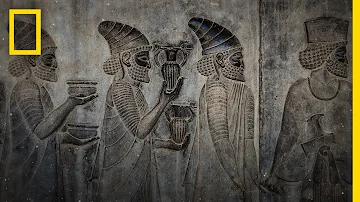 4:10
4:10
 52:58
52:58
 26:14
26:14
 18:40
18:40
 40:57
40:57
 1:06:05
 50:43
50:43
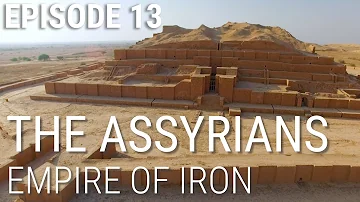 3:05:25
 21:18
21:18
 7:51
7:51
 4:36:15
 20:23
20:23
 30:33
30:33


