hello and welcome to another Common Core algebra one Lesson by emath instruction my name is Kirk Wier and today we'll be doing Unit 10 lesson number one graphical displays of data before we begin let me remind you that you can find worksheet and homework assignment to go along with this video by clicking on the video's description or by visiting our website at forget about those QR codes at the top of every worksheet you can scan those codes with your smartphone or with your tablet and it will take you right to the video associated with the lesson all right let's begin our unit on statistics so statistics is all about doing studies collecting data and then understanding how that data looks and one of the things that we want to do today is understand some of the most basic ways that display data that we've collected all right and one of those ways is with what's known as Dot Plot so let's get right into dot plots you've probably seen these before in Middle School classes maybe even as early as Elementary School here we've got Charlie's food factory and they currently employ 28 workers whose ages are shown Below on Dot Plot answer the following questions based on this plot bet you can certainly do letter so let me pause for minute and you can pause the video to try to answer that question all right well letter simply asks how many of the workers are 18 years old well that just goes to how you read Dot Plot the 18 is right here and there are 1 2 3 four there are simply four workers that are 18 years old like it that's pretty easy now letter gets into more complicated piece of terminology and one unfortunately that we've already seen in this course referring to totally different thing letter asks what is the range of the age of the workers now that's really tricky for variety of reasons number one because we've already seen range and it's referred to the the outputs of the of function that's that's not this right lot of times people use range in terms of the real world by saying well hey you know the youngest person is 16 the oldest person is 42 so the range is 16 to 42 but unfortunately in statistics range has very specific meaning it is the highest value was going to say the maximum and that would work well as well it's the highest minus the lowest value all right the highest value being 42 years and it does have units the lowest value being 16 years and so we simp simply subtract that and the range is 26 years all right 26 years now letter would you consider this distribution to be symmetric right we've seen symmetry before in terms of parabas symmetry basically means it looks the same on one side as it does on the other and the answer here is most certainly no right what we would say is it trails off to the right symmetric Dot Plot would look something like this so symmetric would sort of look the same on either side it would kind of kind of look little bit like this right this thing certainly doesn't look that way right it would look the same out here as does out here letter the mean the average age for worker is 22 years old so we we'll talk about averages and means in future lesson but this one I'm just telling you I've calculated it the average or mean age is 22 years old why is this average not representative of typical worker that's interesting right well let's let's find the mean here's the mean 22 all right the mean now very often we use averages SL means to represent typical data value okay it's what's called central value or central tendency value all right but here I'm claiming that it's not representative of typical worker why do you think that is all right well let's take look what strikes me is that there are lot of workers down here lots of them that kind of makes sense this is probably fast food place don't know Charlie's food factory it's probably out in the midwest or something you know there there's lots of workers down in here right and if that's really representative then we'd expect sort of the same number of workers up here as down here but there are only 1 2 3 four five six seven there's seven up here of course there's one right here and that means there's 20 of them here right because got 28 overall so there are way more workers younger than 22 than older than 22 so that's why it's not representative eventually we'll talk about the median of data set and that would be way more representative here but for right now we're just trying to get feeling for how we display data on graphs and how we read graphical displays of data all right well I'm going to clear this out write down anything you need to okay here we go let's take look at the next page all right well let's actually do Dot Plot now they're pretty easy all right it says farm is studying the weight of baby chickens chicks after one week of growth they find the weight in ounces of 20 chicks the weights are shown below construct Dot Plot on the axis given so this is pretty pretty easy okay and by the way think maybe only have 19 here my apologies on that but it's as simple as this right we've got one at two another one at one another one at three another one at four another one of them at two another one at two another one at three another one at one another one at five another one at three bit mindless and maybe tedious but we're getting the job done these days most statistical plotting is of course not done by hand right it's done by using computer programs whoops there goes my five probably the most common of which is what's known as Microsoft Excel all right but there's many other ones okay and they can make these kind of plots for you of course actually what found is that it's somewhat hard to make Dot Plot on Microsoft Excel but it can be done all right and there you go by the way this would be distribution that would be considered mostly symmetric because it more or less looks the same out here as it does out here there's little bit of asymmetry but it's mostly symmetric know that the problem didn't really ask that but it's good to kind of point it out okay all right I'm going to clear this out we just wanted to do little bit of practice on Dot Plot it's pretty darn easy you'll get some some practice with that in future lessons and on the homework all right here we go let's take look at another type of representing data and this is way more common than Dot Plot here we're going to talk about histogram okay now you've seen histograms before you've certainly seen them in previous classes and you will see them in newspapers you'll see them in reports there ways of representing how much of the data set Falls within given interval of values sometimes those intervals represent only one value but more often than not they they represent multiple values so for instance and bet you can read one of these immediately this is showing the same data that we had before the ages of workers at Charlie's food factory and take look at question it says how many workers have ages between 19 and 21 years and that includes the 19 and the 21 by the way so how would you read this pause the the the video for moment and tell me how many workers are between 19 and 21 all right well we need to be just bit careful but it's not that bad right here's our 19 to 21 category if go over here it looks like now you know love histograms and we'll talk in letter about what why they might be little bit better than dot plots but in letter there is big disadvantage of histogram compared to Dot Plot what do you think it is all right well here it is you don't know what any and this is key any individual data value is right you don't know what any individual data value is in fact for all know these 11 they could be all 20 years old right all we know is that they're 1920 or 21 right we we we don't know we don't know how many 19s there are how many 20s there are how many 21s there are we just know that there are 19 people who have ages 19 20 or 21 so we lose we lose information with histogram that we have with dotplot and yet histograms are lot more common than dot plots now why is that that goes to letter does the histogram have any advantages over the Dot Plot think about that what what you know you may want to look back sorry don't don't have it on the screen but look back at the Dot Plot from exercise one right versus this there is an advantage to the histogram and that Advantage is that it is easier to read the total amount in each category right it's easier to read the total amount in each category right with the Dot Plot you literally have to sit there and count the dots all right now granted you could have scale on the Dot Plot but that's not all that common really with the Dot Plot what you're tending to do is just looking at the number of dots and saying well there's more dots there than there are are there so there's more people that have ages of 17 years than ages of 30 years right that's what you're trying to do with Dot Plot the histogram and why it's used so much more often is that it's very fast you know you can look and you can immediately say well the number of workers that are between 16 and 18 is nine right it's just it's very very obvious very very quickly it's also very obvious from this that there's lot more people that are younger working at Charlie's food factory than older although one could say that you can certainly do that as well with the Dot Plot okay so pause the video now if you need to then I'm going to clear out the text okay here it goes all right let's keep working little bit with histograms the last thing that we might want to be able to do is just construct histogram now again it wouldn't put it past you know standardized exam to ask you to construct one of these things even though the vast vast majority of the time now when histograms are made they're made with computer programs and that's what you really should be doing you know you should be making histograms on Microsoft Excel or some other spreadsheet program but let's take look at how to do one by hand so exercise number four the 2006 2007 Arlington High School of Varsity Boys Basketball team had an excellent season compiling record of 15 and five 15 wins and five losses still remember it the total points scored by the team for each of the 20 games are listed below in the order in which the games were played okay so the order in which the games are played not in numerical order we want to create histogram for that now there's lot of different like nitpicky rules about histograms your teacher might have some common core standards are actually very very vague about them they don't really tend to lay out things like that but one of the things that certainly is true about most histograms is that you want each category to be of equal width because if it's not it can be very deceptive if you've got one category that's really small one that's really large then it'll look like there's more in one category than the other so notice here what we really have is we have 10o categories from 40 to 49 points 50 to 59 60 to 69 70 to 79 and all we're going to do is go through and say all right got 76 so that's one in here then have 55 so that's going in here and have 76 back in here then have 64 that one goes here 46 we'll put that one here 91 get that that's high soring game 65 goes here 46 is going to go here 45 is going to go here as well 53 goes here real defensive battles on some of these 56 there got to not do all these side conversations otherwise I'm going to botch at 57 we'll do that 67 is going to go here 58 is going to go here 64 will go down here 67 will also go in this category 52 goes up here 58 goes up here and 62 goes down here all right the frequency simply refers to how many fell in each category so three fell in here eight fell in here six fell in here I'm just making sure these were my original counts two in here zero in here one in here all right so now we want to construct the histogram all right I'm going to give myself little bit of axis with gray we'll go we'll go Blue again with my line it just makes my life easier if the computer does it instead of me all right and we would want to label that now it would be actually fairly hard for me to turn the paper right now but what we want to do here is we want to we want to label it as either think something nice and descriptive like the number of games cannot believe I'm trying to do this wow sorry about that messiness was actually writing vertically not not easy now down here right we'd like to spread this out sort of as much as we can all right and yet we start at 40 now traditionally in New York state New York state if the xaxis doesn't start at zero you're supposed to put in what's known as line break all right something like that okay don't really particularly believe that you need one okay if you use professional spread sheet program guarantee it won't put one there so those line breaks either kind of look like little thing on heart monitor or you can do kind of like double line like this I'm going to put one in there because again it's tradition in New York state to do that whether it's tradition that makes sense or not don't know and you should find out from your individual teacher whether they expect you to have one there okay but we'll have it there and then we'll start this at 40 now now how many squares should we make each one well we've got 1 2 3 4 five six categories I've got 1 2 3 4 5 6 7 8 9 10 11 12 13 14 boxes left looks like I'm going to get rid of that 40 sorry for right now looks like can afford two boxes per category so that's going to be my first category 40 to 49 my next category 50 to 59 my next category 60 to 69 the next one 70 to 79 the next 80 to 89 and the next one 90 to 99 all right well if there was some reason to make this go by twos or fives or tens we would but the largest frequency we have is eight so we might as well just have those go by ones one two 3 four five maybe just do something like this 6 7 8 9 10 right 40 to 49 we have three so that means I'm going to have rectangle that looks like that I'm almost tempted to use my rectangle utility my next one 50 to 59 is at 8 that's going to be right here all right 60 to 69 is at six why tell your ruler would be nice right now 70 to 79 would be two 80 to 89 that's zero and 90 to 99 90 to 99 that's one lot of students like to add in shading cross-hatching something like that think that makes it look good too all right some students get very creative and they put like different shading per rectangle think that's always nice get creative if you'd like but there's our history Instagram My Hope Is that you wouldn't have to construct one of these by hand on any kind of standardized test quite frankly again if you ever have job or some kind of situation where you have to construct histograms pretty much guarantee you're going to be doing it using computer what you really want to be able to do is read histogram be able to look at one and immediately know the kind of information it tells you okay but still getting little practice and drawing one by hand doesn't hurt all right copy down what you need to and then I'm going to clear out the screen okay here we go let's finish up so statistics is all about collecting data and understanding what that data tells us about variety of different things perhaps it's doctor collecting data about how well Two drugs work in helping you lose weight perhaps it's just somebody collecting data to figure out right how many points basketball team has scored in today's lesson all we really did was look at two primary ways of representing data distributions The Dot Plot and the histogram we'll also see some other types of plots in future lessons but that's it for now and for now let me thank you for joining me for another Common Core Algebra 1 Lesson by emath instruction my name is Kirk Wier and until next time keep thinking and keep solving problems
10:02
Workplace Math 10 Graphs Unit Lesson 1 Interpreting and Creating Line Graphs
Maths360
104 مشاهدة · 8 months ago
14:57
Unit 10 Statistics Interpreting and Analyzing Graphs
Anthony Portare
282 مشاهدة · 9 years ago
1:00
How to plot the points in a Graph in a very simple method
Seetha Maths Tuition Centre 🎓
231.3K مشاهدة · 4 years ago
12:39
Math Antics Data And Graphs
mathantics
1M مشاهدة · 3 years ago
3:57
Charting a Table on a Graph Lesson 11 Math 100 G
Haley Jensen
383 مشاهدة · 9 years ago
0:05
Inequality vs interval notation math
Math360
437.5K مشاهدة · 2 years ago
0:15
Graph Linear Exponential Quadratic Logarithm sine Trick for competitive exam
Gari-Math
716.6K مشاهدة · 3 years ago
0:12
Easy to solve bar graph
Aantrik shakti ki phchan
312.6K مشاهدة · 3 years ago
0:05
Statistics Formulas 1
Bright Maths
2.5M مشاهدة · 3 years ago
0:18
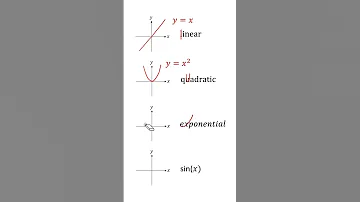
Different types of Graphs linear equations quadratic equations exponential form sine and cosine
Maximize maths
1.3M مشاهدة · 2 years ago
8:13
Data Mini Math Movies Scratch Garden
Scratch Garden
4.7M مشاهدة · 5 years ago
0:14
why jagged lines used in graph thmaths 9 maths
Mukesh Maths 8 to 10
193.6K مشاهدة · 2 years ago
0:25
Use the countif function to find out how many times something comes up in a table

 10:02
10:02
 14:57
14:57
 1:00
1:00
 12:39
12:39
 3:57
3:57
 0:05
0:05
 0:15
0:15
 0:12
0:12
 0:05
0:05
 0:18
0:18
 8:13
8:13
 0:14
0:14
 0:25
0:25
 0:16
0:16
 11:27
11:27
 0:14
0:14
 0:14
0:14
 0:16
0:16
 6:36
6:36


