النص الكامل للفيديو
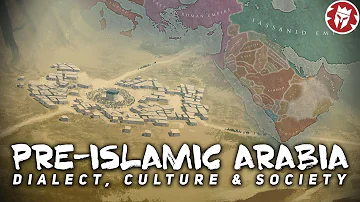
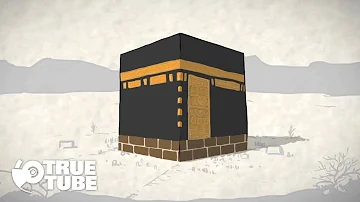
The Quran is full of stories of mysterious events that happened in Arabia long before the religion of Islam was even revealed to the Arabs. Stories of mighty kingdoms that rose and fell, dam that exploded and flooded the land and an entire nation that was thrown into ditches of fire burned for their beliefs. And while these events were all well known to the Arabs at that time, most of them remain mystery today for even those who are now living in those very lands. But what exactly were these great events? And what did they have to do with Jewish kingdom that once ruled Yemen or the army of elephants that tried to destroy the Kaa? And what does all this have to do with strange prophecy in the Bible that foretold the coming of prophet to Arabia, even describing specific lineage and location? In this video, I'll be exploring the answers to these questions and more as tell you the entire story of Arabia before Islam. The documentary you're about to watch is based on the book that I'm writing called the entire history of Islam. In this book, will not only tell you but will show you the entire history of this from Ibraimisam all the way until the modern era and from the Muslim kingdoms of Italy and Greece and China to the obsession that the Japanese elite once had with Islam and with the Muslim world. And if you pre-order the book, will literally write your name into the book, an honor for you, so that the world will know generations from now that it was you who supported this book from the very beginning. So go to my website now and pre-order the book and may Allah grant your name legacy the will never forget. Amen. Our story begins with the birth of Ibraim. in the lands of Babylon in modernday Iraq, possibly in the 800s B.CE, nearly 4,000 years ago. There he lived in polytheistic society that worshiped idols and statues as well as the three celestial bodies, the sun, the moon, and the planet Venus, custom that even as boy, Ibraimisam hated. And so he set out to destroy those idols, showing his people that they were nothing but false gods, and to convince them to abandon this practice. So when his people were not around, he went to the idols and he smashed them to pieces, leaving only the biggest one, claiming that it was the one who had done it. But when his people returned, for brief moment, they realized how foolish they had been to worship these idols. And even though Ibraimisam sarcastically claimed that he had seen the biggest idol smash all the rest, they knew this wasn't possible. And they began to argue amongst themselves. But eventually they all turned on him. He was tied up and taken to huge pit of fire where they built it and burned it and then threw him in. But Allah commanded that the fire be cool and safe for Ibraimisam. And so when the ropes burned off him, he simply walked out unharmed. But miracle like this would not go unnoticed. And news of what had happened quickly spread throughout the kingdom. Soon the rumors made their way to the king himself and he summoned Ibraimisam challenging him about his belief in Allah alone. The king claimed that he himself was God because he could kill and spare whoever he wanted, giving life and causing death. Ibraimisam then tested him, asking him if he could make the sun rise not from the east but from the west. And so the king was left speechless, having been utterly humiliated. And while we don't know what happened next, we do know that Allah soon saved him. He fled from his people, leaving the land of Iraq with his wife, Sara, traveling through Syria and even Egypt before eventually settling in the land of Cananan in modern-day Palestine. Together, they tried to have child who could continue their legacy and spread the religion of Islam to the next generation. But Ibraimisam was getting old and Sara was barren. So, they remained childless for many, many years. And while Sara and Ibraimisam would eventually be visited by angels who would give them the good and miraculous news of child Ishakisam, at the time she did not know this. And so selflessly and graciously she gifted Ibraimisam her servant Hagar, young woman from Egypt. And with her he had his first child, boy he named Ismael. Here was Ibraim's pride and joy, his firstborn son and an heir to his legacy and his prophethood. But while Ismael was still an infant, Allah would soon try Ibraim with an extremely difficult test. And he was told to take Ismael and his mother on journey thousand kilometers to the south. And there he left them alone in barren valley deep in the deserts of Arabia. Trusting in Allah, Hagar began running between two hills, Safa and Marwa, scanning the horizon for any signs of life. Five, six, seven times she ran between the hills. Each time more and more frantic and desperate, until all of sudden she saw someone, an angel off in the distance. He was just standing there digging his heel into the earth as if he was trying to get at something just beneath the surface. Then all at once, the earth began to erupt, and gush of water burst out from the ground, gushing out from where he had been digging. Hagar quickly rushed to the source of the water and began shoveling sand around it to prevent it all from escaping. Little did she know that if she had just let the water flow, this gushing water would have become stream flowing on the surface of the earth. And so this is how the well of zam was discovered. And soon birds and other animals began to flock to the new source of water. But the sudden change in animal behavior didn't go unnoticed and soon number of shadowy figures began to appear along the peaks of the mountains surrounding the valley. It was now apparent that Hagar and Iselisam were not alone after all. Long before made his way to Arabia, tribes originating from Yemen had already inhabited much of the peninsula. There deep in the south man by the name of bin possibly relative or descendant of Hudam from the now destroyed nation of became the father of theites also known as the pure Arabs or the and from him descended number of mighty nations vastly rich and powerful kingdoms that ruled the south for hundreds even thousands of years becoming masters of trade and engineering and producing some of the best sailors the world had ever seen. And from these kingdoms, number of tribes began to migrate north, seeking new lands and new opportunities to explore. And two of these tribes eventually settled in the mountains of Becka. Having been unable to find water supply in the valley below. And when all of sudden they saw flocks of birds circling above in the sky, they knew something in the valley must have changed. They then went to go and look and there they found single person, woman all alone with baby boy in her hands. And underneath her feet was gushing well with enough water to sustain new kingdom in the valley. The tribe of Jorham were the first to find them. And they rushed down the mountains to greet Hagar and her child. They could have easily overpowered her or killed her and then taken the well from themselves. But instead they honored her and they accepted her rights and her ownership over the well and they asked her for permission to settle in the valley and to drink from its water and she allowed them to so long as they became her protectors and guardians of the valley. As this grew up among the people of Jim, he eventually married into their tribe and from that union his 12 sons were born. These sons and their descendants would be known as the Adnanites or the Arabized Arabs. new lineage who would direct descendants of Ibraimisam himself. And as the years went on, Ibraim would periodically come to visit Isma and his new family. And it was during these trips that two very important events took place in the valley of Becca. The first of these was test from Allah when he ordered Ibraim to sacrifice Ismael, his firstborn son. Ibraim and Ismael both complied, submitting themselves to Allah. And when Allah was satisfied with their actions, he sent down ram or another animal to be sacrificed in Ism's place. And from this, the tradition of sacrificing animals was born, legacy that carries on until today. The second event, however, was the building of the Kaa together. This was house in the valley of Becca built for the purpose of worshiping Allah alone. But within the ayat of the Quran is mystery describing them raising the foundation of the house as if someone had built this house before. Some scholars have inferred from this that Adam, the first human alive, may have actually built the original Kaa many ages before and Allah knows best. Ibraim then called upon all the people from all corners of the world to make their way there for Hajj. Never could he have known how far and wide the people would travel answering his call. But eventually Ibraim passed away and so too did Ismael. And for while the Kaa and the valley of Becca were left in the control of his 12 sons. But eventually Jorum rested authority from their hands and became the new leaders of Becca. And the sons of Ismael were fragmented with many leaving towards the lands of Jordan and Syria and even Egypt. But among those who stayed was the second son of Ismaram, Khedar, man who would later become the central figure in biblical prophecy about the coming of great and mighty nation. He was mentioned in chapter 42 in the book of Isaiah in the Old Testament where it describes the coming prophet who will establish justice on earth and will live among the people of Kadar. Here is my servant whom uphold, my chosen one in whom delight. He will not falter or be discouraged till he establishes justice on earth. Let the wilderness and its towns raise their voices. Let the settlements where Kadar lives rejoice. Let the inhabitants of Sah sing. Let them shout from the top of the mountains. The book of Isaiah chapter 42. And this prophecy later came true because among the descendants of Kedar was tribe of the Quraysh from which came the prophet Muhammad sallall.aii. alaihi wasallam the last and final messenger and he would later make hijra to the mountain of and he would stay there for the last 10 years of his life but more on that later with the tribe of Jim now in control of Becca they became the new custodians of the well of zam and the ka and while the people of Jim were initially on the religion of Ibraim and isam over time they became corrupt corrupt and decadent and soon they began to lose their way. As other tribes and peoples from around Arabia had now begun to flock to the Kaa for Hajj, Jum began to take their donations and the gifts meant for their upkeeping of the Kaa, stealing their offerings and using them for their own desires. Soon enough, the sanctity of the Kaa itself would be violated when young couple by the name of Isaf and Na fornicated inside the walls of the Kaa. And legend has it that because of this egregious act, Allah petrified them, turning them into stone. When the people found them there the next morning, they placed them by the well of Zam as warning to all. But over the next few generations, the purpose of these idols was forgotten, and the people began to worship them. As the sanctity of the Kaa continued to be violated even further, having become fed up with all this corruption, two tribes that had been living in the outskirts of Becca began to plot coup against Jum to free the Cabba from their corruption. The first tribe was Huzah who along with Jorum had settled in the mountains of Becca during the time of isam and the second tribe was Kinana direct descendants of Ismael through Kadar. Together they launched an attack against Jorhim, overpowering and defeating them. And when it became clear to Jorham that the battle had been lost, they quickly buried the well of Zamzam, hiding it from their enemies and removing all traces of it. And so the last of the rulers of Jorhund then fled back to Yemen, the land where their ancestors had come from so long ago. It was now the 100th CE and nearly 2,000 years of Jum rule had ended. And while Kinana, the descendants of Ismaelam, had taken part in their defeat, the tribe of Khuz took power for themselves. But while they had initially fought against Jorum because of their corruption, Khuz soon fell into corruption themselves. And it would be under their rule of Becca that idolatry as an institution would begin to take hold and soon it would spread throughout the entire Arabian Peninsula. Story began with man by the name of Amar Iban Lui, wealthy businessman from Kuzah who often traveled to the lands of Syria. During one of his business trips there, he visited the Amalikites, the people which Jalut, the enemy of Dawisam had come from. There they worshiped an idol they called Hubal, saying that he was the one who brought them rain. Impressed by this, Amar brought Hubel back with him to Arabia, hoping and praying deep in the dry deserts of Arabia that this idol would bring them rain too. He then installed this idol in the Kaa and the pilgrims to the Kaa began to pray to it and soon they were manufacturing and carving these idols to sell to the people who came. Then came Alat and Alan and Manat, the three goddesses whom the Arabs claimed were the daughters of Allah. These became new idols, new products to sell. And soon idol manufacturing became huge business. Other tribes then tried to get in on the action, introducing their own idols, and even building shrines in their own cities dedicated to these false gods. This was their attempt to compete with the Kaa and with the idols in Becca, trying to bring pilgrims to their cities to do business with them. Before long, the entire peninsula was flooded with idols, building huge economy of buying and selling and fabricating false gods. Many of these idols were statues of great honorable men who had long passed away, while others were taken from surrounding empires, gods of the Egyptians and Romans and Greeks. And while the Arabs always claimed that it was Allah alone who was the creator of this world and everything in it, their idols became the main focus of their worship. And the religion of Ibraim and Ismaelam was all but completely forgotten. During the rise of and their introduction to idols, number of great chaotic events were taking place in the lands to the north that would forever change the course of the history of the Arabian Peninsula. At the time the people of Beni Israel was still living in the kingdom of Judea and Allah had already raised Isaam to himself and taken him from this earth. Soon after this beni is led number of uprisings against the Roman Empire. The greatest of which was the Barba rebellion in 132 CE. In this rebellion, Beni Israel managed to actually defeat one of the Roman armies in battle, completely humiliating the empire. So the emperor of Rome then gathered third of all the soldiers in the entire Roman Empire and they went in and massacred Ben is over half million people died in retaliation and the waves of refugees began fleeing to the neighboring lands searching for new homes and new chance at life. These people were called Jews as they came from the Kingdom of Judea and many of them made their way down to the Arabian Peninsula. Some of them reached as far as the southern corner of Yemen. While others settled along the mountain of Salah, not far north from Becca, the very same mountain that was mentioned in the prophecy of Khedar. The Jews were waiting for the arrival of the next prophet. There the Jewish tribes of Benuad founded the city of Ythre. And from there they established orchards, farmland, and fortresses. They also built marketplace and rest stop for the Arabs who were on their way to do trade with the Romans in the north. And while it quickly became an important trading hub along the trade routes of Arabia, Yethre would soon become known for so much more because only few hundred years later, prophet that they were waiting for would arrive in that city. But what they hadn't realized at that time was that this final prophet wouldn't come from the lineage of Ishak and Yakub. This time the prophet would instead come from Benny Ismar. The documentary that you're watching was taken from book that I'm writing called the entire history of Islam. And the reason I'm writing it is because we are nation that has completely forgotten its history. We don't know about the Muslim king of Cambodia who tried to bring Islam to his people and was ultimately assassinated. We don't know about the brave Muslims of Elanderus who fought off the Viking invasions. But this is our history and our history is our identity. And so to forget the history of this is to lose who we are as Muslims and to forget where we came from. How will you pass on Islam to your children when they have no way to learn their history? Rather, you risk them finding new identity, non-Islamic identity, and you may end up being the last Muslim in your lineage. This is why I'm writing this book. So go to my website now and pre-order the book. And if you pre-ordered, will literally write your name into the book so that future generations know and recognize that it was you who was the reason that this book could even exist in the first place. May Allah give your name legacy that the will never forget. mean. The lands of Yemen were home to number of mighty nations, huge kingdoms that developed and grew long before Ibraim. am was born. There were sailors, traders, and masters of engineering. They were technologically advanced and extremely influential, and their economies rivaled those of the surrounding empires. The kingdom of Seb was the largest and most powerful of these, having built huge dam in their capital city. It allowed them to capture water and irrigate the soil, creating vast fertile oasis out of the dry desert lands. This was the mighty kingdom that the bird hood told about in he then invited their queen bil to come visit him in his own kingdom where he then invited her and her people to stop worshiping the sun but instead to worship Allah alone as Muslims. But around the year 145 disaster struck when all of sudden the dam of me exploded and the water burst out destroying all their crops and farmland. The effect of this explosion was devastating and soon the kingdom of Sebat weakened and crumbled and the entire region was dragged into economic ruin. Many tribes then began to migrate out of Yemen, no longer able to make living for themselves. And of these tribes, the two most important were and who would then settle in the lands of Yethb along with the Jewish tribes living there. These tribes would play very important role in the coming of the new prophet hundreds of years later. But for the time being, another important and very strange event took place in one that would prepare the people of Arabia for his future arrival. After the destruction of the Kdam and Meb and the collapse of the kingdom of Sebet, the Himirites became the new dominant power, swallowing up the old lands of Sebet and the surrounding territories. Soon the entirety of Yemen was taken, but it wasn't enough. So they continued their expansion, conquering all of the tribes in the north. Legend has it that around the year 400, King Abu Karabad al and hisite army arrived in the city of Ythreb. There he took over the city, leaving behind one of his sons to rule. But when Abu Karab and his army continued on their journey north, the people of Ythreb killed the new governor and Ibu Karibb was forced to return. Soon he arrived back at the gates of Ythreb, cutting down all the palm trees and putting the town under siege. But just as all hope for Ythreb had come to an end, Ibuer suddenly fell ill. And none of his doctors were able to cure him. Hearing about the king and his condition, two rabbis from the people of Yurb offered themselves to the Himarites, saying they could help him, risking their lives. They had studied medicine, and they knew how to cure him. And as they were attending to his needs, they spoke to him about the religion and they managed to convince him to leave his paganism behind. Abu Karab then followed them choosing to worship the god of Ibraim and Ismael and Isakam alone. He abandoned the worship of idols and false gods and the son. And when he was cured of his disease, he went out to the army and he convinced them to do the same as well. Those two rabbis then traveled back with him to Yemen. And there they remained teaching his people the laws of Mus Alisam and the stories of the prophets of Allah. Because of these two rabbis, the entire nation of Hemi became Jewish nation, the Muslims of their time. But from among them would later come tyrant whose oppression would lead to the destruction of Yemen. And soon after that, the events preceding the arrival of the coming prophet would begin. Back in the city of Becca, most of the descendants of Ismael Alisam had left the city, disgusted with how the tribe of Kuzah had violated the sanctity of the Kaa and installed idols in it. But among the last of Ismael's descendants to remain in the city, was man by the name of Iban Malik, who was later given the nickname Kuresh. Over the next few generations, his sons and grandsons would grow steadily, gaining strength in their numbers. But it was only after six generations of the tribe of Kuresh that the children of is Alisam finally managed to regain control of the Kaa. In the year 400 around the same time that Hemar had converted to Judaism Iban Kab was born. His father had died at an early age and he was adopted by merchant from Syria. He was taken there and he was raised and grew up eventually coming back to Becca as an adult. This upbringing in Syria gave Kusai an enormous advantage because he brought with him skills in administration and leadership and commerce. The leadership of Khuzah soon took liking to him and he was allowed to marry from among them the daughter of one of the chieftains of Kuzar. Now the tribes of Huzah and Quresh were linked through marriage giving them privilege above others. And when the chieftain of Kuzer eventually died, Kusai managed to take ownership of the keys to the Kaa. And with the keys in his hand and the tribe of Kuzer, now leaderless, Kusai usurped their throne, becoming the king of Becca and bringing the Quraysh to power. It was now the year 440, over 2,000 years since the descendants of Isam had lost the keys to the Kaa. But now the Quraysh had taken them back, restoring them to the rightful owners. And while the Quraysh were now unified and in control of Becca, this wouldn't last long. Soon, fierce rivalry would split the tribe in two and threatened to break them apart. It was now the year 480 and by then the name Mecca was beginning to come more and more into use. Kusai was now lying on his deathbed and in final act as king he chose his eldest son Abdar to succeed him as leader of the Quraysh and ruler of Mecca. But this caused tension within the Quraysh as Kusai's second son Abdf was seen as much better leader excelling in diplomacy and business and many people would have preferred to see him as king instead. There was now split in the Quraysh between the house of Abdar and the house of Abdul Manf and each side's supporters and before long hostilities broke out with the two factions at each other's throats. The supporters of Abdmanf met at the Cabba and dipped their hands into bucket of perfume wiping them on the walls of the Cabba as symbol of their oath to each other. The supporters of Abdar then did the same this time dipping their hands into bucket of blood as an act of provocation. Tensions were now rising. Weapons were being raised and it seemed as if civil war was about to break out. But in the final moments, deal was made and the two parties agreed to power sharing scheme. The house of Abdar would remain the leaders of Mecca commanding the army of the Qur and keeping their guardianship over the Kaa and in return the house of Abdmanf would be given the honor and responsibility of feeding the pilgrims and giving them water. This was the compromise they made with both sides agreeing to the deal. And while civil war had been averted for the time being, this split in the rulership of Mecca would remain haunting the Quraysh for generations to come. Hashim was the eldest son of Abdmanf and soon he became the man responsible for the pilgrims. He quickly became famous for his extreme generosity with the title of hes meaning the one who grinds being given to him because he would personally spend his time grinding barley to make into soup for the pilgrims to eat. But while he was responsible for the pilgrims, he realized that the entire economy of Mecca was almost fully dependent on the pilgrimage industry. Understanding that this was unsustainable, he gathered his brothers and soon set off on one of the greatest diplomatic missions ever in Arabia. His plan was to visit the surrounding tribes and nations and make deal with each of them, creating new trade route through the heart of Arabia with Mecca at its center. This would bring new source of wealth and trade to Mecca, acting as safety net by diversifying the city's economy. And so, Hashim and his three brothers set off towards the surrounding major empires. On the way there, they met with leaders of Arab tribes in all directions, offering them shares in the profits of each caravan that passed through their land in exchange for their protection. With these guarantees of safety now in hand, the four brothers set off to negotiate trade agreement with each of the major empires. Hasham then went to the Romans in the north while his twin brother Abds went to the Ethiopians in the south. The two younger brothers, Al-Muttalib and Nul soon followed suit, negotiating deals with the king of Himyar. Arabia was at the center of these major empires, neutral territory that was in the perfect position to become trading hub. But these empires knew that it was lawless land with bandits and highway robbers patrolling the main roads. So when these brothers came there with guarantee of safety, each of the empires agreed to their terms and the four brothers were able to negotiate the removal of all taxes and tariffs from their goods and agreement exclusive to the caravans of Mecca, giving them an advantage over their competition. This new trade route would be known as the caravan of the winter and summer with merchants heading south to Yemen and Ethiopia in the winter and north to Syria and the Levant in the summer. It was so revolutionary and brought so much prosperity and security to the people of Mecca that Allah even mentioned it in the Quran. Hashim's reputation was now soaring and before long he would become legend among the people of Arabia. But soon something else would happen to the people of Mecca as treasure that had been lost to them for centuries would finally be discovered and brought out from beneath the ground. There's misconception that the history of Islam is limited to the Middle East. And yet today we find that the vast majority of the comes from places elsewhere. This is one of the reasons I'm writing this book, the entire history of Islam. And in fact, it was the original reason why started this channel in the first place half decade ago. It was to highlight the amazing stories of Muslim heroes and nations throughout the entire history of our ummah. In this book, I've dedicated entire chapters to some of the more unknown regions with immensely rich Muslim history. have an entire chapter on India and another one on China. have chapter on East Africa and another on West Africa. And of course, have chapter in Southeast Asia where the largest Muslim populations live today. And have an entire chapter on Al and as well, one of the greatest chapters in the history of our but these are only few of the 18 or so chapters that have been planned for this book. Covering everything from Ibraimisam, the entire history of Bani is the entire history of Bi is as well all the way to the colonization of the Muslims and to the events that led to their independence and up into the modern era today. And of course, we have an entire section on Palestine as well, inshallah. So, go to my website and pre-order the book now. And if you pre-ordered, will literally write your name into the book so that future generations know and recognize that it was you who was the reason that this book could even exist in the first place. May Allah give your name legacy that the ummah will never forget. mean. During one of Hasham's business trips to Syria as part of the winter and summer caravan, he stopped by Ythreb little to the north and found woman there who charmed and captivated him. Asking the family for her hand in marriage. The two were soon wed and before long Hasham's new wife became pregnant. Hasham then carried on with his mission, leaving his new wife, waiting for him to return, but that return never came as he suddenly fell ill on the journey and unexpectedly passed away. This child of his was eventually born in the city of Ythreb and was given the name Sheba. And when seven or eight years had passed, the child was now playing in the streets. merchant from Mecca passed by him and saw him. Now Sheba looked like his father. And he boasted to the other children about how he was Hashim's son, master of the valleys. And so when this merchant went back to Mecca, he told Hasham's younger brother, Al-Muttalib, about what he had seen. Al-Muttalib quickly left forth in search of this boy. And when he found him, he brought him back to Mecca, where they then called the boy Abdel Mutalib, not realizing that this was Muttalib's own nephew, rather assuming he was Mutalib's new slave. This would be the name he carried for the rest of his life. As Abd Muttalib grew older, two of his uncles, Al-Muttalib and Abdash, soon passed away, and this left only Nel alive as the last of the four brothers. Abdul Muttalib then became of age to inherit from his father Hasham and he became the new leader of the pilgrims. But Nel wanted the position for himself and so he usurped his throne taking all of his inheritance as well. Now Abd Mutar was left alone and isolated as no one wanted to support him and cause another civil war. So he wrote letter to his maternal uncle back in Ye who came all the way to Mecca with an army of 80 men demanding that Nel return the inheritance to Abd Muttalib. Neofil reluctantly agreed and Abd Mutalib took Hasham's throne. Abd Mutalib became known as proper successor to Hashim matching him in his skills and righteousness and generosity. But unlike Hashim and even before him, Abd Mutalib was not wealthy and did not have many sons. In fact, he only had one al to support him. And because of this, he carried out his duties with his own hands. Even as he was approaching old age. But soon, something would happen to Abd Mutalib that would bring him wealth and status beyond any other before him. He began having strange dream each night. And in this dream, voice told him to dig in front of the Kaa. It said that beneath the earth was something precious, something that had been lost to the people of Mecca for hundreds of years. Soon after many nights of seeing the same dream, he went with his son in search of the place to dig. It was between the two statues of Isaf and Na, the cursed couple who had fornicated inside the walls of the Cabba. When they began to dig, the people protested, saying that they were desecrating the sanctity of the Cabba and these statues. But Abd Mutalib ignored them and continued his digging until eventually he struck something and water began to flow from the soil. After hundreds of years, the well of Zam had finally been uncovered. This was monumental event for the Qur. The city of Mecca now had stable water supply and there was plenty of it. And because Abd Mutalib was the one to discover it, the well became his property and if he died now, his son Alh Har would inherit it from him. But there was problem. Abd Mutalib and Alh Har both belonged to the house of Abdul Manf but they were still sharing power with the house of Abdar and they knew that because Alh Har was the only son in his family the other house would eventually overpower him and take the well of Zam for themselves. So Abdalib made promise to Allah that if he granted him 10 sons and they all grew up to manhood, he would sacrifice one of them at the Kaa. And soon enough, Allah would grant him those 10 sons and he would have to fulfill his vow. Over the next few years, from his six wives, nine more sons were born. And as each one of them grew into adulthood, the day of the sacrifice grew closer and closer. Abdullah was the youngest of his sons and his favorite as well. But when he finally came of age, Abd Muttal gathered them all and went to the Cabba and told them about the oath that he had made with Allah. They each took an arrow and wrote their name on it, entering the Cabba and presenting them to their chief idol. priest who was stationed there to guard the idol took the arrows and began the ritual. He drew lots with the arrows and each time the same name was selected. Again and again the priest drew and again it was Abdullah who was chosen. Fate had been decided and there was nothing Abdal Mutalib could do. So he took his favorite son Abdullah and he presented him before the statues of Isaf and there he raised sword above his neck preparing for the human sacrifice. But the people of the town shouted at him and begged him to stop. They suggested that he should visit the sorceress Naj who lived just outside the city. He visited her and brought her to the cabba and explained the oath he had given. So she took the arrow with Abdullah's name on it and began casting lots. Each time she threw the arrow and it pointed at Abdullah, she said 10 camels would be sacrificed instead of him. 10 times it landed, each time pointing at him until on the 11th time it finally pointed away. Abdullah's life could now be ransomed for the price of 100 camels, each to be slaughtered in his place. That day they held monumental feast and word of this event spread across Arabia. Abdul Mutalib had become an almost legendary figure for this great feast and for his discovery of the well of Zamzam. But Abdullah on the other hand was known as the one whose life was redeemed by Allah and for whose honor 100 camels were sacrificed. But even though small fortune had been paid to purchase those camels and to keep Abdullah alive, no one can escape death. And for him, it came quickly when he was only 25 years old. He had just gotten married and didn't even know that his wife was now pregnant. But soon after their wedding, he joined the summer caravan to Syria. And on his way there, he suddenly fell ill and died. He never got to meet his son, nor did he even know that he existed. And little could he have known just who exactly his son would end up becoming. But as the time of this child's birth grew closer and closer, number of very strange and even miraculous events occurred, preparing the people of Mecca for his arrival. Every 10 years or so, new ideology comes to attack Islam. Whether it's liberalism or feminism or capitalism, communism, consumerism, scientism, secularism, individualism, or even of course the promotion of sexual perversions with ideologies such as the LGBT movement. And so in this book I'm writing called the entire history of Islam. have chapter dedicated to the colonization of the Muslim world by Western powers. But it wasn't just the physical colonization through military might or the enslavement to the banks through debt traps, but there was also colonization of the mind of the Muslims through the use of all of these ideologies that take our children away from Islam. And so in this book, will explain how each of these ideologies came about and will respond to each of them with the Islamic stance on them and how Islam differs in its lifestyle. So for example, when I'm talking about capitalism and communism, have whole explanation on how the Islamic economy works. Or when I'm talking about feminism, give an explanation of the roles of men and women according to Islam and how authority within the marriage contract works. So go to my website now and pre-order the book. And if you pre-order during this Ramadan, will literally write your name into this book an honor for you because you are one of the very first people to support this project. something special for the people who pre-ordered this book during this Ramadan only. When Rome was sacked in the year 70 and the second temple was destroyed, the followers of Isaam and his brother James lost their positions of authority and were no longer able to preach his message. The religion they were on would later be called Jamesonian Christianity. And in the wake of their absence, the followers of Paul were able to continue preaching, telling the people that Isaam had been crucified and resurrected and that he was the son of God on earth and that he died for the sins of humanity. This religion would be called Pauline Christianity. Soon Pauline Christianity spread across the Roman Empire, developing, evolving, and mixing with Greek and Roman philosophy. Over the next few centuries, new ideas were introduced and eventually the concept of trinity was invented. The Romans even began exporting Pauline Christianity to Arabia when in the year 354, the emperor sent man called Theophilles the Indian to the southern lands of Yemen. There he established three churches and began preaching trinitarian Christianity to the people of Heimar. And even though the Heimite Empire was mostly Jewish at the time, many of those people converted. But it wasn't just the Romans. Even the Ethiopians began converting, too. young Christian boy from modern-day Lebanon was traveling on ship with his brother. Eventually, their ship was hijacked by pirates, and the two boys were sold into slavery. From there, they made their way to Ethiopia, where they were bought by Izana, the king of Aum. And in the year 340, the Christian boy managed to convince Isana of his religion, converting him to Christianity. Izzana was now the first Christian king of Aum. Soon the entire land of Ethiopia converted to Christianity with him. And while Pauline Christianity was now spreading rapidly in the empires surrounding Arabia, there were still few Jamesonian Christian communities as well. These true followers of Isaam were known as the Ebianites and they rejected the trinity believing in Isaam as merely prophet of Allah. But in order to avoid persecution by the Romans, they were forced to live in isolated places, often hiding in the mountains or the deserts. And one of those communities lived in the land of Nejon. But soon they found that the persecutions would even reach them there too. In the year 522, Jewish king by the name of Duas took the throne of the Himite Empire. This king had court magician who was growing old. So he sent for young boy to become his student and learn from him so that he would become his successor. The boy's name was Abdullahb and soon enough he began training under the magician. But as he went to the magician each day he passed by an old Christian monk, man named Femian who had originally come from Syria. Eventually Abdullah began to sit with Femian each morning and listened to him speak. And soon he became torn between the monk and the magician, not knowing which path in life to choose. One day huge animal entered the city preventing the people from passing. Abdullah took stone and made dua saying, Allah, if the affair of the monk is dearer to you than that of the magician, cause death to this animal so that the people may pass freely." He then threw the stone and killed the beast. And when he went to Fimeon and told him what happened, Fimeon then said, "Today you are superior to me. Your affair has come to stage where find that you would soon be put to trial." Soon the boy began to experience miracles curing the blind and those suffering from leprosy. But when the king Vuas heard about all this, he was amazed thinking all of this was the work of magic. But Abdullah told him and the people, do not cure anyone. It is Allah who cures. If you believe in Allah, will pray and he will cure you." Zuas then tortured him, asserting that he was the only Lord, fearing that he may lose his authority over the people if they began worshiping Allah instead of him. He later found out about Feimian the monk and had him brought in and then cut him in half with saw. The king then told his men to take Abdullah up to the mountain and throw him off of it if he did not renounce his religion. So Abdullah made dua asking Allah to save him. The mountain then shook and the king's men fell off and Abdullah returned to the king unharmed. The king then sent another group of men to take Abdullah out to sea and drown him if he did not renounce his religion. Again made dua asking Allah to save him. The boat capsized, the men drowned, and Abdullah returned to the king once more. Abdullah then told Dun Noas, "You cannot kill me unless you do what ask. Gather all the people in field. Hang me from the trunk of tree and take an arrow out of my quiver and say, in the name of Allah, the Lord of the shoot me. If you do that, you'll be able to kill me." The king did exactly that. And when the boy was struck in the head with the arrow, he put his hands up where it hit him and suddenly he died. The people then exclaimed, "We believe in the Lord of the We believe in the Lord of the We believe in the Lord of the one of the king's men then remarked, "See, Allah has accomplished what you wanted to prevent. The people have believed." So Dunas ordered ditches to be dug and fires to be lit in them. He turned to the people and said, "Whoever does not turn away from his religion will be thrown into the fire or told to jump in." But the people defied him and did not renounce their religion. So they were all pushed in and when mother came with her child she hesitated to jump in but her child spoke to her saying mother be patient for you are on the truth. The details of this story are mentioned in an authentic hadith in Sah Muslim and are referenced in the Quran in surah Buru. News of the ditches of fire and the persecution of Christians in Nejaron soon reached the Roman emperor. And in the year 525, he personally wrote letter to Caleb, the Christian king of Axum, asking for his help in avenging their deaths and defending the rest of the Christians. Caleb then responded by gathering an army of over 70,000 men and sending them across the Red Sea, beginning the Axomite invasion of Himar. Under the command of one of his generals, the army managed to conquer the Himirites and defeat their forces. Soon, Dwas was chased into the Red Sea where he drowned while trying to escape. The kingdom of Hemiar was now under the control of the Axumite Empire, and the general who had conquered it was now made its governor. But among the top ranking soldiers was man by the name of Abraa, and Abraha soon gathered support and usurped the throne, becoming the new ruler of Himar instead. Now, rift grew between Caleb and Akum. and Abraa in him. But Abraa began construction on El Kul huge cathedral in Caleb's honor. And through this gesture, he was able to pade him. But the real motive behind Abraa's grand cathedral was to rival the Kaa in Mecca and make Yemen the main site of pilgrimage in Arabia. Abraha had now earned the eyeire of both pagans and the Jews as his cathedral was an affront to both of their religions. So man from one of the local tribes traveled to Yemen, entered the church and defecated inside it. When Abraa heard about this, he gathered an army of some 60,000 men plotting to destroy the Kaa. And with that army were 11 war elephants, huge towering beasts the likes of which the Arabs had never seen. It was now the year 570 and Abraa and his army set off for Mecca with single-minded purpose of destroying the Cabba. Along the way, they crushed every form of resistance. Tribe after tribe, family after family. The people of Arabia grew frantic and desperate. The situation was dire. All hope seemed to have been lost. This was the Kaa, the house of Allah, the place that people from all around traveled hundreds of miles to worship him. And now the armies of Abra had come unparalleled in their strength, invincible, with huge, horrifying beasts in their ranks, terrifying the people. Soon his army reached the outskirts of Mecca, and the people of Mecca fled to the mountains. But as the army approached the walls of the city, Abra's personal elephant sat down and refused to move. Then the clouds gathered all around them as the sky grew darker and darker, and violent wind roared through their ranks. From above, they heard terrifying noise. huge flock of birds blotted out the sky, and they began pelting the army with heavy black stones, ripping through their flesh and bone, bludgeoning their faces into unrecognizable pulp. The army of Abraa was annihilated, and the Kaa itself was saved. Although Abraa himself survived the incident and made his way back to Yemen, he was destroyed man, shell of his former self with barely the strength to move. Before long, his chest cracked and his heart exploded and that was the end of him. But now there was power vacuum in the region. And fearing that the Axomites would try to reconquer Yemen, the Persians decided to invade first. With Abraa now dead and much of his army destroyed, they were able to quickly conquer Yemen and occupy the land. And soon they installed an Arab governor who was loyal to them and left him in charge. Most of the Axummites at this point had left Yemen and returned to Ethiopia, but some had stayed behind. And among those men, few conspired together and assassinated the Arab governor, threatening another invasion by Axum. The Persians then invaded Yemen for second time. This time occupying it permanently. And there the Persians would remain rulers of Yemen for the next 50 years. After Abra's army had been defeated in Mecca, the people came down from the mountains and returned to their homes. Soon after, caravan appeared on the horizon, just coming back from its summer journey to Syria. But as the dust settled and all the merchants from the caravan dismounted, Abdul Mutalib was left waiting for his son Abdullah, who was nowhere to be seen. Soon he learned the news that Abdullah had died on the trip, and he went to his widow, and together they grieved. Before long, Abdullah's widow gave birth to child, son that Abdullah would never know. And so in hisstead, Abdal Muttalib resolved to raise him and care for him and to protect him, grandchild from his favorite son whom he had spent fortune to save, but who was now gone. But with this new child, he was filled with hope. He hoped that the boy would become leader for his people. And he hoped that he would succeed him as chieftain of the Quraysh. And he hoped that Allah would praise him in the heavens as the people would praise him upon the earth. And so he named him the one who is much praised, the praiseworthy from the Arabic word Muhammad. When the tribes of Khazar settled in, the Jewish tribes of Benadra and Ben had long since established themselves in the city. There they established marketplaces and built fortresses for themselves to live in. and they would give out interestbearing loans to the Arabs, giving them money now to be repaid during future harvests. They became the financiers and the land owners and the manufacturers and the sellers of weapons. And to maintain control over the city, they constantly swed seeds of hatred between and backing both sides whenever war broke out between them. The latest of these conflicts lasted over decade, ending with Yom Bath, the single bloodiest day in the history of allied themselves with the Jewish tribes of Benu Nadir and Benua. While Khazj on the other side was supported by the Jewish tribe of Benu. That day nearly all of the chieftains and tribal leaders of both and Khaz were killed in the battle leaving behind the younger generations and they were hungry for change. These were the youth that eventually met the prophet Muhammad sallallahu alaihi wasallam during the trip to Mecca for Hajj. And these were the youth who invited the prophet to come to their city of and to rule over their tribes of promising to protect them from all of his enemies and to preserve the message of Islam. The prophet sallallahu alaihi wasallam then accepted their invitation and he made hijra to the city of Yre. And when he finally arrived, he united the andar under one banner, calling them the Ansar, meaning the helpers. And to symbolize new beginning for the people of Yreb, the name of the city itself was also changed and given new name, the illuminated city, or as it's known in Arabic in Medina, or just Medina for short. The script of this video was based on one of the chapters of my new upcoming book, The Entire History of Islam. An absolutely massive book dedicated to telling the entire story of our ummah from the lost Muslim kingdoms of Spain and France to the great sultanates of Vietnam and the Philippines and Russia. This is our entire history. compilation that has never been done before in the entire history of our this is the most important book of this generation. So go to my website now and pre-order the book and if you pre-order the book will literally write your name into the book as an honor for you so that generations from now people will read this book and know that it was you were the reason that this book could even be printed in the first place. So go to my website and pre-order now and may Allah accept you as co-author to the most important book of our generation. Amy

 20:01
20:01
 30:54
30:54
 38:23
38:23
 29:50
29:50
 21:40
21:40
 30:48
30:48
 1:01:55
 3:24
3:24
 22:55
22:55
 2:57:21
 8:11
8:11
 4:21
4:21
 1:32:50
 1:53:12
 1:08:57
 5:06
5:06
 57:02
57:02
 2:38:12
 5:48
5:48


