النص الكامل للفيديو
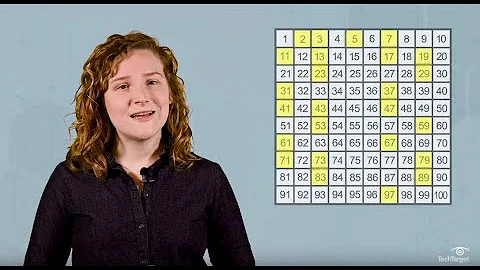
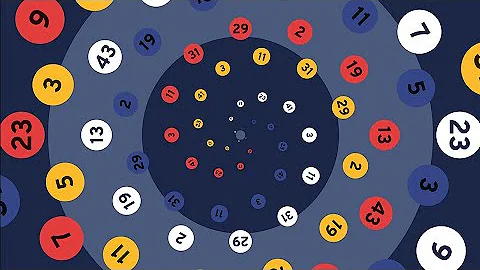
What you are seeing on screen is something that for thousands of years would have seemed impossible. On the right hand side, staircase is slowly starting to emerge with every jump in the staircase marking the location of prime number. But this staircase is not being built by testing numbers one by one. It's being built from the zeros of the reman zeta function. Special points where the function becomes zero. On the left, each circle marks one of those zeros. And as more are included, the prime counting staircase becomes sharper and more detailed. Somehow these zeros know where the primes are located. And what makes this even more tantalizing is that it relates to one of the greatest unsolved problems in mathematics, the Reman hypothesis. So how can the locations of these zeros determine the hidden pattern of the primes? This is what we're going to find out in today's video. But to understand Reman's discovery, we first need to understand the problem he was trying to solve. And that means starting with the primes themselves. prime number is whole number bigger than one whose only positive devices are one and itself. Numbers like 2 3 5 7 11 13 and so on. Primes can be thought of as the building blocks of all other numbers. By which mean that any whole number greater than 1 can be written as product of prime numbers. For example, can be written as 2 * 3 * 3 * 29 and 7,761 is equal to 3 * 13 * 199 each of which is prime. However, prime numbers don't announce themselves. They don't appear to follow any obvious pattern. sometimes appearing close together, other times far apart. And so once you start looking at the primes, the questions come flooding in. For example, can you predict which numbers are prime? Do the prime numbers thin out or become more dense? And is it even possible to uncover an underlying pattern? One thing that surprised me about running physics channel is that the hardest part isn't always the physics. It's everything that goes with it. planning ideas, writing emails, organizing research notes, and all the small tasks that quietly eat up the hours. That's actually where today's partner, Mammoth, has been really helpful for me. Mammoth gives you access to wide range of AI models all in one place, including Claude, Gemini, Llama, Mistral, Perplexity, and more. So, instead of switching between different platforms, everything is just in one interface. Found particularly useful is being able to compare responses between different models. Sometimes one model is better at structuring ideas, another is better at summarizing notes, and another helps refine emails or organize research. Being able to quickly cross-check saves surprising amount of time. You can also create custom mammoths, which is helpful for recurring tasks like organizing notes, drafting emails, and structuring ideas for future videos. Because Mammoth updates models automatically, you're always using the latest versions without needing to manage multiple subscriptions. Plans start from $10 per month. And if you'd like to try Mammoth, you can check it out using the link in the description. One of the first systematic approaches to locating primes was developed by Eerosineses ofSirene more than 2,000 years ago. To see how it works, consider every whole number between 2 and 100. The first step is to consider every multiple of two. Then remove every multiple of two except two itself. Next, you highlight every multiple of three and remove these except three itself. And then you repeat for five and for seven. And at this point, we can stop because what remains are all the primes between 2 and 100. Every composite number has been crossed out. This is the civ of eritosines. What's left are the 25 primes less than or equal to 100. Now although the civ of eritosines works by hand, the method is very labor intensive and becomes impractical when dealing with large numbers. However, it did offer way of filtering out the primes and therefore provided crucial data to mathematicians who were studying the primes. And one such individual was Carl Friedrich Gaus who as teenager around 1792 turned his attention to the distribution of the primes. Gaus focused his attention on what mathematicians today call the prime counting function written pi ofx. Now despite the symbol this has nothing to do with the number pi which you likely encountered at school in relation to the area of circle. Here pi ofx simply means the number of primes less than or equal to So for example, pi of 10 is equal to 4 because the primes up to 10 are 2, 3, 5, and 7. And there are four of them. And if we were to count the primes up to 100, we would find that pi of 100 is equal to 25. And we can actually visualize the prime counting function. For example, if we plot pi ofx up to x= 30, we find the following jagged staircase. And we notice few key features. First, we note that more than one value can give the same output for pi of So for example, we see that for x= 14, 15 and 16, the corresponding pi of value is 6 indicating that of 14= of 15= of 16 equals 6. But we also notice that the graph jumps every time we encounter prime. And so in this sense, the plot contains information about the location of the primes. So from mathematician's perspective, it would be rather nice if you could find way of reconstructing this plot without having to know in advance where all the primes are located. But as it turns out, this is not an easy task. However, first clue comes from looking at larger and larger values of For example, if instead of only considering the first 30 whole numbers, we extend the range all the way up to 100, we see that the staircase continues. But now, let's go further and extend it all the way up to a,000. But then why stop there? We can also push on further and go all the way up to 10,000. And as we do this, we notice few important features. First, we see that as we go to larger numbers, the individual steps get lost. and smooth curve begins to emerge. So perhaps helpful first step would be to understand the shape of this curve rather than the location of every individual step. And this is precisely what captured the interest of young Gaus with nothing more than table of primes, notebook, and burning curiosity. Gaus began counting primes in successive stretches of the number line. But rather than simply counting the number of primes less than given number pi of we can calculate the ratio of /x which tells you the proportion of numbers that are prime up to And we see that for example in the first thousand integers about 16.8% are prime. But by the time we reach 10,000 only about 12.3% of the numbers are prime. This steady decline is hinting at the fact that the primes are thinning out. Now, instead of asking how many primes there are up to we can flip the fraction over and ask about the average spacing between primes up to This can be estimated by / of And we find the following results. At 1,000, the average gap between primes is just under six. Whereas at 10,000, it's just over eight. Now, that's surprisingly gentle rise across an entire order of magnitude from th00and to 10,000. The average gap has only grown by about two. It's slow, but it is climb nonetheless. And we can picture this. If we plot over of against the result is curve that rises quickly at first, but then slows into something steadier. The average gap between the primes is growing, but at decreasing rate. And this reminded Gaus of well-known function in mathematics, the natural logarithm. To make this connection clear, let's plot over of up to x= 10,000 and then plot the natural logarithm of over the same range. And we see that the similarities in the curves is unmistakable. It looks as if the average spacing of the primes at given value of is in some sense roughly equal to the natural logarithm of After all, the shapes look the same. So, could this be the law that we've been searching for? Well, the first thing to notice is that if you plot over pi of and natural logarithm of on the same plot, then you see that although the curves have the same shape, they don't perfectly overlap over this range. the logarithm of gives values that are too high. To quantify this difference, we can look at the percentage difference between the two. So let's plot these again, but now let's track the percentage difference as increases. And we clearly see that the percentage difference is decreasing. To make this even clearer, we can consider much larger values of increasing along the x-axis in factors of thousand all the way up to a,000 trillion trillion. And we can clearly see that the percentage error reduces getting ever closer to zero. So maybe if we could keep going forever, the difference would eventually disappear. In other words, in the limit as goes to infinity, the average spacing between the primes over ofx grows like the natural logarithm of Now we can flip this expression around and write it in the following form. And we say that / log of tends asmtoically to of And this has precise definition. It says that the ratio of to over log of approaches one as grows without bound. In other words, the two quantities aren't just close. Rather, their percentage difference shrinks towards zero as tends to infinity. And this extraordinary relationship has name, the prime number theorem. And this seems to capture the large scale behavior of the primes in the limit that goes to infinity. But there is still significant error between the predicted value and the actual value for finite values of So can we do better than this? Well, Gaus took an important first step in this direction. He realized that better fit to of could be found by considering what is known as the logarithmic integral which we can define as the integral from 2 to of 1 over the natural logarithm. And we can visualize what this means. If we plot the function 1 over the natural logarithm of and then calculate the area under this curve from 2 to and then plot this area as function of the shape of this area function then turns out to be better approximation to the prime counting function. And we can see this explicitly. If we plot the prime counting function pi of and then overlay the logarithmic integral and then compare this with the earlier approximation of over the natural logarithm of then we see that the logarithmic integral is much closer fit than over the natural logarithm of And now with the logarithmic integral in hand, the prime number theorem can be stated in either of two equivalent ways. First pi ofx is asmmptotic to over log of and second pi ofx is asmtotic to the logarithmic integral of But as impressive as Gaus's work was, the simple fact remained that the logarithmic integral curve only seemed to describe some sort of average behavior of the primes. But all information regarding the specific steps in the staircase were absent. What was needed was way of correcting the error at every stage and recovering the hidden step-like structure behind the primes. So is it possible to find function that includes the details of the step structure itself? And if so, how on earth do you find it? And this is where Burnhard Reman enters the story. Reman wanted to understand whether it was possible to do better than the average curve and whether it was possible to reconstruct the exact prime counting staircase. And it was precisely this problem that he took up in one of the most extraordinary papers in the history of mathematics. In 1859 he published short paper titled on the number of primes less than given magnitude. And the title tells you exactly what he was trying to do. Reman wanted to understand how many primes there are below given number. But instead of trying to find primes one by one or simply improving the smooth approximation found by Gaus, he approached the problem from completely unexpected direction. He turned to function that at first sight seems to have nothing to do with primes at all. And that function was the zeta function which represents an infinite series of the form 1 + 1 / 2 ^ of + 1 over 3 ^ of and so on. And it can be written more compactly in the following form. Now this may appear little abstract. So let's ground it by looking at perhaps the most famous example the case where s= 2. In that case we have that zeta of 2 is equal to 1 + 1 over 2^ 2 + 1 over 3^ 2 + 1 over 4^2 and so on. And this is the sum of the inverse squares. And this infinite sum was shown to be equal to exactly p^ 2 / 6 by the legendary mathematician Leonard Oiler. Now at first glance it's not immediately obvious that the zeta function has anything to do with the prime numbers. So if Reman's aim was to understand the primes, then why would he turn his attention to this function? How can this infinite sum possibly know anything about where the primes are located? Well, the first step towards finding bridge between the zeta function and the primes was uncovered by Leonard Oiler himself. Oiler showed that the zeta function could be rewritten not as sum over all whole numbers, but as an infinite product over the primes. So before we can understand the work of Reman, we first need to understand Oiler's bridge. And so following Oiler, we start with the zeta function and then multiply the whole series by 1 / 2 ^ of On the left, this then gives 1 / 2 * of And on the right we find that by multiplying by 1 / 2 to the we create new series containing exactly the terms with even denominators. Now the trick is to take the original series and then subtract this new series and this causes all the even denominator terms to disappear. We then note that we can factoriize the left hand side leaving the right hand side untouched. So with one subtraction we have civd out every denominator divisible by two. Now oiler repeats the same idea with the next prime three. In other words we multiply this remaining series by 1 / 3 ^ So on the left hand side we have 1 over 3 ^ of multiplied by 1us 1 / 2 ^ of * of And on the right hand side we end up with new series containing the remaining terms whose denominators are divisible by three. And now we subtract again. We take the top expression and subtract the one underneath. And then on the right hand side we see that all the terms divisible by three disappear. But now we also note that the left hand side can be factored and rewritten equivalently in the following form. And perhaps now you can begin to see the pattern of this approach emerge. It is essentially the civ of eritosines applied not to list of numbers but to the zeta series itself. To see this pattern emerge more clearly, let's begin with the full zeta series zeta of and then multiply by 1 minus 1 / 2 ^ of The effect of doing this is to remove all terms whose denominators are divisible by two. Next, if we multiply by 1 - 1 over 3 ^ of we remove all terms whose denominators are divisible by 3. Multiplying by 1 - 1 over 5 to the^ of then removes all terms whose denominators are divisible by 5. And then we can do the same for 7 11 13 and so on. And if we continue this process through every prime then every composite denominator eventually disappears. So after all the sibling is complete, every term has been removed except the very first term which is simply equal to one. And so we now end up with an expression where on the left hand side we have series of products each involving prime numbers and on the right hand side we just have the number one. And now we simply rearrange for zeta of and then rewrite the right hand side in the following suggestive form. And this then allows us to express the ZA function in the following compact form where the product is taken over all prime numbers And this is Oiler's product formula. And this is the first astonishing bridge between the ZA function and the prime numbers. Oiler had shown that hidden inside the infinite sum of the ZA function is the prime factorization structure of the integers. So when Reman chose the Zeta function as the object through which to study the primes, he was building directly on Oiler's discovery. But Reman needed something sharper. He needed way to extract prime counting information from this analytic function. He needed to move from product over primes to something that could eventually become formula for the prime counting function itself. So how did he do that? Well, the first step is simple yet incredibly powerful. We begin by taking the logarithm of Oiler's product formula. And we can then use the basic rule that the logarithm of product is equal to the sum of the logarithms. And we apply this to the right hand side. And we end up with the following expression where the product over primes has been changed into sum over primes. We can then use the rule that log of to the power of is equal to log and then use this to write our log expression in the following form. And now comes the crucial step. We can use the standard logarithm power series expansion which says that if we have minus log of 1 - then this is equal to + ^2 / 2 + cubed over 3 + 4 over 4 and so on. And in our case we have that is equal to to the^ of minus And so if we apply this to our situation, we find the following infinite sum. And then if you look at that infinite sum, we see that we can rewrite it in an exactly equivalent form in the following way. And then if we take that expression and sub it back into the right hand side of our log expression, we end up with the following result. And now if you think about it and stare at the right hand side long enough, you see that this is sum over primes. But for any given prime we have an infinite sum involving powers of that prime. And we can write this compactly as double sum where we are summing over all primes and for each prime we are summing over the reciprocal of the prime powers weighted by factor of one over the power. So why is this useful and how does it connect to the prime counting function if at all? Well, first note that we can use the law of exponents to rewrite our double sum in an equivalent form. Now granted this all feels little bit abstract. So let's slow down and simply write out the first few terms in the double sum explicitly. Now the structure becomes much easier to see when we look at it in this form. The first bracket comes from the prime number two. The second bracket comes from the prime number three. The third bracket comes from the prime number five. And the same pattern continues for every prime. But now we note that the logarithm of the zeta function has not simply given us the primes. It's given us the primes together with all of their powers. For example, if we look inside the first bracket, we see the prime number 2. But we also see 2^ squared, 2 cubed, 2 ^ 4 and so on. And in the second bracket we see the prime number three, but we also see 3^ 2, 3 cubed, 3 ^ of 4 and so on. And the same idea is true for the powers of the prime number five. And so in general we see that for every prime we have terms involving ^ 2, cubed and so on. But now pay attention to the terms themselves. We see that the terms involving just prime numbers comes with weight one. Whereas the terms containing prime squares come with weight of 1/2 and the terms involving prime cubes come with weight of 1/3 and those containing prime fourth powers come with weight of quarter and so on. So that in general prime raised to the power of comes with weight of 1 / So we see that the logarithm of the za function is not just singling out primes. It also contains information about the prime powers but with smaller and smaller weights as the power increases. So why is this relevant? Well, this is relevant because this leads us to slightly different counting function from pi of namely one that also counts prime powers as well. If you recall, pi of counts the number of primes less than or equal to But the logarithm of the zeta function is pointing us towards something slightly richer. new counting function which we call of which counts prime powers less than or equal to but with each prime power given specific weight. To see how this works, let's calculate of 10. First we list all the primes less than or equal to 10 and these are 2 3 5 and 7. Next we list the prime squares and we have 4 which is equal to 2^ 2 and we have 9 which is equal to 3^ 2. And finally we list the prime cubes and in this example there is only one which is 8 and this is equal to 2 cubed. Next we apply the waiting rules from our table at the top of the screen. Each prime number carries weight equal to one. Each prime square carries weight equal to half. And each prime cube carries weight equal to 1/3. And so the four primes 2 3 5 and 7 contribute 1 + 1 + 1 + 1. The two prime squares 4 and 9 will contribute half. And the one prime cube 8 will contribute 1/3. Therefore in total we have of 10 is equal to 1 + 1 + 1 + 1 +/ + half + a3 and this sums to 16 over 3 which is 5.3 recurring. So already even in this small example we can see the difference between of and pi of up to 10. The ordinary prime counting function pi of 10 counts the number of primes and is equal to 1 + 1 + 1 + 1 which is equal to four. And that's because there are four primes 2, three, five, and seven, which are less than or equal to 10. But of 10 is larger. of 10 equals 16 over3. And that's because of 10 counts those same primes, but then adds extra weighted contributions from prime powers. And this is the basic idea. of is counting function, but it does not count every prime power equally. Primes count with weight one. Prime squares count with weight half. prime cubes count with weight 1/3 and in general prime power to the^ of contributes with weight 1 over and so in general we can write of concisely as weighted sum. This expression simply means look at every prime power ^ less than or equal to and then add one for each prime half for each prime square third for each prime cube and so on. Now to help wrap your head around this, let's look at larger example. Let's take x= 100 and calculate of 100. First we consider the primes. And as we know from earlier, there are 25 primes less than or equal to 100. And each of these will contribute one. Now we include the prime squares up to 100 which are 4, 9, 25, and 49. And each of these contribute 1/2. So together they contribute half plus half plus half plus half. Then the prime cubes up to 100 are 8 and 27 which contribute third plus a3. The prime fourth powers up to 100 are 16 and 81 which contribute a/4 plus quarter. Then the prime fifth power 32 contributes 1/5 and the prime 6th power 64 contributes 16. And we stop here as there are no prime 7th powers less than 100. And so if we now add all these terms together, we find 428 over 15, which is approximately 28.5333. And if we then compare this with pi of 100, which equals 25, and which is simply the number of primes up to 100, we see that ofx is in general greater than pi ofx. And this is because ofx counts the same primes as of and then adds extra weighted contributions from prime powers. And we can visualize this. If we first plot pi ofx up to x= 100, we see the familiar prime counting staircase. But now if we plot of across the same range, we see that it also looks like staircase. But whereas the ordinary prime counting function pi ofx jumps only when passes prime and each jump has the same height. We see that of jumps at every prime power with jumps at prime squares having height of 1/2 prime cubes having height of third fourth powers having height of quarter and so on. So when we compare the two plots, JVX follows similar general staircase shape, but it sits slightly above it because it's counting not only primes, but weighted prime powers as well. So of may look strange at first, but it's exactly the counting function that the logarithm of the za function leads us to consider. If you recall, the zeta function leads to primes through Oiler's product formula and then the logarithm of Oiler's product leads to prime powers and of is the staircase that counts those prime powers with precisely the same weights. But we ultimately care about the ordinary prime counting function ofx which counts only primes. So the next question is how is ofx related to pi ofx and can we find way of recovering pi ofx from ofx? Well the answer is yes and to see how let's slowly unpack ofx step by step. First let's take the case m= 1. In that case the condition of is less than or equal to becomes ^ of 1 is less than or equal to And this is just is less than or equal to And since 1 / equals 1 over 1 which equals 1, we see that the m= 1 terms count all the primes up to and including each with weight one. But note that this is just the prime counting function of Next we take m= 2 and now the condition is ^2 is less than or equal to But this is simply equivalent to is less than or equal to ^ of 1/2 the square roo of And so the number of such primes is simply pi of to the half where pi is the prime counting function. And because 1 / m= 1/2 each of them contributes half. And therefore the contribution from m= 2 is half * of ^2. Likewise for m= 3 the condition cubed is less than or equal to is equivalent to is less than or equal to ^3 and 1 / is equal to a3 and therefore the contribution from m= 3 is 1/3 * of ^ 3 and we can continue with the same logic for the mth term we have the contribution 1 / * of ^ of 1 / and therefore if we add all of these terms together into an infinite sum we obtain of But now we have expressed ofX in terms of the prime counting function ofX. And this is now an exact relationship between the weighted prime power staircase ofX and the ordinary prime counting staircase of And we can visualize this. What we've essentially done is we can build of by starting with the ordinary prime counting staircase of and then adding extra layers. The first layer half pi ^ of half adds half steps at the prime squares. The next layer adds third steps at the prime cubes. Then the next adds fourth steps at the prime fourth powers and so on. As each layer is added, the ordinary prime counting staircase gradually becomes the weighted prime power staircase of So of is not unrelated to ofX. It is ofX with all these extra weighted prime power layers added on top. But this equation also highlights the problem because of contains the very thing we want ofX but it also contains extra layers. These are the contributions coming from prime squares, prime cubes, fourth powers, fifth powers and so on. So how do we invert this expression? If we want to recover pi of we need to start with of and then somehow strip away the extra prime power layers. So how do we do that? In other words, we're looking for an expression of the form pi of x= of minus some corrections. And those corrections need to somehow remove the extra prime power layers without removing the primes themselves. Now the remarkable thing is that there is function that does exactly this kind of inversion and it's called the moius function mu of The moius function tells us which correction terms to subtract, which ones to add back, and which ones to ignore completely. And it's defined in the following way. Mu of is equal to 1 when is equal to 1 and is equal to minus1 ^ of when is product of distinct primes and is equal to zero when contains repeated prime factor. Now admittedly all of this sounds and feels little abstract. So let's calculate some concrete values. First we have that mu of 1 is equal to one. This is just the special starting case. Next, if is prime, then by definition it has one prime factor and so is equal to 1. And therefore, mu of is equal to minus1. And so, for example, mu of 2 is equal to mu of 3 is equal to mu of 5 is equal to mu of 7 is equal to minus1. Next, if is product of two distinct primes, then is equal to 2 and mu of is equal to + 1. So for example 6 is equal to 2 * 3 and 10 is equal to 2 * 5 and so mu of 6 is equal to mu of 10 is equal to 1. It then follows that if is product of three distinct primes then mu of will be equal to minus1. If it's product of four distinct primes then mu of will be equal to + one and the signs continue alternating. Finally, if has repeated prime factor, then mu of is equal to zero. So, for example, 4 is equal to 2^ 2, 8 is equal to 2 cubed, and 9 is = 3^ 2. And so, these each contain repeat prime factors. And so, mu of 4= mu of 8= mu of 9= 0. So, mu of does two things. It checks whether any prime factor is repeated. And if not, it assigns sign according to how many distinct prime factors has. One prime factor gives minus sign. Two distinct prime factors gives plus sign. Three distinct prime factors gives minus sign and so on. And so we end up with pattern of ones, minus1's and zer as increases. Now the reason that this function matters is that it allows us to perfectly reconstruct pi ofx from ofx using the moius function mu of More specifically, the inversion formula takes the following relatively simple form. To see what it means and how it works, let's write out the first few terms. And then the next task is to sub in the explicit mobious values that we calculated just moment ago. And when we do that we obtain the following beautiful expression. And so we see that the role of the mobius function was to construct the exact pattern of signs and missing terms. Specifically we start with of then subtract the square root correction then subtract the cube root correction. We then skip the fourth root correction subtract the fifth root correction. Add back the sixth root correction and so on. But this still feels very abstract. The best way to see how this works is to apply it to concrete example. So let's do that now. Okay. So let's see if we can use this expression to successfully reconstruct pi of 100. Now we already know directly that of 100 is equal to 25. So the question is whether this formula gives us back that exact number. The first thing to do is to sub in x= 100 and we end up with the following expression. And note that we have terminated the sum at the sixth root correction. And this is because the seventh root of 100 is less than two. And therefore there are no prime powers that contribute from high order terms. So let's consider each term one at time. The first term of 100 we calculated earlier and we found value of 428 over 15. The second term involves of 100 raised to the^ of half which is simply of 10. And again we calculated this earlier and we found value of 16 over3. Next we consider the cube root term. Now the cube root of 100 is equal to 4.64 and so the relevant primes are 2 and 3 and the only relevant prime power is the prime squared 4 which is equal to 2^ 2. And so it follows that of 100 raised to the 3r is equal to 1 + 1 + half and this is equal to 5 / 2. And finally if we look at the last two terms then we see that in both cases there is only single prime that contributes and so both of these terms contribute one. And so now we have the expressions for all of the terms. So we can sub these back into our inversion equation. And when we do that and calculate the result, we end up with precisely 25 just as required. And so we now have method for reconstructing the prime counting function pi of by using the prime power counting function of And we can visualize this. We start with of and then each additional correction term brings the prime power staircase closer and closer to the prime counting staircase of until eventually after finite number of correction terms have been added they perfectly overlap. So in summary we have seen that the prime power counting function ofx can be reversed by moius inversion in order to reconstruct the prime counting function pi ofx. In other words if we can understand of then we can recover pi ofx. And if you recall the reason that we were led to ofx in the first place was through the expression for the logarithm of the za function. The terms in the double sum on the right hand side are indexed by the same prime powers to the^ of with the same weights one over that appear in of So this is not just vague resemblance. It is the same weighted prime power data appearing in analytic form. But now we want to make the connection between the logarithm of zer of and of explicit. Okay. So the question is can we rewrite this explicitly in terms of of And the good news is that we can. So let's go through it step by step. First we note that every term has the same basic form. And this is telling us that each term is attached to prime power to the^ of And each prime power comes with weight 1 / And as we've already noted, prime has weight one. prime square has weight half. prime cube has weight third. and so on. But now let's write out the first few terms in the order of the first prime powers that we encounter. Namely 2 3 4 which is equal to 2 ^ 2 5 7 8 which is equal to 2 cubed and 9 which is equal to 3^ 2 and so on. And so if we write out the first few terms in this order we have the following expression. And then what we're going to do is we're going to multiply out the prime powers and we end up with the following result. Next, we can use trick to rewrite each term on the right hand side as an integral. The reason for doing this will become clear shortly. For example, if we take the first term, then we can write this equivalently as * the integral from 2 to infinity of ^ of - sus1. To convince you that this is indeed equivalent, we can integrate the expression. And then if we sub in the limits and simplify, we end up with 1 / 2 ^ of which is what we started with. And we can apply the same trick to rewrite the 1 / 3 to the term. This time integrating from 3 to infinity. And we can then use the same trick for the other terms as well. And so each term in log of zera of can be written as an integral that begins at the prime power and then continues all the way to infinity. But let's now focus in on the integrals themselves. And we will temporarily suppress the multiplying factor of to avoid clutter and then reintroduce it bit later. Now we do something clever. We split each integral into sections which start and end at prime powers. So for example, the integral starting at x= 2 can be split and written as an integral from 2 to 3 plus an integral from 3 to 4 plus an integral from 4 to 5 plus an integral from 5 to 7 and so on all the way to infinity. And we can then do the same splitting with the integral that begins at three as well as the halfw weighted integral that starts at four and as well as the integral that starts at five. So nothing has changed mathematically. We have just chopped all of the integrals into intervals. And we now note that some of those intervals overlap. To make this overlap explicit, let's line up the integral segment by segment into vertical columns. And what we're now going to do is add together the integrals within each column. In the first column, there is only one integral. In the second column, we have two overlapping integrals, which add to give factor of two, which I've written inside the integral. In the next column we have three overlapping integrals which add to give factor of 5 /2. And in the last column we have four overlapping integrals which add to give factor of 7 /2. So if we imagine adding these terms together but now also consider the next few terms in the infinite sum involving integrating from 7 to 8 then 8 to 9 and then 9 to 11 and so on. and then also reintroduce the overall factor of that multiplies all of these integrals. Then this is exactly equal to what we started with which if you recall was the logarithm of zeta of And so now we have new formulation of the logarithm of zera of involving an infinite sum of integrals with coefficients that look very very suggestive of something that we've already encountered. To tease this out, let's plot the prime power counting function of again all the way up to X= 10. And if we then identify the heights of each of the steps on the Y-axis, we see that the numbers that are emerging are exactly the same as the numbers that appeared as coefficients inside our infinite sum of integrals. If you recall, we had the following expression and we now see that the coefficients are identical to the values of of that we've just seen. And so we can now rewrite our infinite sum of integrals and replace each of the coefficients with the corresponding term. And this is now very close to the result that we want. The last thing to do is to recognize that this entire sum can be rewritten in the following compact form. And this is the key result that we were looking for. This remarkable equation is showing the direct link between the logarithm of the za function and the prime power counting function ofx. And just to give sense of precisely what this relation is saying. We can consider the example where s= 2. In that case we have of 2 is equal to 1 + 1 over2 + 1 over 3 2 and so on. And oiler famously showed that this is equal to 2 6. And therefore we see that this relation is telling us that the logarithm of ^2 / 6 which is roughly 0.49715 is equal to 2 * the integral from 1 to infinity of of * xus 3. This is simply equal to 2 * the area under the curve of xus 3. So let's now have look at that in bit more detail. What we're saying with this example is that if we plot the function of * XUS 3 and then calculate the area under this curve and then multiply that area by two then the answer we get will be exactly equal to the logarithm of p^2 / 6 and that is the link that we've uncovered and this is the key point we now have direct link between the logarithm of the zeta function and the prime in power counting function. So the natural next question is can we reverse this relationship? Can we start with the za function and recover of Because if we can use zeta of to find of we can then follow our earlier steps to reconstruct the ordinary prime counting function pi of from of And this is the goal that Bernhard Reman set himself and which he describes in his famous paper of 1859. But before we arrive at the finale, let us very briefly review the main features of the Zeta function itself. Now for those interested, I've made an entire detailed video on this topic. Link at the top of the screen. So we will only do very short whistle stop tour. So if you recall the original zeta function is defined as the infinite sum 1 + 1 / 2 the plus 1 over 3 to the plus 1 over 4 to the and so on. And when considering to be general complex number the infinite series only appears to converge for values of which have real part greater than one. For values with real part less than or equal to one the series diverges. However, Reman showed that this boundary is not the end of the zeta function through process known as analytic continuation. He found way to extend the function far beyond the region where the original infinite sum converges. In other words, even though the series breaks down when the real part of is less than or equal to one, the function it defines can be continued into almost the entire complex plane with the exception of single pole at S= 1. And once the function's been analytically continued, you can ask new question. Where does the ZA function become zero? Now zero of the zeta function is value of for which zeta of is equal to zero. So how can you find these special locations? Well, in the simple case where is real, we can simply plot the real part of on the x-axis and of on the y- ais and then look at where the za function crosses the xaxis. And when we do that we see that zeros occur at the negative even integers -2 -4 -6 and this pattern of zeros continues for all negative even integers. And therefore we can say that za of -2 -4 -6 and so on represent what are known as the trivial zeros. But what happens when is complex? Well, in that case, we can identify the locations of zeros by marking all the points in the complex plane for which the output is purely real. These are the input points that ZA sends to the real axis in the output plane. Next, we mark the points for which the output of is purely imaginary. These are the input points that ZA sends to the imaginary axis. And then every intersection point where the output is both purely real and purely imaginary corresponds to zero of the zeta function. And we see that we recover the trivial zeros at the negative even integers exactly as expected. But then we notice something much more remarkable. We also see intersections that appear to line up perfectly along single vertical line. The line where the real part of is equal to 1/2. And this is the extraordinary claim now known as the reman hypothesis that every non-trivial zero of the zeta function lies exactly on the vertical line where the real part of is equal to 1/2. But what was it that led reman to this conjecture? And what does it have to do with the prime numbers that we've been talking about for the entire video so far? Well, we're finally in position to understand why such link exists. And the answer connects back to the equation that we derived moment ago linking the logarithm of the za function and the prime power counting function ofx. So can we invert this relationship? More specifically, can we find of using zeta of Well, the answer according to reman was yes. Yes, we can. The inversion process itself is technical and beyond the scope of this video, but the result has remarkable and beautiful structure. Now, at first sight, this might look slightly strange and little bit intimidating. So, let me guide you through it. First, it looks as if the zeta function has disappeared. There is no zeta of written explicitly on the right hand side. However, it is still there. It's just hiding. its information has been converted into the terms of this equation. Each term on the right hand side comes from special feature of the zeta function in the complex plane. The first term is closely related version of the logarithmic integral we encountered earlier. However, in Reman's formula, we use the analytically continued logarithmic integral which can also be evaluated when the input is complex. The first term can be traced back to the pole of the zeta function at S= 1. And if we plot this, we see that it gives the dominant smooth trend controlling the overall behavior of of The last two terms represent nonossilly small adjustments. More specifically, the integral term packages up the contribution from the trivial zeros of the ZA function. Whereas the constant minus log of two is fixed offset that emerges from the inversion process. But the really important part is this term which represents sum over the non-trivial zeros of the zeta function. And this is where the hidden structure of the primes is hiding. You see each pair of non-trivial zeros contributes an oscillating correction to the average shape provided by the logarithmic term. and therefore it is the non-trivial zeros which appear to encode information about the structure of the steps themselves. To get sense of how this works, consider the location of non-trivial zero in the complex plane. To see the connection most clearly, let's focus on the case where the zero lies on the critical line with real part 1/2. In which case we can write row is equal to half plus gamma where half represents the real part and gamma represents the imaginary part. Now in reman's explicit formula each zero appears inside logarithmic integral term. The details of the logarithmic integral are not necessary but rather let's focus on the term inside the integral to the power of row. Since row equals half + gamma, we see that to the row is equal to ^ of/ + gamma. And this is equal to ^ of half * ^ of gamma. And then we can write this as ^ gamma * the natural logarithm of And then using oiler's identity theta= cos theta + sin theta, we can write to the row in the following form. And this makes explicit the source of the oscilly behavior with gamma the imaginary part of the zero acting like frequency in the natural logarithm of Now in reality each non-trivial zero above the real axis is paired with non-trivial zero below the real axis of the form half minus gamma. And we find that each pair of non-trivial zeros contributes real oscilly ripple correction which helps to build the staircase from the overall logarithmic integral smooth curve. For example, here are the ripples coming from the first three pairs of non-trivial zeros. Each one has its own frequency set by the height of the corresponding zero in the critical strip. And Reman's explicit formula tells us that these ripples are not just decorative. They are precisely the oscilly correction terms that modify the smooth logarithmic integral curve. So let's now look at the effect of adding more and more of these ripples. What you are seeing here is the effect of adding those ripples one at time. On the left we see the individual ripples coming from each pair of non-trivial zeros. In the middle we add these ripple terms together. And on the right, we combine that growing sum of ripples with the smooth baseline curve from the logarithmic integral. At first, the approximation is smooth, but as more zero pair contributions are included, the smooth curve is gradually pulled towards the jagged staircase of So, this is the astonishing insight. The logarithmic integral gives the smooth average trend while the non-trivial zeros supply the oscilly corrections. The zeros are not just mysterious points in the complex plane. They generate the correction terms that control how the primes deviate from their smooth average behavior. And once ofx has been reconstructed in this way, the ordinary prime counting function can be recovered from it using the process of moious inversion that we encountered earlier. And we can visualize this process in action as well. In the left subplot, we have the prime power counting function ofx updating as more and more non-trivial zero pairs are included. And in the right subplot, we have the mobious inverted prime counting staircase pi of which is reconstructed from ofx. And we see that as more zero pairs are included, the step structure in the prime counting function becomes clearer. And so something truly remarkable has happened. We have managed to approximate the step structure behind the distribution of the primes using the non-trivial zeros of the zeta function. And if we zoom out for second, the chain of reasoning we have followed from oiler to reman is quite breathtaking. If you recall, we started with oiler finding way of writing the zeta function as product over primes. We then took the logarithm of both sides of this expression and found that the double sum could be written as an integral containing the prime power counting function ofx. We then found that this expression could be inverted in such way that ofx could be reconstructed using the properties of the zeta function with the first term providing the average trend and the non-trivial zeros providing the crucial oscilly corrections needed to recover the staircase structure of ofx. And then finally by using the moious inversion we were able to recover the prime counting function pi ofx. And so the remarkable insight of reman was that the non-trivial zeros of the zeta function supply the oscilly correction terms needed to reconstruct the prime counting function pi ofx. Somehow the za function and its non-trivial zeros contain information about the distribution of the prime numbers. And as more and more non-trivial zeros are included our approximation to the prime counting staircase becomes more detailed. in the limit with all the zeros included in the correct symmetric order. Reman's formula recovers the staircase structure. And if the reman hypothesis is true and all of the non-trivial zeros lie exactly on the critical line, then the fluctuations in prime counting are kept under the tightest possible control allowed by the symmetry and structure of the zeta function. The primes may look random, but Reman showed that their hidden rhythm is written in the zeros of the zeta function. And that is where we will end for today. So until next time, goodbye. And as always, massive thank you to all my patrons and special shout out to the following who have been incredibly generous with their support. Thank you so much. couldn't do it without

 4:46
4:46
 20:29
20:29
 22:21
22:21
 1:48
1:48
 47:05
47:05
 16:24
16:24
 6:46
6:46
 1:02
1:02
 3:58
3:58
 2:42
2:42
 5:21
5:21
 24:34
24:34
 6:23
6:23
 1:52
1:52
 31:33
31:33
 10:12
10:12
 5:15
5:15
 27:36
27:36