the year is 661 ad the Islamic World stands at Crossroads the assassination of Ali IBN ABI Talib has shattered the last remnants of the rashidun caliphate what was once United umah is now fractured torn apart by War ambition and the battle for ultimate power out of this chaos new Dynasty Will Rise one man muawiya IBN Abu sufian will seize control and transform the caliphate into force unlike anything the world has ever seen no longer spiritual leadership centered in Medina the caliphate will become an Empire expanding its reach from the deserts of Arabia to the shores of the Atlantic the Umayyads will carve out one of the largest empires in history crushing enemies building Mighty cities and ruling over millions but with power comes ambition and with ambition betrayal the same forces that fuel the Umayyads meteoric rise will ultimately tear them apart dynasty built on Conquest will soon face its own Reckoning this is the story of the umad caliphate saga of power war and revolution from the victories of muawiya the first to the brutal downfall of Marwan II we unravel the legacy of an Empire that stood on the edge of Eternity only to vanish into the sands of time the assassination of Ali IBN ABI Talib in 661 ad was not just the end of the rashidun caliphate but also the beginning of profound transformation in the Muslim world the event concluded the first fitner civil war that had already revealed deep fractures within the Islamic community the conflict had begun as political dispute over the legitimacy of Ali's rule but it quickly escalated into broader struggle that divided Muslims on theological social and ideological lines the tensions were rooted in the assassination of Usman IBN afan the third kff whose supporters sought retribution but Ali's leadership was contested this division led to the Battle of cifin 657 and the controversial arbitration that followed but the first fitner was not merely political power struggle it became defining moment for Islam's internal divisions Fred Donner American historian specialized in early Islamic history in his welln book Muhammad and the Believers remarks the first fitner was not merely struggle for political power it was clash of Visions about what the Muslim Community should be United moral force or pragmatic political entity the split was not only about power but also about religious legitimacy for the Shia the death of Ali was an injustice that deprived his descendants of their rightful leadership however for the sunnis the transition to muawiya's rule was necessary compromise to restore stability muawiya IBN Abu sufyan member of the influential quray tribe had been the governor of Syria under the rashidun kifs his administrative talent and military strength made him key figure in the post fitner World unlike the pious rashidun kfs muawiya understood that ruling vast Empire required political pragmatism rather than religious idealism Marshall Hodson another prominent American historian in the Venture of Islam describes muawiya as pragmatist who understood the complexities of ruling vast and diverse Empire his leadership was defined not by ideological purity but by his ability to maintain stability and cohesion muawiya's claim to the caliphate was not purely based on religious legitimacy but rather on his ability to command loyalty from his troops and Elite supporters his political Acumen was evident when he reached settlement with Hassan IBN Ali the son of Ali and Grandson of the Prophet Muhammad in 661 ad Hassan abdicated in favor of muawiya but this agreement was not without conditions Hassan hoped to ensure peace and protect his father's supporters but the reality was that it marked the beginning of shift towards hereditary dynastic rule Hugh Kennedy British historian in the prophet and the age of the caliphates highlights this transformation muawiya's genius lay in his ability to adapt traditional tribal politics to the needs of an Empire he was not man of lofty ideals but ruler who understood the art of compromise and the necessity of maintaining order Tariq this shift was controversial some viewed it as necessary for stability but others saw it as betrayal of the early Islamic ideal of consultative leadership shura under muawiya the center of political power moved from Medina to Damascus city with long history of Imperial Administration under the byzantines this change was not just matter of geography but also symbolic and strategic move Medina had been the spiritual heart of Islam but Damascus provided access to well-developed trade routes bureaucratic structures and strong military base Karen Armstrong in Islam short history notes the relocation of the capital from Medina to Damascus symbolized the transer formation of the caliphate from community-led Enterprise to an imperial State muawiya borrowed heavily from Byzantine and Persian administrative systems using experienced Greek and Persian bureaucrats to manage state affairs however this centralization came at cost many Muslims felt increasingly disconnected from the decision-making process but muaa saw it as necessity for governing such vast and diverse Empire Fred Donner points out the centralization of power under muawia was essential for governing rapidly expanding Empire but it also alienated segments of the Muslim Community who felt increasingly disconnected from the caliphates decision-making process however while muawiya's reforms brought stability they also planted the seeds of future resistance perhaps the most controversial aspect ECT of muawiya's rule was his decision to break with the tradition of shura consultation by appointing his son yazid as his successor in 680 this transformed the caliphate from system of elected leadership into hereditary monarchy Marshall Hodgson observes the shift to dynastic rule under the umiads was pragmatic solution to the challenges of succession but it also Mar marked departure from the egalitarian ideals that had characterized the early Muslim Community however not everyone accepted this transition figures such as Abdullah IBN zubah and Hussein IBN Ali the grandson of the Prophet refus to recognize yazd's legitimacy their opposition would eventually lead to one of the most tragic events in Islamic history the battle of carala Hugh Kennedy in caliphate the history of an idea comments by nominating yazid as his successor muawiya set precedent that transformed the caliphate into dynasty while this ensured smoother transfer of power it fundamentally altered the character of the caliphate shifting it away from its communal and consultative Roots whale halak in the impossible State critiques this transition muawiya's institutionalization of hereditary succession represent Ed significant departure from the normative principles of governance that had underpinned the early Islamic poity this transition introduced tension between the ideals of the umah and the realities of Imperial rule many viewed yazid reign as illegitimate but muawiya's move ensured that power remained within the umad family setting precedent that future kifs both umad and Abbasid would follow muawiya's Reign ushered in an era that emphasized political stability military expansion and administrative efficiency but unlike the rashidun cffs who were both spiritual and political leaders the umad cffs ruled more as Emperors than religious guides they maintained the outward symbols of Islam but their focus was on consolidating Power and expanding their Empire's borders Karen Armstrong reflects the umayyad caliphate was paradoxical entity deeply Islamic in its foundations but increasingly Imperial in its structure and Ambitions this Balancing Act between Islamic legitimacy and Imperial governance would Define the umad era but it would also lead to tensions that ultimately contributed to their downfall the rise of the umayyad caliphate was defining moment in Islamic history muawiya's leadership brought stability but also changed the very nature of the caliphate he created power ful Empire but his decisions especially on dynastic rule set in motion the conflicts that would later bring about the umiads downfall Fred Donna concludes the rise of the umiads was turning point in Islamic history representing the evolution of the caliphate from community-led Enterprise to dynastic Empire it was an era of remarkable achievement but also of profound contradictions the yayad caliphates military campaigns were among the most ambitious in history leading to the rapid expansion of Islamic rule by the mid 8th Century their empire spanned three continents stretching from the Atlantic Ocean in the west to the Indus River in the East however this expansion was not simply military achievement it was also strategic and ideological effort to strengthen umad rule the motivations for these campaigns were multifaceted religious Zeal the concept of jihad struggling God's cause played role in rallying Muslim armies but military campaigns were not always driven purely by religious motives economic incentives access to trade routes wealth from conquered territories and tax revenues were significant motivations however sustaining expansion required careful management of these resources political necessity conquests helped solidify the legitimacy of the umad dynasty but they also served as means to distract internal opposition Fred Donner in the early Islamic conquests explains the umiads approached expansion with dual purpose to spread the influence of Islam and to secure the economic and political stability of their burining empire however Hugh Kennedy in the great Arab conquests emphas emphasizes that while religion played role the expansion was also dictated by pragmatic concerns the rapid expansion under the umiads was driven as much by pragmatic concerns such as securing economic resources and pacifying Restless Frontier regions as by religious ideals the balance between faith and pragmatism defined their Imperial strategy despite these strategic advantages expansion also brought new challenges conquering vast territories was one thing but governing them effectively was another North Africa was key Target for the umad caliphate but it was not an easy Conquest the region had been vital part of the Byzantine Empire with coastal cities like Carthage and Tripoli serving as major centers of Commerce however the interior was dominated by Berber tribes who had long resisted outside rule by the mid 7th centur Cy Byzantine control had weakened due to internal divisions and previous Vandal invasions but North Africa was still difficult region to subdue Hugh Kennedy in the great Arab conquests notes the weakened Byzantine hold on North Africa combined with the discontent of local populations created political vacuum that the Muslim armies were quick to exploit however the conquest was not immediate it was prolonged struggle the first Muslim incursions into North Africa began under the rashidun cifs but it was the Umayyads who made significant progress the challenges they faced included difficult geography the Region's deserts mountains and scarce water sources made Logistics difficult Berber resistance the berbers were skilled in Guerilla Warfare but their disunity eventually weakened their resistance Byzantine defenses cities like carth were heavily fortified requiring sustained sieges and even Naval operations Karen Armstrong in Islam short history writes the conquest of North Africa was protracted struggle that tested the resilience and adaptability of the Muslim armies as they faced combination of harsh terrain and determined local resistance however these challenges did not deter the umiads now we will explore key figures that led Umayyads invasion to North Africa ukba Ian Nafi was one of the most important commanders in North Africa in 670 ad he founded kyuan modern Tunisia which became not only military base but also center of Islamic learning and governance his Expeditions pushed deep into mreb Western North Africa reaching as far as the Atlantic Ocean however his campaigns met stiff resistance from the berbers Hugh Kennedy remarks uba's campaigns symbolize the ambition and vision of the early Muslim generals who sought not only to conquer but to establish enduring institutions of Islamic rule Hassan IBN al-numan the consolidator Hassan IBN al-numan played crucial role in consolidating Muslim rule his forces captured Carthage in 698 ad affect ly ending Byzantine power in North Africa however the real challenge came not from the byzantines but from Berber resistance one of the most legendary figures of Berber resistance was kahen warrior Queen who United Berber tribes against the umiads she inflicted heavy losses on the Muslim forces through Guerilla Warfare but she ultimately fell in battle Kennedy writes kahen was more than military leader she was symbol of Berber Defiance embodying the resilience and autonomy of her people in the face of external domination however her defeat marked the end of major Berber resistance the berbers were eventually integrated into the umad caliphate but this process was not without difficulties many berbers embraced Islam attracted by its egalitarian principles but they were still treated as second class citizens under Arab rule Fred Donner in the early Islamic conquests observes the integration of the berbers was both Triumph and challenge for the umad caliphate as it highlighted the tensions between the Universalist ideals of Islam and the realities of Arab tribal dominance however despite these tensions the berbers played pivotal role in the next phase of umad expansion the conquest of Spain the the conquest of al- andelo was not an isolated event but the result of Decades of umad expansion by the early 8th Century the Muslim armies had subdued North Africa and with Berber reinforcements they turned their attention northward the visigothic kingdom of Spain was internally divided with rival factions competing for the throne King rodri's rule was contested but his Rivals sought help from the Muslims an opportunity the Umayyads could not ignore Fred Donner in the early Islamic conquests writes the conquest of Spain was as much political inevitability as military Enterprise the combination of visigothic disarray and umayyad ambition created the perfect conditions for Swift and transformative Invasion however it was not just about opportunism the conquest also had long-term ideological and economic motives in 7-Eleven ad Tariq ibben zad Berber general led 7,000 strong Army across the straight of jalter according to Legend he burned his ships upon arrival telling his troops the sea is behind you and the enemy is in front you have no option but Victory Hugh Kennedy in the great Arab conquests notes while the story of burning the ships may be apocryphal it encapsulates the resolve and determination that characterized tariq's campaign however tariq's Army was outnumbered and success was far from guaranteed by the early 8th Century the umad caliphate had reached its peak but its expansion was not without challenges the conquest of al-andalus had been remarkably Swift yet pushing further north into Gaul modern France proved to be far more difficult the umad governor of andalus Abdul Rahman Al gaiki led incursions into Frankish territory raiding deep into the heart of Gaul however while earlier campaigns had faced Little Resistance this time the Franks under sha Matel were prepared to fight Hugh Kennedy in the great Arab conquests observes the campaigns in Europe represented convergence of two expanding worlds one rooted in the dynamic Islamic civilization of the umiads and the other in the emerging political and cultural identity of medieval Europe the Muslim presence in Iberia had been well established but the Franks saw these incursions as an existential threat Chase Robinson in Empires and Elites after the Muslim conquests highlights the Strategic significance of the umad advance the establishment of Al andelo marked the farthest reach of the umad caliphates EXP expion serving both as base for further campaigns and symbol of Islamic dominance in the Western Mediterranean however the Frankish response would soon alter the trajectory of umad Ambitions in Europe the motives behind the umad advance into Gul were not purely religious but mix of strategic and economic objectives economic gain the Frank's prosperous cities were tempting targets for plunder territorial expansion securing Gaul could stabilize the northern Frontier of Al andalus political prestige decisive Victory could further strengthen umad rule Fred Donner in the early Islamic conquests explains while the Islamic conquests were often framed in religious terms the pragmatic goals of securing wealth and strategic territory were equally significant drivers however Charles Martell understood the stakes and was determined to stop the umiads unlike the Visigoths whose kingdom had collapsed quickly the Franks were politically and militarily more cohesive Charles Martell known as the hammer had spent years consolidating power however he knew his Frankish forces were at disadvantage against the highly mobile umad Cavalry Kennedy notes Martell's preparations were methodical and deliberate focusing on strengthening his infantry and creating defensive strategy to counter the umad strengths however preparing for the battle was one thing winning it would be another the battle took place near tours in forested region that limited the movement of umayyad Cavalry however this was not random Choice it was calculated move by Charles Martell who sought to neutralize the speed advantage of the Muslim Horsemen the Frankish forces primarily composed of heavy infantry adopted shield wall formation creating an impenetrable defense however the success of this strategy depended entirely on their discipline Karen Armstrong in Islam short history writes the Frank's Reliance on discipline and cohesion reflected the evolving nature of European Warfare contrasting with the dynamic and fluid tactics ICS of the Muslim armies the umad Cavalry launched wave after wave of attacks but the Frankish line held firm however as the day progressed rumors spread that the umad camp was being raided thinking their loot was in danger parts of the umad army broke formation and retreated seeing this Martel seized the opportunity launching Counterattack that forced the remaining umad forces to withdraw Abdul Rahman Al gaiki was killed in battle and the umiads retreated South however this was not the end of their Ambitions in Gaul umad forces continued skirmishes in the region for years for Charles Martell the victory at tour was turning point but not necessarily for the reasons later historians claimed while many medieval chroniclers depicted the battle as saving Christendom in reality it was key moment in the rise of the Frankish State Fred Donner remarks the significance of the battle of TS lies Less in its immediate outcomes and More in its symbolic resonance as clash between two emerging civilizations however while the battle marked halt to umad expansion it did not eliminate Muslim influence in Western Europe while the Battle of TS marked limit to umad expansion in the west their campaigns in the East continued at full force however governing such distant territories brought challenges following the fall of the sesanian Empire much of Persia was already under Muslim control however local rebellions and zoroastrian resistance persisted Fred Donna in the early Islamic conquests remarks the Persian conquests were not merely acts of territorial expansion they represented the incorporation of one of the world's most advanced civilizations into the Islamic world however ruling Persia required more than just Conquest it required administrative adaptation the conquest of transoxiana modern usbekistan Tajikistan and Kazakhstan was one of the most ambitious umayyad campaigns however it was not simply military Endeavor it required diplomatic negotiations with local rulers Hugh Kennedy in the great Arab conquests writes the conquest of transx Iana was logistical and diplomatic Masterpiece it involved not only military campaigns but also careful negotiations with local rulers who were often co-opted into the Islamic Administration to ensure stability however resistance was never fully eliminated and the region remained hot bed of rebellion for decades the omad also pushed into India led by Muhammad iban kasim who captured Sy in 7 11 ad however unlike in Persia local Hindu and Buddhist populations were allowed to retain their religious practices in exchange for tribute Peter Hardy in Muslims of British India highlights the Syed campaigns showcased the pragmatism of early Islamic governance by respecting local customs and religions the umiads managed to secure the Loyalty of diverse populations however whil became part of the Amad domain further expansion into India proved difficult the military campaigns of the amads brought immense wealth and Prestige but also created administrative strains that would eventually contribute to their downfall the Battle of Tours showed the limits of expansion in the west while the Eastern conquests brought new governance challenges Hugh Kennedy concludes the umiads expanded the Islamic world to its greatest territory torial extent but their inability to effectively integrate non-arab populations created tensions that would later fuel the Abbasid Revolution however despite their fall their conquests laid the foundations for Islam's enduring Global presence the umad caliphate was unlike anything that had come before while the rashidun calfs had led with sense of communal Authority seeking legitimacy through consultation shur and consensus muaah and his successors ruled with Imperial ambition however while they framed their rule as continuation of the Islamic project they made fundamental changes that reshaped the nature of the caliphate under the rashidun cifs the Muslim world had been governed through relatively open process with cffs selected by Leading figures of the community however muaah abandoned this model in favor of dynastic rule nominating his son yazid as his successor thus establishing the principle of hereditary succession this was deeply controversial as many still believed that the califf should be chosen based on Merit not Birthright Hugh Kennedy in caliphate the history of an idea comments on the implications of muawiya's decision by inating yazid as his successor muawiya set precedent that transformed the caliphate into dynasty while this ensured smoother transfer of power it fundamentally altered the character of the caliphate shifting it away from its communal and consultative Roots however this shift was not just political decision it was necessity the Empire had grown too large for traditional tribal leadership to manage effectively and more structured system was needed to ensure stability the umiads understood the necessity of an efficient Administration but they also faced challenge how to govern multi-ethnic multi-religious Empire stretching from Spain to Central Asia instead of attempting to reinvent the wheel they borrowed heavily from previous Empires particularly the byzantines and the sasanians Greek and Persian bureaucrats were incorporated into government ensuring continuity in tax collection and governance the Dewan system administrative offices was expanded to handle the growing complexity of the Empire Arabic became the official language of administration replacing Greek and Persian in government records Caren Armstrong in Islam short history notes the relocation of the capital from Medina to Damascus symbolized the transformation of the caliphate from community-led Enterprise to an imperial State however while these reforms brought efficiency they also created resentment non-arab converts maali often found themselves excluded from Power while the umiads favored Arab Elites particularly the tribes that had supported muawiya's rise to power Fred Donna highlights the contradictions in umad governance the centralization of power under muawiya was essential for governing rapidly expanding Empire but it also alienated segments of the Muslim Community who felt increasingly disconnected from the caliphate's decision-making process the question remained could this Imperial vision of the caliphate coexist with the Islamic ideal of unified egalitarian umah the Umayyads were masters of expansion but Empire Building came with serious consequences while they had succeeded in establishing control they failed to unite the diverse populations within their realm however the problems they faced were not immediate collapses rather they accumulated over time eventually leading to internal fractures that the abids would later exploit one of the greatest sources of resentment came from the maali or non-arab Muslims while Islam preached equality the umiads maintained hierarchical society where Arab Muslims enjoyed Superior status however this inequality was not just social it was economic maali were often forced to pay jizya tax meant for non-muslims even after converting to Islam they were excluded from high-ranking positions in both the military and govern government Arab Governors frequently exploited non-arab populations for economic gain Fred Donner in the early Islamic conquests remarks the exclusion of the maali from Full participation in the Muslim Community contradicted the fundamental principles of Islam creating tensions that the umiads could not resolve however the umiads ignored these grievances for too long assuming that military power would be enough to maintain control while the Umayyads ruled as an Arab Elite they never fully United the Arab tribes under their Banner instead old tribal feuds resurfaced leading to deadly power struggles within the Empire however these tensions were not just personal rivalries they were about who should control The Spoils of Conquest the kais yamon rivalry between northern and southern Arab tribes frequently erupted into violence umad Cale often favored one faction only to betray them later some provincial Governors ruled autonomously acting as independent Kings rather than loyal officials Patricia croh in God's rule argues the tribal allegiances of the umad rulers while pragmatic in the short term ultimately alienated large segments of their Arab base and SED the seeds of internal Discord however the final blow to umad stability came from new ideological movement the abbasids the abbasids were not just military movement they were revolutionary force that promised to redefine the caliphate however their success was not just due to their own strength it was also because they masterfully exploited the weaknesses of the umiads the role of Abu Muslim and the corasan Revolt the real Turning Point came in corasan where the abbasids had built broad Coalition of disaffected groups The maali Who sought equal rights in the Muslim Community the Shia who believed the Umayyads were illegitimate rulers the disaffected Arab factions who resented umayyad favoritism in 748 ad Abu Muslim brilliant military leader launched the Abbasid Uprising quickly defeating umad forces in the East Patricia Crone in God's rule writes Abu muslim's leadership was masterclass in Revolutionary organization turning corasan into crucible of descent against the umiads however the final battle had yet to come in 750 ad the Abbasid and umad forces met at the great Zab River the battle ended in complete Abbasid Victory the umiads were crushed and caleff Marwan II was executed Fred Donner in the early Islamic conquests emphasizes the Abbasid victory at the Battle of the Zab was the culmination of revolution that combined military strategy with ideological fervor however the abbasids did not stop there they hunted down and executed nearly every surviving member of the umad dynasty however one Prince escaped and he would establish new umad state in Spain ensuring that the dynasty would live on the umad caliphate may have fallen in 750 ad but its impact was far from over while the abbasids sought to erase umad rule from history the dynasty had laid the foundations for an Empire that would endure for centuries however their legacy was not just one of expansion and administration it was also story of controversy Division and survival the most undeniable achievement of the umiads was their astonishing territorial expansion however Conquest alone does not ensure stability governance does despite their many internal struggles the Umayyads successfully Consolidated their empire turning Loosely connected series of territories into cohesive Islamic State the caliphate stretched from the Iberian Peninsula in the west to the Indus River in the East making it one of the largest empires in history they established lished provincial governance that allowed local Elites to continue their Administration under Islamic rule Arabic became the language of government replacing Greek and Persian in official records Hugh Kennedy in the great Arab conquests notes the umad conquests reshaped the political map of the medieval world creating transcontinental Empire that served as conduit for the exchange of ideas goods and cultures however while their expansion was remarkable it came at cost maintaining control over diverse populations was difficult and their Arab Centric policies alienated many subjects Fred Donner in the early Islamic conquests argues while the umayyad successfully established the first great Islamic empire they struggled to reconcile their political Ambitions with the Universalist ideals of Islam in other words their Imperial success contained the seeds of their downfall the Umayyads were not just conquerors they were also architects of culture however while they expanded Islamic civilization they also faced accusations of prioritizing power over piety one of the Umayyads most enduring contributions was the standardization of Islamic practices however this was not always driven by religious devotion it was often practical necessity for governing vast Empire the Quran was compiled in its final standardized form under umad rule Arabic script was developed facilitating the spread of Islamic scholarship key administrative and legal practices were influenced by Islamic principles though they still borrowed from bantine and cenan traditions Patricia cron in God's rule observes the umad period marked decisive shift in the articulation of Islamic identity as the faith evolved from localized Arabian phenomenon to universal Creed however their association with political power led many to question their sincerity Razer Shak kazmi in Justice and Remembrance notes while the Umayyads are often critiqued for their worldly Ambitions their contributions to the institutionalization of Islam cannot be ignored however while their political dominance helped spread Islam it also deepened sectarian divisions particularly the Sunni Shia split which remains defining feature of Islamic history the Umayyads may not have been religious reformers but they were patrons of art and architecture however their Imperial Ambitions were always present in their artistic projects one of their most iconic legacies is the Dome of the Rock in Jerusalem built by khif ABD al-malik in 6 91 ad the structures in scriptions emphasized Islamic monotheism directly challenging Christian theology in Byzantine controlled territories it was not just religious Monument it was statement of umayyad power Jonathan Bloom and Sheila Blair in the art and architecture of Islam argue the umayyad caliphate was instrumental in forging uniquely Islamic aesthetic blending elements from pre-islamic and neighboring cultures to create enduring artistic and Architectural legacies however while the Umayyads created lasting monuments their rule also fueled resentment particularly among those who viewed them as too worldly and too concerned with material Grandeur Hugh Kennedy in the armies of the cffs states the opulence of the umad Court while intended to reject power and Prestige alienated both the pious and the politically ambitious within the Muslim Community their architectural achievements would Inspire later Islamic dynasties but their extravagance also played role in their eventual downfall although the Umayyads were overthrown in the East they did not disappear instead they found new life in the West after the Abbasid Revolution one surviving umayyad Prince ABD al- Rahman escaped to Spain al-andalus and established new umad state in Cordoba this new umad Emirate would flourish eventually becoming caliphate in its own right it became center of learning where Muslims Christians and Jews contributed to golden age of knowledge and culture while the umiads in Damascus had been accused of corruption the cordoban Umayyads became renowned for their intellectual achievements Maria Rosa menal in the ornament of the world emphasizes the umiads in Al andelo preserved the dynamism of their Syrian predecessors fostering flourishing culture that left an indelible mark on European and Islamic history however while the umiads thrived in Spain they were never able to reclaim their lost Eastern Empire Jonathan burky in the formation of Islam includes the survival of the umayyad tradition in al- andelo underscored the enduring appeal of their governance and cultural synthesis while the Umayyads built an Empire they also created deep divisions that ultimately led to their downfall however their collapse does not mean they failed instead their mistakes shaped the future of the Islamic World Fred Donna in narratives of Islamic Origins offers final reflection the decline of the Umayyads serves as cautionary tale about the Perils of exclusivity in governance and the fragility of Imperial cohesion however their greatest irony is that while they were replaced by the abbasids the Abbasid rulers adopted many of their policies Marshall hudgson in the Venture of Islam concludes the umiads rise and fall underscore the Dynamic interplay of political ambition cultural adaptation and religious evolution in the early Islamic World thus while the umaya dynasty fell its Legacy endured in the abased administration in the culture of alandus and in the very structure of Islamic governance that would influence the world for centuries to come the Umayyads were both Empire Builders and oppressors both reformers and traditionalists and both pioneers and reactionaries however while their rule ended in Revolution their influence shaped the course of Islamic history in ways that few dynasties have matched they were the first Empire of Islam and in many ways the world that followed them never truly left their Shadow the umiads shaped the course of Islamic history but at what cost their empire expanded their Administration thrived yet their policies also sowed the seeds of division the the abbasids may have overthrown them but the umayyad Legacy never truly disappeared however the way we understand early Islamic history is deeply shaped by traditional narratives and not all of them hold up to scrutiny were the Umayyads really the power hungry rulers they are often portrayed as and how much of early Islamic history is shaped by later Abid perspectives if you want to explore the problems with the traditional Narrative of early Islam check out our video on this topic where we dive deep into historical sources modern scholarship and the untold complexities of early Islamic history
44:37
QUEER CALIPH al Waleed II Pleasure Palace Qusayr Amra
HISTORYUN
3.2K مشاهدة · 1 day ago
36:42
The First Dynasty of Lagash and Its Forever War with Umma Ancient Sumer 2600–2334 BC
History with Cy
18.7K مشاهدة · 2 days ago
5:06
The rise and fall of the medieval Islamic Empire Petra Sijpesteijn Birte Kristiansen
TED-Ed
2M مشاهدة · 3 years ago
21:51
Battle of Siffin 657 Rise of the Umayyad Caliphate DOCUMENTARY
Kings and Generals
510K مشاهدة · 4 years ago
1:53:12
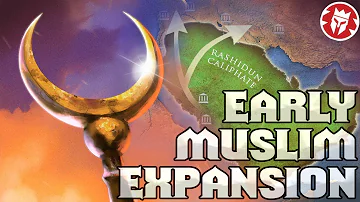
Early Muslim Expansion Khalid Yarmouk al Qadisiyyah DOCUMENTARY
Kings and Generals
8.4M مشاهدة · 6 years ago
18:21
Abbasid Revolution How the Umayyad Caliphate Fell DOCUMENTARY
Kings and Generals
462.9K مشاهدة · 4 years ago
47:21
The Abbasids Islams Golden Age All Parts
Epic History
3.3M مشاهدة · 2 years ago
1:38:15
Umayyad Caliphate The Rise and Fall History Explained
Whispers of History
1.6K مشاهدة · 5 months ago
4:25
The Rise of the Umayyad Caliphate – From the Arab Empire to Global Power
AI Historo
170 مشاهدة · 8 months ago
1:13
The First Kingdom Rise and Fall of Umayyad Dynasty Sheikh Bilal Ismail
AlKauthar Institute
7.7K مشاهدة · 10 years ago
22:12
Rise of the Abbasids Islams Mightiest Dynasty
Epic History
1.2M مشاهدة · 3 years ago
16:25
History of The Umayyad Caliphate Casual Historian Islamic History

 44:37
44:37
 36:42
36:42
 5:06
5:06
 21:51
21:51
 1:53:12
 18:21
18:21
 47:21
47:21
 1:38:15
 4:25
4:25
 1:13
1:13
 22:12
22:12
 16:25
16:25


