النص الكامل للفيديو
This live stream is sponsored by the Reasons to Believe Scholar Community. Welcome, and thank you for joining us for this special live stream. Today's conversation explores if the universe is fine tuned, why isn't there more life out there? Doctor Hugh Ross, astrophysicist, founder of Reasons to Believe and author of numerous works on the intersection of science and faith, is joined by Doctor Brian Keating, cosmologist, Chancellor's Distinguished Professor of Physics at UC San Diego and host of the Into the Impossible podcast. This conversation will be moderated by George Harrison, the second senior research scholar at Reasons to Believe and senior adjunct professor in philosophy and ethics at Azusa Pacific University. This session is divided into three parts. Understanding our Guests Worldview, Fine Tuning, and Life Beyond Earth in Q&A portion. We're honored to have you with us for this important discussion. Welcome to this Reasons to Believe quarterly live stream broadcasts where we explore God's world and God's Word. And as you heard, I'm George for action, senior research scholar here. And I'm joined by two very fine people. call them my intellectual Sherpas for today. And we have Doctor Hugh Ross, astrophysicist. Welcome you. Thank you. You just came back from trip from Canada, your homeland, as you actually. Yeah, was there. Yeah. We got to hang out with quite number of professors and students. That was lot of fun. So welcome. And we are also joined here in person, which is wonderful. Doctor Brian Keating, who is the Chancellor's Distinguished professor of physics in the Department of Physics at the University of California. And you host your own podcast. You're an author. And just something that's fun is you didn't walk here, you didn't drive here, but you was able to fly here. You flew here in mighty, you know, four seat propeller plane all the way from San Diego. And made it on one tank of gas. Didn't even have to refuel along the way. Now, is this something you just picked up or. thought heard you mentioned this part of, like, part of your family heritage. Yeah, yeah. My stepfather was pilot and flew F-4 Phantom in Vietnam. And he had all of his training, you know, magazines around and logbooks and everything. And always wanted to be pilot. And said, maybe could be an astronaut. What do you have to do? And you have to be under 200 pounds or whatever. And at that time, even wasn't under two, still not. And figured, maybe if I'm I'm professor in an astrophysicist plus pilot, they'll take me in. And luckily, you know my self time. You know, maybe I'll get ride aboard aboard space rocket someday. But that's the dream. And, yeah, that's always been part of my my identity. Really. Once you become pilot, you're always pilot. You can't take it away from you. Yeah, yeah, that's. We all have our avocations or hobbies. You look out into the heavens, both of you. Do you get the fly in the heavens? Hugh, know you like to hike as high as you can. Climb the mountain. Climbing mountain, mountain so different ways we reach the heights here. I'm just lowly drummer behind, you know, drum set. So it's going to be lot of fun talking about why the universe is the way it is. Why isn't there more life out there, these types of questions. But for the first part, we want to talk little bit about how we approach science, maybe also science and faith issues. Then we'll go into some of the prepared questions we have, and then we'll invite those of you who are listening and participating. know there's people in our scholar community who will share questions and that we will. will go ahead and share with both of you, and we'll get your comments on this. And feel free to dialog with one another. It doesn't have to go through me. I'll kind of go back into the background as needed. I'm not the astrophysicist here, but Brian, wanted to talk to you first. How do you kind of approach science faith questions? think have this right, but you describe yourself as an observant Jew, but an agnostic. Am stating that correct? Yeah. think the term often use is devout practicing agnostic view. Yeah. Hold to the Sabbath, you know, keep the Sabbath. And really was inspired by my late great friend Freeman Dyson. It was the first guest on the end of the impossible podcast, Titanic astrophysicist, not the inventor of the vacuum. He would have been much richer, but he invented the Dyson sphere and contributed quantum electrodynamics. And he, you know, dialog lot about faith. And he won. He won the Templeton Prize once and was very humble about it and said he didn't deserve it, but at least he didn't deserve it less than some other people had wanted. And said, you know, it's interesting, Freeman, because you are, you know, by all means very thoughtful person, but you don't practice, you don't do anything. So said, how would that be any different than an intelligent alien that we're going to talk about today? If an alien was watching you on Sunday morning and saw what you were doing and saw what Richard Dawkins, you know, I've also hosted, been privileged to host him. And said, if you saw if an alien saw those two men on Sunday morning, they both not be going to the same church. So how do you, Freeman, distinguish between what you claim as your agnosticism and true atheism? said, you know, can you can you be courageous and say that you're an atheist? He said, can't, but don't know how to demonstrate that. And that's when came up with this idea about ten years ago that you could be an agnostic, but you can't be non-practicing Gnostic, or else you're an atheist. There's no functional way to distinguish it. So my practice is observe the Sabbath, keep kosher, my kids, you know, all know ten times more about the Torah, the Bible, the the Tanakh than I'll ever know. But but I've done my best. And the time that I've had since was an altar boy in the Catholic Church. So I've had lot of experience in different forms of religion. And for me, as scientist, the most ecumenical way to do it is approached. It as scientist can approach it with our frailties and with the courage that you guys exemplify to ask the biggest questions and not be afraid of who you're asking or what you're asking about. Yeah, was just mentioning was reading an economics professor by the name of Tyler Cowen, and he observed that in our culture today that we live in new time where he calls it new culture of anger and resentment. Yeah. He was on my house when he said that he was at your house. My wife probably agree with Tyler. Well, mean, that's one thing, as observed on your podcasts and your interactions, think RTB wants to hold this up to create culture where we're cheerful, we are full of goodwill. We want to pursue truth together. You're not the problem. Persons aren't the problem. We want to tackle things, pursue truth together. Kind of in arms, locking arms together. And we want to do it. We always say around here with gentleness and respect, thinking beyond. Or as you talk about in your podcast, Into the Impossible, we want to address these issues and be courageous but humble in that process. call you guys kind of my intellectual Sherpas. We all need guides in life. And I'm the philosopher. You're the physicist. Astrophysicist. I'm Hugh, little bit different than than Brian. How do you approach the science faith topic? For those who may not know specifically how some people criticize, they want to keep science and faith little bit separate, different Magisterium or that how do you approach it? Yeah, well, I'm like, Brian, didn't have religious background. And but got into science starting at age seven, very seriously. And over the years as was growing up, recognize the universe as beginning. Seems like there has to be cosmic beginner. want to find that beginner. And after two years search, realize think the Bible accurately describes the origin history of the universe. It seems to predict future scientific discoveries. So as sophomore physics student, dedicate my life to Jesus Christ. And, you know, 41 years ago launched Reasons to Believe, and it's based on what call the two books doctrine that God has given us two trustworthy books, the Book of Scripture and the Book of Nature. Does does your science inform your religious practice? Is there any integration between those two for you, or is that somewhat you try to keep them, you know, there's barrier or something. Yeah. mean don't subscribe to the Stephen Jay Gould, you know, the nice Jewish boy who, like many Jewish boys, from Lawrence Krauss to Carl Sagan, you know, saw their bar mitzvah as their graduation from religion, saw this as time when they can abandon it and then pursue true reason. And never got to meet Carl Sagan. met his widow and dialog with her, Andrew. And but did talk many times with people from Sam Harris to to Lawrence Krauss and many others. And the thing that I'm always left with is that they're left with 13 year olds understanding of, of the Bible and of the Torah in my case. And in that case, say to them, well, would you trust Sam Harris? Would you trust the word of 13 year old neuroscientist? Absolutely. Honor Lawrence Krauss. Could you falsify if if 13 year old comes to you and says, can falsify your thesis of universe from nothing, would you believe it? No. He doesn't know anything yet. So. But you, Lawrence, you, Sam Harris, accept the word and falsification from 13 year old version of yourself. And so how do you do that? approach scientific questions, and approach the Torah seriously. take it seriously what what do, and talk about this in my first book is can we can we approach the Torah and the Old Testament? Can you approach that in the way that approach scientific text? In other words, can you demand of God? Can you demand of the text themselves, the spiritual scriptural sources, the same level of proof of rigor, of citations and of perhaps falsification that we demand of science? So you have to be open to this. Otherwise, say, you know, if you don't believe that God can be questioned. And the word Israel, as you guys know, means fights with God. So Jews are not known for being humble, you know, and their in their opinions always. But but we all have the same goal, right? But if you can't ask questions as to the scientific basis for your faith, then to me it's just bagels and yarmulke and, and, you know, some, some fun times on Saturday morning. But it's not it's not real. It's more it's more of of hobby, of an invocation. Nothing wrong with it. But but if you can't ask questions of God, who can you ask? So approach religious questions not as guy, but as as as as fat claim that can be interrogated by the tools of science. Do you see the same way, Hugh? How would you add to that? love what you just said. mean, that's how was smiling over your smiling. think that's really the way to approach these issues. Yeah, yeah, we can we can pursue it. As someone you have met before, think Dennis Prager wrote the Rational Bible. You know, that those kinds of things. So. Well, let's get into some of those topics here. Is the universe ultimately hostile to life? That was one question that we were going to address. And some people have famously quipped before, you'll know who they are. You know the universe is out there to kill you. Or think Neil deGrasse Tyson had an episode on his StarTalk at one time. His podcast entitled how Will the Cosmos Kill You? And was reflecting on this little bit and thought about, you know, when was in middle school, took shop class with wood making, you know, crafting. And remember the woodshop teacher telling me everything in the shop is out to kill you. You know, here are all these beautiful machines, saw, lathe, all designed, meant to do particular things. But they were. They were there to kill me if wasn't careful. Is that helpful analogy to the way the universe is? Because if we're too close to black hole, that's not. That's not good, right? Talk about that. Well, let's start with our guest first. Brian, when you hear that question, is the universe ultimately hostile to life? Therefore there's some implications to that that we'll get into. How do you approach that? love when, you know, I've been on Neil's show many times. He's been on my show many times. love when that question is or that statement is posed by him, because he's effectively admitting to the essence and the existence of designer. Right. He's saying it's designed to kill you. Well, I'm sorry, Neil, that means welcome to the club. Now, maybe perhaps it seems to stipulate that there must be some malevolent design or not benevolent god like we might consider here, but. But that it's designed. No, it's not designed. You can't have it both ways. You can't say it's designed, you know, to ultimately destroy everything. And we're here by acts of random chance, right. And these are the dominant kind of things that think we're going to get into from the cosmic scale that study. How is it possible to exist in multiverse of an infinite number of possible universes? Does that explain our anthropic origins and existence here, or no? Or is there astro biological reasons? Are there great filters out there that prevent us from, you know, either contacting or or receiving evidence? But again, we have to treat things as scientists here because there's so much non-science nonsense in the public sphere and and never more so. mean, it's concomitant with what Tyler Cowen was saying, the hostility and resentment and anger, but it's also never been more kind of anti-scientific age. don't know if it's getting worse, if it's getting, if it can get better. But if scientists don't uphold some standard of rigor and also intellectual honesty, then when you say things like the universe is out to get you that, you're implying there is some force of design which goes against previous statements that my friend Neil has made. So think that there's arguments to be made for these things. But again, my role as see it today is to be act as my hero in all things science and even in religion. Galileo bequeathed to us. He said, you know, scientists job is to measure what you can measure and make measurable what you cannot yet do. And that, he said in the book of nature, is written in these symbols that we can comprehend the symbols of math, of triangles, of, of, of mathematical formulae, but it's also accessible to reason. And and from that perspective, postulating reasons why we don't see essentially the answer to the Great Filter or the Fermi Paradox, to assume that there's reason that we're not able to connect with other life forms or see them yet with conclusive evidence, which think is non disputable fact. Right now, we have no explicit evidence for alien existence. mean, maybe that kills the live stream right now, but we're done here. But it's certainly fun to consider. How do you approach that question? Well, find it interesting that both Jews and Christians for over 2000 years have debated this issue. Are we alone in the universe or did God, you know, perform miracles in some other planet and created life there? And people have argued? No, we're the only ones. Cite passages where it says God doesn't perform gratuitous miracles, and it seems like he's conservative the way he does his miracles, and he only needs one planet. Others have argued, look at all the texts that you see, especially in the Psalms. It seems like God really enjoys creating. You see that in the book of job, the book of Proverbs, and he seems to be compulsive creator. He's got have done it many places in the universe. think what's special about the time right now is that astronomy is advanced to the point where it seems to be favoring the model that we're alone, as opposed to hey, life is everywhere. Now. With that, would make an important caveat. think it's going to be relatively soon. We're going to find the remains of life on virtually every solar system body, and people will look at that and say, hey, it looks like, you know, life is everywhere. But I've always argued that's inevitable because of how prolific life is here on Earth. We've been exporting life throughout our solar system, especially on the moon to lesser degree. And Mars is simply inevitable. We're going to find the remains of Earth fossils on these bodies. It's the interstellar problem that think is challenge. And we're not exporting microbes to other planetary systems, but we are in our own system. But astronomy seems to be agreeing with Neil deGrasse Tyson. It really does look like it's out to kill us. With the one exception, the planet that we're on, the planet that we're on seems wonderfully designed to make our existence possible. And would think all the hostility we see elsewhere basically drives home the point. We're living on our very special planet, orbiting very special star, in very special galaxy, in very special galaxy cluster, and very special part of the cosmic web. And so what does that tell us about the significance of human beings? Yeah, it might be that the that the universe is about to kill us. It might be that we're out to kill us. mean, there's certainly more risks, you know, that we take on daily basis. You know, speaking as someone who just flew up here right in small, you know, contraption that has the accompany the kind of appointments of 1988 Honda Accord, people think, the private jet travel so nice. Yeah, it must be. But yeah, certainly we have innumerable ways to to kill ourselves and to fight with ourselves and to maybe even extinguish life on earth, as precious as it is. And think sometimes there's coping mechanism that secular people have, which is to say that there must be life elsewhere in the universe, such that if we destroy the one body that we know for sure has conscious life as technological life, that that there's sort of backup drive that we can boot up somewhere else. And the light of consciousness is Elon Musk, who talked to briefly once in my podcast says won't be extinguished. Right. That's that's his big goal. And stipulate everything you said is probably true. We not only have microbes that we get from other bodies, but we export them to other an hour exporting technology. So imagine civilization far away. If it existed, looking at us, it would see mostly nothing for 4.2 billion years. In the last 75 years, all these things sprouting off of it and going around it and going into the into the heliopause and visiting other solar systems and light days away from Earth. And agree with you. I've heard lot of rumors, and, you know, can't speak about the autopsy. mean, can't speak about the aliens now that but have heard rumors from the most credible scientific sources that, yeah, it's imminent. We're going to announce, just as you said, life, whatever that means. It's not going to be dolphins with iPhones on on planet orbiting Proxima Centauri. But it will be something, you know, that will be revolutionary. mean, let's let's just concede that that discovery will change humanity forever. It doesn't mean doesn't have any implication for our degree of less specialness. think you're right that think we get in parochial kind of bubble, literally and figuratively, that we think that, you know, we've we've searched and searched and therefore we haven't found something. And the evidence of absence is absence of evidence or maybe the reverse. And, you know, that's classic logical fallacy to say that we've searched. My friend Jill Tarter, who is the inspiration for the character Ellie ROA in the movie contact, written by Andrew and her and her late husband, Carl Sagan. You know that that you know, she she said. Basically, we've scooped up about the amount of exploration we've done is equivalent to this coffee mug, which you guys Irish up for me. Thank you guys so much compared to the Pacific Ocean. And it's just incredible to think we can make that now if we can say something based on that. You know, if go down to the Pacific Ocean, scoop up some water and it has no microbes in it. Well, that would kind of upend lot of what we know about the host of different scientific claims that have been made. And we've never had evidence for that. But so the lack of evidence so far doesn't imply continual lack of evidence. And we have developed more and more powerful tools. But I'm I'm all in agreement that think that will change. also think we're isolated and special in so many ways that the secular person will attempt to deny, you know, for example, we often hear where 99.7% similar to chimpanzees. And, you know, my friend Dennis Prager once said, wish it was 100%, you know, because it's like, that point 3%, you know, whatever it is that that little bit mean, what is that? What is that, brain science? Know there are animals that have lot bigger brains than we have. Is it some neural density? No no, no. So sometimes that that that lack of specialness is used as way to say, we're insignificant, we're unimportant, we're meaningless. The concept that Alva Berkman wrote about called the Cosmic insignificance therapy, meaning that you can comfort yourself, you, that you're meaningless compared to the planet Jupiter and therefore you know nothing that you do matters, really. And in hundred years, and no one will even know that you existed. don't believe that. don't believe that's relevant question. believe that gives permission to deny. believe that gives people reasons to deny, not reasons to believe. And think that ultimately that's not approaching things in scientific fashion. Yeah. Let's just be clear on something that made sure heard writing for our audience. You said we're going to find life, but it's going to be remnants of life from Earth that has hit other planets. And that also thought heard you say, we're going to find life. Did you? Were you saying the same thing as you or you? would say slightly different, was saying so he was talking about theory that's related to concept called panspermia that was popularized by Fred Hoyle, who coined the term Big Bang as pejorative, as an insult against the theory that we now dedicate most of our research. And that was the theory that life is delivered elsewhere to the Earth. It doesn't solve the origin of life problem and solves the origin of life on Earth. So there's reverse panspermia brought to you guys last time. I'm sure you still have it. Little fragments of Mars in the moon and and meteorites. And so we got meteorites from Mars. And so therefore we have Earth meteorites on Mars. Right. So it must be there. In fact, there must have been some when that Mars was wet and moist, because that's when the Earth was being bombarded 4.2 billion years ago when Earth and Mars were young, there was lot more exchange of interplanetary material between the two planets. It acted like ups, you know, going back and forth between the planets, delivering life, microbes, whatever, to now, don't think we're going to find life on Mars. don't think that's what you're saying. But think you're saying we'll find fossils on Mars. Well, perhaps. Perhaps. Yes, but but think when my astronomer colleagues are telling me is that they've already seen the signatures of of molecules that seem to only be produced by life and maybe might be produced by some form of technology, like if you see Freon, the gas of powers are air. That is very difficult molecule, entropic to create naturally via stochastic processes. But it's trivial for us to do it here on Earth. Technology can produce certain molecules that show up in the transiting spectra of extrasolar planets. And I'm hearing rumors can't I'm not going to stake my career on it. But there are very credible people saying it's just matter of time. There's been many announcements of both life from Mars and molecules that seem to suggest the existence of life, not only in other stars, but from our own star on the planet Venus. Not not many of them. If any of them have been really confirmed beyond reasonable doubt, though. Yeah, mean, phosphine on Venus, which did not be able to confirm it. And by sulfides they found in the spectrum of planets. But now we know that can happen naturalistic without life. So yeah, that's not settled. So we should hold these people to the same level of rigor that they're going to hold believer to their claims about the existence of of God, of Jesus in your case. Right. So don't think anyone should get free pass. think we should we should interrogate these things and see. Is it exciting? You know, I'd like to know from your perspective because was told could ask questions here. So the Torah and the Talmud, which is commentary on the Torah, as you know, has no problem. It seems to suggest in certain passages, think it's kind of meaning the meanings in doubt from my professional cosmological, but not rabbinical training. Right? I'm not around, but there seems to be no problem with that. And obviously Giordano Bruno, you know, he had different experience in 1600 being burned alive by the Catholic Church for suggesting that every point of light was star which had planet around it, which had life on it, which seemed to contradict the existence and and the possibility of Jesus dying for our humans redemption. So how do you what are the claims? Just as scientist, scientists and scientists, what are the are the New Testament gospel claims that either permit, forbid, or allow us to falsify the claim of Jesus existence? I'm sorry to say in those stark terms, but if it's the ones that have been cited to falsify the idea that God created life elsewhere, or particularly New Testament texts where you see Jesus Christians believed to be the creator, refusing to do certain miracles, and it seems like he only does miracles to fulfill his stated purpose. So theologians looked at that and said, think we can work out our Christian theology that God can achieve everything he wants to achieve with life on one planet. And but then there's been pushback. Rather, Christian scholars have said, but look at the degree to which God enjoys creating. He's promised he's going to be creating way beyond in the new creation. And it's like that would seem to imply that he wouldn't limit himself to creating life. Just here in planet Earth, there's going to be millions of planets in the universe where he has done that. So it's kind of balanced debate. It depends on your theological perspective. Do you give more weight to the text that talk about God's enjoyment of creating? And especially they cite the fact notice how these texts, especially in Psalm 104, talk about the diversity of God's creation. So we should expect the nominees or light belts. Where in the universe is going to be diverse from the light we see here on planet Earth? But then those argue the same God doesn't waste his miracles. And also think the Bible talks about our desire to make contact. And mean, you saw that in the novel you just mentioned. mean, that was whole theme. It's something within us that wants that contact. And from Christian perspective, well, God's the one that we need to make contact with. He's the extraterrestrial we need to relate to. But, you know, actually had Carl as professor when was at University of Toronto, and he basically was lecturing, saying, we humans are without any hope and we don't make contact with extraterrestrial aliens. And so he believed that they have published in the Cyclopedia Galactica, and that we can somehow use our radio telescopes to read that Encyclopedia Galactica that will solve all of our problems within it, were so right. Well, was sitting in the second row and just nudged my fellow graduate student said, don't we already have an Encyclopedia Galactica? Carl overheard me. He said, know the book you're talking about. No one can live up to its moral standard. And it's like, well, isn't that the point of the book? That's exactly its message. So that was an interesting dialog that took place there. But think what it concerns me as an astronomer, read these surveys not just of laypeople, but of astronomers. And thought, well, we're in the 21st century now. Astronomy seems to revealing more and more evidence that our planet is unique, our stars unique, our galaxy even are super galaxy clusters unique. And it seems to be giving more evidence. Yeah. Once we get past Earth, universe seems to be able to kill us. But the paradox is the number of people that believe that there are intelligent aliens like us and other planets. In 2019, was 33% of U.S. adults. It's now 64%. You know, it's virtually doubled. And while you say, well, surely the astronomers would have different perspective. But in 2025, Nature Astronomy did survey and was survey of 521 research astrobiologists and 534 doctoral level scientists in geology, biology and physics. And we discovered was that 87% of the astrobiologists said extraterrestrial life is all over the universe, 88% of those that weren't astrobiologists, those virtually the same percentage. And then they took out the 60 out of the 1055 who said, you know what, don't have an opinion. don't want to give an opinion. They took those 60 out. It was 98% who believed in E.T. but then they followed up the survey. Well, what about extraterrestrial intelligent life and other planets? And was surprised that only 10% of astrobiologists express any doubt about the existence of extraterrestrial intelligent life and of the planets. And when they surveyed the non astrobiologists 48%, it seems quite likely that E.T. exists. So it's like the percentages are high even amongst the people that are doing this astrobiology research, where they're being daily confronted with the fact, you know, seems like we still have data free discipline. So and you're right, we haven't searched everywhere. But think what find compelling, we now know we have to live in very specially looking super galaxy cluster that's cluster of clusters of galaxies. And every one we've looked at in the observable universe, either as basketball shape or football shaped, jammed with all these galaxy clusters, squeezed rather tightly together. We live in the only one we've seen so far where it's different. It's kind of like stick insect, where you have these small galaxy clusters strung out along these filaments. It doesn't look anything at all like the others. Well, mean, in terms of our research and in terms of our uniqueness, my understanding from my friends that do these vast simulations is that actually the simulations match quite accurately with what we observe in baryon acoustic oscillations and the cosmic microwave background that I'm dedicated my my life to studying research life at least. And so, you know, we can look we can look at nearby galaxies within our local supergroup. And we can see we can see, you know, the Andromeda galaxy is not that dissimilar from ours. In fact, it's so, you know, it's so dominant over us in terms of, you know, having twice as many stores, perhaps, that we're actually going to combine with it and to make one giant super galaxy, you know, again, keep paying your taxes out there because it's not going to happen for, you know, hundreds of billions of years. Just avoid long term investments. That's right. That's right. So, you know, from the perspective of let me get back to your to your survey, because think that is interesting. Yeah. find it's almost shocking that scientists talk about belief. think it's totally kosher. It's totally acceptable for you to say reasons to believe. But got lot of flak for video made once called astrophysicist says don't believe in gravity. Okay? don't have to believe in gravity. And because have evidence for gravity right now, could gravity change? And in fact, yes, we know that the laws of gravity have changed. We know that the physics of not just how we describe it from Newton to Einstein, from Galileo, back to Aristotle, all those different changes in our understanding of how we write that mathematical laws. But gravity is physically changed due to the presence of what's called the cosmological constant, which is changing the rate of expansion of our universe, not our galaxy, not our solar system, but our universe is expanding slightly faster every day due to this presence of this mysterious substance called dark energy that Einstein once published as claiming, you know, according to George Gamow, that it was the biggest blunder of my life. And think it's too bad because he could have been famous, you know, if he didn't make that one blunder, you know, he would have been quite successful. But it turned out that saying it was his blunder was the blunder, because in 1998, we came upon evidence that, no, the universe does have this sort of dark energy vacuum energy that's causing the rate of expansion to not only, you know, be of certain value that's positive and not negative or zero, but actually increased day after day, year after year, decade, billions of years after billions of years. So over that time, we've kind of visualized the form of anti-gravity, right? So the laws of gravity have changed. That doesn't mean that we don't understand it. That's puzzling. It's miracle. Whatever within the laws of the cosmological model that we have, which are best way to interrogate observations versus theory. This makes sense. And it was discovered and it was, you know, quasi predicted actually in the 1980s as well. So, so this is and it's an extremely well tested thing, but don't have to believe in it like need like in Hebrew, we have different name for belief and for fact and for knowledge and for wisdom. We have, you know, as many words for these different intellectual concepts as the Eskimos of Canada, your ancestral homeland have for snow, right? They allegedly have 12 different things. So two to we. So we have word for belief. And it's like faith. Faith is munna, which is where we get the word amen from in the English language as well. Right? Amen comes from Munna, which means true or attest to it. Miss means truth in Hebrew. So it's something you specify, right? don't have to have belief that, you know, aerodynamics principle is going to get me here today, and the propeller is going to work the way that aerodynamics, we have evidence, you know, millions of things and piece of evidence. Right. So it's shocking to me. It's not shocking. And it's totally appropriate that you call this reasons to believe it's 100% appropriate. But to have scientist say, believe in aliens or believe in intelligence, or that's completely asinine thing for scientist to say. I'm shocked that they would even wouldn't answer that question here, to be honest with you. would say this is this is nonsense. Do we have evidence for them, yes or no? No, we don't move on. Next question. What does belief have to do with science? That's pathetic. What shocked me was that the statistics over the past 30 years is showing this belief that we're not alone is going up. When the scientific evidence is basically calling into question. would expect the evidence for belief to go down, but instead it's going up. And I'm wondering, what does that say about the desire not just of laypeople, but as scientists, to want this to exist in spite of the evidence? think it becomes sort of their surrogate God. Right. So if you have if you have no biblical God in heaven, you'll create gods in the heavens of the heavens, right? So this is classic thing, and it's sort of neopaganism. Right? Because now we're ascribing these different entities, you know, like right now we'll say we're insignificant compared to the planet Jupiter. So really everything's meaningless. Let's live our life that way and kind of eat, drink and be merry. But there's the alternative. What if we find life, right. So my question about these surveys is we do have to distinguish between life, you know, some some slime mold on, on Proxima Centauri Will that be the breakthrough of at least our generation in terms of. Of course it would be. And I'd be extremely excited. want to learn about it. What its properties. What is the spectrum? What is it? You know, what does it tell us about about other chemistry, about origin of life on Earth and from this perspective? But it wouldn't it wouldn't be as revolutionary, obviously, as finding intelligent life. The problem is, you know, the slime mold in my in my fridge, you know, as college in my college dorm wasn't very good at using an iPhone. Right. So we wouldn't know about that life as having technology unless it does possess what we seem to possess, doesn't mean it has to have positive thumbs. mean, that's often cited as our unique advantage, but there's no telling that alien has to be anthropomorphized in the way that we think they should. Nature's under no obligation to behave in the way that some science fiction author, as great as he or she is, you know, rights. It's be right. So. But we wouldn't know about it, right? So and in fact, we wouldn't know about it for, you know, for long time. Right. So right now if, if we asked what was the what was the what's the farthest civilization that has technology, not just intelligence. Intelligence prerequisite for technology. Right. What's the farthest away that civilization could be? And it's about about 35 light years away. Right. Because we've had television technology since the 1936 Olympics broadcasting. Here we are coming. You know, if that's what you want to do, you know, come and get us. Right. And there's nothing we can do about that, right? Those waves are long. Those horses have left the Cosmic Barn, and they're on their way out to bubble that's about 35 light years away. And then light could come back and they could say, hi, we got your message 35 light years later. So about 70 light years. How many stars are in that region? That's very small amount of stars. mean, it's 1000, but it's not. It's not trillions like in our galaxy or Andromeda. And then how many planets are there? How many habitable planet? We can actually interrogate each one. We can go around each. There's not that many of them. So we can look for each each planet and we can ask, do we see signs of our type of technology now, if they're using neutrino beams and gravitational waves to communicate, that's what often hear. They define the laws of physics. Right. So physicists I'm pretty good with the laws of physics. Right. So so do we have evidence? Do we have any scientific evidence that we can say we have intelligent technological life, not life. Life that is that is somehow sentient but also can use technology, could be an AI system. don't know, we'll talk about put the limit of at least two in or light years, because it takes very special kind of star to have planet orbiting it, and which advanced life exists and stars are bright, so we can easily measure their characteristics. And so we know it has to be twin of the sun. And so we've looked out 200 light years and say, we're confident there's no such twin. That's that that's that. Close. The question would push back with respect is to say, you know, how much is the variability in the exact twin? have twins, I'm blessed to have twins. And they couldn't be more different. Like, you know, and any parent of twins out there is probably shaking their head in agreement. Not only are each one of my kids different, but the twins are like somehow more different than than from each other, than they are from the other kids in my family. So to say there's no twin might be little bit over constrained. So. But but it doesn't. It doesn't destroy the argument, just maybe expands it out to 400 light years. But but that's okay, right? Because there's still limited number of stars in our bubble of 400 light years, out of 30,000 light years or more, 30,000 parsecs. mean, we may be just as insignificant. And where we are in the galaxy, that might be important for interactions with with things like the black hole at our center or the dark matter cloud that envelops us. But but I'm curious when you say that the prerequisite for solar twin there are stars. You can see one. Tonight's called Capella. That's the beautiful orange yellow star, just like the sun. Same classification, little bit brighter. The existence of things. If we were having this conversation in 1991, before the first extrasolar planets were discovered, we would say, well, no, it's impossible to have Jupiter sized planet orbiting three, you know, three, you know, basically third of an astronomical within the orbit of Mercury around any star. And yet we found thousands of them. We found giant gas giants, literally giants within like few million miles of their host stars. And that was thought to be impossible also. So the question of habitability, which which level of habitability do you mandate? And how do we know what the requirements are on life? Doesn't that not put limit on God's ability? Like if God wanted to make planet Venus bloom? mean, it's not in the habitable zone. It's too hot for for liquid water, right? Could God not do that? mean, of course God could do that, right? So what do we how do we reach the limits of the parameter space? We're going to search. want to encourage our listeners to we're going to come up on the time where we're going to have some questions taken from you that we'll have you guys answer. But if you go ahead and respond to what Brian was saying, yeah, that's interesting question. And, you know, you see on the NASA website 40 billion habitable planets in the Milky Way galaxy alone, but all looking at is the liquid water habitable zone. That's right. And very generous definition of the liquid water. Have the zone. And, you know, 13 planetary habitable zones have been discovered so far. Three chemical habitable zones have been discovered one, just two weeks ago, four lunar habitable zones and five galactic habitable zones. And the truth is, for planet to be truly habitable at microbial level, we're not talking the equivalent of us. That's 25 independent habitable zones, and the planet has to simultaneously reside in all 25. So this is really pushing the view that it's not only rare earth, it's rare moon, it's rare star. And you can push that to rare galaxy. So again, I'm making the point. The more we're learning about the universe, the more evidence seems to be accumulating that, you know, our existence here is rare. Again, we haven't done an exhaustive search. That's right. But the search has gone quite far. mean, we are able to see super galaxy clusters throughout the entire universe, and there are over 10,000 of them. But we were living in the one that has necessary characteristics for existence. So it's like we don't have to search those other 9999. That's an approximate number, but certainly certainly we can we can agree that there is. mean, well, maybe people wouldn't agree that there's intelligent life on earth. Right. But you're really bringing up fine tuning question, which is part of the topic of the live stream. Right. So, so how finely tuned is necessary. Right. So people ask me all the time, well, like math and music, they kind of go together, you know, you must play an instrument. My older brother's very, very renowned jazz guitarist. What instrument do you play? say play Spotify, you know. can't play anything. I'm horrible with music. And when play, it doesn't matter if if the guitar is finely tuned or not, it is going to sound horrible. It could be the the perfect, perfect tuning and whatnot. But but the question of how finely tuned does the universe need to be for life to exist? It's very, very interesting, very, very well grounded and hard scientific data and and appropriate question, think. And there's many different realms in which you can suggest fine tuning. But but you did bring up different, different elements that seem to be critical for our existence. Yes. None of which precludes the existence of life elsewhere in the universe. At the mold level, at the dolphin level, swimming in some ocean somewhere. Right. But intelligent life, basic life and then technological life. Those are the three levels that think we care about. And they go up in order of magnitude of how impactful they'd be, at least for me. Right. First discovering mold, you know, from some some creature, some protozoa on some planet would be incredibly astounding. To be alive during that time is amazing. And then the dolphin swimming in some liquid nitrogen ocean. So don't know, making all these things up. As said, have no special expertise in this field. You know, when did biology in high school, dissected the frog. The frog kind of like screamed in pain. It was hard. And I'm just kidding. Peta, know you're watching out there, Peter. There was good show. There was it was dead. Yeah, but, you know, the question is how? Finally. So my friend Fred Adams, posted on the podcast, to my knowledge, secular. I'm convinced about that. But but he could be you know, it's done lot of work on just the habitability of planets around stars and the stability of stars. Other friends of mine, Sergio Kleinman, is working on stability of space time itself. So to have all these different levels, guess the question is where do you start? In Judaism, we have our own version of apologetics, right? It's different from the Christian apologetics because our goal is different. Right? We we each in the like to joke, you know, we we we do at some level paint the target around the hour and that's fine. There's nothing wrong with that. If you're if you're if you're honest about what you're doing, it's fine in Judaism, have these things too. For example, there's rabbi scientist named Gerald Schroeder is in Israel, to my knowledge, for many books God in the Big Bang, Genesis and the Big Bang dinner with him. you did okay. Yeah. He's he's great guy. And, you know, respect. But but he has different arguments for the, the, the biblical reality of seven day creation period. And, and he goes through and makes arguments for it based on relativistic time dilation, which is real thing, and the different and the different events that he considers characterizing along the creation period. So what does or mean? What does he let there be light mean? What does the talk about? What is the chaos and disorder? What does that mean? All the different things. And he's rabbi and he understands Hebrew better than do. And he ascribes to them different signposts on the creation of the universe from the physical perspective, from the laws of physics. When did electromagnetism come about? The lecture weak force, quark confinement, genesis occur, all these different things CMB form that study, etc., etc. and he gets eventually he gets 15 billion years. that's great. You know, it's kind of kind of matches with what we believe now is practicing cosmologists 13.826 billion years, with 10 million year uncertainty on the precision that my colleagues and have been able to work on with hard evidence. And have to believe it anymore, can actually prove it right. But then you dig little bit deeper. What? What is he doing? What is Gerald Schroeder? What is Rabbi Schroeder, what is he doing? Well, he's picking out some arbitrary point in his case. He picks up quark confinement. He says the quark confinement corresponds to this Genesis event. And from that, agree that you will get 15 billion years. However, if you take one picosecond earlier or later, because of the dependance on the fine structure constant and other forces, and the charge called the value for QCD, you will get something that's 100 billion years, or you'll get something that's one one day. So it really depends on where you paint that bullseye around which arrow you're choosing. And so that finely tuning also occurs in the apologetic space. And sometimes don't feel like we're 100% honest about that. Where do you choose the fine tuning to be for you? Good point. Yeah. Because, you know, I've talked to Gerald and it's like can get few points in Genesis one to fit my time dilation, but can't get them all. That's right. He's changes model multiple times. He still can't get good fit. And I'm sorry. I'm sorry to interrupt you, but this is so important. He's changed his model. Have you changed the Torah? I'm sorry. Have you changed the New Testament? Have you ever changed the Gospels? God forbid. Right. You never do that, right? They're an affable learner. So the problem with apologetics, from my perspective, with all due love and respect for those that do it, think it's think it's important. think it's interesting. It's perfect, philosophically, perfectly acceptable form of philosophical abduction. Right? Not alien abduction, but abduction. Right? There's no and efficacy of god that you believe in, right? You can't say the Torah must change to meet this. Now it's 15 billion years. Okay. Tomorrow will be 13 point science changes could defend Gerald. don't think he's trying to apologetically argue for the truthfulness of the neck. He's more interested in the Kabbalah. And so think that's the big difference between those are very different sources, very different sources. Yeah. So apologetics what are you apologizing for? So but yeah, think, hey, we actually treat the, the pardon me, I'm trying to think of the argument. Yeah. The the time dilation. We astronomers have been measuring the spectra of distant galaxies with high precision now for 50 years more. Yeah. Okay. If the universe is really just 10,000 years old, we're going to see difference. That's right. And we don't even though we can measure the spectra. That's right. Nine places of the decimal, which tells us it really is, you know, at least billion. There's there's naturally occurring nuclear fission reactor in Gabon, Africa, right, called the Okello nuclear reactor. There's actually startup company that's called Okello now trying to do portable small nuclear reactors that we're going to need for our data centers to power their AI overlords that are going to replace God. For every one of the listeners out there, I'm sure I'm joking, but this is huge craze, right? So Okello is naturally sustain breeder reactor that had neutron moderation with no human beings around for the next billion years. It corresponds to redshift of 0.3 and the exact laws of physics that help for the nuclear force there that depend very strongly on the nuclear structure, fine structure constant. And so they haven't changed in over billion years. So we can say very strongly, very carefully about the properties, the age of the universe and without recourse to saying like, well, relativistic time dilation is actually observer dependent, frame dependent. And you have to acknowledge that, well, what frame has gotten like where's there's cosmic rest frame? And then does that not violate Lorentz invariance. So I'd love to talk to him and love to meet with him. But but my my thing is you have to be self-consistent. You can't say that you're going to like science can change because we get more and more precision. Like Newton was subsumed by Einstein. But we don't need Einstein to get the Artemis mission around the moon. Yes, people out there, we did go around the moon recently. We will land there again. But. But we don't need Einstein at all to do any of this. Even to get to the nearest star. We don't need Einstein for any of that. We need Newton. Can we go beyond post Newtonian physics? Is that goal? You've talked lot about string theory. Recently I've been watching proton decay, all these different things. What level of fine tuning would kind of be required to falsify the existence of alien? In other words, you can't prove something in science. can't prove the Earth is is round, but can prove it's not flat. Right? That's very clear thing to do. We can do that high precision. It's extremely high precision. And we can't even as Isaac Asimov, another one of my heroes, once said, if you believe the Earth is flat, you're wrong. If you believe the Earth is perfect sphere, you're also wrong. But you're less wrong. And think that's our goal in science to be continually improving and less wrong. But to say that the Torah could change or the Gospels can change, it just seems to kind of like you got to pick team. Gerald, would say with respect, yeah, you do, but think your point is, hey, if we're talking about the Torah, the act, the Bible, expect that to be consistent with fine tuned universe. mean, fine tuning. So that's kind of the argument I've been doing for decades as saying the more we study the universe, the stronger the fine tuning argument becomes for personal entity that designed it for benefit. And it's like, you know, this list of habitable parameters, it's like every six months goes by. We had another one to the list. We're discovering more and more. If there was no fine tuning, we'd expected to believe the way around that the more we learn about the universe, the weaker the fine tuning argument would become for God, what I've noticed in my lifetime, it's exponentially increase. It's gone from just little bit of evidence for fine tuning, and the classic evasion of that on the secular scientist perspective is multiverse, right? Yeah. So the multiverse, you say? Well, of course, yeah. In any given universe, just like, you know, guys, saw this incredible thing on the way. can't believe it. saw license plate nine show seven, four, three. Can you believe the odds of seeing that? What the heck is this guy talk? Of course. Like, that's, like, almost zero chance any given. But if you say, what are the odds you saw license plate, it's very high, right? So in the multiverse argument, you evade all this, you don't need God. It came from your right to apply to infinity. remember back in the 1980s. Let's hold it there. Some questions. Sorry. No no no no, that's talking. Yeah, could have went and got lunch and you guys would still like, I'll take kosher pastrami sandwich and. Yeah. Feel free to jump in. Both of you can comment on this. We'll try to keep our answers little bit shorter, just so we can get through some of the questions. As as philosopher, when you're mentioning certain words believe prove, you know, might, you know, my belts and whistles are going on. know you hungry. held out. So this is from Steve. He says astronomically, the solar system and planet is passing away over time based upon our best scientific understanding. So isn't it? The real question. The real question is, does sentient life with spirit exist elsewhere? Is this question you? Yeah, think he's raising good point. Is that the time window for our possible existence is coming to close, and people say, yeah, and 4 billion years the sun will incinerate us. But in just couple of million years, the sun is going to be sufficiently bright that in order to keep the temperature for photosynthetic light going, we're going to have to drop the carbon dioxide level down to level where photosynthesis can happen. So, least on an astronomical timescale, our time in the universe is relatively brief. So there's window, there's window. And think that should cause us to think why does it window exist? What is our ultimate destiny? And hey, we can't depend on the universe. Keeping us going is definitely the time for that window to close is going to happen. And so for me, this drives questions again. Then in that context, what is my purpose? What is the purpose of the universe? think that's an important thing, is that people have argued the fine tuning argument is just the. But if you can link the fine tuning with purpose, especially, you can link it with multiple independent purposes, then it gives it weight. mean, we are maybe as scientist you you go so far you were talking about the evidence in that. But as human being, as philosopher, just beyond that, you can ask these other questions that come into about existence. We have this window. What does that mean? Maybe the scientists can't answer that specifically, but as human explorers, if you will, you can go beyond that. Any further comment from you, Ryan? Well, think it's undoubtably it's it's it's just seems to be unreasonable that we should be here at this moment to ask this question, why here and why now? What is the purpose of that? think it's also reasonable question to ask. You know, also, if this is true. Why did God reveal himself to band of nomadic, you know, kind of Bronze Age peasants, mostly his former slaves, that he freed, according to the Torah narrative, which then forms the basis for the Old Testament, the New Testament built upon that in the Gospels. So why did he, when there were probably about maybe 80 billion, 90 billion people that live or, you know, Homo sapiens, whatever that means? It could be half of that. It could be ten times. don't even care. But there are billions of people that live before that. And so, you know, would would ask with, again with humility and respect, you know, how does the New Testament kind of grapple with that? Like, why are we conscious now? Is why did this creation process, it makes the problem more finely tuned for Jesus's miracles and his revelation and and his ascension. Right. Because you have to believe in all those. Right? So does that not sharpen the fine tuning argument that some could say, well, why now? Why here? Why us? For Jesus's existence in an even narrower 33 year period 2000 years ago and his eventual return as you, we believe it will come for the or the Messiah will come. How do you reconcile with that the fine tuning of Jesus's time on earth? think that heightens the fine tuning argument. These are these very narrow time windows. How do you explain the fact that we happen to be here in the history of the universe, in .00 1% of its history? Is there some significance to that? think what drives that home, it's not just one narrow time window. could name 15 narrow time windows that must be here for us to exist. And here they're all simultaneously lining up at the same epoch in the universe. If there is no God, how do explain the fact that these extremely narrow time windows all simultaneously line up on this planet at this time in the history of the universe? So we haven't argued. Even the time is fine tuned. Certainly could be. Yeah. Let's go back to another question for Doctor Keating here. How does Doctor Keating view the concept of solace or spiritual life being made in God's image and tie into the concept of sentient life elsewhere? So this would kind of agree. So love this kind of concept. Right. Because the, the listener, viewer is making scientific fact claim that could or could not be true. Right? So if you were to observe creature and contact with creature that has soul or spirit or even is seemingly spiritual in the level of let's, let's make an Turing test for spirituality, right? Not just for humanity, but let's have spiritual Turing test. It's called it's called Ross test. Right. So the Ross test says, you know, can you interact with this entity and determine whether or not it has soul or spirit, and if so, if that spirit, if it's not in corporeal, humanistic form, in the image of God and the image of us, we are therefore in the image of God. Does that have any ramifications? Well, think that scientist has to say, we don't know. It has to be humble and says, we don't know. There's not proof of it. But this gives us an opportunity to falsify it. Right. If we do find, as Carl Sagan would have, would have loved to find, right some intelligent, not only dolphins swimming through the liquid nitrogen pools, but but you know, someone is using cosmic iPhone somewhere out there, right? We're in touch with that person and we can pass the Ross test. And we say this person that that is something, right? You could also have hyper intelligent AI that has no effective soul or spirit, because it's encoded based on the training data that it has only, which includes the corpus of all of human knowledge. Right. So maybe you couldn't you couldn't pass the imitation game of that, but you could detect that. it does not have soul. Well, then that would be falsifiable test. think that's wonderful conjecture now. But think right now we have to be honest and humble. And so we don't know. But think he was an amazing we live in this time when telescopes and and microscopes can tell us information that is just like would be magical. Not not thousand years ago, 20 years ago, when was in graduate school, 30 plus years ago, we didn't know if the age of the universe was 10 billion years or 20 billion years. So that means there were objects that we knew that were 15 billion years old. So if you believe 10 billion years for the universe, that meant you believe that there were objects in the universe older than the universe. You remember this? remember that, so that means, like, hey, Hugh, meant met your mother. She's half your age. What the heck is going on? Like, it's no wonder why people didn't take us seriously. Now we know that to the same precision. can say to you, you were born exactly at this day and this half of an hour. That's the level of precision we have. It's astounding. It's almost, you know, it's almost magical. And magic is just another way for miracle, right? Yeah. You're raising the point about the spirit. mean, from Jewish or Christian perspective. The spirit is nonphysical. How can scientists then come up with physical refutation of that which isn't even physical? So it's different category. Here's one for you, Hugh Sebastian says, Doctor Ross, would you push back on the claim that gravity has changed? Person says, believe it would contradict the promise in Jeremiah. Yeah, would argue that gravity hasn't changed, but think what Brian is bringing up as well, dark energy, has an effect on the dynamics of the universe. wouldn't say it's changed gravity, it's supplementing gravity. And I'd be curious how you think about that, Brian. mean, don't think, you know, Newton's or Einstein's law. Gravity has changed at all. But now we've got another factor that's actually more dominant than gravity in determining the dynamics of the universe. Yeah. So in Einstein's concept of relativity, the space is not empty. It is dynamical. It has properties such that the vacuum isn't what we think of, you know, that insulates our Yeti coolers. Right? It's not something that's that's the absence of completeness within it. It's it's actually an active quantum mechanically viable and, and dynamic process that's been proven that we know that vacuum energy exists. We measure it's called the Casimir force or even people out there. Some say that are questionable in their motives. But but they've created what they claim is battery that extracts free energy from the vacuum and that will all plug it in. We'll have limitless free energy. And some people even take it further that that inventor of that thing better have 24 hour day security guards, you know, to prevent him from Big oil taking them out or big solar or whatever. But but in reality, the vacuum is dynamic. It has energy. It has properties that allow input and output. And and one of the things that that is incumbent upon Einstein, you know, at Einstein's theory of relativity, which we have abundant evidence for. In fact, got here in my plane, it has has GPS, and the GPS relies on satellites that have to be calibrated to pico second level precision. Otherwise the speed of light is actually quite fast. Every nanosecond light travels one foot. So if you're off by, you know, 100,000 nanoseconds, wouldn't have been here today. Sorry. You'd have another guest. You know, you'd be covering for me. George, you get your rapid bachelor PhD in physics. So. Yeah. So the laws don't change. The laws are immutable and they're knowable, perhaps only to Mother Nature or God or whatever. But our discovery of the laws then allows us and allows us with the ability to make predictions and seek evidence that could falsify. But so far we have abundant evidence for things like gravitational lensing, which the space time has to be for the expansion of the universe, for the acoustic oscillations that tell us that dark energy might not be cosmological constant. It's the biggest discovery in this field since dark energy was validated, which was the biggest discovery since Einstein predicted it. So these are all huge things, and they stand in stark contrast and contradistinction to things that are purely speculative, for which we have zero evidence, like string theory, which attempts to find possible plausible mechanism by which gravity can become dynamical, but so far has zero evidentiary backing behind it. Yeah, think Sebastian is making the point. Hey. Notice that the act talks about the immutability of the laws of physics. Is there any threat to that by current measurements by physicists? would argue no. Yeah. And as said, this nuclear reactor proves that combination of the four most fundamental constants in particle physics have not evolved at all over the course of all of the planet's history and distant quasars, as you said before, push that back to just few hundred million years after the Big Bang. Right. And you see, oftentimes in the songs and the places, Proverbs, that the immutability of the physical laws is also tied to the immutability of God's moral law. Right. That it will uphold. Well, that's the comparison. He says I'm immutable. Here's evidence. As the laws are immutable, I'm immutable. And that's actually the basis for doing science. If the laws are immutable, we can trust what we measure. Okay, let's keep going. Now for for Christian holding to the New Testament, there's this idea of that there's going to be new heavens and new earth. Some see that as you know, sort of rebuilt carburetor. It's renewed in some ways. Others. This is this universe is shut down, and there's whole new earth and new heavens that have some resemblance that also gives the possibility of other kinds of life. Someone's asking this question. What? Let's hear your comments on that. Yes. Well, this is not unique to Christianity. It's also part of Judaism that there's going to be this new creation. I've often made the case that what distinguishes, say, Judaism, Christianity from the other major religions of the world. It's two creation model. God creates this universe for the purpose of eradicating evil and suffering. And when that happens, there's no longer going to be need for entropy, electromagnetism, gravity. He's going to take us into new creation, or there'll be different laws. And we see in both the Old Testament and New Testament, God's going to be creating, and he's going to be creating something doesn't really tell us what he's going to create, but he does say that his followers as human followers will be managing what he creates. But it's going to be under different laws of physics, different dimensions. Who knows what kind of life forms God's going to create there? Is it going to be just one life form? Is it going to be trillions of distinct life forms? kind of go back to model for God seems to like creating diverse life and with different laws of physics. think he's going to have fun time recreating incredible life forms, and we're all going to be surprised by what he creates. And think the real challenge for us is we're going to have to manage whatever he creates. It's hard enough trying to manage my two teenage boys, right? try to manage what God creates new creation. And maybe that's why we're going to continue. Need lot of wisdom from the creator. There's another question. Comment at all? No, think he was. Perspective is valuable to another one here in some in quantum physics, are using the theory to question the cause and effect mechanism and say they are potential, potentially other independent universes with parallel timelines. Does this hold any weight? think it was directed towards you. Brian, do you want to comment on this little bit? But yeah. So there are as many different interpretations of of quantum mechanics as there are physicists. It's unique branch of physics that we don't have, typically an interpretation of the laws of thermodynamics or of how superconductor works. There's no well, believe in the Fresno interpretation of the superconductor. believe in the many superconductors there. So but in quantum mechanics, because it's so bizarre, alien, and quite frankly, dysfunctional, so much so that one of my professors quoted one of his professors, think it was Wolfgang Pauli, who, upon teaching quantum mechanics in the 40s or something, said something. They came into the classroom and said, you know, Professor Pauli, don't understand quantum mechanics. have to be honest with you. And by the end of this quarter, you two will not understand quantum accounting. So so then cries out for interpretation, which is actually oddly, eerily similar to religion. Right? We don't have people say, well, like, you know, here's, here's the here's the Torah. Okay, great. But where's the commentary to it? It's like, here's the Constitution. You should be able to determine everything that's legal and illegal in America, not. You need the you need all the case law. That's and thousands of pages long, right. So you need you need supplemental regard material for for religion. It is the Talmud, you know, in the case of and then the commentaries on the Talmud and the super commentaries on the commentary, like the superclusters and balancing and Christianity the same way. Right. So, so the thought that that, you know, religion and science are kind of divergent actually breaks down at the level of quantum mechanics because you do need interpretation of it. Now, the dominant one, the one that actually works for day to day physicists to get things done, is known as the Copenhagen interpretation, which makes predictions about all sorts of things that you can verify not only down to very high significant figures, but it's actually the most precisely known scientific fact, the spectrum that he was talking about for different distant galaxies also holds on Earth. And we can we can calculate the different perturbations that occur to it due to external forces and even internal forces that were unknown to the creators like Schrodinger and Heisenberg and even Paul in the beginning. But now we know them to to 13 significant figures. It's just the sounding level. Again, we live in the best timeline, whatever timeline that we're on now in different models of both cosmology and what's called string theory, there then becomes manifest within them what's called multiverse. Different types of multiverses, parallel universes as as the viewer is suggesting. And so how do we grapple with them? There are ways that they're used to sort of make possible the strange features of the Copenhagen. The Orthodox interpretation. The Catholic interpretation is that the wave function collapses, but that's very distasteful. Like Schrodinger's cat. Is this famous, thought experiment where the cat is living and dead. And so you have to superimpose that they're both living and dead at the same time, which my cat finds very troubling. My cats. His name Schrodinger, actually. And and you have to view. But that's very weird. And then you open the box and see if it's alive or dead, and that's when the wave function collapses. But that type of behavior is very different. It's like saying equals ma for baseball thrown through the air, and then all of sudden it equals the cubed to the 15th. You know, it's very strange. It's called non unitary evolution. People don't like it. So they said actually instead of the wave function collapsing every possible outcome takes place. The cat is living in one universe and is dead in another universe. And that's the many worlds interpretation is parallel. Is the multiverse and cosmology where there's ten to the 500th or maybe infinite number of of universes within the multiverse. And then in string theory, it's known as the landscape problem. So there's many different string vacuums that could be possible, leading to different configurations of call them spacetime dimensions, none of which we have evidence for the multiverse or the or the or the many worlds everyday in quantum mechanics interpretation and worst of all, string theory, which we may never be able to get evidence for and it may only be non falsifiable. And that's very troubling. So yes, it's often used as kind of scapegoat escape hatch to jettison yourself from when you're an uncomfortable conversations about the meaning of quantum mechanics. Yeah. Well, you know, people often look at quantum mechanics and say it refutes causality. think that's mistake. It hides cosmic causality. And because it hides causality, we have all these different interpretive models. And there's real limit to how much we can push this. So agree with you. We got dozens of different quantum mechanical models. We always will because of causality based on the Heisenberg uncertainty is hidden. So it's more of problem how we know not philosophers. Right. That's where we need the philosophers, right? Finally, no has ever said those words. Now I'm just kidding. know. Well, some people are asking questions about, well, we're talking about this window of time and that. But there seems to be now also universe eschatology talking about how the universe is going to end. You pointed to this. We have some viewers wanting what your relative views of that. And does that impact how we think about ourselves, our uniqueness, and that we talked about the New Testament idea in the. Well, there's that famous Woody Allen movie where ten year old boy refuses to do his homework because it's the heat death of the universe is coming. And the mothers. don't care about the heat death of the universe. You're going to do your homework. Brooklyn is not expanded famous line, right? Right. So yeah, mean, the universe is heading towards an end and it's going to be long ways off. But there's different ideas, as you know, about how it will end. That's right. And different ideas about how are we going to reach the Big Rip and when is that going to take place. Even the heat death get some dialog and discussion. But the idea that we human beings can live in this universe forever and be able to expand our thriving in the universe, we know that that model is incorrect. Yeah, think it's finding more kind of imminent parallel. You know, it's to quote Woody Allen, again, another famous Jewish atheist. You know, he was asked, what what do you want people to think about you in 150 years? And he said, want them to think that look pretty good for 200 year old, you know? And so, again, keep taking your vitamins, keep paying your taxes, because we don't know if we will reach the end times. Right. But but think now the eschatology paradigm is now being kind of manifest over our the threat, the opportunity, the the benefits and the detriments of AI. think AI, you know, to quote Yuval Noah Harari, another Jewish atheist, you see why call myself devout Hebrew University? Yeah, yeah. Which means it's not like seminary. Notice about some of these Jewish scholars is they're basically pointing out maybe AI is going to bring about the end of all of us the fastest. That's what I'm saying. So say more, say more. Yeah. There's couple of papers that have been published in the astrophysical literature saying that in terms of our technological future, it's going to come to crashing halt in less than 200 years, basically making the point. AI is the first technology we're developing, or it's expanding faster than we can control it. And given the nature of humanity, within 200 years or less, we're basically AI is going to bring an end to maybe not us, but it's going to bring an end to our ability to control technology. That's right. And that could be the end of us. think that would be sort of what call an AI event horizon, right? There may be boundary beyond which we know control, scientific discovery, factual, ontological, you know, kind of fact gathering, so to speak, logically. So so how is it how is it more relevant? Well, it's upon us now. mean, some say it's already been achieved. don't actually believe that we've achieved AGI yet. do believe it will have this transformative power, at least as big as the internet. But but probably some exponential power of that, both in terms of benefit and in terms of curse. So it has this exact parallel. talked with John Lennox on my podcast about his criticisms of Yuval Noah Harari, which is we have become gods. That's all this story. mean, literally the Tower of Babel, right? mean, it's literally we are going up to make war, you know, to make name for ourselves, right? What could be better than that? We're technological. We don't need God. We are gods. Right. And some say in the astrophysical literature that it makes no sense to send, you know, the slime mold, the dolphin with the iPhone. It makes no sense to send that around. You could just send information. You could just send the AI via its source code and some blockchain on the cosmic World Wide Web or internet, cosmic web, web, cosmic wide web. So so how would that then impact us? Right. So we might discover life, quote unquote. It might not pass the Ross test for artificial spiritual intelligence, but it may be the more convenient, parsimonious explanation of why we don't see biological life. Right? We're not we're not maybe. And maybe it's not transmitting on frequency we can dial in with fine tuning. Maybe it's transmitting in some other fact. In what way then neutrinos, gravitational waves or etc.. So I'm just saying this is logical is on us now. It's not the end times. It's not the revelations book acts and revelations. It's right now. And the question is, do we manage it? Can we steward it? Is it out of control? And is it is it sort of already escaped the case? AI or some other time window is going to come to close. think the basic conclusion is our hope cannot exist in the universe. Our hope is going to be elsewhere besides the universe, if we have any hope at all. But what find interesting, we humans seem to be programed to search for hope, and we're all programed for that. There has to be some actual rational hope out there. That's right. And it can't be the universe. It's got to be beyond the universe, agree. Well, the Psalm says, and you'll know the Psalm itself, but it says the song man's days are but, you know, passing, passing wind, passing shadow, night watchman shadow. mean, it's incredible to think of how brief it is and yet how amazing it is that we are the only creatures that have this ability to interrogate the universe. So do agree that's significant challenge to non theism, that the existence of us as, as this, as this only species that we know or we're worth is hopeful species. And yet our hope can't last in this universe. It really seems like our hope has got to be elsewhere. guess it depends on what's the end of hope, you know, to probably Obama's 17th autobiography will be called The End of Hope or so. But but my question is, is hope coming to an end with from within or without? Is it the laws of physics, the laws of biology, the laws of our are, you know, the micro world? Or is it the laws which are much harder, the laws of how we treat each other? And think there's much higher risk of existential demise from our fellow humans before we think about asteroid collisions or the Big Rip, mean, or even AGI. mean, we might live in the final days, God forbid, but but because of what we're doing with nuclear weapons and biological weapons, superintelligence, uncontrollable superintelligence. So it reminds me of the debate had with Victor Stinger, where he was making the claim the universe is all there is. Well, the universe is all there is. We have no hope. Interestingly, he said, agree. We have no more hope than piece of rock or piece of dust. That's it. Yeah. That's insignificance therapy, right? Right. And at least from the Christian view, hope is virtue. It's also gift, right? transcendent gift. And despair is somewhat looked down upon as type of sin. To just literally despair means that there is no hope in God. And Christians are supposed to not give in to that. And it's to national anthem of Israel. It's called the hope. Right. Good. Well, we're quickly running out of time here. Let me see if take one more question, and then we'll wrap things up for you, Brian, real quick. So trying to make it short, it's like, you know, explain the universe, but in two sentences. All right. What is your strongest argument against fine tuning as evidence for creator or intelligent designer? Yeah. So not to be to Bill Clinton about it, but it depends on the meaning of fine tuning, right? So lot of studies suggest things could be relatively coarsely tuned. It's not like tuning radio or violin or guitar that you'll have kind of on off switch, which will tell you in binary Boolean fashion that you're not tuned or not or are tuned. For example, the force of gravity can vary. You know, by some, some large fraction. We often hear that the cosmological constant has to be fine tuned to 120 orders of magnitude. It's complete category error. That's actually the cosmological constant, which said is Einstein's greatest blunder, but then came to be his greatest blunder because he called it his greatest blunder. It is actually an observable piece of evidence in our in our cosmological model. It could. It's basically completely insignificant. It hasn't played role in the history of the entire universe, including up to Jesus, to us. Whatever you want to believe, it's come up. It has no bearing on it whatsoever. And we could vary it by factor of ten or probably ten or more times. Nothing would happen. Make it much smaller. Nothing would happen by factor of ten. So is that finely tuned? mean, if take again, if take radio station on my frequency that have to communicate with the air traffic control tower here in Pomona, and tune it off by just tiny bit, cannot communicate. will be fined by the FAA. That's extremely finely tuning, with huge consequences to my life and my finances and my my ability to fly, my safety. could, God forbid, something could happen. Right. That's exquisite. We have five digits on the on the radio dial in in in plane, like private airplane. And if you're off by one of the last digit, you will not be able to communicate with anybody. And you will also possibly risk your life and other people's lives, and you'll be fined ensued. Right. That's fine tuning with consequence immediate for me. Right? But if can tune that by factor of ten either direction, it doesn't matter. would say it's not fine tuned. So don't know if you do fine tuning with the degree of, of kind of of weight that Hugh does in terms of believing. And again, don't like that word belief, but like reasons to believe. like to like and that's the way my particular branch of, as said, devout practicing, agnostic Jewish atheistic agnosticism rather is manifest. So it's how would you comment on that? know there's number of people would want to hear you comment on what Brian is saying right there. Yeah. think what's compelling for me is that the more we search for fine tuning, the more we find it seems to have predictive value. People have made that climate the anthropic principle. As we find evidence for the anthropic principle, it leads to other things we didn't expect to find. And it's like the trail never ends. The evidence for fine tuning always increases and never decreases, and the increase seems to be exponential just within the few decades in which we've been alive. One sense, think it's privilege to be alive in the 21st century, because 200 years ago we didn't have this these kinds of tools. Today we do. And look what we found. And what is it revealing about our place in the universe, or time and place, and the fact that we seem to be at very special location, the universe where we can see all this stuff and we were close to the black hole in our galaxy, we wouldn't be able to make these observations, or if we were in the halo of our galaxy, wouldn't be able to do it. And we seem to be at this fine tuned place. So, mean, everywhere you look for fine tuning, you seem to find it. And so think that's compelling argument. I'll just give one counterexample if could just to that again, there's nothing wrong about minute. Okay. Yeah. So so posted something recently on which, which is that if you look at circle inside of square and scrub circle inside of square, how much area is in the kind of corners? How much area does the circle occupy out of given square, cube, etc., etc. and when you go on to higher and higher dimensions, as you're talking about, and the string theory kind of concept that actually all of the inhabitable region you'll get, you get within like billionth of percent of the perimeter of sphere of hyper if you have enough dimensions. Right. So if you were living in such universe, say, like, live in the in the outer skin, like one atom thick, one Planck layer thick of this vast cosmic universe, what are the odds of that? But there's nothing that it's more statement about dimensionality than it is about the tuning that led to that, right? So we just have to be careful and what we count towards evidence that's exculpatory versus and think it's legitimate. think there's absolutely consistent with your worldview. And just I'm more and more curious to learn how do these different pieces of evidence from different fields, the concealing that we get from different fields in astronomy. Tell us about. Yeah, I'm all for viewing ourselves as important as having the only mandate that we know in the universe to interrogate it, as said, as conscious entities and and how we use that is at our peril if we use it incorrectly. Well, fine tuning can be just statistic. Like, you know what, the odds of getting particular hand in poker, it's the same for every hand. But when you bring in purpose, especially, you bring in multiple purposes. You know, that's something that we've been doing work on and say when you look at the universe, it seems to be fine tuned to fulfill at least 11 known distinct purposes. And think this gives meaning to the fine tuning we're seeing. If we only saw fulfilling one purpose, you could say, well, maybe that's statistical accident, but the fact that it's filling multiple, radically distinct purposes, think gives it philosophical importance. So let me give me book from the scholar community. So as you, for fun, would you baptize an extraterrestrial? Baptize an extraterrestrial. Depends on where that extraterrestrial is capable of sin and has repented of their sin. Will you make them observe the Sabbath? Were forbidden to to force people to force? Yeah, yeah. We just ask him, do you want to be baptized? Yeah, exactly. Well, Brian, thank you very, very much. You've been very gracious. Obviously, you have the depth of knowledge there. We have similar subjects that we're interested in, and we want to keep dialogs like this going on. love your podcast. So where would you want to point people to discover more about you, your podcasts, some of your written work? think the main thing is, yeah, the YouTube channel. have conversations with 25 Nobel laureates to date and scholars and thinkers like John Lennox. Next week I'll have Stephen Meyer on that again. So yeah, it's kind of the intellectual salon wish existed. You know, when was in college and sleeping through lectures and kind of been able to create it with these, you know, geniuses from around the multiverse of minds that get connected to. Anybody can get an education just listening to it. It's free and you can take it class in your pajamas. don't know my students at UCSD. What's the address for that? That's Doctor Brian Keating on YouTube and very well. And the podcast audios into the impossible. We have Star cells and God is one that you're on. Hugh, what about book you would recommend for people? Well, an easy to read book I've written is called Why the Universe Is the Way It Is. Relatively short introduces the fine tuning argument, but especially focuses when we're talking about the multiple purposes for the fine tuning. And find people really enjoy just like, had no idea that these purposes are relevant and actually all fit into the fine tuning why the universe is the way it is, and you answer questions on Facebook and other places. answer hundreds of questions every day. Literally every day. Every day. Well, we want to thank you for joining us on this live stream, please. It helps us. Hopefully it helps you. Be sure to subscribe to this YouTube channel and see future live streams that are coming. Brian, you know, people ask me when get on plane, they say, have safe trip and say that's up to the pilot. But this is truly up to you, but have safe travel. So thank you for visiting us in person. That makes huge difference. We appreciate you and your friend who came. Hugh, always great to have you the time and the interaction. look forward really to taking this further, hopefully someday. It's been fun conversation. Thank you for joining us.

 49:06
49:06
 2:55
2:55
 1:52:51
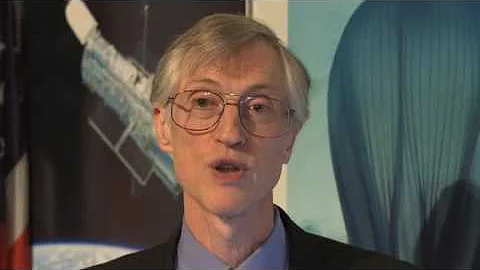 2:12
2:12
 31:24
31:24
 1:23:16
 0:39
0:39
 0:32
0:32
 1:10
1:10
 1:04:37
 9:52
9:52


