A Simple Clear Explanation of the Verb TO DO

👁 1 مشاهدة

A Simple Clear Explanation of the Verb TO DO

النص الكامل للفيديو

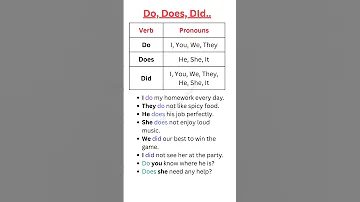
Well, hello and welcome to this English lesson about the verb, to do. I've had number of requests from viewers to do lesson about this, about the verb, to do, do, does, did, didn't, doesn't, all the various forms of that verb and how to use it when you're having an English conversation. So in this English lesson, I'll do just that, but you'll have to bear with me. I'm going to do this lesson inside. The weather outside is not very nice, so there won't be any beautiful backgrounds while do this lesson, but please do watch the entire thing. think I'll explain this in way that might help you in your next English conversation when you need to use the verb, to do. (upbeat music) Let's start by reviewing how to form the verb when you're talking in the present tense. With you, they, and we, it's just do. do, you do, they do, we do. But when you use he and she, it becomes does for some reason. So he does, she does. So when you're talking about something that's happening right now, something that is true right now, we use do, you do, they do, and we do. Or if you use he and she, it's he does and she does. The most common way to use do though in this tense, in the present tense is when we are saying that something is true or we're answering question, where we want to tell someone something is true and we want to emphasize it. So you might hear people say something like this, do like bananas," or "He does work at that store." These are usually responses to questions, where someone wants to emphasize that something is true. "Do you like bananas?" do like bananas." "Does he work at that store?" "He does work at that store." You can even hear when I'm using the word do and the word does, I'm even emphasizing it bit with how say the word. do like bananas." "He does work at that store." So this would be in response to questions like, "Do you like bananas?" "Does he work at that store?" And it's way to emphasize that it is true. Let's talk little bit though about the negative with you, they, and we, it becomes do not or the contraction don't. That's actually far more common. So do not or don't. You do not or you don't. They do not or they don't. Or we do not or we don't. With he and she though, it becomes does not, or what's more common, the contraction doesn't. He does not or he doesn't. She does not or she doesn't. So don't, you don't, they don't, and we don't. He doesn't and she doesn't. And you've probably guessed it, we used the negative to talk about something that isn't true. So if someone was to ask me this question, "Do you like bananas?" could say, don't like bananas." "Does he like bananas?" "He doesn't like bananas." You could ask question like this. "Does she work at that store?" "No, she doesn't work at that store." So anytime you want to describe something that isn't true, you would use don't or you would use doesn't. So let's talk little bit about the past. And this is way easier, by the way. You just need to know the word did. For some reason, the verb, to do, just has one form in the past. did, you did, they did, we did, he did, she did. We use this when we talk about something in the past that is either no longer true or is finished. It's not happening anymore. So you can say things like this, did like bananas," but this does mean that now you probably don't like bananas. So it's something that was true in the past that isn't true anymore. You could also say things like this. "He did buy computer," meaning that he went out to store and he used his money to buy computer. He did buy computer. In some ways, we're using the word did to emphasize it, because you could just say, "He bought computer." But when you say, "He did buy computer," we're emphasizing the meaning of the sentence little bit. So did like bananas means no longer like them. And he did buy computer means he went out and he bought computer. When using the negative in the past, it's actually quite easy as well. You simply use did not or the contraction didn't. The contraction's actually far more common. So you would say things like this. didn't, you didn't, they didn't, we didn't, he didn't, she didn't. It's the same for all of them. So you might hear people talk about things that are no longer true. You might hear sentence like this, didn't like bananas." That means that now, they probably do like bananas, but at some point in the past, bananas weren't something that they enjoyed. Or you might hear someone talk about something that didn't occur or didn't happen. Sorry, I'm kind of using didn't to talk about didn't, but can't think of another way to describe it. So you might hear people say things like this, "He didn't buy the computer," or "They didn't go to the game." So if you wanna talk about the past in the negative, all you need to know is did not, or actually the contraction didn't, which is far more common. It's very common in English to start question with do or does if you're asking about something in the present, or something current, or with the word did when asking about the past. You'll hear questions like this. "Do you like bananas?" "Does he enjoy going to the movies?" On Mondays at my work, it's very common to hear people ask this question. "Did you have good weekend?" "Did you have an enjoyable weekend?" So when you ask question and it's about something that's current or something that's happening right now, you can start with do or does. And when you're asking about the past, you can start with did. And just for fun, there are examples I'm going to give you, where we use the verb, to do, twice in the same sentence. You could ask question like this. "Did you do your homework?" You start with the word did, and you also use the word do. "Did you do your homework?" And the response would be, did do my homework." If you ask question like this, "Do you do your homework during the day?" And if you wanted to emphasize your response, you could say, do do my homework during the day." And you end up with the word do twice in the same sentence. And that's totally correct. "Do you do your homework during the day?" do do my homework during the day. It's the best time to do it. It's better than at night when I'm really tired." Anyways, thank you so much for watching this indoor lesson about the verb, to do. hope helped you to better understand how to use it when forming questions, when making statements, and when using it in an English conversation. Remember, if this is your first time here, don't forget to click that red subscribe button, give me thumbs up, leave comment if you want, and just hope you have really good week and some really good fun English learning in the days ahead. (upbeat music)
The verb forms to be in English Grammar 0:06

The verb forms to be in English Grammar

English Grammar and vocabulary

1.4M مشاهدة · 1 year ago

VERB TO BE exercises 0:59

VERB TO BE exercises

PROFa GRAZIELA BARDELLI

70.5K مشاهدة · 5 years ago

English Grammar AUXILIARY VERBS – be do have 13:08

English Grammar AUXILIARY VERBS – be do have

English with Ronnie · EnglishLessons4U with engVid

2.2M مشاهدة · 8 years ago

DO vs DOES English Exercises Learn English DO vs DOES ESOL practice exercises 11:49

DO vs DOES English Exercises Learn English DO vs DOES ESOL practice exercises

Woodward English

433.7K مشاهدة · 7 years ago

Verb to do exercise 3:46

Verb to do exercise

Easy english with Ariya

281 مشاهدة · 5 years ago

Do or Does English Grammar 0:13

Do or Does English Grammar

LKLogic

764.9K مشاهدة · 2 years ago

02 Present Tense to be verb questions English Test am are is 3:03

02 Present Tense to be verb questions English Test am are is

English Pop Quiz

47.9K مشاهدة · 3 years ago

Basic English Grammar TO BE verb 10:12

Basic English Grammar TO BE verb

English with Ronnie · EnglishLessons4U with engVid

5.9M مشاهدة · 14 years ago

Verb to BE English grammar lesson exercises 15:46

Verb to BE English grammar lesson exercises

Crown Academy of English

471.4K مشاهدة · 8 years ago

Basic English Grammar How To Use DO DOES DID DONE 17:36

Basic English Grammar How To Use DO DOES DID DONE

JForrest English

45.9K مشاهدة · 2 years ago

Am Is Are Verb to be Game for kids Part 1 2:38

Am Is Are Verb to be Game for kids Part 1

Interesting English

355.4K مشاهدة · 2 years ago

Use of Do and Does Quiz Can you score 12 12 Simple Present Tense 2:56

Use of Do and Does Quiz Can you score 12 12 Simple Present Tense

Speak English with Ridhima

199.5K مشاهدة · 3 years ago

The verb TO DO Simple Present Easy English Class 2:03

The verb TO DO Simple Present Easy English Class

Boris

114.1K مشاهدة · 10 years ago
Do Does Did When to use Example 0:06

Do Does Did When to use Example

English Speech Slingers

978.4K مشاهدة · 1 year ago

TO BE Present Tense QUIZ 101 exercises to practice AM IS ARE in English Learn English TO BE 14:59

TO BE Present Tense QUIZ 101 exercises to practice AM IS ARE in English Learn English TO BE

Woodward English

32.3K مشاهدة · 1 year ago

Verbs To Describe Body Actions Everyday Exercise Vocabulary 0:25

Verbs To Describe Body Actions Everyday Exercise Vocabulary

Learn English | Let's Talk - Free English Lessons

1.8M مشاهدة · 1 year ago