Waves
👁 2 مشاهدات

النص الكامل للفيديو
hi it's Mr Anderson and today I'm going to talk about waves our lives are dominated by waves right now you're listening to me and so you're picking up sound waves from the speakers in your computer since you're watching me that's electromagnetic waves if you're listening to this on Wi-Fi then you're using radio waves to pick up that signal so what is wave wave if we Define it is simply disturbance that moves through space and time it's good way to take energy or information and move it from point to point so waves are really important but there are few properties that you need to understand about waves before you really get it first of all you should understand that waves come in two different flavors there's transverse waves and longitudinal waves transverse waves an example of that if you were to tie string to tree and then just move the string up and down you'd be creating transverse wave how does that work well the string would be moving up and down but the wave would actually be traveling perp pendicular to that and since this is perpendicular motion we call that transverse wave and this does kind of look like on its side and so that's good way to remember what transverse wave is longitudinal wave an example of that would be the sound you're listening to it doesn't oscillate perpendicular to the motion it actually oscillates in the direction of the motion and so this video shows you some longitudinal ways what's happening well the oscillation is in this direction and the motion is in this direction as well and so so that's longitudinal wave it could be like this in water waves or it could be air waves as well but that's longitudinal wave there are some properties you should understand about waves as well and in fact there's relationship that's worth memorizing and that is equals time Lambda what does that mean speed of wave equals the frequency of the wave times the wavelength we always measure speed in meters per second we measure frequency in hertz which is 1 / time or 1 divided by period or second that's called Hertz and then wavelength is going to be measured in meters so let me kind of go through these three properties of wave if you're looking at wave speed it's easier to measure wave speed when you're looking at just one wave and so let's say for example that we're measuring wave and we want to see how long it takes to move from point we'll say over here to point which is over here well let's put the wave in motion let me time it 1 1,00 2 1,00 3 1,000 so let's take it say it takes three seconds to move from point to point and let's say that that's 3 to make the math easy well it's now moving 3 in 3 seconds and so it' have wave speed of 1 m/ second another thing that's interesting to look in this animation is that the actual particles on the wave don't move as fast as the wave the closer you get to the surface if you're surfer the faster you can move but lot of those particles are barely moving at all and so the energy is being traveled through the medium but the medium is actually not being traveled next thing is going to be called frequency frequency is how often waves come and so the the definition for that is one wave divided by which stands for the period in other words if we have one wave every one second then we would call that frequency of one Hertz so let me put this animation in run so right here we've got series of lights so the light at the bottom it's blinking every half second and so it's period is 0.5 seconds and so it's 1 / 0.5 or 2 Hertz let's say we have wave that comes this often every two seconds so we have wave and then 1 1,00 2 1000 wave so that would have frequency of 05 Hertz in other words the faster the waves come the bigger the frequency is going to be the larger the frequency is going to be and if you're listening to my voice you're listening to thousands of Hertz if not tens of thousands of Hertz in my voice and so those waves are oscillating really really quickly much quicker than these flashing lights right here last thing in wave is is Lambda and what Lambda is simply going to be wavelength wavelength well first let's look at this wave right here in in transverse wave it's going to have Crest which is going to be the top it's going to have trough which is right here at the bottom and then we're going to have this node which is right in the middle and so from Crest to Crest we call that one wavelength and what you'll find is it's going to be the same distance from here to here here to here in other words how long wavelength is going to be Lambda or that's going to be the wavelength of wave now to really measure and play around with the waves would encourage you to do this this is simulation it's found at P.C colorado.edu they do some wonderful science animations and this one's called waves on string so let me go find that for second so here would be wave that you can kind of play around with so what you can do is we can grab this string of beads and can move it up and down and can move away from this side to that side now what you'll find it's hard for me to do this very well let me try that again is that the energy is being traveled from or is traveling from point to point but the beads aren't traveling so it's just being transferred through that Medium so this would be typical wave let me just make quick pulse like that so what's happening here well that wave is moving down and then it's just moving right out the door let's kind of reduce the damping for just second and see what happens all right so we even have more of wave that's moving down now let's actually put fixed end on that so now what I'm going to do is I'm going to actually send wave down and let's see what happens to it the wave is being reflected or it's bouncing back and this is characteristic of waves as well let me kind to put damper on that for just second so let's see what happens when send wave and then send another wave well what happens when they hit that was kind of hard to see let's try that again let's say if send wave and then send another wave what happens when they hit well when they hit they actually cancel each other out it's hard to see let's see if we do it this way let's make loose end now what happens if have loose end and we send that down that's cool the wave actually comes back on the same side so now let's send wave and now another wave down what happens when they hit well what's happening is they're actually taking the energy of both waves when they Collide and then we're adding to that so we have that that's called constructive interference so now let's kind of oscillate our wave so let me keep the dampening like that that let's go back to no end at the end and now let's set it to oscillate so now what do we have in wave well in this wave we've got high amplitude so amplitude is going to refer to how big the wave is so let's reduce that so amplitude is how high it's moving up and down frequency is going to be how fast it occurs so right now the frequency is 50 hertz what does that mean we have 1 divided by what would that be 1 divided 02 seconds and so we're getting 50 Waves per second so that's going to be high frequency if increase the frequency so we're going to have more Waves per second or 50 Waves per second and if get it really cranking now we have 84 waves per second or 84 Hertz what happened to the wavelength when did that though so what happened to the wavelength well as increased the frequency decrease the wavelength so let's go back here what happens when decrease the frequency so now it's only 24 waves second now the wavelength gets really really longer so what do we remember well so if we go back to our equation which is speed equals frequency which is how many hertz it is time Lambda so what does that mean if we increase the frequency if we increase the frequency then the wavelength is going to go down now cool thing can happen if we actually add fixed end to that we start to get constructive interference and so what's happening now waves that are going down are meeting waves that are coming back and so if we increase the amplitude little bit we can actually get some big waves now let's decrease the dampening and now we got waves that are almost standing waves or or dancing waves at this point if we really reduce the dampening then this is going to get crazy at control and so that's waves on string and that's so let's go back to the keynote for just second and so there are few more properties you should understand about waves and and the next thing is what happens when they move from one medium to another so there are essentially three things that can happen four but let's just talk about these three could be absorbed as well by the material but first is reflection so what happens with the reflected wave in this case we're using laser which is coherent light so we have have light moving in this direction which is wave it hits surface that's reflected and we get reflected wave and this this reflect angle of reflection is equal to the angle of incidence so the waves are simply bouncing off of it so when you're looking at mirror those would be reflected waves that are coming back to you now another thing that can happen when it hits moves from one medium to another in this case we're going from Air it looks like to lens or this could be filled with water it's being refracted what does that mean it's being bent and so as light moves in this direction it's wave it hits this and it's actually slowing down and that's bending or refracting the wave now you can also see here that some of that is being reflected but we certainly have lot of refraction here or bending of wave and then the last thing that occurs is something called defraction when you move waves through small opening the waves will actually Bend and that's called defraction so they're bending through this opening or they could be bending around the bend as well so let's say you're listening to music and you're right over here that sound wave is actually going to bend around so you can hear it now which waves are you going to hear Bend more easily well the high frequency waves so the high pitches will actually move right through but the low frequency will actually Bend more quickly and so that's why when you hear car coming by and they're listening to really loud music you'll hear that you hear that low frequency sound because it's defract more readily to get out of the car but the high pitches or the the the higher frequency noises they don't get defract as much so you don't hear them last thing want to show you is that you can solve simple problems and so let's say this is real world example let's say we have tsunami which is giant wave in the ocean created by an earthquake let's say it has wavelength of 21 210,000 so that's 210 km between waves that's huge wavelength and let's say it has frequency of 0067 Herz that would be like one wave coming every 25 minutes now calculate the speed of the wave well how would you do that well we remember our equation which is wave speed equals frequency time wavelength we have to look at our units so we know frequency and it's in hertz and so we're fine we know wavelength and that's going to be in meters and so we're fine so to figure out the the wave speed we simply multiply the frequency to the waves length to figure out the wave speed and did this earlier when you take 210,000 * 0067 what you get is 140 if we do significant digits right because the both of those have two significant digits 140 per second now most of us don't understand what meters per second are so we can roughly take that times 2.2 and so tsunami that has that large wavelength and that small frequency is going to move at about 310 mil an hour and so these things move really really quickly and that's why it's important that we know and get high get to Higher Ground when we hear the tsunami warnings going and so that's waves and hope that's helpful
 7:45
7:45
Traveling Waves Crash Course Physics
CrashCourse
2.1M مشاهدة · 9 years ago
 5:08
5:08
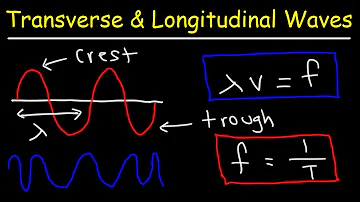
Transverse and Longitudinal Waves
The Organic Chemistry Tutor
762.7K مشاهدة · 7 years ago
 3:39
3:39
Wave Motion Waves Physics FuseSchool
FuseSchool - Global Education
1.5M مشاهدة · 8 years ago
 5:17
5:17
Physics Waves Frequency Wavelength FREE Science Lesson
AtomicSchool
681.6K مشاهدة · 8 years ago
 2:13
2:13
Waves for Kids Wavelength Amplitude Science Lesson for Grades 3 5 Mini Clip
GenerationGenius
601.8K مشاهدة · 7 years ago
صفحات ذات صلة

Activation Energy

The Chloroplast

The Atmosphere

درس الإنتاج و الاستهلاك الدراسات الاجتماعية الصف الثالث الفصل الثاني

تلخيص تطور التجارة في وطني صف ثالث اجتماعيات قناة حياتنا التعليمية

درس تطور التجارة في وطني الدارسات الاجتماعية الصف الثالث الفصل الثاني

شرح وحل اسئلة تطور التجارة في وطني صف ثالث اجتماعيات قناة حياتنا التعليمية

شرح درس تطور التجارة في وطني اجتماعيات الصف الثالث المنهاج الجديد 2026