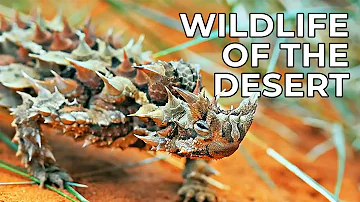
nature is not place to visit it's our home nature is all that we see animals insects disappearing into their surroundings using deceptions disguises lures nature is all that we hear the call of an eagle the hiss of Ocean Spray the Rumble of Thunder the doings of cricket the wonderful beauty of nature The crucial fragile Affinity between animal life and their environment all of this is world of the Wild thank you deserts while hostile to life they are far from lifeless rather for the animals that live here deserts represent life on the edge receiving less than 250 millimeters of rainfall every year these Barren expanses cover third of the planet's land surface area found on every continent they offer surprising diversity in their characteristics and the wildlife that survives within them in this episode we venture into these Badlands to stalk the Sands with scorpions study the defense mechanism of rattlesnakes endure the extremes with camels examine the adaptations of lizards and roll the dunes with Golden Wheel spiders thank you with its ancestors predating the Dinosaurs the resilient scorpion has been on the planet for over 400 million years and is nothing if not survivor foreign with nearly 2 000 varieties of scorpions spread across all the continents except Antarctica the majority of Scorpion species are desert dwellers and they exhibit range of adaptations to occupy this parched landscape Lee encountered on the surface during the day instead they seek Shelter From the heat using their enlarged claws to burrow beneath the Desert Sands where they wait for the cool of the night the lower temperatures of the desert night accommodate the Scorpion's active hunting style while capable of taking down lizards in small rodents the majority of the desert scorpions diet is comprised of insects prey between their pincers scorpions will attempt to make the kill with Brute Force while preferring to reserve their sting for self-defense it will quickly be deployed to subdure more Troublesome Quarry coated insensitive Brown hairs for the detection of prey through ground and air vibrations Scorpion's tail ends in their distinctive bulbous sting packed with neurotoxic Venom utilizing set of sharp claws to draw food into pre-oral cavity below their mouths scorpions dissolve their prey into liquid form for ingestion serving their need for both food and water in their thirsty desert surrounds hatching their eggs internally female scorpions give birth to live young brood sizes range from 2 to 100 the exact number determined by range of environmental factors that remain unknown to science carried on their mother's back The Young will remain dependent on her until the first shedding of their skin for all the Scorpions adaptations to their desert home the ravages of this extreme environment take their toll on even the toughest occupants prolonged exposure to above ground temperatures over 45 degrees Celsius is fatal to scorpions and in the unforgiving desert they can quickly be consumed by species they would otherwise prey on or avoid enough for the Scorpions that managed to survive in the harsh world of the desert it is precisely these hardships that protect their future while scorpion species around the world face the threats of habitat loss and the widespread usage of pesticides desert species are largely shielded from the presence of man and the dangers that he brings allowing these armored Warriors to continue as they have for countless millennia foreign species creates sound that strikes fear into all those that hear it rattlesnake there are around 30 species of rattlesnakes found across range of habitat with strong preference for the Sands and rocky hills of America's desert regions ranging in size from 30 centimeters to nearly two and half meters rattlesnakes display significant diversity but all share one remarkable adaptation to their environment used as warning to deter the other predators of the desert the rattlesnake's rattle is composed of series of hollow amplifying tail segments with contraction of super fast Shaker muscles these segments vibrate against one another to produce the distinctively threatening noise the tough scaly hide of rattlesnakes affords protection not only against the birds and coyotes that prey on them in the desert but also from dehydration with the overlapping scales preventing moisture loss through their skin elliptical cat-like pupils provide enhanced Vision in dim light useful Advantage when hunting in the desert's more agreeable nighttime temperatures while the rattle serves as an intimidating display when threatened in their day-to-day lives rattlesnakes prefer to maintain low profile and the unique skin patterns of each species can blend near seamlessly with their favored environment allowing them to bask and travel without drawing unwanted attention foreign outer ears rattlesnakes rely on vibrations to detect sound as such they are effectively deaf to the sound of their own rattle meaning that this sophisticated warning system is designed specifically for use against other species although able to hunt during the day in the desert rattlesnakes are more active during the night and rely heavily on their Keen sense of smell to seek out quarry using their nostrils in their flickering tongue to detect chemical signatures in the air the snake will take up strategic position and wait for prey to venture into its range quick strike and an equally fast-acting Venom dispatches the victim before it is swallowed head first one of the youngest and most recently evolved species of snake rattlesnakes today appear to be undergoing another Evolution with their traditional range encroached upon by the spread of humanity certain species are now listed as endangered in many U.S states this selective pressure from humans appears to have resulted in the phenomenon of rattlesnakes that do not rattle with non-rattling snakes avoiding detection they are surviving to produce non-rattling Offspring offering These Quiet varieties the chance to remain for now in their increasingly populated habitat thank you perhaps the most iconic animal of the desert there is good reason for the camel's success in this inhospitable environment the camel's history is inextricably connected with the vast waterless expanse of the desert with mankind the strong durable nature of the camel in this tough environment has long been recognized by man and the species was domesticated in the Middle East around the dawn of civilization laughs divided into one humped and two-humped varieties today the Bactrian camels of Asia's Gobi Desert are considered the only true wild camels that remain genetically pure with Bactrian numbers estimated to be as low as 600 it is their hybridized ancestors that are more common and widespread so perfectly attuned to Desert life they are able to thrive in any arid environment and thanks to man have spread to Desert systems around the world treading easily over tough terrain the camel's broad padded feet have snowshoe effect preventing sinking in soft sand long legs keep their body high above the reflected heat of the ground which can be over 70 degrees Celsius enlarged eyelashes and transparent third eyelid keeps sand from getting into their eyes and thick lips allow the camel to feed on prickly desert plants please traveling in herds led by dominant male camels have famed for their resilience to the incredible hardships of the desert able to go for more than week without water and months without food their Feats of endurance are thanks to their most distinctive adaptation their hump rather than directly storing water the hump is store of fat and the reason behind its unique shape is to minimize heat retention were the camels fat to be evenly distributed around its body the insulating effect would be fatal in the desert heat the exposed environment of the desert is prone to some of the most extreme temperature fluctuations on the planet scorching during the day when the sun sets the desert cools rapidly and can drop below freezing overnight known as the ships of the desert camels are among the most superbly adapted creatures to these testing environments but while hybrid camels thrive in deserts around the world their common ancestor the Bactrian camel is classed as critically endangered as long as there are deserts there will be camels but greater awareness and protection is required to preserve their fragile ancestry hot environments present niche habitat for the cold blooded and the world over desert's other domain of lizards among the over 6 000 species of lizard the Australian thorny devil is true individual coated in dense array of intimidating spikes this small non-aggressive reptile dissuades Predators by virtue of being difficult to swallow its peculiar jerky gate is also believed to confuse the visual system of any predator that spots them in the open foreign the thorny lizard's distinctive coat offers resourceful adaption to the Arab desert its rigid spikes collect moisture in the form of dew which is channeled via series of tiny grooves running between the scales to the corners of their mouth allowing this one-of-a-kind lizard to effectively drink from the air man found predominantly in North America horned lizards have been subsisting in the desert since prehistoric times beyond their specializations for life in these arid zones horned lizards display range of adaptations to prey on specific food source that has also endured since the age of dinosaurs harvester ants are an abundant insect species in the deserts of the new world although easy to catch they provide little nutritional value and carry the most toxic venom of the insect world for these reasons they know only one predator in the wild the horned lizard feeding almost exclusively on these nutritionally poor ants horned lizards have developed stomach proportionately 65 percent bigger than any other lizard species in order to process the sheer volume of ants required to sustain them and having evolved unique blood Factor this determined lizard is completely immune to the ant bites that would be fatal to other species these adaptations afford the horned lizard sedentary lifestyle with an abundant food supply free from competition rare luxuries in the desert as in the case for so much of the planet's Wildlife global warming is looming Menace for lizards for all their adaptations to life in the hot deserts lizards are not immune to the temperatures here and must limit their periods of activity In the Heat of the day even modest rise in temperatures can result in lizards losing significant portion of the day when they can feed these effects are already being felt and researchers predict that if greenhouse gas emissions continue 20 percent of the world's lizard species will be extinct by the year 2080. there is time for the world to act but the window of opportunity to reverse this trend is rapidly closing in South Africa's Namib Desert one creature has developed unique adaptation that aids not only in self-defense but also in transport coastal desert characterized by steep sand dunes some of which are 300 meters high the Namib Desert is home to the Golden Wheel spider tucking its body into tight ball the Golden Wheel spider is famous for its habit of Wheeling itself down the sand dunes of its desert home this remarkable behavior is unique to this species and employed as defense mechanism when the spider feels threatened by utilizing the sharp drop of the soft desert Dunes it can tumble over 40 turns per second enabling it to make speedy escape from danger highly efficient mode of travel Beyond self-defense the Golden Wheel spider has been known to employ the tumbling technique when the Sands are too hot to walk upon careening down the dunes at speeds of one meter per second this acrobatic arachnid covers good ground with little time and even less energy expenditure while the spider's golden coloration affords effective camouflage against the Warm Sands of its habitat when on the surface during the day it remains susceptible to Predators as well as heat exhaustion to counteract this the Golden Wheel spider goes Underground just 20 millimeters in size this tiny spider is an efficient excavator and can shift up to 80 000 times its body weight in sand as it digs its burrow although it may not spin web the Golden Wheel spider will line its burrow with silk maintaining its shape against the crumbling Sands the Burrows are dug deep in defense against the spider's most common predator the pompelid wasp with shallow diggings insufficient to avoid attack from this persistent aerial Hunter the spiders must dig half meter down to ensure their safety carefully topping the entrance from below with thin layer of sand when the spider finishes its work the burrow is completely imperceptible from the surface as the safely ensconced the Golden Wheel spider waits for the cool of the night before again venturing out into the demanding world of the desert foreign deserts are in many ways self-protected wildernesses where only the most Hardy can survive in this episode we have seen stinging scorpions boisterous rattlesnakes durable camels expertly adapted lizards and tumbling Golden Wheel spiders unlike most wilderness areas around the world in the face of global warming deserts are expanding with many bordering regions and dry land ecosystems becoming increasingly arid while desertification is great challenge to humanity for existing deserts Rising temperatures can push life beyond its limits more efficient water usage can help contain the spread of deserts while curbing greenhouse gas emissions will slow the effects of global warming and keep the creatures that have evolved to live on the edge from going over it foreign
47:23
Surviving Deserts Full Episode Hostile Planet
National Geographic
3M مشاهدة · 2 years ago
3:15:18
4 K Desert Safari Relaxing Wild Sounds 4 K Deserts Relaxation Film Wildlife Animals ScreenSaver
Background Boss
108K مشاهدة · 3 years ago
44:15
Wild Frontier Deserts of the Middle East Free Documentary Nature
Free Documentary - Nature
442.3K مشاهدة · 11 months ago
50:55
Our Planet From Deserts to Grasslands FULL EPISODE Netflix
 47:23
47:23
 3:15:18
 44:15
44:15
 50:55
50:55
 34:31
34:31
 26:08
26:08
 52:00
52:00
 3:22
3:22
 9:02
9:02
 3:48
3:48
 4:28
4:28
 52:03
52:03
 7:06
7:06
 4:07
4:07
 3:34
3:34
 12:34
12:34
 9:37
9:37
 7:49
7:49
 17:44
17:44


