النص الكامل للفيديو
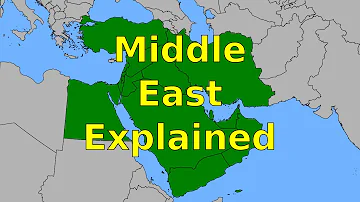
Whenever the term middle east pops up in discussions today, it is usually related to the latest interventions of western militaries, the oil market or civil war. In this episode however, would like to show you the fascinating geography of the largest peninsular in the world, and the land stretches surrounding it. We will explore the fascinating and futuristic cities of the oil-caliphates, the incredible mountain ranges of Iran and Turkey, fertile banks of one of the largest river deltas in the world, the Nile Delta, one of the most inhospitable places in the world, the Arab desert, and finally, one of the most important locations for the human heritage, the place where human civilization began, the Euphrates and Tigris river system, in the heart of the fertile crescent. To start off our journey, we are going to the mega cities of the Arab world, which can almost all be found within the middle east. The cities of Dubai, Abu Dhabi, Doha, Jeddah or Kuwait City, just to name few, are all world famous by now for their lavish skyscrapers and exceptionally luxurious establishments such as indoor skiing halls in the desert, man-made islands, gigantic shopping malls or formula 1 racetracks. All of these cities have one thing in common, which is the insane growth rate they underwent in the period after the second world war. Every one of these cities increased 0:01:12.630,0:01:17.189 their population by at least 10-fold. As the most extreme example of this, we'll take look at the commercial and political center of Saudi Arabia, Riyadh. While it used to be medium sized town of small significance in the early 20th century, with mere few thousand inhabitants, the need for government center of Saudi Arabia led to growth rate of up to 8 percent annually. This increased the population from 150,000 in 1960 to over 7.6 million today. In the same time period, standard European cities experienced growth rate of less than 1%. Next to the development of economic and political hubs of worldwide importance in these cities, these developments also bring many challenges with them. The development of suitable infrastructure for sewage or waste management didn't scale in the same pace and lag behind dangerously. Only recently, many of these cities partnered with international engineering consultant firms, to tackle these problems more actively. Away from these metropolitan areas, it's time to go into the wild nature of the Middle East. The first thing that comes to mind when discussing the nature of the Middle East, are of course the hot deserts that span all across the Arabic Peninsula. What most people forget though, is that Turkey and Iran also considered major parts of the Middle East. These places trump with enormous mountain ranges, stratovolcanoes and even glaciers. The Zagros and Alborz mountains in Iran as well as the Taurus Mountains in Turkey cover large areas of their respective land masses. All three mountain ranges formed from the Arabic and African tectonic plate ramping up against the Eurasian landmass, which then folded up to form the mesmerizing plateaus and peaks. fascinating natural phenomenon which also stands out with its unique habitats, dates back to time lot more recent from geological perspective. The Delta of the River Nile, the longest river in the world, is estimated to have formed only around 30 million years ago. It is result from the formation of the Ethiopian Highlands, which redirected its water to form the Blue Nile. After merging with the White Nile coming from Lake Victoria, this massive stream was created. The constant supply of sediments from the six thousand six hundred kilometer long stream brought incredible fertility with them, which is the reason why the Nile Delta was the home to one of the earliest civilizations in the world. Intense agriculture is said to have been conducted for 5000 consecutive years in this region. Even today it plays major economic and political role in the world politics, with over 39 million people living in this area around the Nile Delta. This small region of the Egyptian territory also provides almost all agriculture supplies for the country, which in itself employs nearly one-quarter of the entire labor force of the nation. From an economic perspective, the Arab desert poses the exact opposite of these fertile lands. spanning from the southeastern countries of Oman and Yemen, across the entirety of Saudi Arabia, all the way to Jordan and Iraq. Over this vast distance, the desert is not actually just the same plain of yellow sand. When you examine the area more closely, variety of different landscapes can be identified, which are all astonishing in their own way. It is possible to divide the Arab desert into five divisions which all have different striking features. The first of these divisions is called the ad-Dahna desert, which is located centrally and stands out with huge red sand dunes and complex cave systems full of crystals in the soft limestone ground. The Tuwaiq escarpment also lays centrally and consists of vast canyon landscapes with many narrow valleys and plateaus. Underneath this stretch of land, is where large parts of the oil of Saudi Arabia can be found. The brackish salt flats of Umm Al Samim are standing out with dangerous quicksands. These form from regular floods of the area, which make the underlying ground very soft. Due to the constant heat however, the top layer dries out and gives the impression of solid ground. When this top layer is broken however, it is possible to sink into the muddy underground. The Wahiba Sands were shaped by strong trade winds, retreating glaciers and monsoons. These natural forces created 100 meter high sand dunes all over the region and within this 12,500 square kilometre area, you can also find over 16,000 insect species, as well as many endemic birds and native flora. The final division is the Rub al-Khali desert, which carries the nickname The Empty Quarter. It makes up solid 1/3 of the Arabic Peninsula and fulfills pretty much everything that you would think of when imagining desert. Precipitation of 35 millimetres annually in the majority of the desert, is one of the lowest values found on the planet and subsequently flora and fauna is very shy to live in this area. The final stop on the journey through the Middle East brings us to the region that used to be known as Mesopotamia. Surrounded by the river systems of The Euphrates and Tigris, it was key region for the development of the entire human race. It is said that here, the first human civilization called the Sumer were formed and the dominance of the human race started to become inevitable. The marshlands, swamps and freshwater lakes were the foundation of the first agriculture conducted by the humans and it's fertility of the land gave the nickname Fertile Crescent to the region. Several biblical happenings are said to have taken place in between these two rivers and even today, it has incredible economic and political importance. Cities such as Baghdad or Bashra can be found between the riverbanks, which total to population of over ten million people today. While the region has taken big toll from an economic perspective due to constant military interventions throughout the 21st century, the historic value of this region is undeniably one of the most precious one on the planet. Nowhere on earth you can find such an incredible number of historic events in single region. Millennia of human success and defeat, empires, kingdoms and nations have left mark in form of ancient ruins, diverse architecture and rich culture to explore.

 3:06:18
 37:22
37:22
 4:29:28
 29:50
29:50
 5:52
5:52
 18:42
18:42
 11:16
11:16
 42:28
42:28
 29:04
29:04
 1:46
1:46
 9:02
9:02
 27:44
27:44
 1:01:41
 7:26
7:26