Asexual and Sexual Reproduction

👁 1 مشاهدة
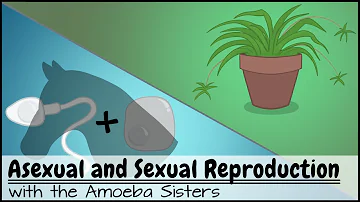
Asexual and Sexual Reproduction

النص الكامل للفيديو

When was 6 years old, went through phase where was really into plants. My sister never really went through plant phase although to be fair she was also 2 years old at the time, so she was kind of in to everything. wanted to have lots of plants that could water and take care of. But my plant caring skills were…not so great…so only some plants were safe. cactus perhaps. But you get sick of cacti. One day, it so happened, my dad brought home spider plant. As usual, the way imagined spider plant turned out to not exactly be what spider plant was---but---I was also very happy it wasn’t cactus. “Take really good care of this spider plant and it will have little baby plants,” my dad said. “Then you can plant the plantlets and they’ll grow into new spider plants too. “It’ll be fun,” he said. Let’s just say think my dad may have underestimated my dedication with this. Spider plants reproduce by making new, identical baby spider plantlets. The baby plants are genetically identical to the parent plant, meaning, they contain the same DNA. clone basically. You can plant the plantlets and ta da, new spider plant. As kid, didn’t realize that what was seeing at the time was asexual reproduction. Asexual reproduction requires only one organism and results in offspring that are genetically identical. Uniform! No genetic variety! And many times there can be an advantage that this can be efficient and fast since only one organism is involved. Asexual reproduction also occurs with very simple organisms, like bacteria. These prokaryotes literally split into two in process known as binary fission. Many single-celled eukaryotic organisms---like protists---do this too. Another type of asexual reproduction that starts with “b” is budding. very small, amazing animal called the hydra can reproduce by budding. That means they literally just bud an identical offspring right off of themselves! It falls off and grows into new hydra. So in the spider plant example, this was asexual reproduction. But it’s important to realize that not all plants can reproduce asexually. In fact, spider plants themselves can reproduce another way. Spider plants, and many other plants, can undergo sexual reproduction. In fact, lots of organisms can---some fungi and some protists, many plants, many animals. Sexual reproduction involves the uniting of gametes, which are reproductive cells, to make new organism. If you’re talking about animals, typically these gametes would be known as sperm cell from the male organism and an egg cell from the female organism. Gametes typically have half the number of chromosomes as somatic cell. So in humans, sperm and egg cells each have 23 chromosomes. When they combine, they can produce new cell, fertilized egg known as zygote which would then have 46 chromosomes. This fertilized egg can continue to divide to make more cells and more cells...oh look, this fertilized human egg cell is blastocyst now. Yeah, it’ll keep dividing from there. Now while that was an example of gametes uniting to make new human, realize that all new organisms that result from sexual reproduction have the potential to be genetically diverse. In sexual reproduction, the offspring are not clones. They received genetic information from their two different parents. And gametes themselves tend to be different from each other due to independent assortment and crossing over which happens when the gametes are made--- in process called meiosis. Check out our meiosis video for more about that. So the gametes are different from each other, and they combine to make unique organism. Now sexual reproduction can be more time consuming because it does require two gametes finding each other and uniting. little more complicated than asexual reproduction when, in many cases, you can just…split. So then what is benefit in sexual reproduction and why could this even matter? Well different genes can mean different expressed traits. And different expressed traits could be beneficial in the case of environmental changes. Let’s consider these grasshoppers. Let’s say the vegetation present changes due to dry season and now some colors of grasshoppers have better advantages than others in blending in…which means perhaps better advantages from hiding from predators. Those grasshoppers with the advantage potentially could have higher fitness. But see, that variation is present in the first place because of sexual reproduction. There are definite benefits can come with variety. Well…that’s it for the amoeba sisters and we remind you to stay curious!
Sexual and Asexual Reproduction Explained 5:38

Sexual and Asexual Reproduction Explained

Science Sauce

593.9K مشاهدة · 4 years ago

Sexual and asexual reproduction Middle school biology Khan Academy 4:40

Sexual and asexual reproduction Middle school biology Khan Academy

Khan Academy

89.2K مشاهدة · 4 years ago

GCSE Biology Sexual Asexual Reproduction Gametes 2026 27 exams 3:18

GCSE Biology Sexual Asexual Reproduction Gametes 2026 27 exams

Cognito

106.2K مشاهدة · 1 year ago

Types of Reproduction Sexual versus Asexual Reproduction iBiology Youreka Science 5:17

Types of Reproduction Sexual versus Asexual Reproduction iBiology Youreka Science

Science Communication Lab

197.2K مشاهدة · 8 years ago

Asexual and sexual reproduction High school biology Khan Academy 8:42

Asexual and sexual reproduction High school biology Khan Academy

Khan Academy

93.4K مشاهدة · 8 years ago

GCSE Biology Revision Sexual and Asexual Reproduction 3:39

GCSE Biology Revision Sexual and Asexual Reproduction

Freesciencelessons

836.6K مشاهدة · 8 years ago

Advantages of Sexual and Asexual Reproduction 8:37

Advantages of Sexual and Asexual Reproduction

Science Sauce

212.1K مشاهدة · 4 years ago

Sexual vs asexual reproduction How and why they evolved 5:17

Sexual vs asexual reproduction How and why they evolved

YourekaScience

13.9K مشاهدة · 7 years ago

Sexual vs Asexual Reproduction Class 10 Science How Organisms Reproduce 4:37

Sexual vs Asexual Reproduction Class 10 Science How Organisms Reproduce

Next Toppers

328.4K مشاهدة · 8 months ago

Sexual vs Asexual Reproduction 7 th Grade Science Made Simple 3:49

Sexual vs Asexual Reproduction 7 th Grade Science Made Simple

FSI Science

2.5K مشاهدة · 9 months ago

Asexual vs Sexual Reproduction Middle School Science 3:36

Asexual vs Sexual Reproduction Middle School Science

Cognito USA

1.9K مشاهدة · 6 months ago

Sexual vs asexual reproduction Differences between sexual and asexual reproduction 2:02

Sexual vs asexual reproduction Differences between sexual and asexual reproduction

Biology Lectures

33.3K مشاهدة · 3 years ago

Types of reproduction in plants Difference between sexual asexual reproduction in plants 3:39

Types of reproduction in plants Difference between sexual asexual reproduction in plants

MindMap Universe

1K مشاهدة · 1 year ago

REPRODUCTION IN ANIMALS SEXUAL and ASEXUAL OVIPAROUS VIVIPAROUS OVOVIPAROUS 4:37

REPRODUCTION IN ANIMALS SEXUAL and ASEXUAL OVIPAROUS VIVIPAROUS OVOVIPAROUS

Smile and Learn - English

2M مشاهدة · 2 years ago

How Organisms Reproduce Sexual Asexual Reproduction 5:16

How Organisms Reproduce Sexual Asexual Reproduction

MAD GARDEN Science

17.4K مشاهدة · 2 years ago

Difference Between Sexual and Asexual Reproduction 1:19

Difference Between Sexual and Asexual Reproduction

Sillidilli

22.1K مشاهدة · 13 years ago

Asexual Reproduction 3:36

Asexual Reproduction

MooMooMath and Science

243.4K مشاهدة · 9 years ago