quadrilaterals and its types so in our class we studied about family of quadrilaterals so you know that in the family of quadrilaterals we have kite which is special type of quadrilateral in which two consecutive sides they are equal and you can see that here we have four sides in which two pairs we see two pairs of consecutive sides equal and here in The Kite we also observe that not even single pair of opposite sides is parallel to each other now the second family member is this trapezoid and in trapezoid one pair of opposite sides is parallel to each other the third family member is the parallelogram and here in parallelogram both pairs of opposite sides are parallel to each other and interestingly you will see in parallelogram family we have three more special cangle and square so today we are going to explore properties of special quadrilateral called parallelogram so let us go to to geogebra so here hope you can see the screen so let us first try to make parallelogram so I've taken segment tool and drawn AB this is one side of the parallelogram and we know that in parallelogram both pairs of opposite sides are parallel to each other so using the parallel line tool will be making another parallel line right which is parallel to AB after that using this segment tool we are going to join AC so you can see that here we have two sides of the parallelogram now ab and AC and on the left side you will be noticing that this is algebra window where the dimensions of these sides are appearing so AB is denoted by this so this is 4.46 CM and AC is denoted by this value that is 2.91 CM okay let us see how we get the fourth vertex of the parallelogram for that we will be using the parallel line tool again and we will try to make parallel line to AC which passes through the point right now we will get the fourth vertex this is the point of intersection so we will use the intersect tool and place it here so that we get the point so is the point of intersection right so now we have to make the parallelogram so we don't want to see these lines so just you need to go to that line right click and click on the show object it will go off and then go to this second line right click and then click on show object the second line will go off and then using the segment tool we can complete the parallelogram right see how easy it is to make this parallelogram now here in the geogebra we have move option move tool it's dynamic software so you can see that there are the Blue Points and these are the dynamic points and the point black this deep point is static point so you can move and change the dimensions of the parallelogram by moving any of the point either or or you can move the point and you will see that every time you are getting parallelogram interesting okay let me now fix up one parallelogram and we will be now now exploring the properties so the first thing is both pairs of opposite sides are parallel to each other let us observe the dimension of the lengths so here you can see that AB is the first side and it has Dimension you can calculate and see okay is here it is 10.3 CM let us see what is this CD CD is represented by here it is it is also 10.3 CM so we observe that AB is equal to CD that is opposite side of the parallelogram they are equal let us see the second pair AC AC is is 4.86 CM and BD what is the length of BD BD is repres represented by yes it is also 4.86 CM okay so if you use this move tool you can every time see that both pairs of opposite sides are equal you just check the values of the variables here and so you will see that is equal to and is equal to that means AB is equal to CD and AC is equal to BD so opposite sides of the parallelogram they are equal now let us explore the angles so for this first we need to Mark the angles so here have taken the angle tool and you know how to use the angle tool so you need to move on in the clockwise direction from one vertex say for example have to get the measurement of angle so will start from what click on then and then you will get the measurement of angle okay now you tell me if we have to get the measurement of angle what should do yes you are right will start from click on then and then but before that make sure you have selected the angle tool this is the angle tool right okay now have to do measurement of angle so this is we have to go in the clockwise Direction now have to get measurement of angle so click on and then right let us now do the exploration so observe carefully the measurement of angles do you see relationship do You observe anything just observe them observe of the measurement yes angle is 58.288 28° yes the observation is very simple that opposite angles of parallelogram they are equal you see angle and angle are also equal 121.71a applet is application is very very useful you can see that angles you are getting in deci also in normal classrooms we never do this we never even draw so but here you see you are getting the correct measurement so let me use the move tool and you have to keep your eye on observing the opposite angles okay just observe and write at least three observations yes every time I'm changing the size so you can see I'm changing the size of this parallelogram and we see that opposite angles are equal interesting yes you see opposite angles are equal okay now let us do the next exploration about the diagonals so for that first we need to draw the diagonal so am making the diagonal and then okay now you see that the diagonal AC has the length let me see what is this variable it is and diagonal has length so what is is 15.48% and is 7.99 CM so it is pretty clear that diagonals are not equal in parallelogram what about whether they bict each other for that we need to first get the point of intersection so let us Mark the point of intersection of the diagonal so this point is so we need to now check whether AE is equal to Ed and is equal to EB for that we will be using the segment tool so I'm taking the segment tool and we will draw the segment from to from to the length is 7.74 CM okay let us see what happens from to to it is okay it is also 7.74 so that means AE is equal to Ed okay let us see what is the relation between and EB so is 4 cm and EB is also 4 cm so interesting so we have got that diagonals of the parallelogram they BCT each other okay now we are doing the last exploration whether they BCT each other at 90° or not so for that we should have the measurement of angle so let us check the angle tool and now you tell me how how should get this angle yes we we will be starting from click on then and then we have to move in the clockwise Direction so here you see that the measurement of this angle is more than 90° okay so obviously it is not right angle so what are the basic properties of parallelogram can you tell me yes number one we started with the basic definition that both pairs of opposite sides are parallel to each other so we have verified that both pairs of opposite sides are equal to each other opposite angles are equal to each other diagonals they are not equal diagonals they BCT each other and they do not bisect each other at 90° right so now this is General thing about the parallelogram okay so dear students now we will be doing The Next Step let us see what happens if this parallelogram is rhombus or if this parallelogram is square or if this parallelogram is rectangle then what will happen What will be the change in the properties right for that we would be now placing this exis and the grid at the back okay so that we can get the special quadrilaterals so if need to say for example study about the this Square so can use the can take help of the coordinates you have studied the rectangular coordinate system so can get square here by counting the number of squares okay so let us see what happens I'm trying to make square you will see that in every case it is parallelogram okay but here we need to get yes we need to make square see how we can do this you need to move the coordinates suitably and then you can see how we are going to get square yes yes yes yes Ive got it so you can see that that in square each angle is 90° it's parallelogram in which each angle is 90° and all sides are equal right so you can verify them now you just observe the diagonal I'm interested in knowing the properties of diagonals what do You observe here yes diagonals they BCT each other obviously it's parallelogram so that property will hold true in the Square also but interestingly you notice here that this diagonal BC and AD they are equal also and they are perpendicular to each other also so in square in case of diagonals diagonals they follow the property of parallelogram but other than than that if you notice this is special parallelogram in which diagonals are equal and diagonals they BCT each other at right angles right so this is how we have got the square now if move this point say for example I'm moving this point to this place to get rectangle now see this is rectangle now it is not square now so what do you notice there is difference between rectangle and square in the rectangle diagonals they BCT each other at right angles but notice here this angle angle this is 96.7 3° so that means means diagonals they BCT each other no problem but they do not BCT each other at right angles but in this rectangle the diagonals are equal so remember in parogram it is not necessary that diagonals are equal but if parallelogram is rectangle or if it is square the diagonals will be equal right and in the Square diagonals will be equal they will BCT each other and they will BCT each other at right angles but in rectangle if you notice the diagonals they will BCT each other but they will not BCT each other at right angles now what you have to do is you have to get rombus and study the properties of rhombus by moving the point and you just need to write in the comment like what do you notice specifically about properties of the diagonal in case of the rhombus right hope it is clear to all of you so in mathematics visualization pays plays great role and we see that in different types of quadrilaterals we have observed their properties now you see that if you specifically see we have explored parallelogram rectangle then have given you task for rhombus and we have explored Square so these is these are some special quadrilaterals having certain specific properties so hope this lesson will help you in acquiring some knowledge set about special quadrilaterals and then in the next session we would be doing questions based on properties of these special quadrilaterals thank you so much have nice day bye-bye take care
9:17
Properties Of Quadrilateral Applet using geogebra
Agbamu Idonorewrene
285 مشاهدة · 3 years ago
3:47
Geo construct a parallelogram in Geogebra
Regan Ray
561 مشاهدة · 7 years ago
17:32
8 2 8 3 Video Lesson Geometry Properties of Parallelograms
Britta Dwyer
246 مشاهدة · 5 years ago
9:50
Math Antics Quadrilaterals
mathantics
2.8M مشاهدة · 12 years ago
12:26
Rectangles Properties of Parallelograms Special Quadrilaterals Geometry
The Organic Chemistry Tutor
196.5K مشاهدة · 8 years ago
7:07
Quadrilateral Points in Geogebra
LawrenceAcademy Math
2K مشاهدة · 12 years ago
2:57
Area of a Parallelogram Using GeoGebra to demonstrate the area of a parallelogram
Maths Clinic Multimedia Series
413 مشاهدة · 4 years ago
4:55
MathinPictures 48 Five Quadrilaterals
Alan Graham
80 مشاهدة · 11 years ago
1:47
Quadrilaterals Song Types of Quadrilaterals Classifying Quadrilaterals
Math Songs by NUMBEROCK
2.7M مشاهدة · 10 years ago
23:25
Understanding of Quadrilaterals Chapter 3 Class 8 Exercise 3 1 GeoGebra NCERT
Sunita Gupta
259 مشاهدة · 5 years ago
2:22
Discovering Properties of Parallelograms with GeoGebra
Tim Brzezinski
12.8K مشاهدة · 8 years ago
1:45
Learn Quadrilaterals Easily Polygon Tool in GeoGebra Step by Step Visualization
GeoGebra with K.Kumaravelu
37 مشاهدة · 2 months ago
21:46
Quadrilaterals Geometry
The Organic Chemistry Tutor
725.4K مشاهدة · 8 years ago
2:38
Properties of parallelogram I n geo gebra
Praveen Kage
144 مشاهدة · 7 years ago
7:13
Properties of Quadrilaterals Tree Diagram
Mario's Math Tutoring
21.3K مشاهدة · 10 years ago
6:20
Properties of a rhombus rectangle and a square
MooMooMath and Science
371.2K مشاهدة · 10 years ago
1:53
Property of a parallelogram in geogebra by Sunita Jadhav
Sunita Jadhav
205 مشاهدة · 5 years ago
7:21
Understanding Quadrilaterals Properties of Parallelogram Activity NCERT English

 9:17
9:17
 3:47
3:47
 17:32
17:32
 9:50
9:50
 12:26
12:26
 7:07
7:07
 2:57
2:57
 4:55
4:55
 1:47
1:47
 23:25
23:25
 2:22
2:22
 1:45
1:45
 21:46
21:46
 2:38
2:38
 7:13
7:13
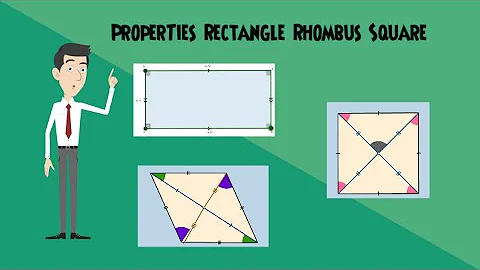 6:20
6:20
 1:53
1:53
 7:21
7:21


