النص الكامل للفيديو
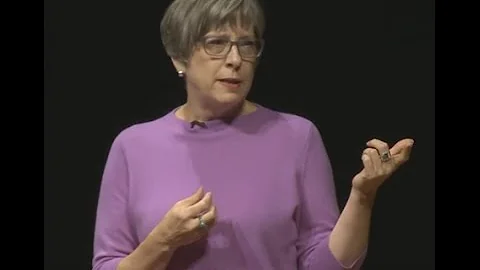
When was 6 years old, my biggest fear was to get bored. used to make to-do lists every single day so that I'd always have something to do. But one day was watching this documentary on sea turtles and it said that sea turtles can live up to 150 years of age. And realized as 6-year-old kid that I'm probably not going to live that long. I'm going to die. It was such strange realization. Don't you feel weird sometimes when you realize that no matter what you do in life, you're still going to die in the end? So ran to my mother and asked her, "Mom, is it true that we're all going to die someday? You, me, Dad, my friends?" And she said, "Yes, we're all going to die. There's nothing you can do about that." And was horrified. started to cry and cried so hard because of what death meant. It literally means the end of existence, the end of everything. And wondered, "What's the point of all this?" So turned to my mom, still crying, and said, "So why do we work? Why do have to work? Why does Dad have to work so much if he and everybody else is going to die anyway?" She never answered my question. But that question stuck with me. ask myself lot of questions and I'm sure you do, too. That's what philosophy is all about, asking questions. And what could be more important than asking questions about how to use your time? Probably nothing. Because time is all we have. So naturally you would expect the whole time management movement to be very philosophical. After all, time management is is concept that started out in philosophy. The ancient philosophers were obsessed with this one very important question. How can we use our time in way that makes our lives meaningful? But modern time management is philosophically empty. Time management books are written by consultants, not philosophers. It's always about tips and tricks and techniques to get more things done, to do things faster, to be more productive, more efficient, and to work better. Time management has become philosophically empty. Time management has moved away from its philosophical roots. But if you really want to live meaningful life, we have to once again reinfuse time management with philosophy. And philosophy starts with questions. Here's very simple question. Why do we need to manage time? Some people might say it's because time is precious, very precious, so we need to manage it. But how precious is time exactly? See, whenever introduce myself to people as as time management researcher, the first thing people say is, yeah, time management, that's that's really important because because time is money." Time is money. Every time hear time is money, it reminds me of this conversation had over coffee with this acquaintance of mine. He was he was contractor. As we were talking, he looked slightly annoyed and impatient. So asked him, "Jeff, what's going on, man? Everything all right?" And he said, "It's just that hate wasting my time. It makes me so so angry." So asked him, "What do you mean?" And he said, "Look, make $160 an hour. That means every hour spend with you, I'm losing 160 bucks." was slightly offended, to be honest. But it's what he said next that really shocked me. He said, "Whenever I'm spending time with my own kids, it makes me so angry because yeah, I'm spending time with them, but every hour spend with my kids, I'm not making 160 dollars." And it's not just an anecdote. You can see this everywhere. Experiments show that whenever people start to think of time as money, they become more agitated, less happy, always in rush, and importantly, they get greedy. They become less likely to help people out, to volunteer, or to think about the environment. Because nothing else matters when you're making 160 dollars an hour. The real question is, is money the real value of time? The Roman philosopher Seneca said that if we think of time as money, we're actually valuing our time very cheaply. We value our time very cheaply because we think we're we have lot of it. Because we think we're going to live forever. But we're not going to live forever. We're going to die. And the moment you realize, and mean fully realize, that you're going to die, 160 dollars an hour won't mean much. Time is not money anymore. Now some people might say that thinking about death is not exactly cheerful. Maybe. But it's very helpful. The French philosopher Albert Camus said that the most fundamental question in philosophy is why shouldn't kill myself right now? It's true. Why shouldn't kill you Why shouldn't you kill yourself right now? Your answer to that question will remind you what you're truly living for. Your answer to that question will remind you of the true value of your time. Because time is not money when you know you're going to die. And this is how philosophy helps with time management. It helps us ask the meaningful questions about time. Here's another seemingly simple question. Can you manage time? Back in college had this this professor used to tell me that you can't manage time. Time management is You can't manage time because there's too much too many things to do. Too much work to do. Too many obligations. You can't manage time. She used to publicly brag about how she never sees her daughter because she has she never has time. People admired her because she was so productive. But what people didn't know was that her work obligations also made her depressed. They cost her marriage. And of course, she never really got to know her daughter. But what truly pains me is that things could have been otherwise. She could have been alive She could have been alive today and see her daughter grow up. But she didn't believe that time could be managed, so she never tried. Whenever used to drop by her office, she would tell me, "Sorry, kiddo, don't have time." But that was lie. don't have time" is the biggest lie in the history of mankind. You know who really didn't have time? Your great-grandparents. Those guys had no time at all. They had to work 12 hours day every single day. And it's not just work. Everything back then was more time-consuming. People didn't have washing machines, so they had to wash everything by hand. They didn't have frozen meals, so they had to cook everything from scratch. And all those things took hours to do back in the days. That's why our great-grandparents really didn't have time. But here's the incredible thing. Our great-grandparents did not complain about not having time. We do. It's paradox. We have more time than they did and yet we still complain that we don't have time. Why? Because we have more options. More freedom to choose our time options as we please. Look at how we live today. We can shop on Amazon 24/7 any day of the year. Women can delay pregnancy by freezing their eggs. More and more companies offer flexible work schedules. We can watch our favorite shows anytime we want on Netflix. So not only do we have more time, but we have also have lot more flexibility. lot more. lot more freedom to use our time as we please. And we still say that we don't have time. Why? The philosopher Jean-Paul Sartre said that we have this tendency to trick ourselves into thinking we're not free. Because being free to use your time as you please means that you have to make choice and live with the consequences of that choice. That mean That means whatever you do with your time, it's on you. And that's the scary part. It's scary because what if we made the wrong choices? What if we're missing out? It's this constant fear of missing out. Would your life have been better had you spent more time with your kids? Or more time studying? Or more time partying? Maybe we don't want to know. That's why we say we don't have time. It gives us an excuse. It's reassuring. But in reality, we do have time. And time can be managed. It's just that we don't have lot of it. So So, have to be sacrifices. We can't have it all. When it comes to time, we can either make sacrifices or make excuses. But, only one of them will allow you to live meaningfully. We live in an era of unprecedented flexibility, where we can actually afford to work less and do more meaningful things with our time. So, why don't we? And by we, really mean us. You, me, and everybody else in the city. Because time management is not just about you. It's about all of us. It's about all of us as society. The way you manage your time has huge consequences for our world. What do people say when they don't vote? didn't have time. What do people say when they don't read? don't have time. Why don't people relax, go to the museum, or volunteer? don't have time. But, this wouldn't be the case if we thought about time management the way philosophers do. By asking questions, the right questions, instead of focusing on tips, tricks, and shortcuts. So, what kind of questions can we ask ourselves? Well, is it reasonable to let your boss call you on weekends? Is it worth it? Is it worth your time? And by time, really mean life, not money. Because you're not paying your bosses with some with some commodity. You're paying them with your time. You're paying them with your life. And if that's not precious, don't know what is. Next time you tell friend you don't have time to hang out, ask yourself if you actually have better things to do, or if you're just making excuses. Because there's growing sense of isolation in Western societies. People feel alone. Partly because people feel they don't have time to hang out anymore. But, we do have time. So, please share it with the people you care about if you can. And remember, if you want to if you want to manage your time meaningfully, embrace philosophy and never stop asking questions. Thank you.

 5:20
5:20
 8:35
8:35
 1:01:57
 43:51
43:51
 1:20:31
 36:17
36:17
 1:17
1:17
 10:10
10:10
 22:16
22:16
 6:39
6:39
 13:55
13:55
 1:54
1:54
 5:02
5:02
 1:28
1:28
 3:34
3:34
 2:49
2:49