Bryophytes and the Life Cycle of Plants

Bryophytes and the Life Cycle of Plants

النص الكامل للفيديو

In the previous tutorial we divided true plants into vascular plants and nonvascular plants. Let’s now zoom in on the nonvascular plants, which we can refer to as bryophytes, so that we can better understand them. The bryophyte group is actually an informal way of talking about three very similar types of nonvascular plants: mosses, liverworts, and hornworts. While distinct, all three of these types of plants have enough characteristics in common that we can talk about them together. Bryophytes are very sensitive to moisture, as they don’t have vascular system to bring water up from deep in the soil. You’ll usually find bryophytes living in cool, moist places, like how moss grows on tree bark in dense forests or on rocks next to streams. However, they don’t need to be completely submerged in water, giving them an evolutionary advantage over algae and other plant ancestors, so these were the first types of plants to ever exist outside of some body of water. Even though bryophytes are considered to be relatively simple plants, their forms show significant diversity between species. For instance, these are two different types of moss. And while this hornwort is somewhat similar in structure to moss, we can also see how different they are. If we also look at liverwort, we can really begin to understand the variety that exists within the bryophyte group. For example, the rhizoids in mosses are multicellular, while only unicellular in liverworts and hornworts. Some liverworts are parasitic, while mosses are not. And there are number of other subtle differences in their structure and organization. Since bryophytes are nonvascular plants, they aren’t differentiated into leaves and stems as easily as vascular plants are. Instead, we refer to the “body” of bryophyte plant as the thallus. Bryophytes, like essentially all plants, go through sexual reproduction. But plant life cycles and reproduction are little more complicated than what we’ve discussed for animals in the biology series. Plants demonstrate heteromorphy, or quality in which they have two genetically and morphologically distinct generations that alternate. The two plant generations are haploid gametophyte and diploid sporophyte. As we learned in our study of genetics, haploid refers to any cell with single set of chromosomes, like our sperm and egg gametes, and diploid refers to cells with two full sets of chromosomes, like all of our normal somatic cells. The difference is that plants utilize organismally distinct haploid gametophytes, which would almost be as though our sperm and egg cells formed totally separate biological organisms unto themselves. In fact, with bryophytes, the haploid gametophyte is the dominant generation, or the generation that we’re most aware of seeing. The entire thallus or “body” of this moss is the haploid gametophyte. The gametophyte sprouts from haploid spore, and it grows into number of rhizoids, which are the things that look like tiny stems and roots. But remember, the rhizoids aren’t actually stems or roots because they lack vascular tissue. Once the gametophyte thallus is mature, it will sprout two kinds of reproductive “heads” called antheridia and archegonia. Antheridial heads have multiple antheridia, or places where sperm cells are produced through mitosis, rather than the way they require meiosis in humans, because the gametophyte is already haploid. Archegonial heads have multiple venters where egg cells are produced, also through mitosis. When there is sufficient water in the environment, the sperm cells can swim to the archegonial heads and fertilize the egg cells. Once an egg is fertilized, the zygote and then embryo develops inside the venter where the egg was formed. Eventually, the embryo will emerge from the neck of the venter and grow into diploid sporophyte. In this particular case, the diploid generation actually never detaches from the thallus of its haploid parent. These little stalks at the tips of this moss are the sporophytes. The head of each sporophyte is called capsule. Meiosis takes place within the sporophyte capsule, cutting the chromosome number in half, and then haploid spores are released from the capsule to start the cycle all over again. Now that we’ve examined nonvascular plants, and received an introduction to plant reproduction, it’s time to shift our focus to the different types of vascular plants, so let’s move forward and do just that.
Life Cycle of a Plant Learn Parts of a Plant Twinkl USA 7:01

Life Cycle of a Plant Learn Parts of a Plant Twinkl USA

Twinkl Teaching Resources - United States and Twinkl Kids TV

616.4K مشاهدة · 2 years ago
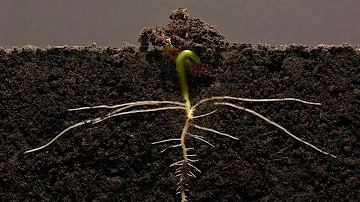
Bean Time Lapse 25 days Soil cross section 3:10

Bean Time Lapse 25 days Soil cross section

GPhase

44.6M مشاهدة · 8 years ago
How Does A Seed Become A Plant Backyard Science SciShow Kids 3:47

How Does A Seed Become A Plant Backyard Science SciShow Kids

SciShow Kids

6.1M مشاهدة · 10 years ago

Plant Life Cycle Learning Life Cycle Videos For Kids And Toddlers 1:51

Plant Life Cycle Learning Life Cycle Videos For Kids And Toddlers

SuperKidzo Tv

803.6K مشاهدة · 6 years ago

Plants Diversity Structure Adaptations 9:28

Plants Diversity Structure Adaptations

Amoeba Sisters

1M مشاهدة · 3 years ago

Angiosperm flowering plant Life Cycle 13:01

Angiosperm flowering plant Life Cycle

Craig Savage

720.9K مشاهدة · 14 years ago

Plant Life Cycle Stages From Seed To Fruit Primary School Science Animation 5:22

Plant Life Cycle Stages From Seed To Fruit Primary School Science Animation

The Pique Lab

624.8K مشاهدة · 3 years ago

The Life Cycle of Plants Grade 5 Science 25:51

The Life Cycle of Plants Grade 5 Science

Jatin's Academy

24.3K مشاهدة · 5 years ago

What Is Seed Germination SEED GERMINATION Plant Germination Dr Binocs Show Peekaboo Kidz 6:28

What Is Seed Germination SEED GERMINATION Plant Germination Dr Binocs Show Peekaboo Kidz

Peekaboo Kidz

5.3M مشاهدة · 5 years ago

How Plants Grow Plant Life Cycle Explained for Kids 3:25

How Plants Grow Plant Life Cycle Explained for Kids

Infobiteskids

24K مشاهدة · 10 months ago

Angiosperm Flowering Plants Reproduction UPDATED 8:16

Angiosperm Flowering Plants Reproduction UPDATED

Amoeba Sisters

228K مشاهدة · 10 months ago

Bill Nye The Science Guy S 05 E 06 Life Cycles Best Quality 23:13

Bill Nye The Science Guy S 05 E 06 Life Cycles Best Quality

Bill Nye The Science Guy HD

79.5K مشاهدة · 2 years ago

Life Cycle of a plant Educational Video for kids 4:30

Life Cycle of a plant Educational Video for kids

BrightMinds

12.6K مشاهدة · 7 months ago

Life cycle of Plants How Does a Plant Grow Pollination and Fertilization in Plants 10:16

Life cycle of Plants How Does a Plant Grow Pollination and Fertilization in Plants

Neel Nation

21.9K مشاهدة · 2 years ago

Reproductive Cycle of Flower Plants The Amazing Lives of Plants 18:19

Reproductive Cycle of Flower Plants The Amazing Lives of Plants

Mitochondria

887.3K مشاهدة · 12 years ago

How Does a Plant Grow Lifecycle of Plant Miss Molly Sing Along Songs The ALPHABET Kids 3:20

How Does a Plant Grow Lifecycle of Plant Miss Molly Sing Along Songs The ALPHABET Kids

Miss Molly

1.9M مشاهدة · 5 years ago

Life Cycle Of Sunflower Time Lapse 75 Days Seed to Seeds 2:24

Life Cycle Of Sunflower Time Lapse 75 Days Seed to Seeds

Amazing Tube

638.4K مشاهدة · 3 years ago

Life Cycle of a Plant Living Creatures Grade 6 Science Khan Academy 3:52

Life Cycle of a Plant Living Creatures Grade 6 Science Khan Academy

Khan Academy India - English

10.4K مشاهدة · 9 months ago

Plant Life Cycle Facts For Kids 3:38

Plant Life Cycle Facts For Kids

Hey! Guess What

100.8K مشاهدة · 2 years ago