Chordate Animals Classes of Vertebrates

👁 1 مشاهدة

Chordate Animals Classes of Vertebrates

النص الكامل للفيديو

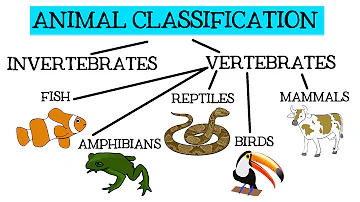
Animals are fascinating creatures that take on many shapes and sizes and have adapted to live all over the world. You can find them in the water, on land, or in the skies overhead. In our last lesson, we learned about the key characteristics of animals, as well as how non-chordates are classified by scientists. Today, we'll be focusing on chordates, or animals with spinal cord, as we describe the characteristics of the five main classes in this phylum and identify examples of each. The phylum Chordata is home to all animals with spinal cord. Members of this group possess complex nervous system, well-developed brain, and at least some well-developed senses, such as sight, hearing, and touch. There are thousands of species within this phylum, so it is further divided into five main classes, which are fish, amphibians, reptiles, mammals, and birds. Fish are the conquerors of the sea. They are unique among the classes in that they live exclusively in aquatic environments, from freshwater rivers and lakes to the darkest depths of the ocean. Fish breathe through gills, which are structures that filter oxygen out of water, and they are cold-blooded, which means they cannot regulate their own body temperature. Because of this, their internal temperature is roughly the same as their environment. Structurally, most fish are covered in scales or scale-like structures, which provide protection from predators and parasites. Additionally, they have fins instead of arms or legs, which they use to propel themselves through the water, as well as to steer and balance. To reproduce, fish lay eggs which can range in number from just couple to thousands at time depending on the species. Examples of fish include lampreys, sharks, rays, and salmon. Our next class of animals, amphibians, also have special connection with water. The word "amphibian" comes from the Greek word "amphibious," which means "double life." This is fitting because many newborn amphibians, like tadpoles, spend their time entirely in water before growing into adult frogs and venturing onto land. This significant change in their body structure after birth is known as metamorphosis. Some amphibians have lungs for breathing air, and some have gills for breathing underwater, but what makes them unique is the ability to breathe through their skin, absorbing oxygen through the process of diffusion. Amphibians are cold-blooded, or unable to regulate their own body temperature. As adults, amphibians possess limbs or arms and legs with fingers and toes, and they reproduce by laying eggs. Some common examples include frogs, toads, and salamanders. The remaining three classes exist primarily on land, and we'll start with reptiles. These scaly critters take on wide variety of forms, which allows them to live successfully in many kinds of environments, from rivers and oceans to vast expanses of desert. Reptilians have lungs to breathe air and leathery scales to protect their bodies. Most are cold-blooded, which is why you can often find them sunbathing to keep warm. With some exceptions (I'm looking at you, snakes), reptiles generally possess four limbs and reproduce by laying eggs that have shell. Reptiles generally possess four limbs and reproduce by laying eggs that have shell. Some examples include lizards, turtles, snakes, and crocodilians. This brings us to mammals, which arguably have the most impressive range of all chordates on Earth. Conquering not only the icy depths of the ocean and the scorching heat of the desert but taking to the sky as well. They owe their success to their unique traits. Like reptiles, mammals breathe using lungs and generally possess four limbs. But unlike their scaly cousins, mammals are warm-blooded, which means they can regulate their own body temperature. They achieve this due to their generally fast metabolism, or rate of chemical reactions in their body. Because they generate energy more quickly, they have energy to spare to warm themselves up, allowing them to survive in extremely cold environments that reptiles cannot. Additionally, they can typically afford to spend more energy on movement, allowing for flight in some mammals, such as bats. Mammals are unique among all animals in that they have fur, produce milk, and generally give birth to live young. Some examples of mammals include mice, wolves, bats, and whales. Pause the video and write down three more examples of mammals in your guided notes. Our final class of animals, birds, have traits similar to both reptiles and mammals. They exist in many places on Earth, from the oceans to the desert, but their most impressive feat is their dominance of the sky. Birds accomplish this for variety of reasons. Pause the video and write down the traits you think birds have that make them so successful at flying. Well, for starters, birds are warm-blooded and typically possess fast metabolisms necessary for the energy demands of flight. They have specialized lungs, which are more efficient than most mammals and reptiles, and most birds have hollow yet strong bones that reduce their weight. Additionally, they have wings and are covered in feathers that not only help them fly but also help them keep warm and dry as well. Like their reptilian cousins, birds possess four limbs and reproduce by laying eggs that have shell. Some examples of birds include robins, eagles, and flightless birds, such as ostriches and penguins. And with that, we've covered the basics of chordate animals. We've learned that chordate animals are divided into five main classes that include fish, amphibians, reptiles, mammals, and birds. Fish use gills to breathe and live in aquatic environments, while amphibians breathe through their skin and can live on land and in water. Reptiles, mammals, and birds breathe using lungs and have variety of traits that set them apart from each other. In our next lesson, we'll explore the final two kingdoms within the domain Eukarya: fungi and protists. Until then, fellow biologists, I'm Tony, and remember, life is full of wonders, so keep learning and don't ever stop wondering.
Chordates CrashCourse Biology 12:09

Chordates CrashCourse Biology

CrashCourse

1.1M مشاهدة · 13 years ago

Main Classes of Chordates Amphibians Reptiles Mammals Birds Fish 10:24

Main Classes of Chordates Amphibians Reptiles Mammals Birds Fish

MooMooMath and Science

163K مشاهدة · 4 years ago

Animal Classification The Vertebrates Song 3:44

Animal Classification The Vertebrates Song

Hopscotch Songs

7.8M مشاهدة · 4 years ago

What Are Chordates Learn about the animals in Phylum Chordata 3:24

What Are Chordates Learn about the animals in Phylum Chordata

Learn Bright

27.9K مشاهدة · 1 year ago
Animal Classification for Children Classifying Vertebrates and Invertebrates for Kids FreeSchool 6:52

Animal Classification for Children Classifying Vertebrates and Invertebrates for Kids FreeSchool

Free School

3.4M مشاهدة · 9 years ago

WILD SCIENCE Classifying Vertebrates 8:30

WILD SCIENCE Classifying Vertebrates

Gladys Porter Zoo

35.5K مشاهدة · 5 years ago

Introduction to Phylum Chordata Chordate Characteristics and the Chordate Cladogram 8:25

Introduction to Phylum Chordata Chordate Characteristics and the Chordate Cladogram

Professor Dave Explains

27.9K مشاهدة · 1 year ago

Vertebrates The Dr Binocs Show Educational Videos For Kids 3:40

Vertebrates The Dr Binocs Show Educational Videos For Kids

Peekaboo Kidz

1.8M مشاهدة · 9 years ago

Animals Tour of 9 Phyla 12:21

Animals Tour of 9 Phyla

Amoeba Sisters

694.6K مشاهدة · 3 years ago

Vertebrate Diversity An Introduction 14:46

Vertebrate Diversity An Introduction

Craig Savage

93.5K مشاهدة · 14 years ago

Video Lecture Chordates and Vertebrates 29:11

Video Lecture Chordates and Vertebrates

Western Anatomy

607 مشاهدة · 7 years ago

Kingdom Animalia Vertebrata Class 11 Biology iKen 9:56

Kingdom Animalia Vertebrata Class 11 Biology iKen

Iken Edu

955.7K مشاهدة · 13 years ago

What Is a Vertebrate Learn about the animals of the Vertebrata subphylum 5:13

What Is a Vertebrate Learn about the animals of the Vertebrata subphylum

Learn Bright

118.9K مشاهدة · 2 years ago

Chordates Animals With Some Real Spine 38:11

Chordates Animals With Some Real Spine

Mr. Mac's Science Class

206 مشاهدة · 6 years ago

Phylum Chordata 18:25

Phylum Chordata

Prof Toff

38.1K مشاهدة · 4 years ago

Phylum Chordata 8:03

Phylum Chordata

Hark 07

21.3K مشاهدة · 12 years ago

Animal Classification Vertebrate Animals 13:24

Animal Classification Vertebrate Animals

Kurt Nilsson

7.3K مشاهدة · 8 years ago

Vertebrates Chordates Classification of chordates 9:02

Vertebrates Chordates Classification of chordates

BioStrome

32 مشاهدة · 5 years ago

Introduction to Vertebrates 9:01

Introduction to Vertebrates

The Amazing Sciences

3.1K مشاهدة · 2 years ago