النص الكامل للفيديو
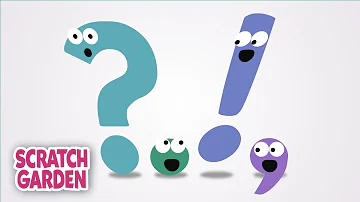
Hi. Welcome to www.engvid.com again. My name's Adam. Today, I'm responding to some requests for punctuation lessons. So, today's lesson is about punctuation. I'm going to focus on the period, the exclamation mark, and the question mark. Now, you're thinking: why am beginning with these three? Because these are the ends of sentences. Right? These always come at very specific point in the sentence, always at the end, always with clear purpose. What is the purpose? period ends sentence. Seems simple enough, everybody knows this. Correct? But it's not that simple. Many, many times I've seen students writing and not putting the period in the correct place. What... Another thing you have to remember about the period is what comes after it is always capital letter. Okay? Many people forget the capital after period. period ends sentence which means it ends complete idea. Whatever comes after the period is already new idea. Of course, one idea flows to the next idea; one idea builds on the previous idea, but they are two separate ideas. When you have completed your sentence, when you have completed your idea - put period. And British people call this: full stop". Same idea, means: full stop, done, next idea. Okay? With capital letter. Always don't forget the capital letter. Or never forget the capital letter. Okay? Another thing to remember about the period is that once you have sentence with complete independent clause and you don't have another independent clause with conjunction, "and", "but", "so", "or", etcetera or semi-colon-this is semi-colon-that means your sentence is finished. If you have two independent clauses in sentence and you don't have the conjunction, you don't have the semi-colon, means you have run-on sentence. Okay? "run-on sentence" is sentence that has two subjects, two verbs, no spacing, no conjunction, no period. Okay? Let's look at an example of run-on sentence. "Stacey and Claire went shopping at the mall with Ted and Alex they bought new clothes." Does this sentence seem okay to you? If it does, there's problem. Okay? We have "Stacey and Claire" as your subject-sorry, this is actually-"went shopping at the mall". Where? "With Ted and Alex". With who? This is complete idea. "Stacey and Claire went shopping at the mall with Ted and Alex." Your idea is complete, this is what they did. Now, at the mall, what did they do? "They bought new clothes." put period, put capital. have to separate ideas, therefore, two separate sentences. Now, is there any other way can fix this? Of course. can put comma after: "Alex," could put the word: "and they bought", in which case, that sentence is fine. "And" joins two independent. So, every time you're writing... Punctuation, of course, is for writing, not for speaking; we don't see punctuation in speaking. Every time you write, check your sentences. If you have two independent clauses, means two subject, subject, verb, and then subject, verb. If you have two of these, two combinations of subject and verb without period between them, without conjunction, without semi-colon - you have run-on sentence. Okay? Just to make sure, here's another sentence. I'll take this away. Something came before. "As result," -of whatever came before-"the police evacuated the tenants of the building they thought this would be safer." "The tenants of the building they thought this would be safer." Wait minute. What's going on? Where does the sentence end? Where does the idea end? What's the next part of the sentence? Okay? "The police evacuated". Who? "The tenants". Which tenants? "Of the building". Okay? "The building they thought this", no. Okay, "The building that they thought this", no, doesn't make sense. So this must be the next subject, "they thought". Who are "they"? The police. "They thought". What? "This would be safer." So now, need to put something here. need to break up these two sentences because they're two separate ideas. This sentence explains why they did the action in the first sentence. So, how can do it? One way, could put the period. Put period, the idea ends, it's complete. I'm going to the next idea, beginning with capital for "They". Another way can do is put this. I'm not... Don't worry about semi-colon today; I'll explain that another time. But this is one other way to split up two sentences, "; they thought", because it's direct connection, "; they thought this would be safer." Another way is to put "because". "Because they thought this would be safer." "This" being evacuated the tenants. Right? The situation. Okay, so there are three ways you can fix this. Okay? So you don't have run-on sentence. So that's the whole idea of the period. Make sure when your idea is complete, when your independent clause is complete and finished, and you're starting new independent clause, put period to finish the first one. The reader understands: "Okay, this idea is finished. I'm getting ready. Okay, give me the next idea. I'm ready for that." Okay? Or join them. Okay? To get one full compound sentence which we'll talk about another time as well. Let's look at the exclamation mark. Okay? Okay, so now we're going to look at the exclamation mark and the question mark. The thing to remember about these: they work just like the period, meaning that they end the sentence, they end the idea. Question mark think is pretty clear; everybody knows this. There must be question involved. We're going to look at that in one second. Let's look at the exclamation mark, it's short and sweet, to the point. An exclamation mark shows emotion. Okay? It could be shock, surprise, etcetera. Could be anger or it could be command. "Stop!" We use an exclamation mark; it's very strong expression. Subject "you", verb "stop". "Stop!" Now, sometimes we can use an exclamation mark with question mark. It's called an interrobang, but you don't need to worry about that word. just like to say it, interrobang, sounds kind of neat. "Why are you doing this to me!?" I'm showing... I'm showing emotion; I'm little bit angry, little bit upset, but I'm also asking you question. Like: "Why are you doing this?", "Why are you doing this to me!?" Angry, shocked. Anyway, you get the point. Now, the thing about the exclamation mark is that you should rarely use it. Many students, many native, non-native English users, they like to use an exclamation mark. They think every time they're making strong sentence, they need to show that it's strong sentence, but you don't. If you write clear sentence, very direct statement - that's enough. You can use this, but make sure that it is necessary in that situation. Even novelists, creative writers who have to show emotion in their writing, even they rarely use exclamation marks. And when you do use it, it's that much more powerful. Okay? So try not to use it. Especially in academic writing, you have no reason to use it. Okay? You're not showing emotion in academic writing. In more creative writing, you can use it, but sparingly. Means not very often. "Wow!" Okay, put an exclamation mark. But at the end of sentence, period works just as well. Now, the thing about question mark: make sure there's question. Okay? Let's look at this example here: "What happened last night?" This is question. First of all, if you hear it, it goes up at the end. You're asking question: "What happened last night?" "What happened last night should not have happened." Okay? So be careful. This, what we have here... What is this? This is noun clause, this is the whole thing is the subject to the verb: "should not have happened". Okay? Make sure that you understand. Even if it looks like question, make sure there is actually question there. How do you know there's question? The subject and verb will be inverted. Right? As in here: "Are you coming?" This is question. The verb comes before the subject and there's going to be question. So let's look at this sentence: "Are you coming to the Party at Linda's house, it'll be fun." Okay? If I'm speaking, maybe the question mark, you might not hear it because want to stress this point more. But is there question here: "Are you coming to the party at Linda's house"? Yes. So this, again, is what we call run-on sentence. don't want comma here, want the question mark. There's question, the sentence is pretty much finished. Interrogative sentence, it's question, but it's still sentence. And here, want the capital "It will be fun. Are you coming to the party? Come, come. It'll be fun." Right? Two separate ideas, each has its own punctuation. So there you have it. Period, exclamation mark, question mark for punctuation, for writing. If you're not clear about all of this, come to www.engvid.com; there's quiz, you can practice this little bit more and ask all the questions you need. Okay? See you again soon.

 3:59
3:59
 2:19
2:19
 3:39
3:39
 2:11
2:11
 1:39
1:39
 2:25
2:25
 1:31
1:31
 3:57
3:57
 1:26
1:26
 0:05
0:05
 5:47
5:47
 2:06
2:06
 5:01
5:01
 1:01
1:01
 1:18
1:18
 4:16
4:16
 4:10
4:10
 1:04
1:04
 3:25
3:25


