النص الكامل للفيديو
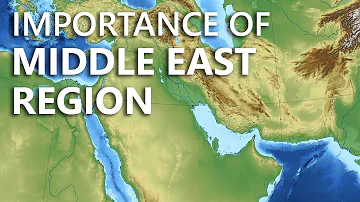
Did you know that one country in the Middle East earned over $1 trillion in single year, almost entirely from liquid found underground? Today, we're uncovering how natural resources have transformed entire nations in the Middle East. From the oil fields of Saudi Arabia to the futuristic skylines of Dubai, why some countries are worth trillions while their neighbors struggle, and what happens when the oil eventually runs out. Let's dive in. This is going to blow your mind. First things first, what exactly is natural resource? natural resource is anything that comes from the earth without human influence and that people can use. Think of things like oil, gas, water, minerals, sunlight, or even forests. These are all natural resources that shape our lives every single day. Now, some natural resources are renewable, meaning they can be replaced naturally over time, like wind or sunlight, but others are non-renewable, meaning if we use them up, they're gone. Coal, oil, and gas all fall into this category. And here's why that matters. The Middle East sits on top of some of the biggest non-renewable reserves on the entire planet. Now, here's something really important to understand. Natural resources aren't spread evenly around the world. The way something is spread out across geographic area is called its distribution and the distribution of oil and gas is very uneven. Some countries have enormous reserves. Others have almost none at all. In the Middle East, countries like Saudi Arabia, Kuwait, Iran, Iraq, and the United Arab Emirates are sitting on vast reserves of oil and gas. While other countries in the same region like Yemen and Jordan have very little, this uneven distribution has enormous consequences. And we're going to explore exactly what those are. Okay, quick quiz. Let's test your knowledge. What does the word distribution mean in geography? Think about what we just covered. The answer is Distribution means how something is spread out across geographic area. We use this word to describe the uneven spread of resources like oil and gas around the world. Not every country gets an equal share. Great job. Let's keep going. Let's zoom in on Saudi Arabia because the numbers here are genuinely mind-blowing. In 2023, Saudi Arabia produced 11.4 million barrels of oil every single day. That made it the second largest oil producer in the world, just behind the United States, which produced 19.4 million barrels per day. Russia came in third with 11.1 million barrels per day. Now, Saudi Arabia's economy, that's the way country produces, uses, and manages money, jobs, goods, and services, had GDP of 1.07 trillion US in 2023. And nearly half of that came from oil exports. Wow. to export means to sell goods or services to other countries. So Saudi Arabia was selling its oil to the rest of the world and earning staggering amounts of money from it. So how does this oil wealth actually affect people? When country exports oil, it earns money and that money can be reinvested into the country itself. Think about building better roads, hospitals, and schools or creating thousands of jobs in transportation, extraction, refining, and management. Countries like Qatar and the United Arab Emirates have used their oil wealth to build some of the most modern cities in the entire world. Doha and Dubai are genuinely extraordinary places, all funded in large part by oil revenue. But here's the flip side. Countries in the Middle East that don't have significant oil reserves often have much lower GDP. Yemen had GDP of just 21 billion US in 2023. Jordan had around 51 billion. Compare that to Saudi Arabia's 1.07 trillion. That is staggering gap and it's largely down to one thing, oil. Okay, second quiz. Let's see if you were paying attention. What does it mean when country imports resource? Think about what we just covered. The answer is To import means to buy goods or services in from other countries. Remember the trick. Import starts with the same letters as the word in. So, it's coming into the country. Whereas export starts like exit. It's leaving. Well done if you got that. Let's keep going. Now, oil sounds like an ideal source of wealth, but it comes with serious risks. Oil prices fluctuate. That means they go up and down depending on global demand. And sometimes they drop dramatically. If country earns nearly half its income from oil exports and prices suddenly crash, that country is in serious trouble. This makes economies that depend too heavily on oil very vulnerable. And there's another problem. Oil is non-renewable. It won't last forever. At some point, those underground reserves will run out entirely. So, what do you do when your main source of income disappears? This is one of the biggest challenges facing Middle Eastern countries right now. And some of them are already acting on it. If you're enjoying this, don't forget to subscribe for more Keystage 3 geography videos. Thank you. Some Middle Eastern countries are responding by diversifying their economies. To diversify means to add variety or do something differently. Instead of relying on single resource, these countries are building entirely new industries. Tourism is big one. So is technology, finance, renewable energy, and sport. The UAE has become global hub for tourism and business. Investing in airlines, developing free trade zones, and even launching Mars mission in 2020. Qatar has invested heavily in sport and media, hosting the FIFA World Cup in 2022 and developing global news through Al Jazzer. And perhaps the most ambitious example of all is Saudi Arabia. In 2016, the Saudi government launched national strategy called vision 2030. This was bold plan with three key aims. First, diversify the economy away from oil. Second, build massive new projects and attract global investment. And third, implement social and institutional reforms. One of the most extraordinary parts of this plan is project called NAM. brand new city being built in the northwest of Saudi Arabia near the Red Sea. It has four features that sound almost like science fiction. The line, long narrow city with no cars, powered entirely by green energy. Oxigon, high-tech industrial portly floating on the sea. Trojena, mountain resort where people can ski, and Sindala, luxury island with hotels, beaches, and yacht docks. These projects show just how seriously Saudi Arabia is taking the challenge of life after oil. Did you know there's free worksheet for this topic? Link in the description. Perfect for revision or homework. Okay, final quiz before we wrap up. Let me know in the comments how many you got correct. Which of the following is not one of the four features of NEM? Think carefully about what we just covered. The answer is The grid is not part of Neon. The four actual features are the line, Oxigon, Troena, and Sindala. The grid was distractor. Well done. If you caught that one, it means you were really listening. Perfect. Right, let's bring everything together. Natural resources like oil and gas are not spread evenly around the world. We call this an uneven distribution. In the Middle East, Saudi Arabia dominates oil production with nearly 12 million barrels per day, while countries like Yemen and Jordan have very little. Oil exports have made some countries extremely wealthy, funding modern cities and high standards of living. But overreiance on oil is risky. prices fluctuate and eventually the reserves will run out. That's why countries like the UAE, Qatar, and Saudi Arabia are actively diversifying into tourism, technology, sport, and finance to secure their futures beyond oil. Now, here's question for you. If you could visit one place in the Middle East, where would it be? Would you head to the futuristic skyline of Dubai, explore the museums and markets of Riyad, or maybe watch match at the Luzale stadium in Qatar? Leave comment and let me know. If you found this helpful, you might want to check out my other videos on my channel. Thanks for watching. Don't forget to subscribe for more Keystage 3 geography videos. This is knew it all and will see you in the next video.

 9:52
9:52
 12:02
12:02
 5:52
5:52
 7:00
7:00
 5:56
5:56
 18:42
18:42
 11:16
11:16
 18:43
18:43
 15:26
15:26
 4:34
4:34
 19:06
19:06
 4:52
4:52
 25:45
25:45
 13:24
13:24
 8:09
8:09


