Earthquakes and Tsunamis What Causes Them and How They Shape Earth

Earthquakes and Tsunamis What Causes Them and How They Shape Earth

النص الكامل للفيديو
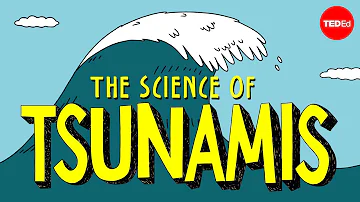
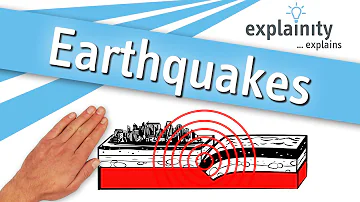
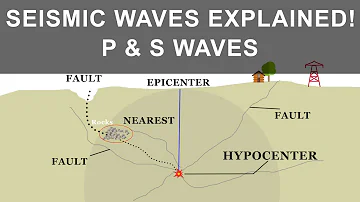
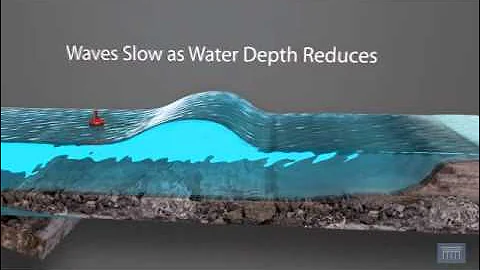
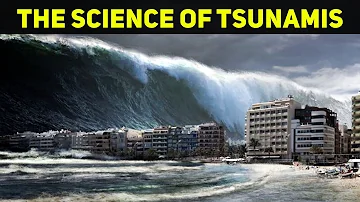
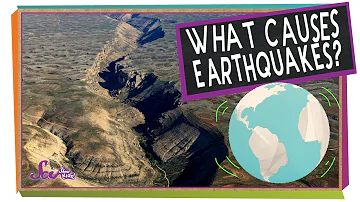
Off the coast of Alaska, few miles below the sea, lies the Aleutian subduction zone. This is where the Pacific Tectonic Plate is slowly slipping underneath the North American Plate. It's why Alaska has as many as 100 earthquakes every single day. It's also the site of the largest earthquake to ever hit the U.S. Just tiny motion along this boundary is enough to have enormous effects, and it — Whoa! It looks like the seismograph is picking something up. Is it one of those common tremors, or could it be major event? Let's see if we can shake things up around here to find out. By the end of this lesson, you'll be able to explain the causes of earthquakes and tsunamis, describe the ways earthquakes are measured, and explain how these natural forces shape our planet. Let's get started! So, what set off the tremors we just felt, and why do so many happen here? Remember, the Earth's crust is made of huge, slow-moving tectonic plates. The Aleutian subduction zone is one of Earth's many plate boundaries where these tectonic plates meet. Tectonic plates are essentially massive slabs of rock with rough and jagged edges. When they move, they get stuck along these edges, but they keep exerting force on each other. Over time, this force builds up until it's strong enough to break the plates free and release all that built-up energy at the same time. We call this release of energy an earthquake. The point where the energy release happens is called the hypocenter, and it's where the earthquake starts. The released energy then ripples out from the hypocenter in seismic waves. It moves through the Earth's crust until it reaches the epicenter, or the point on Earth's surface directly above the hypocenter. That's when we start feeling the ground shake: when the energy reaches the surface. So, when does the built-up pressure reach the tipping point and start an earthquake? Well, we don't know! Seismologists, or scientists who study earthquakes, can't predict earthquakes just yet. But they can tell us lot about them. One of the tools they use to study earthquakes is called seismograph. It can detect and record the seismic waves produced by an earthquake. Then, seismologists can use these readings to calculate an earthquake's magnitude. Magnitude is the strength of the release of energy at the hypocenter. The more energy is released in seismic waves, the stronger the earthquake's magnitude will be. Seismologists measure magnitude with system called the moment magnitude scale. Most earthquakes are so small that we don't even feel them on Earth's surface, so they're only around one or two on the moment magnitude scale. Anything over five is likely to damage buildings, while anything over seven is major earthquake that will be seriously dangerous and damaging. Seismologists think the strongest possible earthquake would probably be around 9.5, which would be incredibly damaging, especially near the epicenter. However, the farther away from the epicenter you get, the less the impacts of an earthquake are usually felt. This is called an earthquake's intensity, which is the shaking it causes at specific place. The higher an earthquake's magnitude, the higher the intensity tends to be near the epicenter, and the intensity gradually lessens as you move farther away. But the magnitude isn't the only factor that determines an earthquake's intensity. Its depth is also important. Since tectonic plates are so thick, earthquakes can start at different depths within the crust. How do you think the depth of an earthquake's hypocenter changes its intensity? Pause the video here and record your predictions in your guided notes. When an earthquake's hypocenter is deep underground, the seismic waves lose energy as they travel to the epicenter, meaning the earthquake will be less intense. On the other hand, shallow earthquakes release their energy closer to the surface, leading to higher intensity. And the more intense an earthquake is, the more likely it is to change our planet's surface at that spot. While smaller earthquakes might just shake few rocks loose, powerful ones can have huge impacts. An earthquake can trigger landslide that reshapes mountain, can raise or lower the ground level, or can even change the course of river. And when tremor starts at fault like the Aleutian subduction zone, it can have different set of effects. After all, this fault is underwater. That means it wasn't just the ground shaking during this earthquake; the ocean floor moved, too. Now, the tremor felt was only about three on the moment magnitude scale, so it will probably just cause some choppy seas. But stronger quake can displace an absolutely colossal amount of water. And unlike solid ground, liquid water can move extremely quickly. This fast-moving water can form massive wave traveling across the ocean at speeds of 500 mph. That's as fast as an airplane! And when that massive wave eventually gets into shallow water closer to shore, it gets pushed upwards, making the waves grow taller. Then, it isn't just wave anymore; it's tsunami, or huge ocean wave caused by an undersea disturbance. When it surges onto land, it can level anything in its path, washing away forests and destroying buildings. They can trigger landslides and even erode huge chunks of land. In fact, tsunamis are often more dangerous and destructive than the earthquakes that cause them. So, while the movement of tectonic plates is very slow, it can cause earthquakes and tsunamis that can change our planet in an instant. And although seismologists can't predict these events just yet, they can help us prepare. In areas where earthquakes are common, buildings are designed to withstand them. Many places near the coast build seawalls to protect them from tsunamis and have warning systems in place to help people get to safety if one is coming. Seismologists help deepen our understanding of these events to help people all around the world stay safe during them. Still, I'm glad this was just small one. So, let's recap what we've learned today. Now you know that earthquakes are caused by the movement of tectonic plates, that undersea earthquakes can cause tsunamis, and that both of these natural disasters can cause rapid changes on Earth's surface. Every tremor and wave is reminder of the forces, both fast and slow, that are constantly changing our planet's surface. Be sure to check out the practice questions and extension activities that go with this lesson to delve even deeper into understanding them. And remember, in Earth science, as in life, you rock! See you next time.
How tsunamis work Alex Gendler 3:37

How tsunamis work Alex Gendler

TED-Ed

9.1M مشاهدة · 12 years ago
Earthquakes explained explainity® explainer video 2:35

Earthquakes explained explainity® explainer video

explainitychannel

382.8K مشاهدة · 3 years ago

What Is An Earthquake The Dr Binocs Show Educational Videos For Kids 3:43

What Is An Earthquake The Dr Binocs Show Educational Videos For Kids

Peekaboo Kidz

10.2M مشاهدة · 10 years ago
Earthquakes and Tsunamis for Kids A fun engaging introduction to Earthquakes and Tsunamis for Kids 5:06

Earthquakes and Tsunamis for Kids A fun engaging introduction to Earthquakes and Tsunamis for Kids

Learn Bright

635K مشاهدة · 8 years ago

Tsunami What causes Tsunamis What is the tsunami warning The Dr Binocs Show 3:01

Tsunami What causes Tsunamis What is the tsunami warning The Dr Binocs Show

Peekaboo Kidz

3.2M مشاهدة · 10 years ago

The CRUEL Physics behind Tsunamis 12:04

The CRUEL Physics behind Tsunamis

Sabin Civil Engineering

6.9M مشاهدة · 11 months ago

Earthquakes for Kids STEM Learn why earthquakes happen and how to measure them 6:14

Earthquakes for Kids STEM Learn why earthquakes happen and how to measure them

Learn Bright

1M مشاهدة · 3 years ago

Understanding earthquakes The science behind what makes the earth shake CBC Kids News 3:15

Understanding earthquakes The science behind what makes the earth shake CBC Kids News

CBC Kids News

1.3M مشاهدة · 1 year ago
अर्थक्वेक भूकंप कैसे आता है Earthquake In Hindi Dr Binocs Show Educational Videos For Kids 3:27

अर्थक्वेक भूकंप कैसे आता है Earthquake In Hindi Dr Binocs Show Educational Videos For Kids

Binocs Ki Duniya

698.7K مشاهدة · 4 years ago

What Causes a Tsunami How Tsunamis are Formed Animation Studio 212 789 9077 0:27

What Causes a Tsunami How Tsunamis are Formed Animation Studio 212 789 9077

TMBA, Inc. - Animation Studio

822.9K مشاهدة · 15 years ago
How Earthquake occurs and what causes it Seismic Waves P and S Waves 4:30

How Earthquake occurs and what causes it Seismic Waves P and S Waves

Amit Sengupta

1.6M مشاهدة · 9 years ago
3 D Animation showing Formation of a Tsunami 0:17

3 D Animation showing Formation of a Tsunami

TrialQuest

1.3M مشاهدة · 15 years ago

What Are Earthquakes Volcanoes and Tsunamis 10:37

What Are Earthquakes Volcanoes and Tsunamis

Miacademy & MiaPrep Learning Channel

85.8K مشاهدة · 6 years ago
The science of tsunami How does an Earthquake cause Tsunami Education 4:07

The science of tsunami How does an Earthquake cause Tsunami Education

Let'stute

2.4M مشاهدة · 4 years ago

How earthquakes trigger tsunamis BBC 2:16

How earthquakes trigger tsunamis BBC

BBC

6.2M مشاهدة · 15 years ago

Tsunamis 101 National Geographic 2:43

Tsunamis 101 National Geographic

National Geographic

2.1M مشاهدة · 10 years ago

How does Earthquake happen Earthquake explained using D Simulator Physics Simulator Letstute 12:04

How does Earthquake happen Earthquake explained using D Simulator Physics Simulator Letstute

Let'stute

1.6M مشاهدة · 6 years ago

How Tsunamis Really Form The Science Behind These Deadly Waves 1:16

How Tsunamis Really Form The Science Behind These Deadly Waves

The National Weather Desk

75 مشاهدة · 9 months ago
What Causes Earthquakes 3:46

What Causes Earthquakes

SciShow Kids

1.7M مشاهدة · 9 years ago