welcome to lesson seven of how to understand quranic grammar series last time we started our journey with arabic verbs and we started with the first topic related to it which is the arabic pronouns we learned that there are three types of pronouns separated pronouns attached pronouns and hidden pronouns we learned that the separated pronouns in arabic are the subject pronouns in english so they're like he she they we and so on and today's topic will be mainly about attached pronouns what they mean and how we can use them so let's get started it is quite known that the quran an arabic in general contains words that can be sometimes translated into full sentences one of the secrets to this characteristic is prefixes and suffixes regular word in the quran can easily have one two and even three suffixes which adds lot to the meaning of the word and today we'll talk about one of the most common suffixes in the quran which are the attached pronouns attached pronouns in arabic means and here are the three most important things you need to know about the first thing is that in arabic attached pronouns only come as suffixes which means that they only come at the end of words also it is important to know that you can add up to two suffixes to single word after one another last attached pronouns in arabic can be translated to object pronouns in english so like me him her them and so on or to possessive pronouns so like my his their hour and so on and the type of word it is attached to and the context will determine which one of the two it is and just like last time singular pronouns will be in yellow dual pronouns will be given in green and plural pronouns will be in orange so let's get started with the first one last time we learned about the pronoun ane which means and its attached pronoun is the suffix which comes only at the end of words as suffix and it would then mean me or my like in these examples so in this example we see the verb age and at the end of it we see the yeah attached to the end of it to give the meaning of put me or appoint me unfc in and in this example we see the suffix coming twice in the same the first time in this word nafsi which is then translated to myself and also at the end of the example in the word rabbi to indicate my lord next is ant which means you as we learned last time and its attached pronoun will be ke which would then come at the end of verbs and nouns and it would then mean you as an object pronoun or your like in these examples the next pronoun we learned last time was hoa and its attached version will only be which comes then at the end of words with the meaning of him or his like in these examples next is the attached pronoun which is related to and this attached version is hai which is then attached to the end of words and it means her and don't forget that in english her is used as an object pronoun so saw her and also as possessive pronoun so we say her book we see it used in the quran in this example and before we can leave the singular pronouns behind it is important to remember that arabic does not have neutral pronoun which equals the pronoun it in english that's why sometimes the words or their attached pronouns at the end of words can be translated into it or it's in order to fit the translation and the english sentence now these were the singular attached pronouns which come at the end of words as suffixes moving on to the dual attached pronouns which also come as suffixes at the end of words and what we learned last time for the dual pronouns was en tume and its attached version is kumar which would then mean you or your for the dual form like in these examples and if it was not directly talking to two people and you would be talking about two people you would then use the suffix huma which would then be attached to the end of verbs or nouns with the meaning of their or them for the dual form like in this example to now moving on to the plural attached pronouns last time we learned that nachnu means we and the attached version of nachnu in arabic is the suffix ne and the suffix at the end of words would then mean us or our which we can see in these examples in now next is antum which means for plural and the attached version of it is kum and as you would expect com at the end of words would then mean you or your for the plural form like in these examples now this pronoun and this suffix is used when addressing men only and it is also used when addressing group of people including men and women however if you're addressing group of only women you would then use antone and antone was not discussed last time because it is not mentioned in the quran however its attached pronoun is mentioned in the quran and that's why we are talking about it this time and we see the suffix used in the following example was used because it is addressing only group of women next is the pronoun hom home could also be used as suffix at the end of words to indicate the meaning of their and them like in these examples and just like the case with antum and anton hum is used when talking about group of men also is used when talking about group including men and women and if you're talking about group of only women you would then use the suffix that would be attached to the end of verbs and nouns and would then mean their or them but only if the group is made up of women like in this example me me finally just like last time there will also be poster that would help you remember these attached pronouns along with the separated pronouns and the best surah that you could use to train your skills with separated pronouns and attach pronouns is surat yusuf because it contains all the variations of separated pronouns as well as attached pronouns so make sure that you read it at least once after watching this lesson and ask yourself what the meaning is of each pronoun that you come up against now let's go back to the beginning of the lesson when we showed very long word in arabic and let's analyze it and see how we can understand it the word is here it starts with fe which means so or then which we learned in 50 of the quranic vocabulary and the verb as you see in green is and the verb ends with two suffixes following one which would then mean you as an object pronoun and after it we see the attached pronoun which would then mean his him or it so that's why means and we give it to you to drink now finally i'm going to give you long word and want you to try and analyze the word and tell me which are the prefixes and which are the suffixes and what would they mean the word is faisa yeah and because we haven't studied this verb yet i'm going to mark the verb with green color because then it would make it easier for you to understand where is the prefix and where is the suffix thanks for watching hope you have learned something new today if you did please like and share the video for other people to learn from it and don't forget to subscribe to our channel if you want to see more videos like this thanks for watching and i'll see you in lesson 8.
13:43
The Attached Pronouns in Arabic Part 1 الضمائر المتصلة
The Arabic Classroom
2.4K مشاهدة · 1 year ago
6:43
Personal Pronouns in Arabic Lesson 21
Arabic with Toqa
41.8K مشاهدة · 4 years ago
0:06
arabic grammar gardan Mazi mudhare ماض
saaz arsh arshu
179.9K مشاهدة · 2 years ago
2:01
Learn about Arabic pronouns Lesson 21
Easy Quran
4K مشاهدة · 7 years ago
10:30
ARABIC ATTACHED POSSESSIVE PRONOUNS WITH EXAMPLES ARABIC GRAMMAR LESSON 9
ARABIC LANGUAGE ACADEMY
16.9K مشاهدة · 5 years ago
0:06
arabic grammar zameer pronoun
saaz arsh arshu
40.9K مشاهدة · 2 years ago
1:49
Arabic Attached pronouns
Arabic blooms
13.3K مشاهدة · 8 years ago
8:45
Arabic grammar lesson 4 detached pronouns
Learn Clear Arabic with Nesma
2.3K مشاهدة · 4 years ago
0:06
Arabic gardan LearningJourney 25 saazarsharshu 4545
saaz arsh arshu
522.3K مشاهدة · 3 years ago
9:01
ARABIC PERSONAL DETACHED PRONOUNS WITH EXAMPLES ARABIC GRAMMAR LESSON 8
ARABIC LANGUAGE ACADEMY
19.6K مشاهدة · 5 years ago
6:40
Singular Demonstrative Pronouns in Arabic Lesson 21 Learn with Safaa
Learn With Safaa
181.4K مشاهدة · 8 years ago
0:17
Saudi Grammar 101 Has Have Prepositional Phrases
3arabian
18.6K مشاهدة · 1 year ago
3:31
How to Form Arabic Imperatives Command Form Arabic Grammar Explained
Andalusi Extra
13 minutes ago
39:59
AT 21 BAG Attached Pronouns
ArabicTree Learning by Mohammed Kafil Ansari
192 مشاهدة · Streamed 2 years ago
12:32
How to say My and Your in Arabic Personal Possessive Pronouns

 13:43
13:43
 6:43
6:43
 0:06
0:06
 2:01
2:01
 10:30
10:30
 0:06
0:06
 1:49
1:49
 8:45
8:45
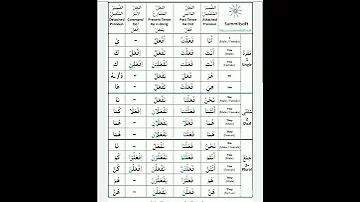 0:06
0:06
 9:01
9:01
 6:40
6:40
 0:17
0:17
 3:31
3:31
 39:59
39:59
 12:32
12:32
 0:40
0:40
 0:34
0:34


